Earlier this year, I talked about Pyth becoming the foundation for financial markets.
Last week at Breakpoint, I explained why this vision matters and what comes next.
Most people don’t realize this, but there’s a $50B industry sitting underneath global finance that almost no one talks about: market data.
Companies like Bloomberg, LSEG, and FactSet don’t trade markets. They sell the data that markets run on. And collectively, they’re worth more than what most people expect because high-quality data quietly powers EVERYTHING.
Here’s the uncomfortable truth: good data is expensive because low quality data leads to people getting ripped off. When prices are delayed, filtered, or opaque, someone always pays for it. Usually the end user.
This year, Pyth crossed an important threshold.
We proved that market data provided directly from the source doesn’t just work technically, it works commercially. Institutions are willing to pay for it. Since the launch of Pyth Pro, we are already seeing 8-10 weekly inbounds, over 80 active subscribers, and have generated more than $1M of annualized revenue in the first month.
But building foundational infrastructure isn’t just about growth. It’s about value accrual to the network.
That’s what led to the launch of the PYTH Reserve.
The idea is simple: Real customers drive real revenue.
Ecosystem revenue → PYTH DAO treasury → monthly open-market purchases of PYTH.
2025 was about proving the model.
2026 is about scaling the model.
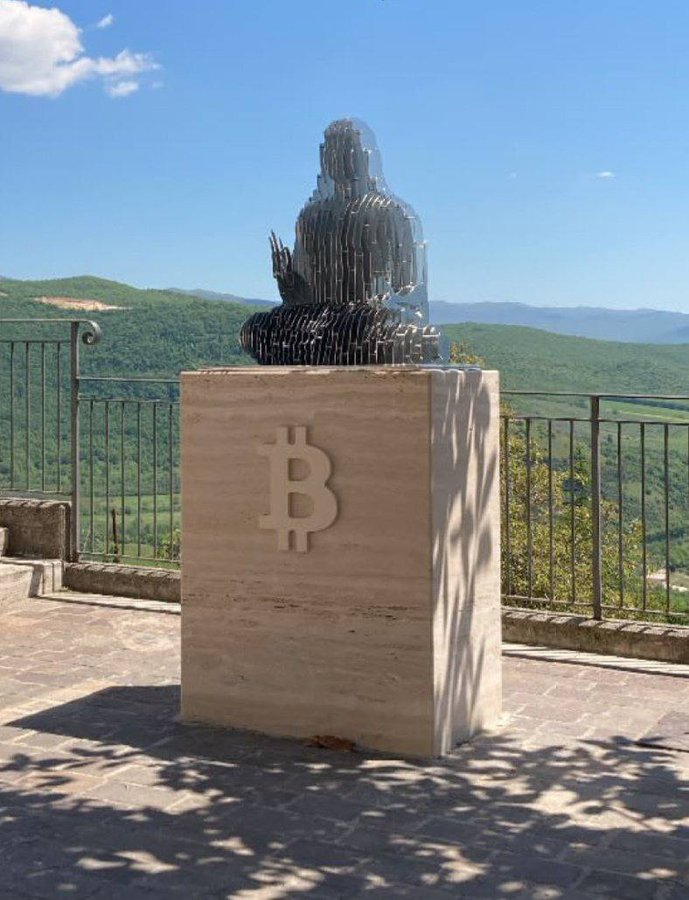
First Tokyo, now another statue spotted in Italy🇮🇹
The town of Fornelli inaugurated a statue honoring Satoshi Nakamoto, fully funded by the municipality.
With 24 merchants accepting $BTC, it claims the highest Bitcoin adoption per capita worldwide.
Day 13 - Why do Bitcoiner's say “Not your keys, not your coin”?
Ever wondered how Bitcoin ensures only you can access your funds—even without a bank?
The answer lies in public-private key cryptography—the foundation of Bitcoin’s security and self-custody.
How Public & Private Keys Work
When you create a Bitcoin wallet, it generates a private key—a long, random number that acts as your master key. From this private key, a public key is created using cryptographic math.
🔹 Your private key proves ownership and allows you to send bitcoin.
🔹 Your public key is what others use to send bitcoin to you.
Think of It Like a Locked Mailbox
These two keys work together in a way that’s similar to a mailbox:
✔️ Your public key is like your home address—anyone can send mail (bitcoin) to you.
✔️ Your private key is like the key to your home—only you can unlock it and access what’s inside.
Without your private key, no one—not even a hacker—can unlock your funds.
What Is a Seed Phrase?
Since a private key is a long, complex string of numbers and letters, wallets generate a seed phrase—a human-readable version of your private key in the form of 12-24 simple words.
✔️ Your seed phrase allows you to restore your bitcoin if your wallet is lost or damaged.
✔️ It is just as powerful as your private key—protect it at all costs!
✔️ If someone gets your seed phrase, they can take your bitcoin.
🚨 NEVER SHARE YOUR SEED PHRASE! 🚨
Why Does This Matter?
This system means that you don’t need a bank to hold your money—you can hold it yourself. But that also comes with responsibility.
This is where the phrase “Not your keys, not your coins” comes in.
If you don’t control your private key (or seed phrase), you don’t truly own your bitcoin—you’re just trusting someone else to hold it for you.
Most people who leave their bitcoin on an exchange don’t realize the risk they're taking. If the exchange goes bankrupt, gets hacked, or decides to freeze withdrawals, your bitcoin could be lost forever.
This is why self-custody matters. If you control your private key (or seed phrase), you control your bitcoin. No bank, government, or third party can take it from you.
💡 Your keys, your coins.
💸 Their keys, their coins.
Tomorrow, we’ll cover public addresses—your wallet’s public-facing side and how they protect your privacy. 🔐🚀
Check the comments 👇 tomorrow for Day 14! #21DaysOfBTC
📌 Side Note: This is part of “Understanding Bitcoin: A 21-Day Journey.” After 21 days, you’ll know more than 99% of people about how Bitcoin truly works.
New here? No worries—start from the beginning here: https://t.co/WjF5tG4szA
Day 9 – Why Will There Only Ever Be 21 Million Bitcoin?
Unlike fiat currencies that can be printed endlessly, Bitcoin has a fixed supply. There will never be more than 21 million BTC.
But why? And how does Bitcoin enforce this limit?
Bitcoin’s Hardcoded Scarcity
Bitcoin’s supply is governed by code, not by politicians or central banks. New bitcoin enters circulation through mining, but it follows strict mathematical rules:
✔️ Every 10 minutes, miners process transactions and add a new block to the blockchain.
✔️ Each time they do, they’re rewarded with newly minted bitcoin—this is called the block subsidy.
But here’s the catch: The block subsidy is not constant.
The Halving Cycle: Bitcoin’s Supply Schedule
Every 210,000 blocks (~every 4 years), the reward for mining a block is cut in half. This event is called the halving.
🟠 2009: Miners earned 50 BTC per block
🟠 2012: Dropped to 25 BTC
🟠 2016: Dropped to 12.5 BTC
🟠 2020: Dropped to 6.25 BTC
🟠 2024: 3.125 BTC per block
And this cycle continues until the year 2140, when the last fraction of a bitcoin will be mined.
🔹 Why Doesn’t Bitcoin Exceed 21 Million?
Bitcoin’s supply follows an asymptotic curve, meaning it gets infinitely close to 21 million, but never exceeds it.
Think of it like this:
Imagine splitting a pizza in half. Then halving it again. And again. No matter how many times you divide it, you’ll never completely run out—you’ll just get smaller and smaller slices.
That’s how Bitcoin works. Each halving event slows down new issuance, ensuring that bitcoin remains scarce.
🔹 What Happens After 2140?
When the final fraction of BTC is mined in 2140, miners will no longer receive a block subsidy.
But they’ll still have an incentive to secure the network—because they’ll earn transaction fees instead of new bitcoin.
Bitcoin’s fixed supply is one of its most powerful features. No bailouts. No inflation. No monetary manipulation. Just pure, mathematically enforced scarcity.
🔥 Sound money. Hard money. The scarcest money ever created.
But this begs the question... If bitcoin is released on a predictable schedule, what happens if miners speed up? Or slow down? We’ll cover this tomorrow.
Check the comments 👇 tomorrow for Day 10! #21DaysOfBTC
📌 Side Note: This is part of “Understanding Bitcoin: A 21-Day Journey.” After 21 days, you’ll know more than 99% of people about how Bitcoin truly works.
New here? No worries—start from the beginning here: https://t.co/WjF5tG50p8
Day 1 - What is Bitcoin?
What if I told you there’s a form of money that no bank or government can control? A monetary system that plays by a different set of rules?
Created by the pseudonymous Satoshi Nakamoto, Bitcoin is a decentralized, peer-to-peer monetary network that enables trustless, permissionless transactions in a money that stores value over time.
Jargon, right? Let’s break it down.
🔹 Decentralized – No single entity (government, bank, or corporation) controls it. Instead, Bitcoin’s security and rules are enforced by a voluntary, global network of users.
🔹 Peer-to-peer – No intermediaries. Just like handing someone cash, you send bitcoin directly to another person, anywhere in the world.
🔹 Trustless – You don’t need to trust a middleman to verify the transaction. Instead, Bitcoin’s protocol ensures transactions are valid.
🔹 Permissionless – No one can stop you from using Bitcoin. Unlike traditional finance, no bank can freeze your funds or deny access.
🔹 Store of value – With a fixed supply of 21 million coins, Bitcoin is designed to protect your purchasing power from inflation.
But bitcoin isn’t just another form of money—it’s the first truly independent, borderless, and incorruptible monetary system.
For decades, brilliant minds have tried to create a digital currency free from control or censorship. Every attempt failed. Why? Because digital money had one fatal flaw: trust.
Before Bitcoin, every online transaction required a bank, government, or third party to ensure money wasn’t copied or double-spent. Without a trusted authority, digital cash simply couldn’t work.
That is—until Bitcoin.
For the first time in history, Bitcoin solved the problem of digital trust and allowed people to send money online without intermediaries.
How? By cracking one of the most difficult challenges in computer science: The Byzantine Generals Problem.
What is it? Why was it the missing piece?
That’s a topic for Day Four. But first, let’s rewind and explore: Who is Satoshi, and what is the Bitcoin White Paper? See you tomorrow.
Check the comments 👇 tomorrow for Day 2! #21DaysOfBTC
📌 Side Note: This is part of “Understanding Bitcoin: A 21-Day Journey.” After 21 days, you’ll know more than 99% of people about how Bitcoin truly works.
New here? No worries—start from the beginning here: https://t.co/WjF5tG4szA
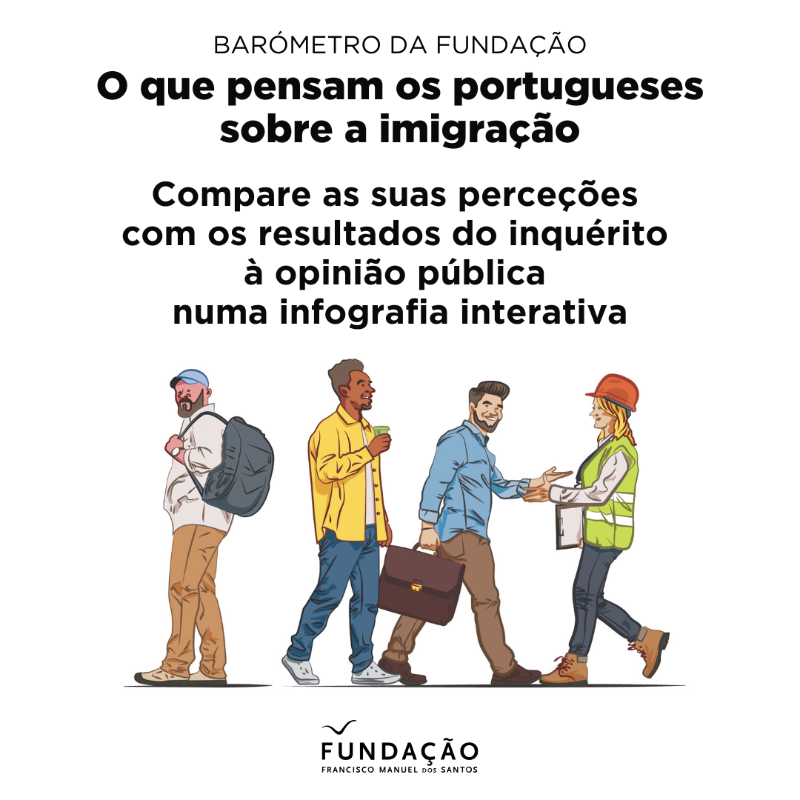
Como veem os portugueses a imigração? A Fundação acaba de divulgar um novo barómetro, que analisou a perceção dos portugueses sobre a imigração.
O relatório completo, que deu origem à infografia, está disponível no início da página do site da FundaçãoComo veem os portugueses a imigração? A Fundação acaba de divulgar um novo barómetro, que analisou a perceção dos portugueses sobre a imigração.
O relatório completo, que deu origem à infografia, está disponível no início da página do site da Fundação.
🔶Today is the 16th anniversary of the The Bitcoin Whitepaper release.
"Bitcoin: A Peer-to-Peer Electronic Cash System"
Released on October 31, 2008 by the pseudonymous author Satoshi Nakamoto to the Cryptography Mailing List.
Thank you Satoshi. 🙏
While the Fed likes to report to you CPI Inflation (yellow line).
What you really need to beat is CPI + monetary debasement (while line).
It's around 8% normally.
Gold keeps you on par.
SP500 will beat it by 3%.
#Bitcoin will beat it by 20%-70%.