The classic software startup writes code to solve users' problems. If AI makes writing code more of a commodity, understanding users' problems will become the most important component of starting a startup. But it already is.
If only someone told me this before my 1st startup:
1. Validate.
I wasted at least 5 years building stuff nobody needed.
2. Kill your EGO.
Make your users happy instead of yourself.
3. Don’t chaise investors; chase users, and then investors will chase you.
4...
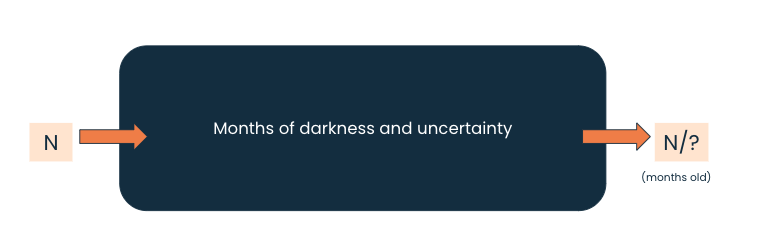
What does software development look like from the outside?
I request N things. A few of them come out months later.
Hence: these programmers need to work faster.
1/
As you know, my explorations of the Gen AI space is ultimately all about creative control. You should be able to shape the generative matter using all your artistic sensibilities and your aesthetic sense.
OpenAI's Sora is a huge technological leap, but what excites me the most about it is the modalities where it depends on input other than text alone. Such as video to video. Here's an example of how Sora can change an input video.
Base video🧵
@jabrasupport since the last days we are facing crashes of the new MS Teams Client (V2) while using the Jabra Evolve2 50. It's unusable with this crashes.
Please see this thread: A lot of people are having the same issuse.
https://t.co/lUAogYa3BW
A home needs housekeeping or it slowly becomes a mess.
A codebase needs housekeeping too.
But developers are busy. So they're often so focused on shipping isolated features that they become blind to the mess.
The solution: I believe *an individual* should ultimately be responsible for code quality (typically the team lead or the most senior developer).
This person is responsible for considering the code *holistically*. It's their job to regularly propose tweaks to keep the code consistent, secure, fast, etc.
Assigning an individual assures we regularly consider the big picture.
Avoid a single meeting on a problem. Instead, have two separate meetings:
Meeting 1 - Define the problem.
Meeting 2 - Decide how to fix the problem.
Here’s why:
✅ The first meeting assures everyone understands the problem. This avoids people jumping to suggestions before we agree what the problem is.
✅ Gives people time to think about the problem before the solution meeting.
Result? More contribution and better ideas.
Via @shaneparrish in “Clear Thinking”
Some people “overdo” their job.
Examples:
🚫 A software architect that over-engineers a simple problem.
🚫 A UI designer that redesigns something that already works well.
🚫 A scrum master that drowns the team in meetings.
The solution? Ask, “Is this necessary?”
Here's my core "Agile" process:
(1) Talk to user customers and figure out the most important thing I can build in a few days max.
(2) Build it (talking to users as I do and deploying frequently).
(3) Repeat.
That's it. Everything else is noise.
"As a small startup, you have the opportunity to avoid growing into the structural dysfunction of the biggies you compete with. You have the opportunity to be business-aligned rather than function-aligned in your org structure." - @sriramnarayan
https://t.co/xlAj00bF7J
After 2+ years of working in Kanban, my team moved to working in Sprints, and here are the highlights:
Estimating tickets is a waste of everyones time and sanity, so we decided not to: all tickets have a story point value of 1 ✨