Tucson was hit with a massive storm today! This timelapse from the University of Arizona's Department of Hydrology and Atmospheric Sciences shows the progression of the storm. #abc15#azwx
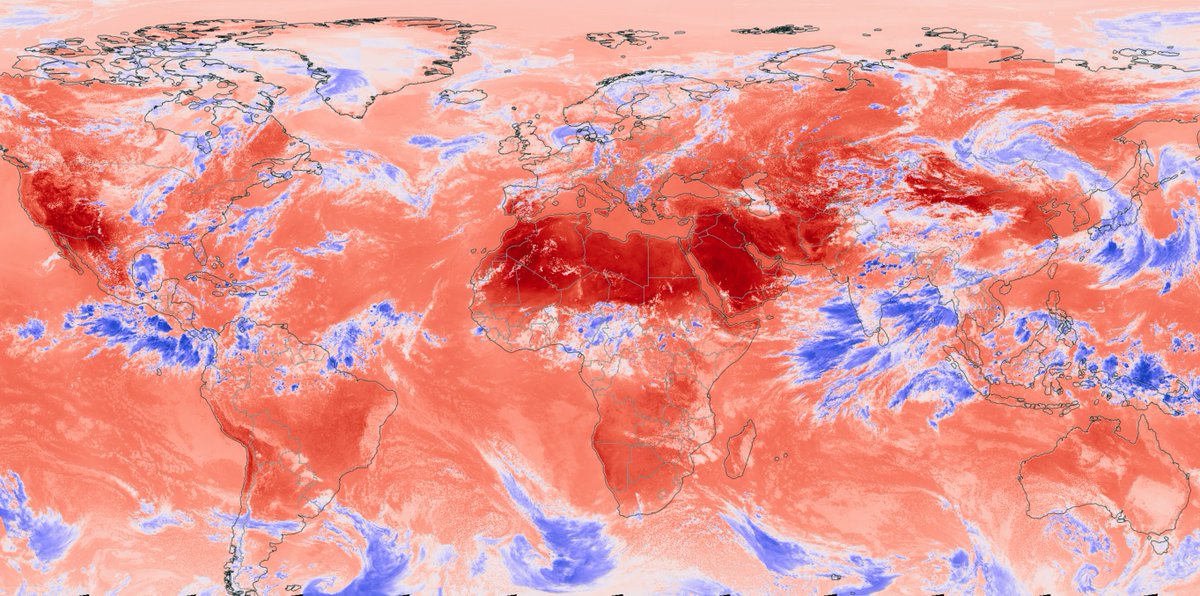
Unofficial records suggest that in recent days the global average temperature was the warmest that has ever been directly measured. What does that mean? 🧵
@Franciscostgon @THEADVICERY@Eugeniadelsur Definitivamente. Eso es lo que se requiere estudiar con más detalle ahora. Tenemos que determinar los umbrales críticos de plantaciones y bosque nativo que permitan asegurar la sustentabilidad hidrológica de las cuencas mediterráneas en el largo plazo
Due to the shortage of water on the Colorado River caused by overallocation, prolonged drought, and climate change, the City of Phoenix has declared a Stage 1 Water Alert and activated its Drought Management Plan.
As the drought intensifies...
@Franciscostgon @THEADVICERY@Eugeniadelsur Muchachos, el bosque mixto con dominancia de nativo regula de mejor forma flujo subsuperficial de agua a escala de cuenca. Las plantaciones por si solas y dependiendo de su ubicación podrían influir de manera distinta en este proceso. En el estudio se discute esto.
It's #StoryMap Monday at #CampLandsat!
Fires, floods, volcanoes, tsunamis—when disaster strikes, knowing the lay of the land is crucial for a prepared response.
Find out how #Landsat helps people deal with disaster:
https://t.co/0B4N97Xcqr
Ever wanted to explore glacial and ice-covered sites without leaving your desk? Check out Virtual Ice Tours of places like Alaska, Greenland, and Peru. #watersciencewednesday
https://t.co/zOt2oLtU5s
Do you know of or are you a woman working in hydrology? We want to celebrate #WomenInHydrology in a Special Issue of the Journal of Hydrology #womenJOH-SI..1/
The Ensemble Meteorological Dataset over N. America (EMDNA) is now available to download for free! https://t.co/JJYMIwfHaI
Read all about it in this paper hot off the press by
@tang_guoqiang@martynpclark@SimonPapalexiou et al.🔗https://t.co/80QxuUyjEJ
@GWF_pubs@ESSD_journal
Modeling atmospheric gravity waves has traditionally been difficult because of the small scale of the waves and the low resolution of most atmospheric models.
Learn more in our May issue, free online: https://t.co/QX2gkhJQUQ
https://t.co/dGgnfgffA1
Join us next Friday at 2pm PDT (UTC-7) for a fun speed #networking event! You will have a chance to meet other #students and #earlycareer people in #hydrology and related #sciences! We will randomly select a participant as a highlight on our #research blog! All are welcome!
Always nervous about saying anything was "the first" because it often turns out that someone has done it before ... but this is the first isotopic palaeoclimate record that I know of from a gypsum speleothem.
New #openaccess data description paper: #WFDE5 - the bias-adjusted #ERA5 reanalysis is described and assessed with #WaterGAP and station observations in https://t.co/6V2SCvpoMI.
A fun animation showing just a few of the ways satellites and models inform us about the complexities of the climate system. Have a great weekend! 🙂
Graphic by @NASAHyperwall: https://t.co/l1kkoG1B2i
The University of Arizona has once again been ranked No. 1 in the U.S. in the area of water resources in the 2020 Academic Ranking of World Universities. "Our impact in this vitally important area will shape our world for generations to come." - @UArizonaPres