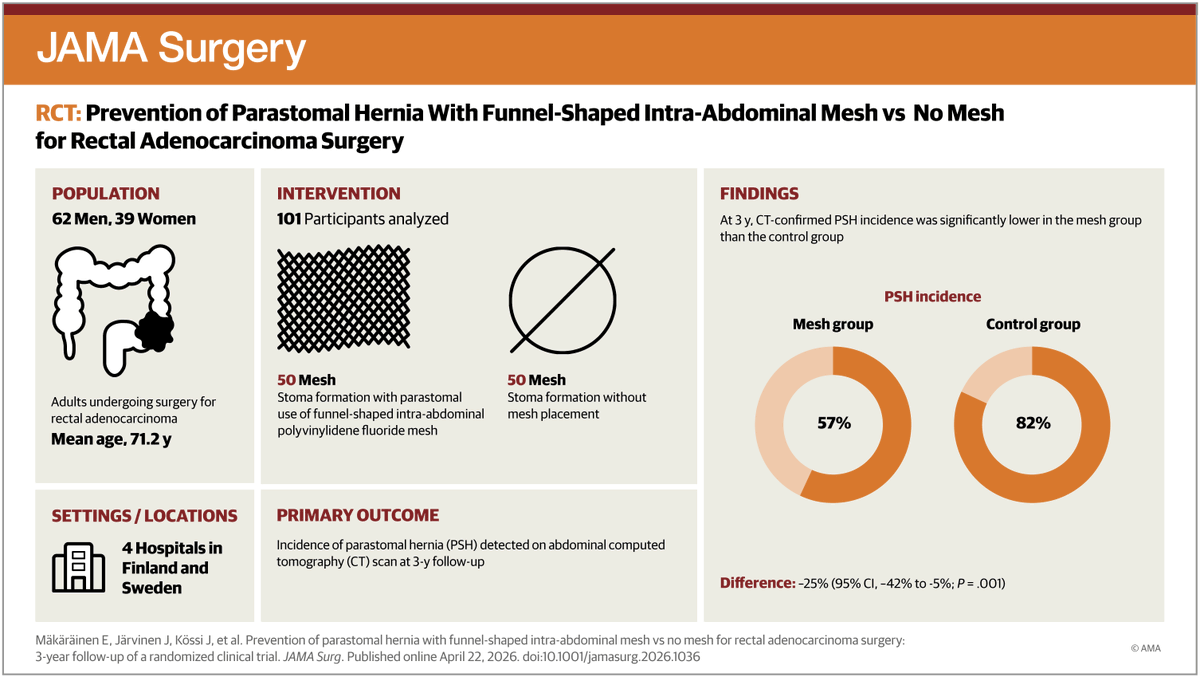
In patients undergoing permanent colostomy for #RectalCancer, use of a funnel-shaped intra-abdominal mesh reduced parastomal hernia incidence and size at 3 years without increased complications compared with no mesh. https://t.co/RQkiWexN0a
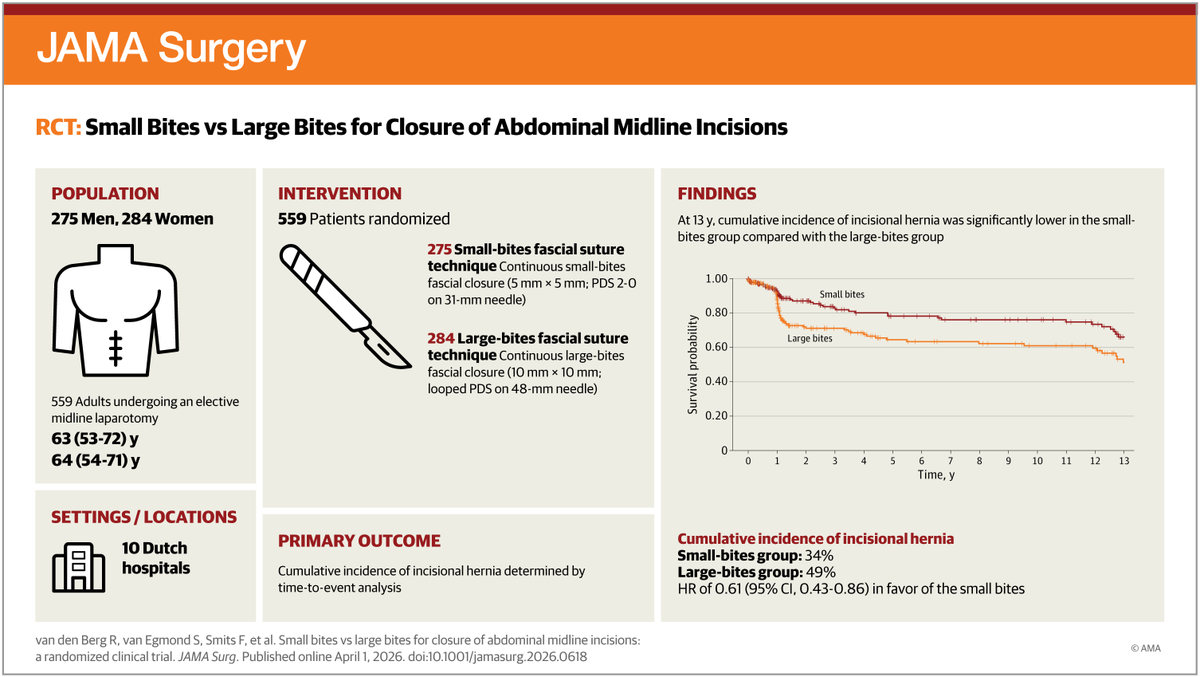
Small-bites fascial closure after elective midline laparotomy reduced long-term risk and size of incisional hernia vs traditional large-bites technique, supporting small bites as standard practice for abdominal closure.
https://t.co/wEifzN6cNH
Exciting Update: TotalSegmentator supports segmentation of liver lesions on both CT and MR images. Free and easy to use. Great team effort by the University Hospital Basel Radiology team.
paper: https://t.co/6d6dcO7cfN
code: https://t.co/BblnCvoKAw
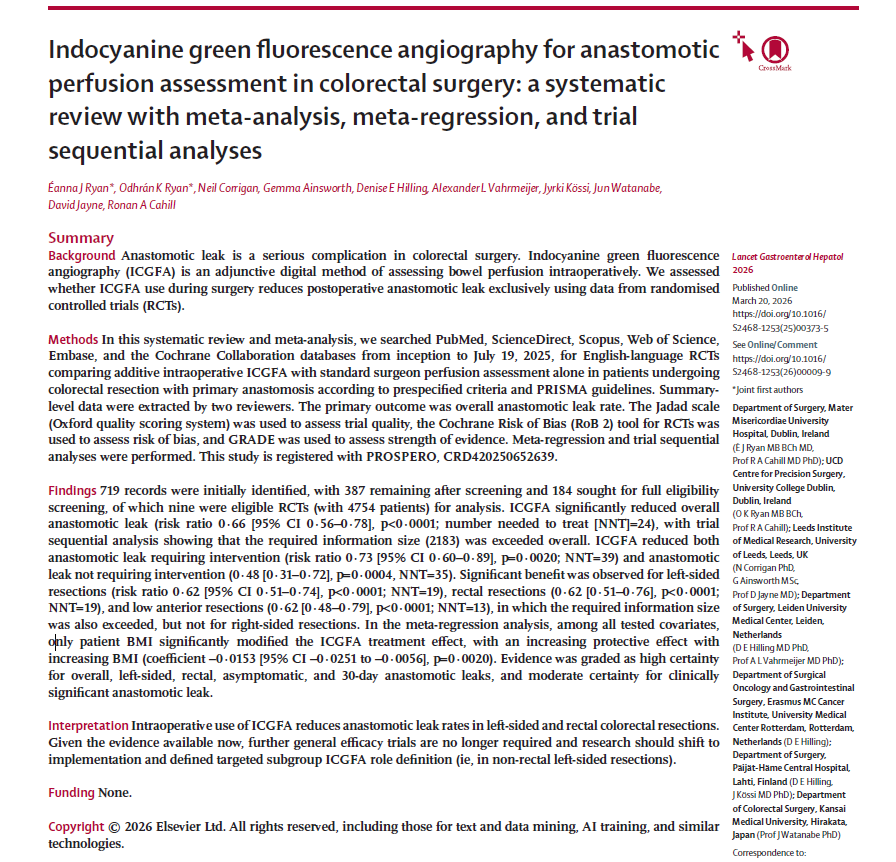
🆕Indocyanine green fluorescence angiography for anastomotic perfusion assessment in colorectal surgery: a systematic review with meta-analysis, meta-regression, and trial sequential analyses
https://t.co/5QaeBVVe3E
#GITwitter#SurgTwitter
Single institution comparison of open, lap, and robotic Hartmann's reversal. Is there a difference in morbidity? Read more in this month's #DCRJournal: https://t.co/P2LeWnlt0u
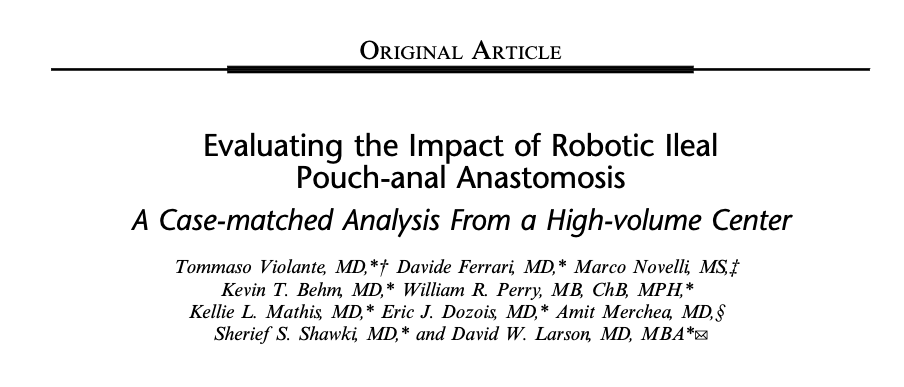
Robotic ileal pouch–anal anastomosis was associated with lower conversion to open surgery, less blood loss, and shorter length of stay than the laparoscopic approach, with similar 30-day outcomes. https://t.co/oSWIHvOm0w
Video Vignette | Laparoscopic TME and Systematic Infrarenal Para-aortic Lymph Node En Bloc Resection After Total Neoadjuvant Therapy for Rectal Cancer: https://t.co/GWiAf2HlhY
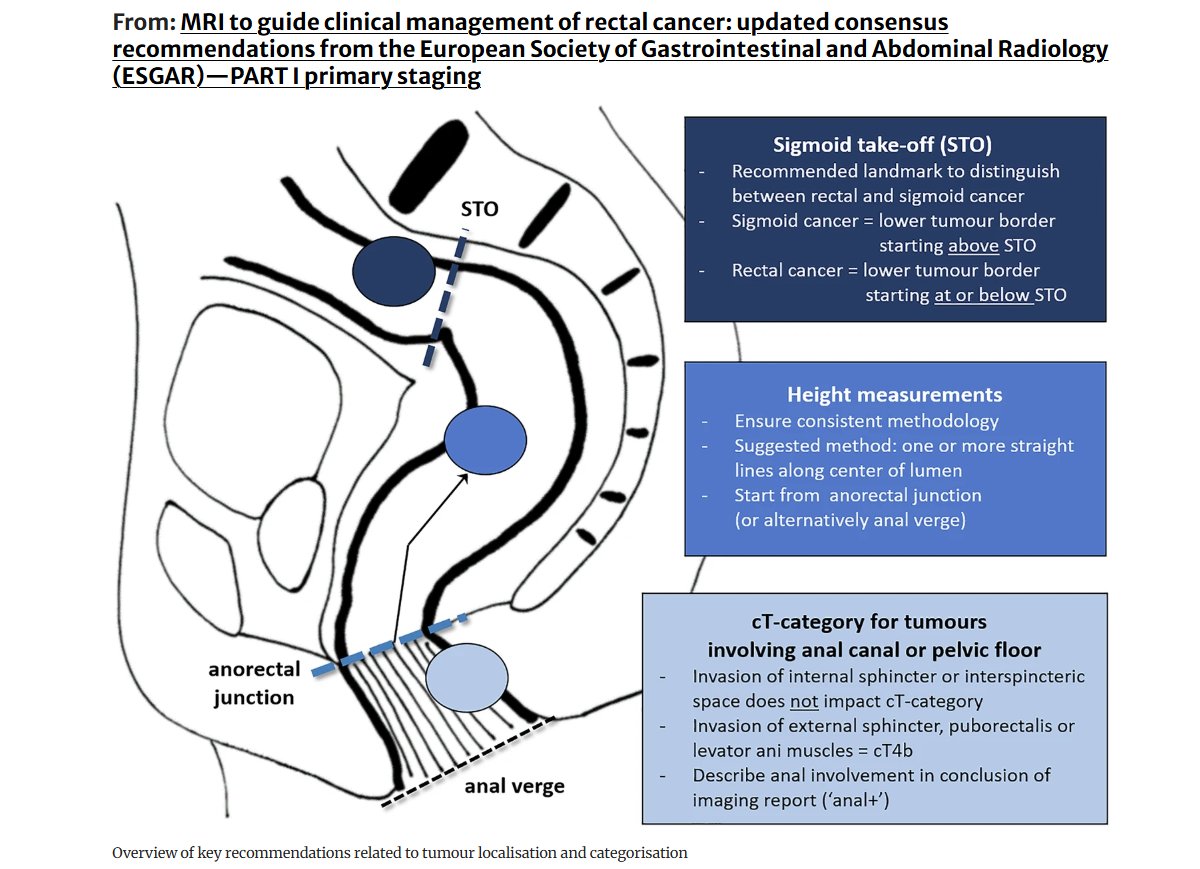
MRI to guide clinical management of rectal cancer: updated consensus recommendations from the European Society of Gastrointestinal and Abdominal Radiology (ESGAR)—PART I primary staging.https://t.co/80DS0kJMkh
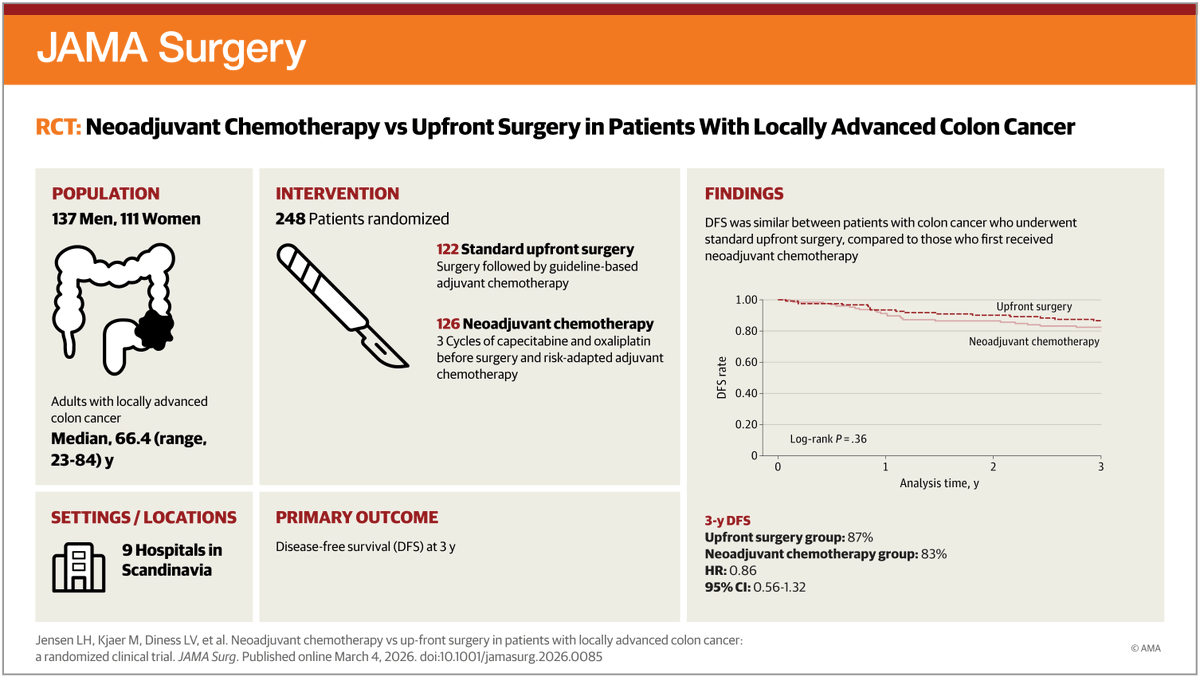
Neoadjuvant chemotherapy did not improve disease-free survival vs upfront surgery in patients with locally advanced #ColonCancer, but reduced need for adjuvant chemotherapy and showed safety and feasibility.
https://t.co/UZokI2JLQN
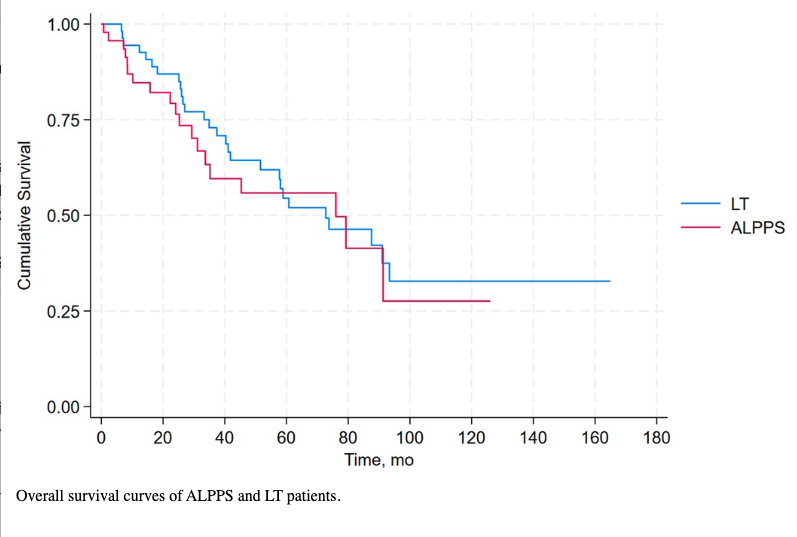
In patients with colorectal liver metastases, liver transplantation did not provide a significant survival benefit compared with ALPPS. The potential advantage appears dependent on adherence to stringent, established transplant selection criteria. https://t.co/Qdg9LcmI8R
Should all patients with HNPCC be treated with total colectomy? Read this month's #DCRJournal to find out about a mutation specific model regarding choice of operation: https://t.co/2jOVwnhKlr
#DCRJournal Didactic Video | Robotic Trans-Peritoneal Transection & Single-Stapled Anastomosis for Low Rectal Cancer and Total Mesorectal Excision: https://t.co/H2a2sUZo1u