Trump say the war is done so thats a reliable thing to bank on. This retouch of 70k could be a bull trap but these are just catchy terms used to personify market forces.
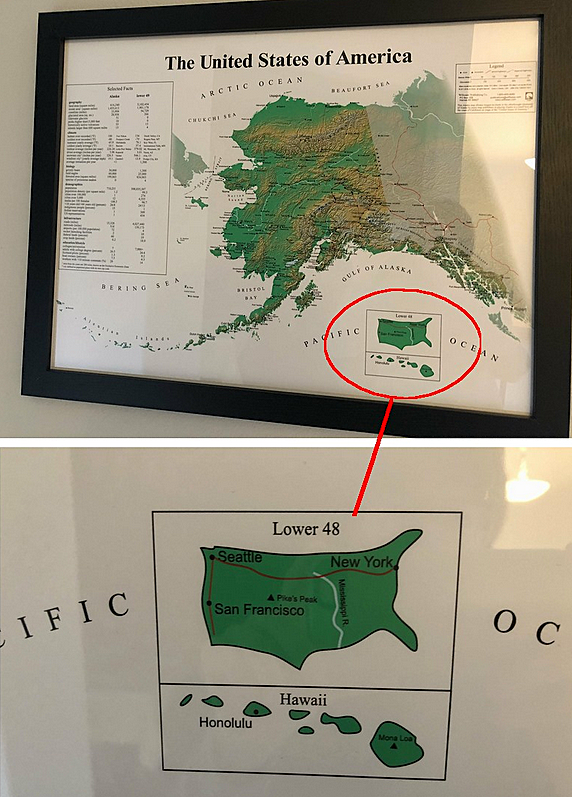
people born in america probably don’t realize how cool america used to be. how many random people around the world built their identity around american signifiers. the death of US soft power is going to have long term consequences we're only beginning to see
I think the labs are betting on AI medical and biotech discoveries to turn the tide on public sentiment in the West. If the models start producing miracle cures and longevity treatments then everything about the discussion will change. This probably starts happening this year.
We need more DAOs - but different and better DAOs.
The original drive to build Ethereum was heavily inspired by decentralized autonomous organizations: systems of code and rules that lived on decentralized networks that could manage resources and direct activity, more efficiently and more robustly than traditional governments and corporations could.
Since then, the concept of DAOs has migrated to essentially referring to a treasury controlled by token holder voting - a design which "works", hence why it got copied so much, but a design which is inefficient, vulnerable to capture, and fails utterly at the goal of mitigating the weaknesses of human politics. As a result, many have become cynical about DAOs.
But we need DAOs.
* We need DAOs to create better oracles. Today, decentralized stablecoins, prediction markets, and other basic building blocks of defi are built on oracle designs that we are not satisfied with. If the oracle is token based, whales can manipulate the answer on a subjective issue and it becomes difficult to counteract them. Fundamentally, a token-based oracle cannot have a cost of attack higher than its market cap, which in turn means it cannot secure assets without extracting rent higher than the discount rate. And if the oracle uses human curation, then it's not very decentralized. The problem here is not greed. The problem is that we have bad oracle designs, we need better ones, and bootstrapping them is not just a technical problem but also a social problem.
* We need DAOs for onchain dispute resolution, a necessary component of many types of more advanced smart contract use cases (eg. insurance). This is the same type of problem as price oracles, but even more subjective, and so even harder to get right.
* We need DAOs to maintain lists. This includes: lists of applications known to be secure or not scams, lists of canonical interfaces, lists of token contract addresses, and much more.
* We need DAOs to get projects off the ground quickly. If you have a group of people, who all want something done and are willing to contribute some funds (perhaps in exchange for benefits), then how do you manage this, especially if the task is too short-duration for legal entities to be worth it?
* We need DAOs to do long-term project maintenance. If the original team of a project disappears, how can a community keep going, and how can new people coming in get the funding they need?
One framework that I use to analyze this is "convex vs concave" from https://t.co/1BrMsUAKWK . If the DAO is solving a concave problem, then it is in an environment where, if faced with two possible courses of action, a compromise is better than a coin flip. Hence, you want systems that maximize robustness by averaging (or rather, medianing) in input from many sources, and protect against capture and financial attacks. If the DAO is solving a convex problem, then you want the ability to make decisive choices and follow through on them. In this case, leaders can be good, and the job of the decentralized process should be to keep the leaders in check.
For all of this to work, we need to solve two problems: privacy, and decision fatigue. Without privacy, governance becomes a social game (see https://t.co/uMXcuzQNjM ). And if people have to make decisions every week, for the first month you see excited participation, but over time willingness to participate, and even to stay informed, declines.
I see modern technology as opening the door to a renaissance here. Specifically:
* ZK (and in some cases MPC/FHE, though these should be used only when ZK along cannot solve the problem) for privacy
* AI to solve decision fatigue
* Consensus-finding communication tools (like https://t.co/Nzord32Ub1, but going further)
AI must be used carefully: we must *not* put full-size deepseek (or worse, GPT 5.2) in charge of a DAO and call it a day. Rather, AI must be put in thoughtfully, as something that scales and enhances human intention and judgement, rather than replacing it. This could be done at DAO level (eg. see how https://t.co/pCHI7Mlo2m works), or at individual level (user-controlled local LLMs that vote on their behalf).
It is important to think about the "DAO stack" as also including the communication layer, hence the need for forums and platforms specially designed for the purpose. A multisig plus well-designed consensus-finding tools can easily beat idealized collusion-resistant quadratic funding plus crypto twitter.
But in all cases, we need new designs. Projects that need new oracles and want to build their own should see that as 50% of their job, not 10%.
Projects working on new governance designs should build with ZK and AI in mind, and they should treat the communication layer as 50% of their job, not 10%.
This is how we can ensure the decentralization and robustness of the Ethereum base layer also applies to the world that gets built on top.
@serenanathan Research tells us meaningful change begins at around 6 months. Neuroscience tells us it takes that long to develop new neural pathways. Ten sessions is first aid, not psychotherapy. Might be okay if they didn’t mislead people about what they’re providing
https://t.co/vPlxRtkhnb
How should Canada navigate a shifting world order? With the U.S. redefining its alliances and Europe rearming, Canada’s foreign policy faces new challenges.
Seva Gunitsky, political science professor at UofT and author, joins @spaikin to break it all down. Watch tonight at 8pm.