A huge explosion caused when a train laden with US bombs caught fire on June 2nd 1944 near Soham, Cambridgeshire, might have been far worse were it not for the actions of rail staff — two of whom were killed. They were later decorated for their bravery.
Britain's railways were crucial in moving US bombs and ammunition from seaports to suitably isolated storage depots around East Anglia.
These included sites at Braybrooke, Sharnbrook, Riseley, Earsham, Bures, and Barnham — some of which had their own rail sidings.
P-51D Mustang 44-13704 'Ferocious Frankie' of the Eighth Air Force's 374th Fighter Squadron, 361st Fighter Group, based at AAF Station 374 Bottisham, ten miles east of Cambridge; July 1944.
Navigator Lt Grant Benson at his station aboard Flying Fortress 42-102504 'Time’s A-Wastin' of the 401st Bomb Squadron, 91st Bomb Group.
After flying 107 missions, flak brought the bomber down just a month before the end of the war in Europe.
'Mary Ruth', a 401st Bomb Squadron B-17 — among five from the 91st Bomb Group at Bassingbourn lost on 22nd June 1943 in an Eighth Air Force raid on Marl, in Germany's industrial Ruhr Valley.
Corporal Joseph Fox of Indiana flashes signals from an improvised control point at Ridgewell (AAF-167), Essex, England — home to the 381st Bomb Group's B-17s.
A B-17 Plexiglass nose sits atop packing crate frames, which in turn are perched on an old British caravan (trailer).
B-24 Liberators of the 458th Bomb Group escorted by three 352nd Fighter Group P-51B Mustangs, and one D-model, for a photoshoot; 1944.
The bombers and their escorts were based in Norfolk — at Horsham St Faith and Bodney respectively.
Overhead camouflage netting casts a mottled appearance to this scene at an Eighth Air Force bomb dump (possibly at AAF-167 Ridgewell in Essex, England, home of the 381st Bomb Group).
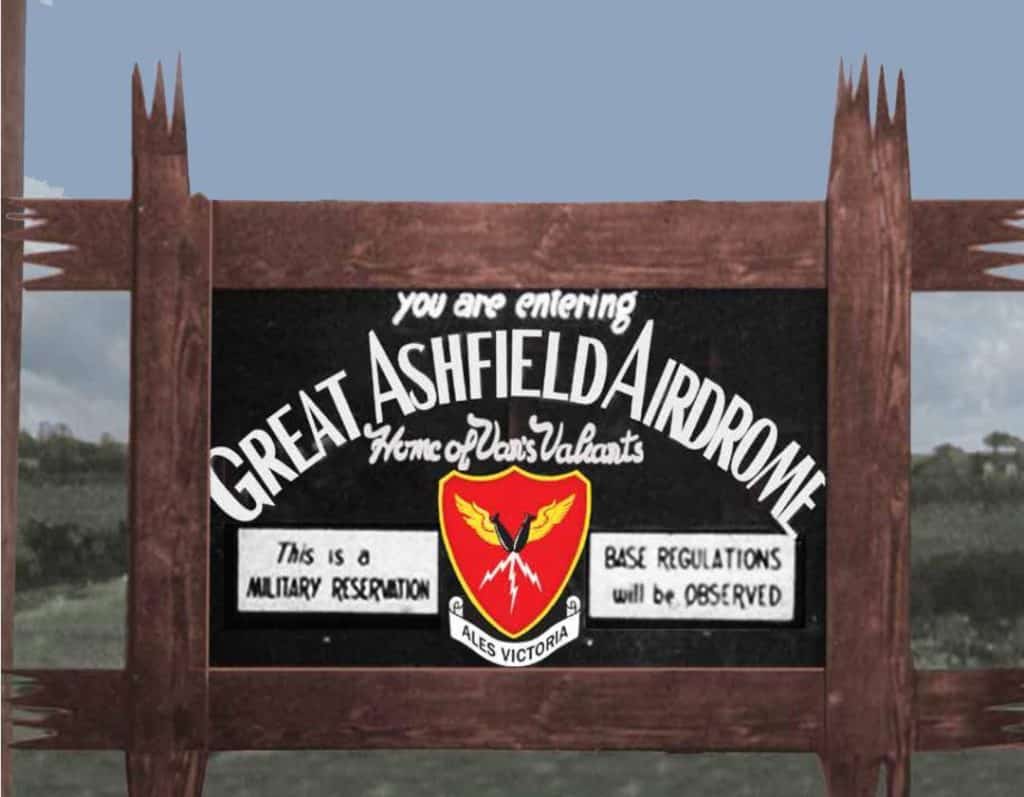
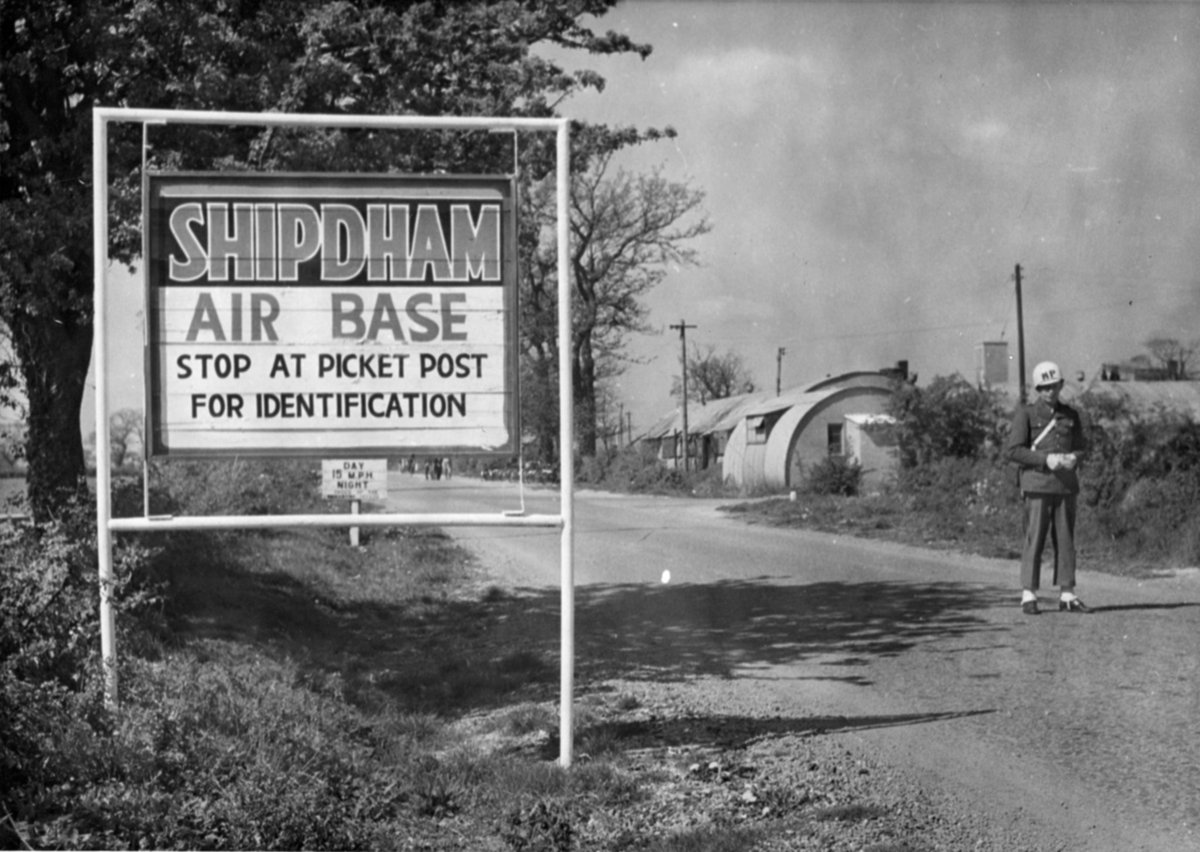
There was no formal type of signage at Eighth Air Force bases, giving graphic designers a chance to shine.
Shipdham (AAF-115) in Norfolk, England, briefly hosted a B-26 unit bound for North Africa before becoming home to B-24 Liberators of the 44th Bomb Group in October 1942.
A German V-1 flying-bomb photographed from a 390th Bomb Group B-17. Date and location unknown.
Based at AAF Station 153 Framlingham (Parham), the 390th BG, 100th BG and 95th BG together formed the 13th Combat Wing of the Eighth Air Force's 3rd Bomb Division.
New B-17Gs await transfer to Eighth AF bomb groups.
Serial no 43-38075, in the foreground, went to the 603rd Bomb Squadron, 398th Bomb Group at Nuthampstead (AAF-131) in Hertfordshire.
Photo possibly taken at 1 Base Air Depot at Burtonwood, Lancashire (AAF-590). Summer 1944.
Capt James Duffy of the 355th Fighter Group at Steeple Morden (AAF-122), Cambridgeshire, with the unit's bulldog mascot on the wing of P-51 44-63764 'Dragon Wagon'.
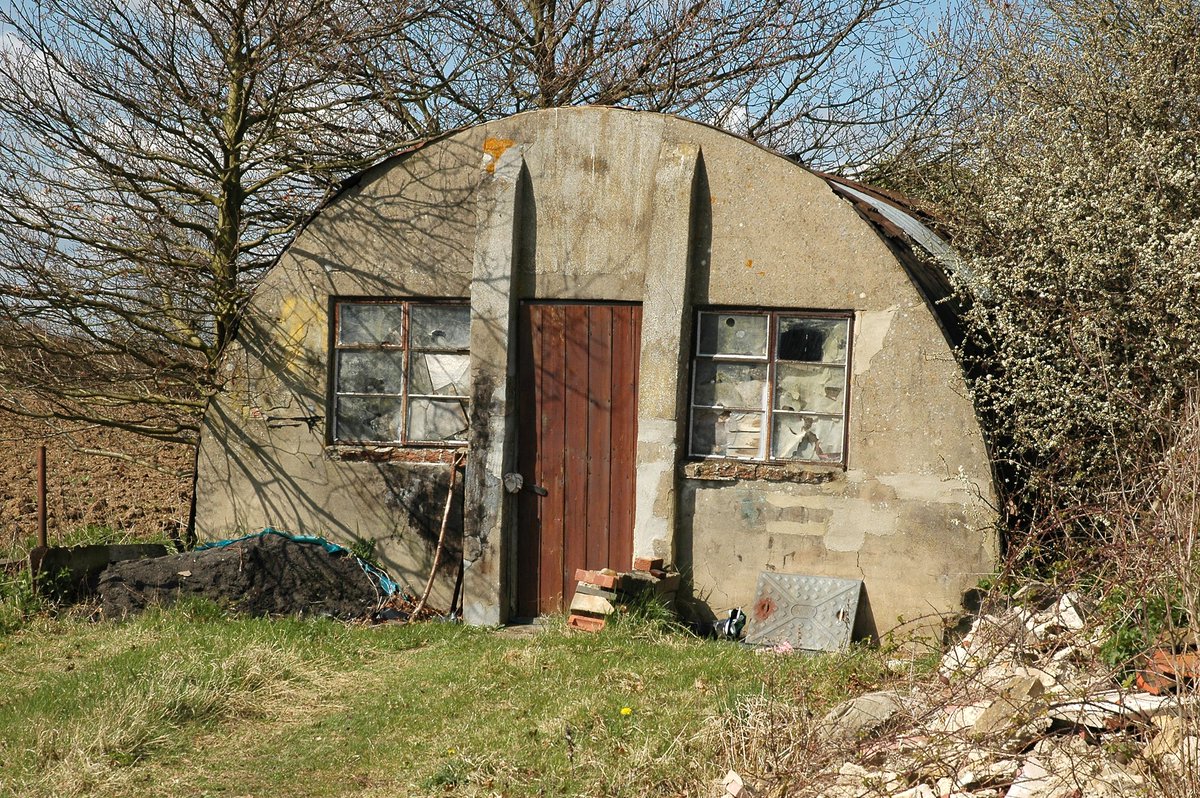
AAF-174 Sudbury's dispersed facilities included the base's main domestic site (inc the gym/cinema) south of the airfield — which survived until around 2010.
Meanwhile the sergeants' mess is still intact and used as part of a car breaker's yard.
2/2
largest raid of the war, involving more than 2,000 aircraft.
Castle's B-17 was attacked by fighters, but he stayed at the controls till the end to allow the rest of the crew to jump clear.
The general was posthumously awarded the Medal of Honor for his actions.
Another of the 4th Combat Wing's bomb groups – the 487th BG – flew from Lavenham airfield (AAF-137) near the famed medieval village of the same name.
On Christmas Eve 1944, 4th CW commander Brig Gen Frederick Castle took off from Lavenham to lead the Eighth Air Force's...
1/2