I envy the people who has a way with words and here i am in constant rut to imitate their effortlessness to say things in a way that connects, I am against the wall here.
A lonely goodbye to Madhav Gadgil, one of the tallest environmentalists of our times.
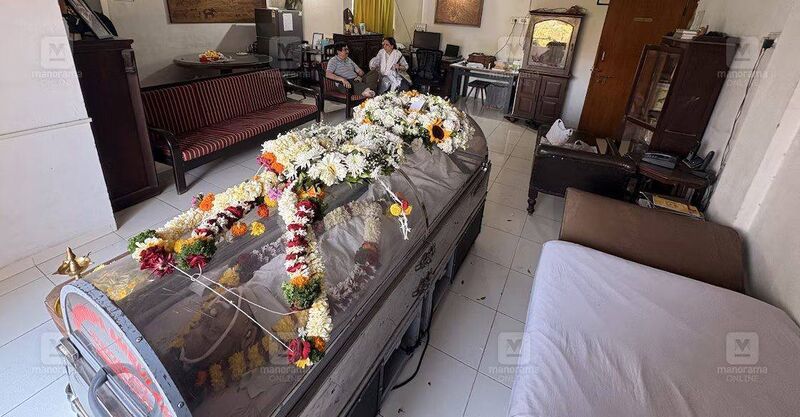
Under the banyan trees of Navi Peth in Pune, Madhav Gadgil was taken for cremation last evening. The gathering was small, some forty, perhaps fifty people.
No ministers. No senior officials. No tricolour to drape the body. No guard of honour salutes. No ceremonial rifle volleys.
One expects a crowd, the usual press cameras and public mourning. Instead, there was a pause, a quiet uncertainty, as if this farewell were happening somewhere it wasn’t meant to.
State honours had been promised, but never quite arrived. Even the police escort lost its way. For nearly half an hour, Gadgil’s body lay waiting, wrapped in simple white, while the city carried on around it, indifferent.
For me, this was not the death of a distant public figure.
In the 1990s, when I was starting out as a science correspondent with the Press Trust of India in Bengaluru, Madhav Gadgil was already a towering presence at the Indian Institute of Science (IISc). At the IISc's Centre for Ecological Sciences, he stood out, not by volume or self-importance, but by intellectual rigour and moral clarity.
I walked into his office many a time in those years, notebooks open, deadlines close. He listened carefully, answered precisely, never spoke down. He believed knowledge carried responsibility, and that science without ethics was incomplete. Those conversations stayed with me, shaping how I understood both journalism and ecology.
This was also the man who later led the Western Ghats Ecology Expert Panel, producing a report that treated the mountains not as real estate or mineral stock, but as living systems. The Gadgil Committee Report spoke of ecological limits, decentralised governance, community rights, and long-term survival.
A Padma Bhushan awardee. A UN Champion of the Earth. A lifelong defender of forests, rivers, biodiversity, and uncomfortable truths. In death, he was treated as someone easily forgotten.
The trees were not.
The old banyans stood quietly, their leaves stirring in the afternoon air. Gadgil had given his life to them. Trees remember. Animals remember. They show up when people don’t.
Had this been a politician or an industrialist, roads in Pune would have been sealed, helicopters circling, television studios filled with tributes and theatrical grief. Power is never allowed to pass quietly.
But a man who tried to protect the land that sustains us all was sent off almost unnoticed.
The trees stood witness.
The rest of us moved on.
Goodbye, Madhav Gadgil.
Forgive us.
We did not know how to honour you.
(Photo Courtesy: R S Gopan)
#ZubeenGarg This morning Delhi woke up to Zubeen Garg via my article in the @IndianExpress . The phone is ringing off the hook. My immediate social and family network are mostly Delhiites. They had no awareness i am Assamese. So glad I wrote this piece. Zubeen is beyond an icon. Like my Dada says, he was a Gandharva, who came among us mortals for some time.
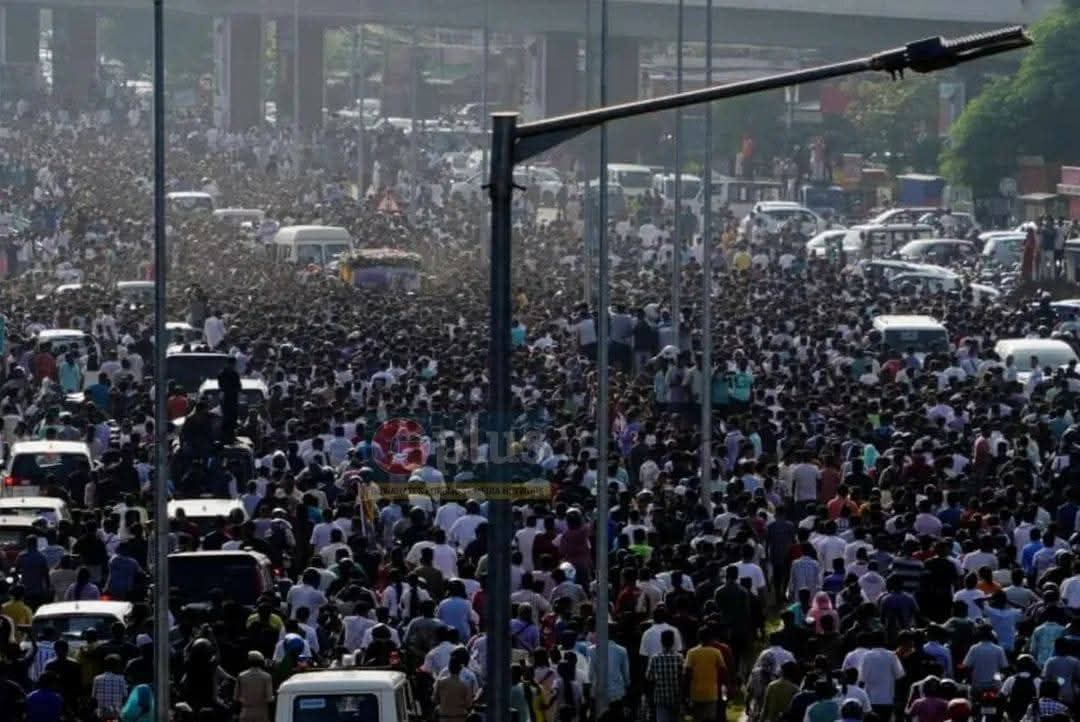
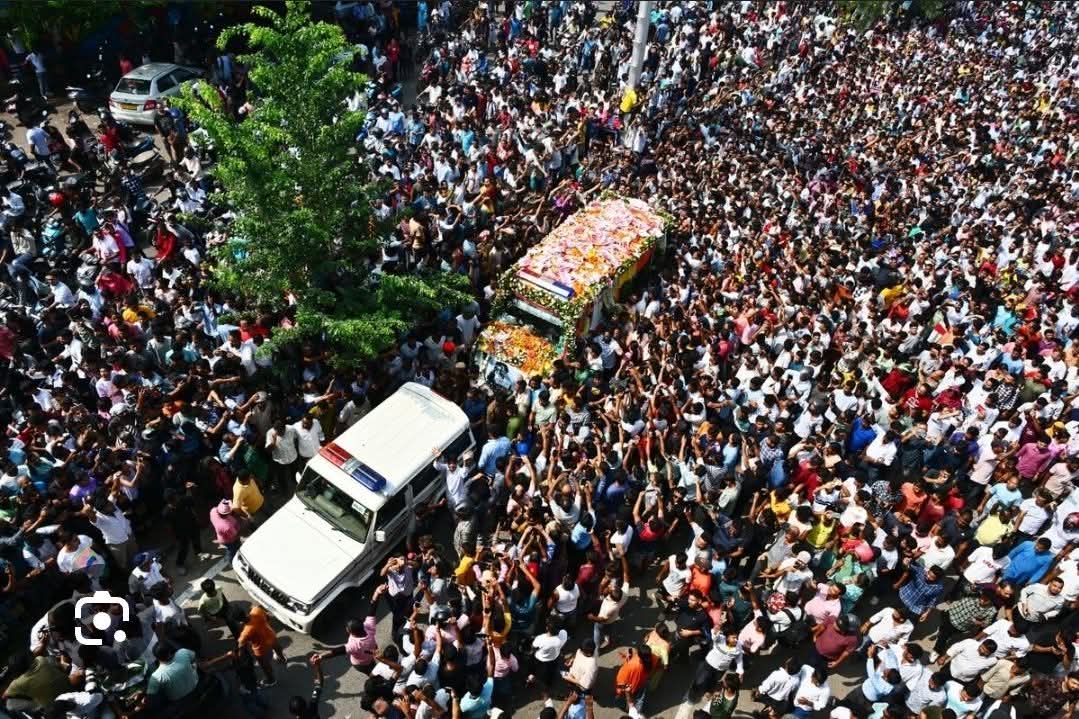
In Guwahati today , amidst the grief of #ZubeenGarg passing away. His legendary status clearly unmatched. The whole state is in mourning.
I went to one of the few shops open to buy a pen and the shop keeper wouldn’t take money. He said that he had kept his shop open in memory of Zubeen and would charge nothing all day.
My driver while talking about him started weeping.
This kind of love is rarely seen in big cities.
It was interesting to see my parents’ generation (Bhupen Hazarika/Jayanta Hazarika/Dipali Borthakur gen) come to terms with Zubeen. They did so hesitantly, begrudgingly & only privately. Zubeen distorted their image of a tame, “cultured” artist. But they couldn’t ignore him.
#Protests & #Movements are inevitable and often necessary in a #democratic polity. However, they can not substitute for the role of #public#institutions...and so I argue in this article.
Artilce link: https://t.co/ixHJ8SiGBb
Take some time to watch our film, where @kri_tikka brewed magic into our travel across 200 km in bengal & Sikkim. What is it like to live in the shadow of glacial lakes and hydropower projects? Especially, when the two are a bad combo.
@pulitzercenter
https://t.co/B8457oS8Sa