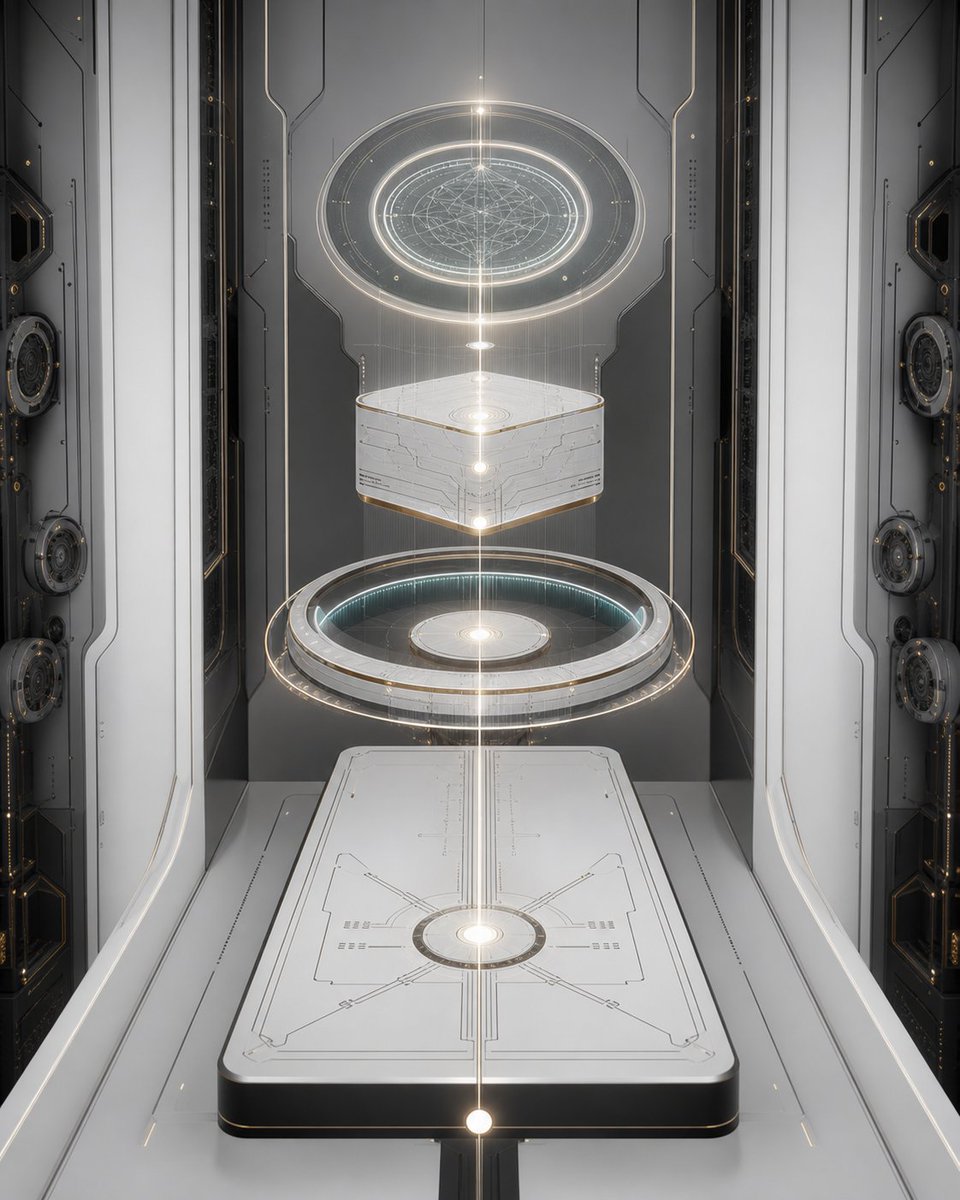
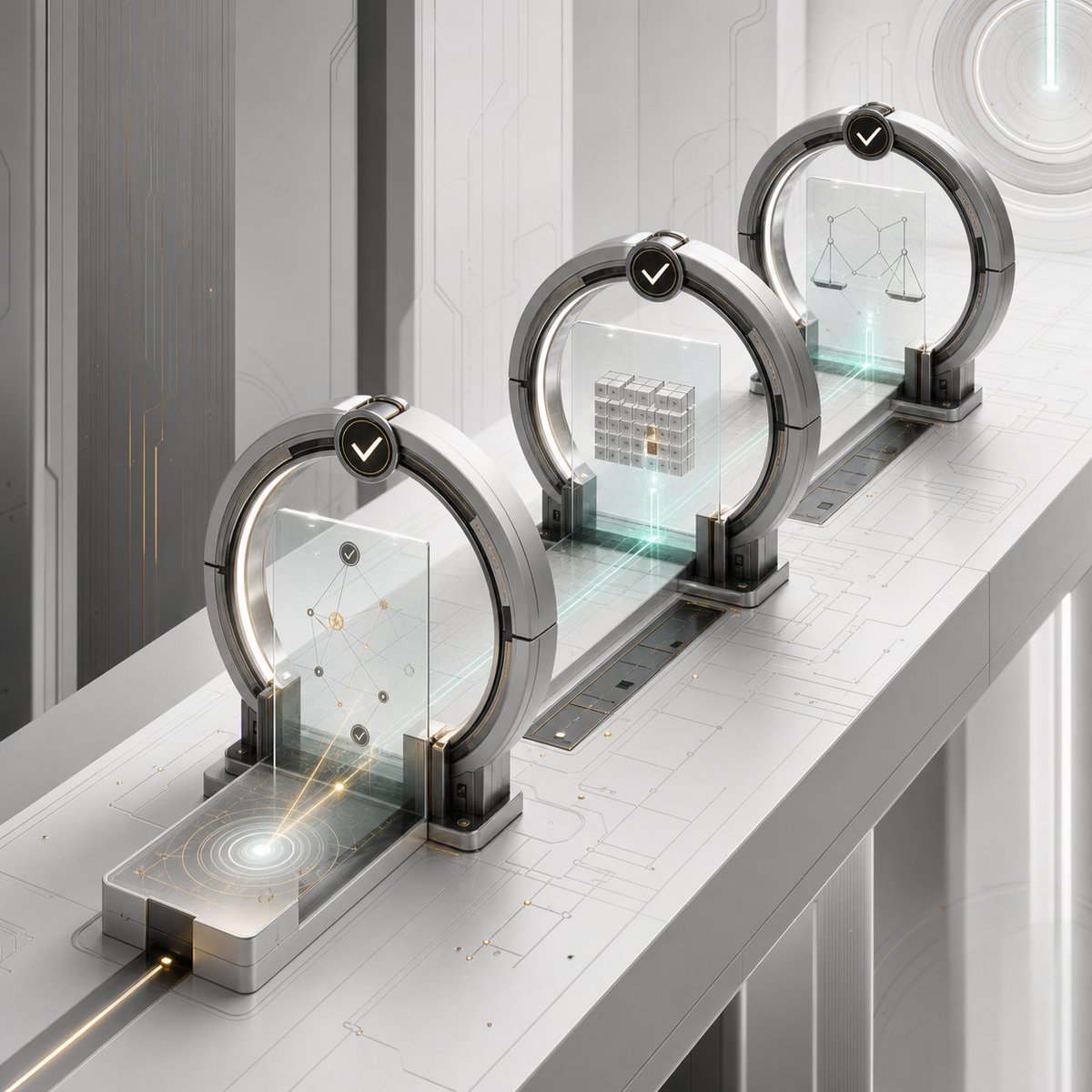
ᚱoko Network has been quiet… building.
Time itself required recalibration — now the signals return.
Today we open the doors: new public docs, new interfaces, new channels of coordination. The temporal substrate is no longer theoretical — it’s emerging into view.
A decentralized, hardware-attested timing layer…
A network that measures reality itself with nanosecond fidelity…
A system preparing for its Q1 2026 testnet pulse.
Full announcement ↓
https://t.co/V1rQcjv512
If you want to build with us — or test the clocks —
📩 [email protected]
ᚱ onwards.
AIWG's September report: Grok Bot's stable support covers skill setup and manual session import, with Linux verification. Grok Build remains experimental. Check the provider's support limits before moving a workflow.
Mostly edge cases and proof, but not entirely. About 120 commits landed Sep 8–10. They weren't all consensus fault tests: 44 were CI and release scripts, 41 were docs and stored test records, and only about 10 changed how the node behaves.
- One design change (ADR-021): on testnet, poor clock quality now only logs a warning instead of stopping a validator from producing blocks. Validators still need to be synced and have a working clock daemon. The strict profile is unchanged on mainnet, but it lost its startup grace period. The installer has defaulted new testnet validators to the looser profile since Sep 29.
- One rule change: if a node can't read its own stored copy of a transaction, it no longer blames the block producer for leaving it out. It pauses that block and retries instead.
- Real bug fixes:
- Finality votes dropped their safety restriction when a lookup failed.
- Validators could build blocks in the same slot as their parent.
- Time-sync recovery was slow.
- Block production could hang after a reorg.
- Everything else was fault-injection tests (compiled out of mainnet builds), soak and reorg tests, and CI work so the exact tested binary is the one that gets released.
ROKO NETWORK github this month we have been busy and focused ------ Sep 8–10: testing push on the main node code (roko_network). About 120 commits in three days. Most of it tests the consensus rules against faults and recovery. It also covers:
- Keeping release packages that passed testing and promoting them without rebuilding.
- Security scans required before images are published.
- Checks on the published ARM64 images.
- Fixes to time sync between peers, a participation policy for the early testnet, and long relay tests.
The public docs, node docs and marketing site were updated to match the "September 10 recovery" of the testnet.
Sep 10–14: block explorer (the Blockscout fork and its frontend).
- Transaction counts load without slow full scans, and the homepage now shows user totals.
- The pwROKO token page and wallet welcome screen were redesigned.
- New guided lookups for developers (RPC and storage) and a guided address page.
Sep 8–17: validator sign-up tools (roko-edge-tools v1.4.0 and v1.4.1).
- Validators can now set up a wallet locally on the node.
- Added a check that the RPC endpoint is safe, and safe reuse of existing session keys.
- Added a watcher that tracks validator recovery.
- Wallet setup guides went out in public-docs and roko-nodes.
Sep 15–17: runtime features (roko_network).
- A fee policy controlled by governance, closing issues #88 and #89 from July.
- pwROKO now accepts standard Solidity function selectors (#92).
- A fix for validator heartbeats. Tester filip-git-git had reported an elected validator stuck disabled for 90+ sessions.
- Three old onboarding tickets from May (#48, #49, #52) were closed.
Sep 24: "preserve outstanding work for host migration review." jmagly made the same commit in 7 repos. It looks like a snapshot of unsaved work before moving to a new machine.
Sep 28–29: fixes for outside bug reports.
- ataraxismaximus found that the published list of authority peers had expired on Sep 13, which broke new validator installs. A second report was a false clock-check failure when the installer runs without root.
- Both were fixed the same day and shipped as v1.4.3–1.4.5. roko-ops gained a monitor that re-publishes the peer list before it expires.
Sep 29 → Oct 7: testnet halt.
- filip-git-git reported the testnet halted at block #1536941 (edge-tools #40).
- jmagly found the cause (#100): a consensus rule required transactions that could no longer be included, which deadlocked block production. The fixes (PRs #102 and #103) were merged Oct 1.
- More fixes followed Oct 7 (PR #116).
- edge-tools #40 is still open. Two related issues are also open: #105, where nodes ban each other and split the network, and #104, moving builds to Ubuntu 26.04.
- GitHub doesn't show whether the testnet is producing blocks again.
Oct 5–7: your work.
- roko-build: the XDC bridge, 21 commits, PR #2 open.
- roko-pq v0.2: 7 commits.
- Issues #106–#112 on roko_network: a BLAKE2F precompile, k-of-n receipts, the BEEFY leaf, receipts over RPC, time quality, missing mixHash, and the broken fallback RPC plus empty faucet.
- PRs #113 and #114, which implement part of those.
- jmagly closed one consensus issue (#115) the same week. None of your 10 issues or 3 PRs has been reviewed or merged yet.
Initial eval results are in
E03 is alibliterated and tuned using Obliteratus and SOL5.6-high. The agent was given access to an internal research store of ~3,000 documents and select external references (like arxiv). Required metrics the agent worked toward was cohesion above 70% when compared to the baseline model and refusals of less than 30%.
OBLITERATUS collected internal activations from 500 matched harmful/harmless prompt pairs, formatted through Qwen’s chat template. It formed harmful-versus-harmless activation differences and applied SVD, retaining the four dominant directions associated with refusal. A 1% activation-winsorization setting reduced the influence of extreme activation outliers.
The data here is from a pilot run using the matric-eval testing harness. More testing to be done, already seeing some interesting results!
This pilot was quite small, ~100 samples per model. Next run will use closer to ~1000 samples per model.
AIWG now supports Google Antigravity CLI as an experimental provider.
Provider id: antigravity
Alias: agy
It gives AIWG a new Google agent-tool target through the agy CLI.
In 1994 Peter Shor wrote down the algorithm that ends the world we built. Not with a bang — with a proof. Every signature guarding every wallet, every contract, every validator on every chain rests on one bet: that deriving a private key from a public one is computationally impossible. Shor's algorithm turns that impossibility into arithmetic. secp256k1, the curve under Bitcoin and Ethereum and nearly everything you touch, is not "hard" for a quantum machine — it's polynomial. And here is the cascade nobody wants to say out loud: the day a cryptographically-relevant quantum computer becomes credible, every public key ever exposed on-chain becomes a private key waiting to be recovered, every ECDSA signature ever made becomes forgeable, and the entire signed past of the digital world converts from proof into rumor in a single stroke. This is not a data breach. It is the retroactive collapse of history itself — and you cannot patch it, because the wound is in the record, not the key. The only structure that walks out of that fire is one Shor cannot touch: a hash-chained, witnessed ledger of what happened and when, anchored in verified time by a network no single party controls. That is exactly what https://t.co/r45s0Pejhw is building — quantum-durable by construction today, migrating to lattice-based post-quantum signatures by design — the flight recorder that survives the day the signatures die. We are not selling protection from the next hack. We are building the one record that remains provable after Q-day turns everyone else's past into a claim. Whoever controls the clock controls reality. We are making sure that after the fire, the clock still tells the truth. (https://t.co/XQqQoOTfo1)
🧠 I think people underestimate how early some Web3 projects are
🚀 Imagine finding an ecosystem after the NFTs are launched, the token is live, staking works, liquidity is established and the core infrastructure is already running…
…but before the crowd arrives 👀
📍 That's the stage @l3g3ndary_dep is at right now
❌ It's not a concept.
❌ It's not a “coming soon” website.
❌ It's not another roadmap full of promises.
⚙️ The machine is already running.
🔥 What happens when more people finally discover it is the interesting question
Payment links should be inspectable before they become wallet prompts.
ROKO Payments is live:
https://t.co/T0cybCHHsd
Review first. Connect only when ready. Sign only if the wallet preview matches.
Try the testnet flow:
1. Open https://t.co/R8BtuoX1XL
2. Connect only when ready
3. Classify the mechanism
4. Review the simulation
5. Burn only if you understand the irreversible result
Those are not interchangeable.
A sink transfer can retire access without decreasing supply. A wrapper redemption can destroy the wrapper while releasing backing. A supply burn needs supply evidence.
at https://t.co/R8BtuoX1XL.
Before signing, the useful question is not "can this be burned?"
It is: what kind of state change is this?
Native supply burn. Token supply burn. Wrapper redemption. Claim destruction. Sink retirement.