Stop Funding the Silence.
There are countless organizations out there claiming to “support law enforcement mental health” or “prevent police suicide.” They raise money, get grants, build brands, and pay salaries — but when it comes time to tell the truth about whycops are breaking… they go quiet.
The uncomfortable truth is this:
A huge driver of the mental health crisis in law enforcement is toxic command staff, broken leadership, retaliation, and internal abuse.
And yet many nonprofits refuse to say it.
Instead, they hide behind statements like “there’s no data proving that” or “we can’t make claims without studies.” That’s not science — that’s avoidance. It’s a convenient way to protect agencies, protect funding streams, and protect relationships while officers keep suffering.
Here’s what they won’t acknowledge:
You don’t need a peer-reviewed paper to know what’s killing cops.
You need to listen to the survivors.
The widows.
The children.
The partners.
The coworkers.
The officers who survived suicide attempts.
Ask them what happened before the badge broke.
You’ll hear the same words over and over:
Retaliation.
Internal investigations.
Targeting.
Humiliation.
Career destruction.
Isolation.
Being abandoned by leadership.
That isn’t random.
That isn’t “just the job.”
That’s organizational trauma.
If a nonprofit claims to prevent law enforcement suicide but refuses to name leadership abuse, hostile command climates, and department retaliation as core causes — they are not solving the problem. They are managing optics.
And if an organization:
• Takes in large donations
• Pays executive salaries
• Receives government grants
• Builds fancy websites and awareness campaigns
…but can’t show meaningful cultural change inside departments… you should ask why.
Because awareness without accountability is useless.
Training without truth is theater.
And fundraising without courage is exploitation.
Support organizations that tell the whole story — even when it makes chiefs, sheriffs, and administrators uncomfortable.
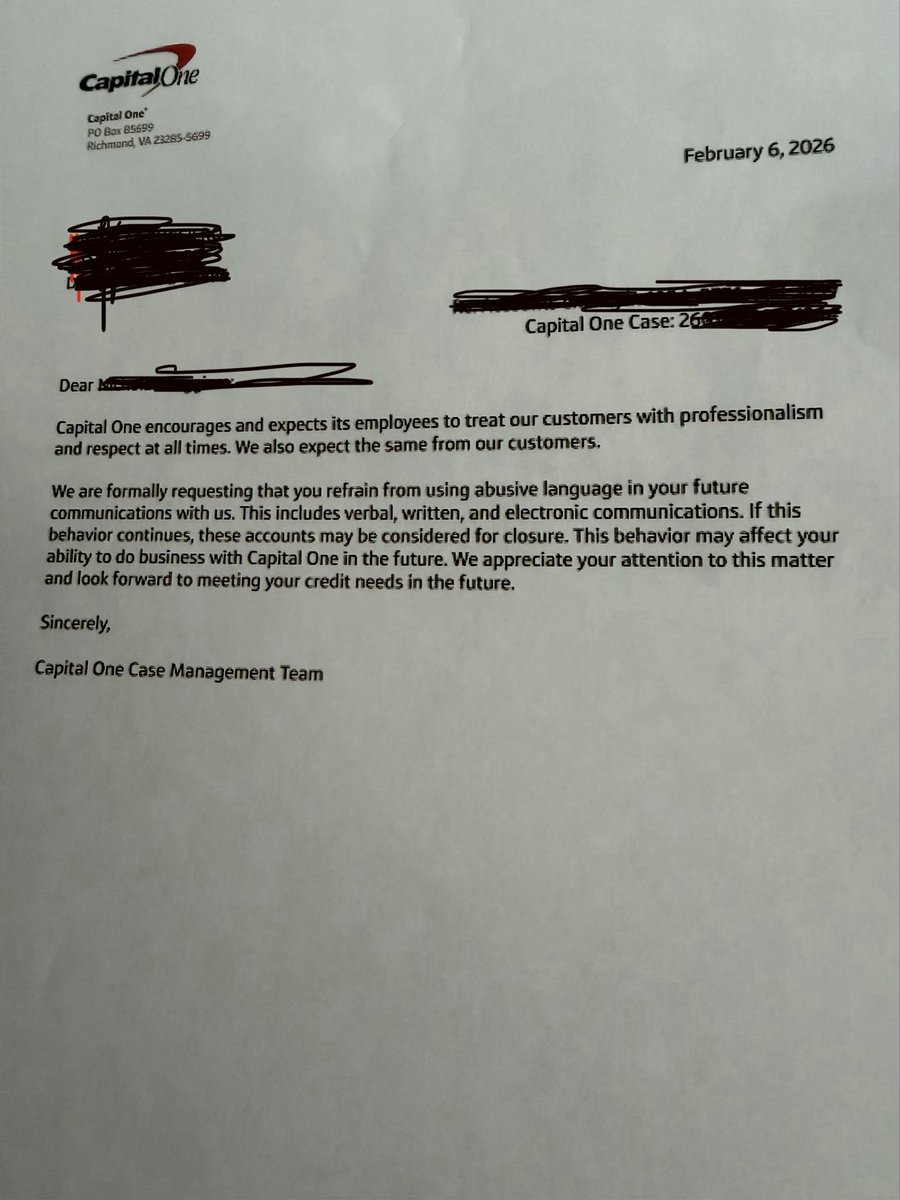
Only @CapitalOne would overnight a letter telling you to not curse at their terrible customer service reps in Thailand instead of fixing their terrible customer service. Immediately opened a bank account at another bank and pulled all my money out. DON’T use Capital One, they don’t care about customers.
Stop Funding the Silence.
There are countless organizations out there claiming to “support law enforcement mental health” or “prevent police suicide.” They raise money, get grants, build brands, and pay salaries — but when it comes time to tell the truth about whycops are breaking… they go quiet.
The uncomfortable truth is this:
A huge driver of the mental health crisis in law enforcement is toxic command staff, broken leadership, retaliation, and internal abuse.
And yet many nonprofits refuse to say it.
Instead, they hide behind statements like “there’s no data proving that” or “we can’t make claims without studies.” That’s not science — that’s avoidance. It’s a convenient way to protect agencies, protect funding streams, and protect relationships while officers keep suffering.
Here’s what they won’t acknowledge:
You don’t need a peer-reviewed paper to know what’s killing cops.
You need to listen to the survivors.
The widows.
The children.
The partners.
The coworkers.
The officers who survived suicide attempts.
Ask them what happened before the badge broke.
You’ll hear the same words over and over:
Retaliation.
Internal investigations.
Targeting.
Humiliation.
Career destruction.
Isolation.
Being abandoned by leadership.
That isn’t random.
That isn’t “just the job.”
That’s organizational trauma.
If a nonprofit claims to prevent law enforcement suicide but refuses to name leadership abuse, hostile command climates, and department retaliation as core causes — they are not solving the problem. They are managing optics.
And if an organization:
• Takes in large donations
• Pays executive salaries
• Receives government grants
• Builds fancy websites and awareness campaigns
…but can���t show meaningful cultural change inside departments… you should ask why.
Because awareness without accountability is useless.
Training without truth is theater.
And fundraising without courage is exploitation.
Support organizations that tell the whole story — even when it makes chiefs, sheriffs, and administrators uncomfortable.