This is the personal account of David Rollins and is not connected in any way to a professional designation or vocation. RTs do not imply endorsement. Go Duke!
California is set to become the first U.S. state to ban single-use (disposable) vapes.
🔗 https://t.co/HR85KnC15L
The legislation aims to curb toxic e-waste, microplastics, and dangerous lithium-ion battery trash fires. The bill now heads to the Governor's desk for signature
Introducing Starbase, Louisiana – a high-cadence launch site that will enable Starship to open a pathway to the stars for humanity.
Thank you to @LAGovJeffLandry and the great people of Louisiana for all of their support as we work together on this audacious project → https://t.co/zGKVOGSxfW
There are other options, and none are pleasant. Tactical default, e.g., sell off assets and haircut the debt holders (we bankers call this a cram down). Then there a few other options, including Greenland, until the worst — war.
Yesterday, when the Treasury announced buybacks, and the bond market rallied…I got sick to my stomach. It’s rearranging the chairs on the decks of the Titanic. The real problem - Deficits (all over the world). Governments have lost their minds. No amount of financial engineering will fix this. The only thing that will fix it is to stop spending. If governments actually raise taxes to levels needed to fund their current drunken largesse, they will kill all growth and make problems even worse. The other problem with all this spending, is that we are borrowing from savers and giving it to consumers. We are eating our seed corn. In addition to all this, we are not hearing about the losses in pension funds, insurance companies, banks, and central banks in Europe or Japan or the US. They are huge. Pension funds bought debt at negative interest rates and now face huge losses. To repeat: The only way to fix this is to stop spending. Or, somehow miraculously to lift growth rates. But, governments are larger as a share of GDP and this has reduced growth rates. Keynesianism works in the reverse way people are taught in school. It’s crushes growth in the long-term even though it feels good in the short-term. The US’s $40 trillion in debt is a long-term problem…issuing 3-month T-bills doesn’t make it a short-term problem. Buying back long-term bonds doesn’t make it a short-term problem. Governments have to start facing reality and stop pursuing short-term, feel-good, nonsense solutions. Again: Cut the size of government…it’s the only real solution.
108F. Seek shelter at your local pub (the Patio Lounge, Jefferson at Drusilla in #batonrouge, aka The Divorcee Getaway). In my defense my wife is out of town and the market closed two minutes ago.
St. George worked to create its own city.
So why doesn’t it have the authority to create its own school system?
Amendment 2 fixes that.
Decisions closer to families. More accountability.
Vote YES on Amendment 2.
Learn more: https://t.co/HcskJZAgOM
#lalege#lagov
During the recent kerfuffle over whether people should be socially shamed for wearing pajamas at Costco, someone on here suggested that I was supporting the decline of social standards because I think it's perfectly fine to wear whatever you want to a giant warehouse that sells $1.50 hot dogs.
The idea that dress was better in the past is treated as such an obvious truth that few people question it, even those who share my preference for contemporary life. But I would pose another view: although the emergence of fast fashion is certainly bad, and there's a terrible environmental cost from the waste now caused by the fashion industry, dress is better today than in the past.
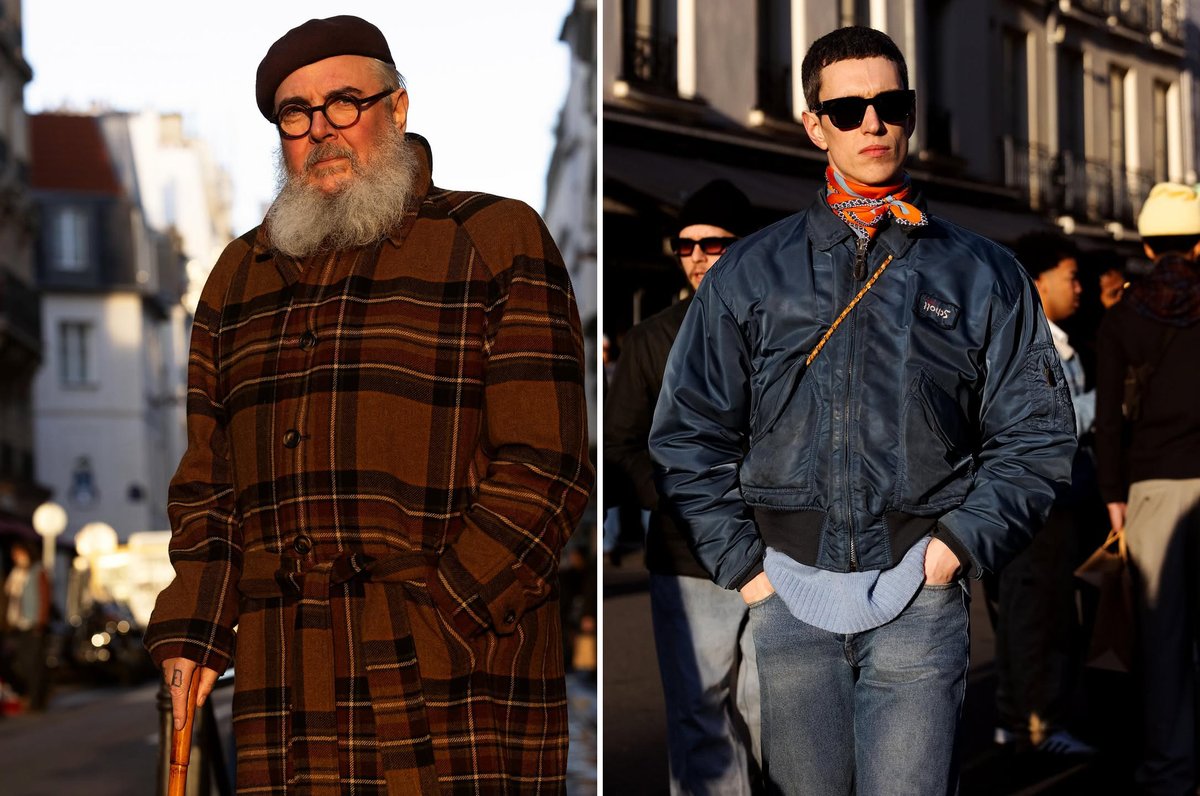
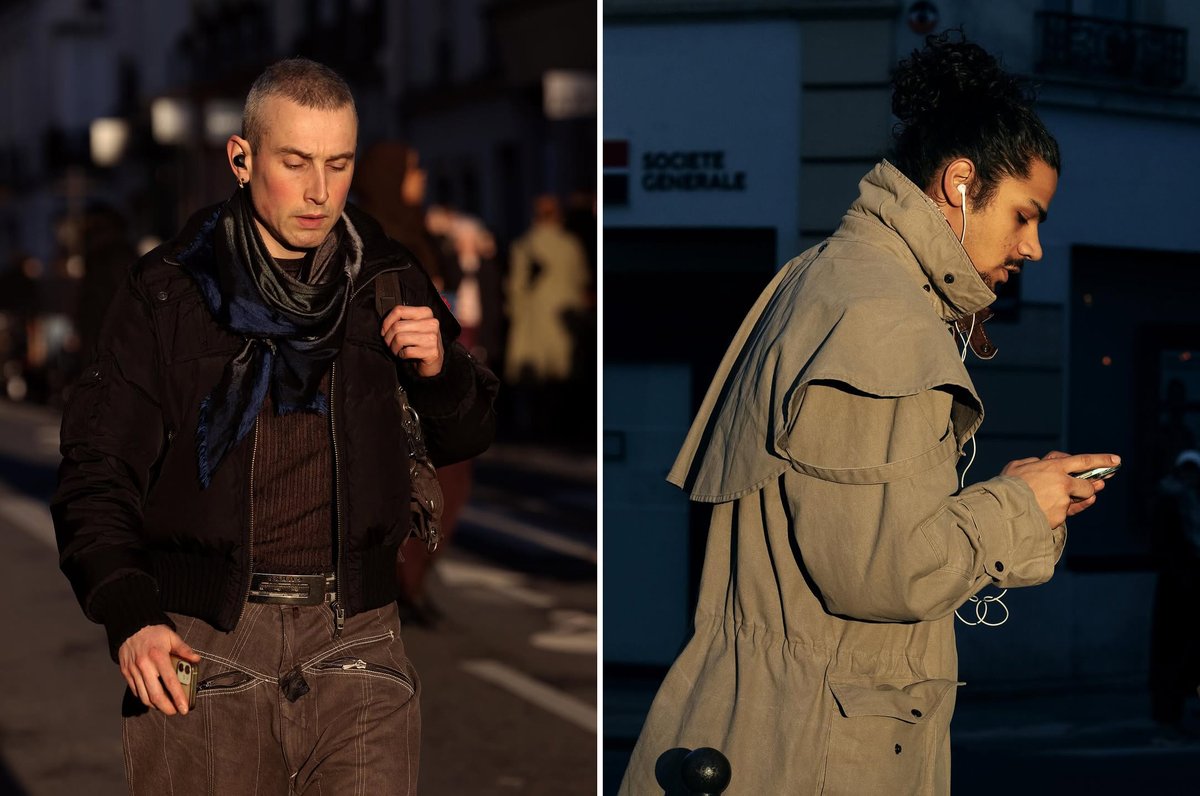
Just look at these photos recently posted by Scott Schuman, the photographer behind the famous fashion site The Sartorialist. These images are from his recent trip to Paris. Scott often posts themed sets like this — images of stylish people in Milan, Hong Kong, New York City, and so forth.
I disagree with the idea of dress respectability on moral grounds. You should treat everyone with respect, regardless of what they're wearing. But as a matter of aesthetics, it's good that society has eased some of the Victorian handwringing around what people wear in public.
Look at the diversity of aesthetics showcased here, from just one recent trip to Paris (and notably, only focused on menswear, not even getting into womenswear). On first glance, there are some themes here that could describe the fashion Robert Frank captured in his book The Americans, shot just after the Second World War. Here we see men wearing military-inspired clothing (e.g., bombers and trenches) and tailoring (e.g., houndstooth tweed and a boldly checked raglan overcoat).
But we also see fashions that prob wouldn't have made it onto the streets in 1950, such as the patchwork boro jacket or the double-breasted with unusual pattern and button placement (look at that button-and-cloth corsage!).
It's unimaginable today, but in the first half of the 20th century, a man could be sent home from work for wearing the wrong color shirt. For white-collar professionals, even in cosmopolitan cities, the standard office uniform consisted of a dark worsted suit worn with a white-collared shirt, a dark silk tie, and a pair of dark leather shoes. The phrase "no brown in town" refers to the British cultural practice of only wearing black leather shoes in certain professions when doing business in London. Brown was the countryside. If you flouted these rules, people would whisper behind your back about how you're a bad person (e.g., dumb, uncultured, rude, etc).
That social system seems terribly toxic to me. But even as a matter of aesthetics, how great is it that the second man in the second slide can show up at many offices today wearing a brown houndstooth tweed jacket with a jaunty little neckerchief?
The world is aesthetically better today than it was 100 years ago. Yes, there are lots of people who are badly dressed. This is fine, as not everyone cares about aesthetics. But if you do care about aesthetics, you enjoy greater freedom today and thus can express yourself through a wider range of aesthetics. If you let people wear pajamas to Costco, you can wear any of the outfits below and more.
And if you open your mind to other aesthetics, I think you will find that many people on the street today are stylish, even if they're wearing something that you would not personally wear yourself.
IG thesartorialist
A policy shift is underway: U.S. states are moving to tax nicotine pouches like traditional tobacco products
Read more:
https://t.co/BvZj8cd7L2
At least five states are considering new taxes, including a proposed 75% tax rate in New York
Fifteen year anniversary of the day I married an LSU professor with a tree farm. (We are long on timber.) Trees are church. Get outside and talk to God.
Your brain peaked musically somewhere around age 16. Everything since then has been a dopamine echo.
Between the ages of 12 and 22, the mesolimbic dopamine pathway, the same circuit that processes cocaine and sex, fires at levels in response to sound that it will never reach again for the rest of your life. A 2011 McGill study used PET scans and fMRI simultaneously and found that music triggers dopamine release in the striatum at peak emotional arousal. The caudate nucleus lights up during anticipation of the good part. The nucleus accumbens lights up when it hits. Your brain is treating a guitar riff with the same reward architecture it uses for food-seeking and pair bonding.
During adolescence, that response is dramatically amplified. Pubertal hormones are flooding the system. The prefrontal cortex is still wiring itself. Memories formed during this window get encoded with a density of emotional tagging that nothing in your 30s or 40s can replicate. Researchers at the University of Leeds identified this as the “reminiscence bump”: the period when your sense of self is forming, and the music playing during that formation becomes structurally integrated into your identity.
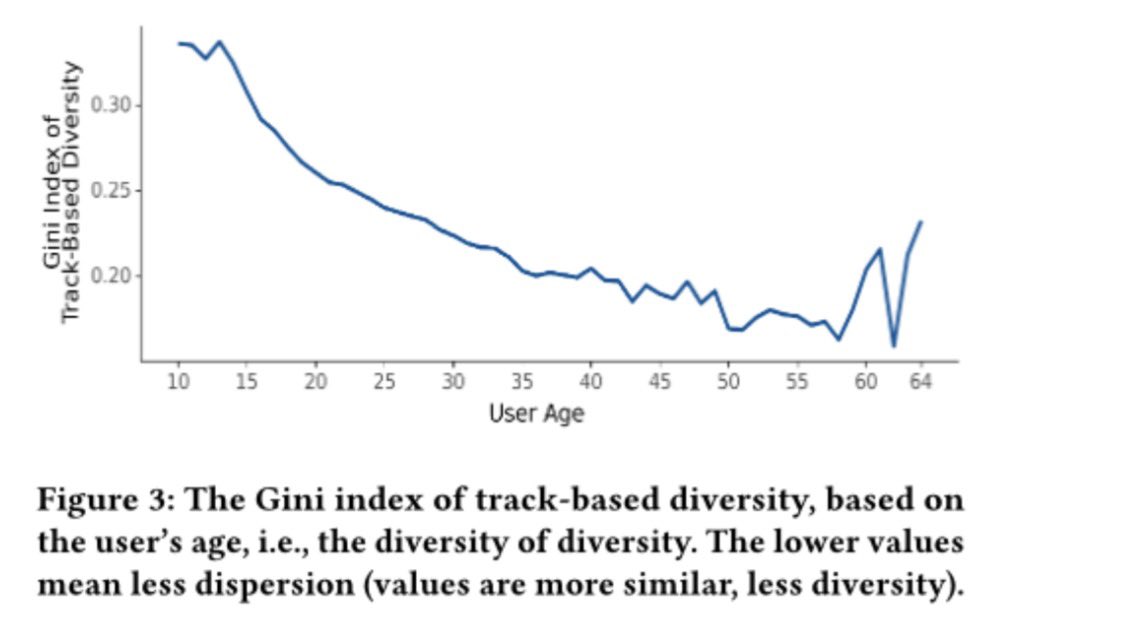
A 2025 longitudinal study from the University of Gothenburg analyzed 40,000 users’ streaming data across 15 years. Younger listeners explored broadly across genres. Older listeners collapsed into increasingly narrow loops, almost entirely anchored to music from their teens and early twenties.
Your brain stopped losing interest in new music years ago. It’s running a cost-benefit analysis. Familiar songs deliver guaranteed dopamine with zero processing cost. New songs require pattern recognition, expectation-building, and repeated exposure before the reward circuit kicks in. Past 25, most people stop paying that tax.
The one variable that predicts whether someone keeps exploring: the personality trait “openness to experience.” Score high, you keep seeking. Score average, you default to the familiar forever.
The fix, if you want one: deliberate exposure. Three listens minimum before your auditory cortex builds enough predictive models to generate a reward response. One passive listen on a playlist will never get there. Your brain needs repetition to find the pattern, and it needs the pattern to release dopamine.
Regular CPI sucks. So I had Claude build the RPI (Redneck Price Index) with shit that matters: 150hp Evinrude, Copenhagen, 1# of nails, 30-pack, singlewide, propane, duct tape, fishing license, full-size truck, A/T tires & .30-06 ammo.
Not looking great.
Friday was another six figure day...Hermes, Chanel, AP, Tiffany. Did I mention I am buying a trailer park in E. Texas? Y'all can call me Double Wide Dave