An Econ PhD student at the 20th ranked program who is working on stuff they are passionate about will have a better job market than one at MIT who's been doing nothing but phd-app-maxxing since undergrad.
People get confused by this because they don't observe *how* successful people came about their insane knowledge bases. It wasn't by relentlessly grinding away at stuff because they had to.
They look at Scott Kominers and say "if i grind and learn as much math as he did, i will be successful." You can't! *You* can't learn as much math as Kominers because he gets energized by configuration results for type ii lattices. You will burn out if you try to do it this way.
You cannot, through grind alone, learn more about the economics of cities than Glaeser, or about how to maximize a value function than Acemoglu.
Research careers are long. Most people give up and stop working on research (graph is share of elite PhD graduates with at least one publication in year X after graduation).
If you're starting a PhD, you're presumably doing it to have a successful 40-year research career. The number one factor in whether that happens is not which program you get into, it's whether you find a research angle that energizes you enough to push through the endless barriers an academic career throws in your path.
This is why a lot of the received wisdom around PhD applications is wrong. If you're 100% consumed by the predoc rat race already, it's going to be a long, hard road ahead.
Obv you still have to do admissions, you should study a lot for the GRE, sigh it seems like taking real analysis is probably worth it.
But spending time on the things that energize you about economics is a no-brainer, whether it's policy, or blogging, or whatever, you gotta do the things that light your fire and make you want to be on this road.
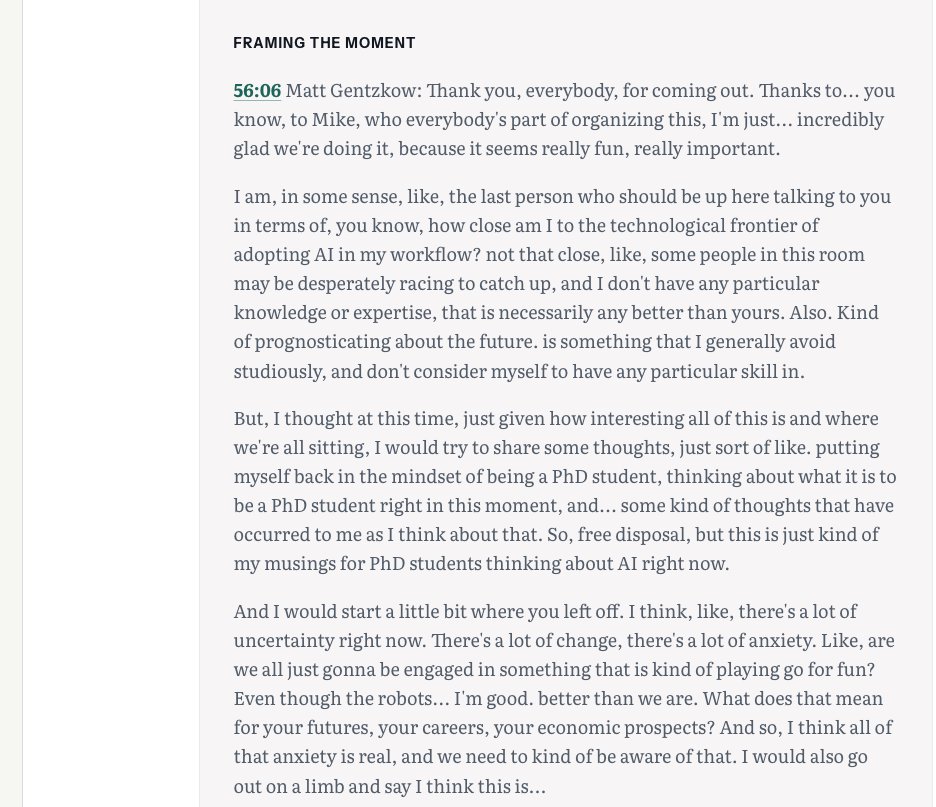
Stanford recently livestreamed a 3.5 hour conference with leading economists (@Susan_Athey , Matt Gentzkow, and @ahall_research , among others) on "Empirical Work in the Age of AI"
I turned the whole thing into a readable transcript, separated by talk.
You can pass the whole thing to your coding agent to extract exactly what is useful for you.
Check it out here!: https://t.co/jKtU6mgG1X
@aniketapanjwani As a future PhD applicant, I’ve been thinking a lot about how AI changes the ideal aplicant profile.
What skills do you think are becoming more valuable now? What should we be prioritizing learn and signal well to admissions? Curious about your take!
📊El SAR lanza el 𝐋𝐚𝐛𝐨𝐫𝐚𝐭𝐨𝐫𝐢𝐨 𝐝𝐞 𝐌𝐢𝐜𝐫𝐨𝐝𝐚𝐭𝐨𝐬 𝐓𝐫𝐢𝐛𝐮𝐭𝐚𝐫𝐢𝐨𝐬 (𝐃𝐀𝐓𝐀𝐋𝐀𝐁-𝐒𝐀𝐑), una innovadora iniciativa respaldada por el @BancoMundial, orientada a hacer un mejor uso de los datos fiscales para fortalecer la gestión institucional y diseñar políticas públicas basadas en evidencia.
El propósito del DATALAB SAR es convertir los datos administrativos en conocimiento práctico y evidencia sólida para impulsar una administración tributaria más eficiente, transparente y enfocada en resultados.
👉Leer la nota completa en: https://t.co/PPoMOlfyyl
Very excited for the publication of our new work on inequality and taxation in Brazil -- please join us for the live conference with minister @Haddad_Fernando starting now!
Paper: https://t.co/XaPjL12XKC
Conference: https://t.co/569mZYV7xi
Indonesia’s Special Economic Zone programme had minimal impact on regional growth and welfare, largely because it targeted remote, low-potential areas and relied solely on tax incentives.
Read today's article to learn more: https://t.co/rR1La8lZMY
Chile: factura cero gracias a energía solar
Chile multiplicó por diez la participación de la energía solar y eólica en la matriz energética del país. Una estrategia: instalar pequeñas plantas solares en terrenos fiscales. Algunas boletas de luz ahora son más económicas. /mt
Different economies all follow similar trajectories.
As they develop, they move away from agriculture, and they eventually move away from manufacturing, towards service sector domination.
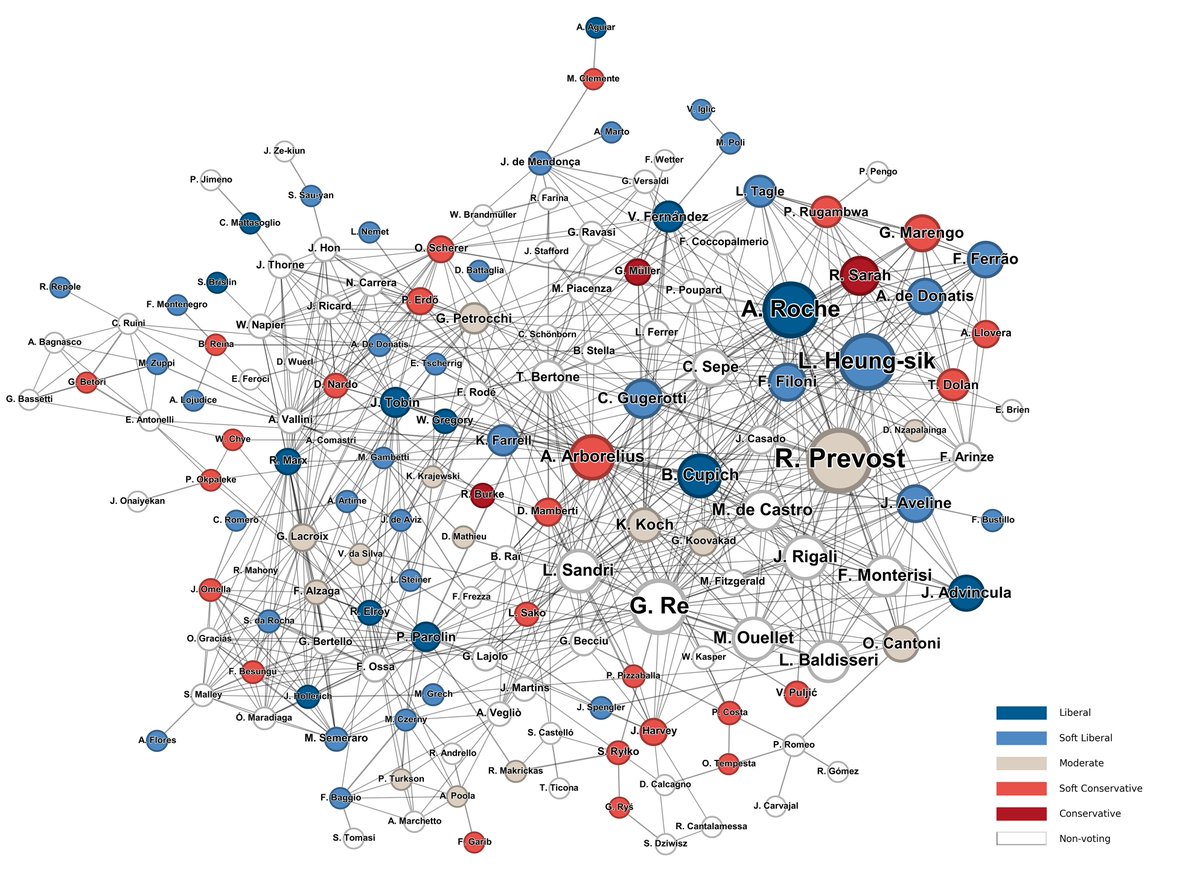
How we "guessed" the Pope using network science: inside the cardinal network. A study by me, Beppe Soda and Alessandro Iorio. Article: https://t.co/xQ0fTmpVxb @Unibocconi