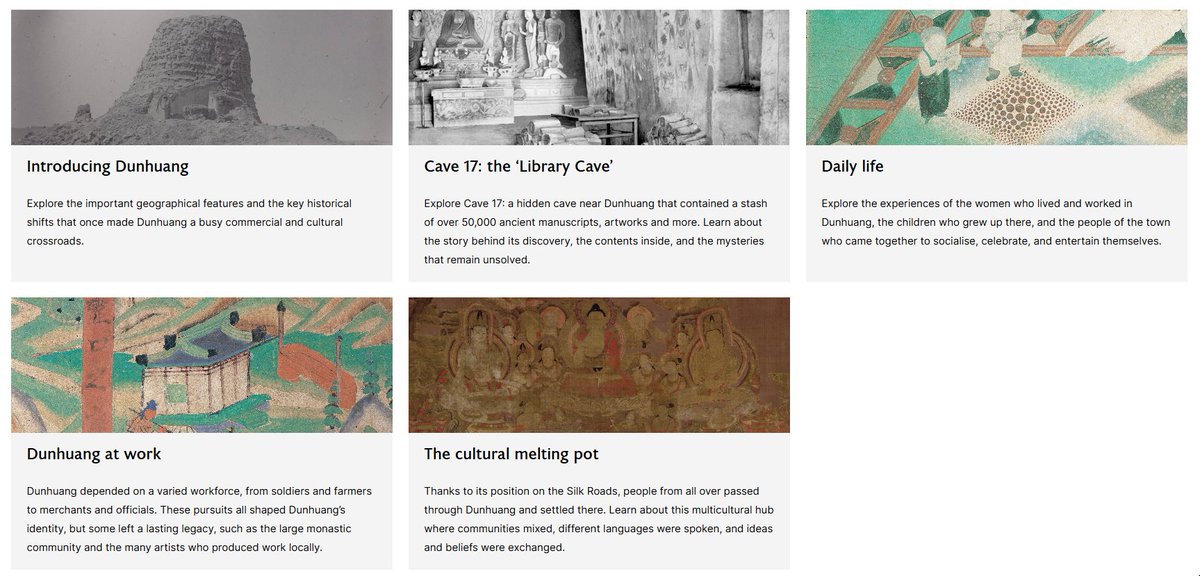
Our new IDP website learning resource has launched today! 'Dunhuang' is available now! ➡️
https://t.co/szJ5w7r26i
This new resource looks at the history, geography and multicultural landscape of the Dunhuang region and its significance to the Silk Roads. 🐫
It's been busy weeks for our mobile CT scanner ENCI and our team: in Ankara and Kayseri, they analysed not only enclosed cuneiform tablets, but also cups, golden earrings and engraved gemstones, among others!
https://t.co/VhGmyOMjOi
Happy to celebrate the Ph.D. of Milad Abedi, formerly at our "Sino-Indo-Iranica rediviva" project (https://t.co/pITuhWSDjX), now at U. Innsbruck (https://t.co/fxsmBAUllR) & doing exciting work on the Pahlavi Papyri of the Austrian National Library.
Join us on September 24 for Dr. François Lachaud’s lecture on “What the Bear Knew: Fujito Takeki and the Craft of Presence.” The talk will be given in English. Registration is not required. All are welcome to attend.
Here are different interesting variants found in the legend of the Map of the Eight Provinces of Korea, especially with 㘴 for 坐,亰 for 京, but for 國 I could not copy/paste the character. Source : Coréen 91, collection Collin de Plancy, BnF.
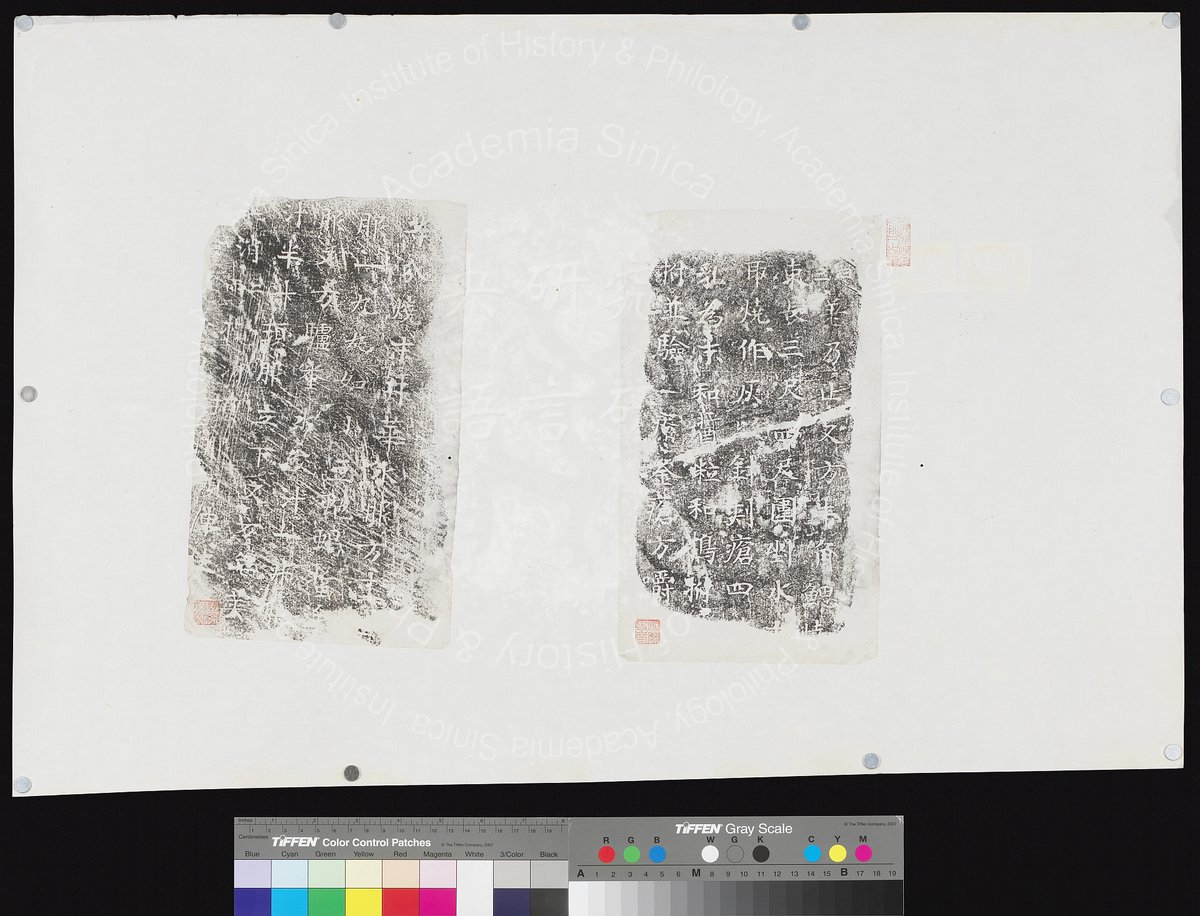
“Medical Recipe Cave” at Longmen contains 140–155 medical recipes (“fang”) engraved from 650–653, a Buddhist practice to benefit society. Dr. Liu Shu-fen suggests these recipes circulated among monks and were introduced to Japan through Buddhist exchanges.
poste d’ATER (100%) en Civilisation et langue de la Chine moderne à l’Université de Strasbourg. Le contrat débute le 1er octobre. Toute personne intéressée est invitée à consulter le profil du poste et à postuler au plus tard le 31 juillet 2025 : https://t.co/2K9sMXFv6o
@tongbingxue It’s just another tourist activity for them, there is no worship or whatsoever (the smile of the guy in pink says it all). Perhaps an inch of respect towards tradition and religion, and maybe…maybe they want to be protected by the divine, who knows ?
Next Monday at Academia Sinica, an IHP-EFEO talk (in Chinese) on how 9 Dunhuang geographical documents can help us understand knowledge production and practices in Central Asia before the age of print. All welcome
Helen Wang talking about publications related to Aurel Stein at the workshop Stein Archive and Silk Road Studies, held at the Museum of Art and Archaeology, Zhejiang University.
Multigraphic written artefacts have been produced numerous goals in artistic, ritual, religious, or scientific contexts. This week, a workshop at the CSMC explores the ‘spatio-temporal profiles’ of multigraphic written artefacts.
Hybrid event, all welcome!
https://t.co/AUgTV0kn0l