Mech E student at University of North Texas. Brake Lead/CNC Machinist for the Mean Green FSAE team. Rocket and manufactoring nerd. 🔰 chief Waffle House shill
> Be James Talarico
> Co-sponsor statewide single-stair bill
> Win Texas by 12 pts
Clearly, the path to victory in America is through YIMBY single-stair reform.
I cannot let a steam engine analogy go by without bringing up John Wilkinson, perhaps the most underappreciated engineer of the Industrial Revolution.
Watt had figured out how to dramatically improve the steam engine, but he spent years struggling to actually manufacture one. The problem was embarrassingly simple: nobody could make a sufficiently round cylinder.
The casting and machining tolerances were atrocious. Watt complained that one 18-inch cylinder was out of round by as much as THREE-EIGHTHS OF AN INCH. Steam leaked past the piston. He tried packing the gaps with cork, oiled rags, paper, and apparently even old hats. Nothing worked particularly well.
Enter John Wilkinson, a British ironmaster whose immediate concern was manufacturing better cannons.
At the time, iron cannons were commonly cast around a core, introducing defects and misalignment that could make the barrels inaccurate or dangerously weak. Wilkinson developed a process for boring cannons from solid castings, and in 1774 patented a vastly improved boring machine.
The key innovation was almost comically mechanical: a massive, rigid boring bar, supported at both ends, that could cut a genuinely straight, circular hole instead of following the irregularities of the casting.
He adapted this technology to Watt's cylinders. By 1776, Matthew Boulton was boasting that Wilkinson had bored a FIFTY-INCH cylinder accurate to within the thickness of an old shilling.
Suddenly, the steam engine was a commercially viable machine.
And the story gets better. Wilkinson became one of Watt's first customers, buying an engine to drive the blast machinery at his own ironworks. The steam engine was now helping manufacture the iron that made more steam engines possible.
I find this whole episode absolutely extraordinary. The Industrial Revolution was, for a critical period, bottlenecked on the ability to make a sufficiently round hole.
We remember Watt, and rightly so. We remember the invention of the steam engine and the subsequent development of thermodynamics. But the man who made the machinery that made the whole thing possible is practically a footnote.
I think we consistently underestimate how much of scientific progress is actually downstream of advances in tooling, measurement, and manufacturing precision. It's not just that technology precedes theory. Sometimes the decisive breakthrough is that someone finally figures out how to build the thing the theorists have been talking about for twenty years.
Anyway, I think John Wilkinson deserves considerably more credit for modern civilization than he gets.
This might have been as close as .95 mach depending on their cruising speed and max desent velocity. 550 mph cruising speed and 336 cruising speed has you at 644 mph which is .93 mach at 25000 ft.
Severe damage to the aircraft involved in the FlyDubai incident, a Boeing 737 MAX 8, following the ‘forced’ descent (from 30,000ft to around 15,000ft in just approx 30 secs) during the time of an incident in the flight deck (involving pilots, and reportedly some passengers)
I’d happily pay the President $20 million/year. $2M for Senators. $1M for Congressmen. It’s decimal dust in the Federal budget.
But completely ban stock trading while in office, and have automatic expulsion and prosecution for any whiff of corruption.
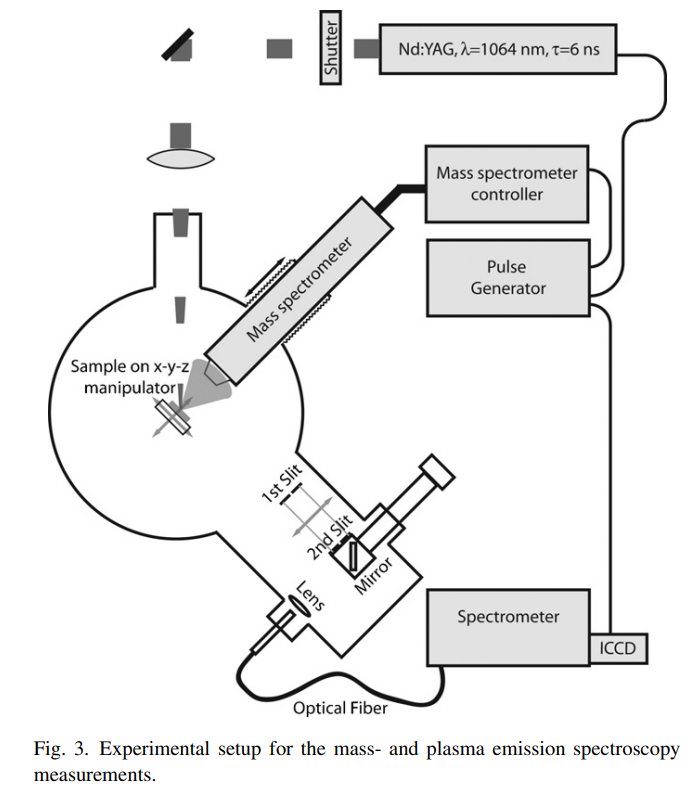
A laser-ablation microthruster that achieves 867s Isp and 368% efficiency by blasting an energetic polymer with infrared pulses:
https://t.co/pOM8INWahf
Nothing spectacular, but it's funny to see a 'tape player' rocket engine.