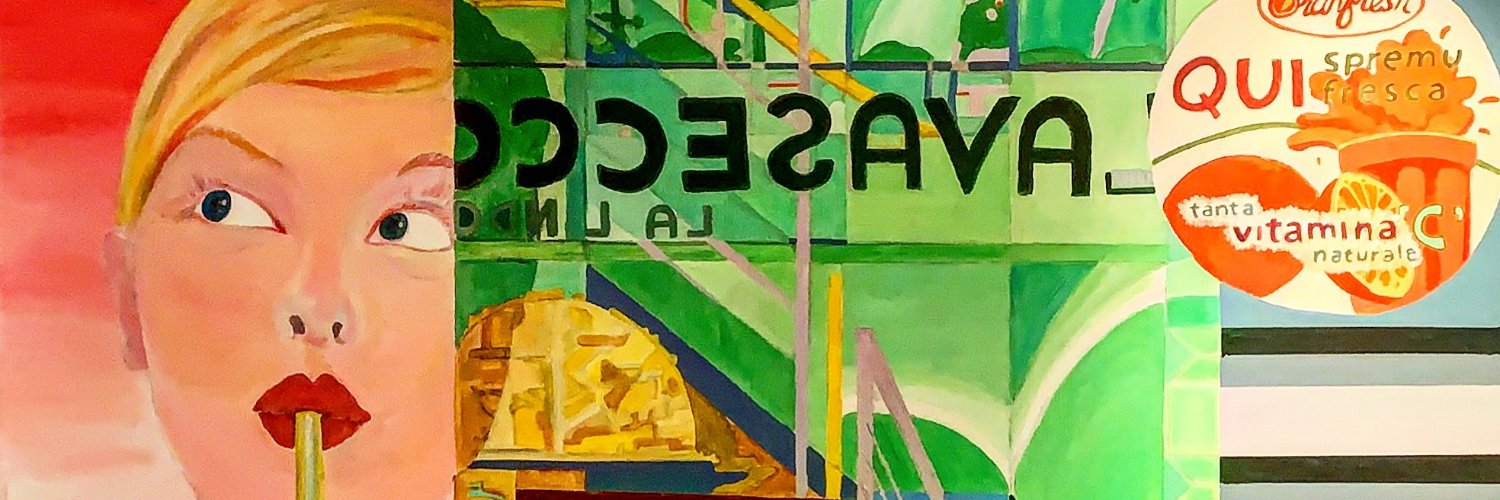
Let´s make fun of A.I. slop...with A.I. slop.
Meanwhile, ¨j´accuse¨ what does not look nor sound too wise... Thanks to Émile Zola for a pertinent idea.
Made with @grok@imagine music with @Suno and edited with @capcutapp_jp
Now is the best time to learn how to prompt. So many people keep saying you don't need that, but the reality is different: it is not about the prompt itself; it is about your thinking process for solving complex problems and avoiding limitations. Keep exploring possibilities, and never stop thinking.
Best practical starts for most people (single 16–24 GB GPU or good Mac)
Qwen3.8-27B (Alibaba) — Strong dense model, Apache 2.0 license, multimodal (text + image + video), excellent coding/agentic performance for its size. Fits a 24 GB card at Q4 (~16–19 GB). One of the best quality-per-VRAM open models available.
Gemma 4 variants (Google DeepMind) — Apache 2.0, solid range of sizes (12B, ~27–31B). Reliable local performers with good tooling support.
gpt-oss-20b (OpenAI) — Apache 2.0, efficient MoE design, strong reasoning relative to size, runs comfortably in ~16 GB.
These are the ones most people should start with. Download quantized GGUF versions (Q4_K_M or similar) from Hugging Face / Unsloth for use with llama.cpp, Ollama, or LM Studio.Stronger models if you have serious hardware (multi-GPU, high-end Mac Studio 256 GB+, or server)
DeepSeek V4 / V4.1 Flash (DeepSeek) — Frequently ranks at or near the top of open-weight boards, MIT license, efficient active parameters, strong coding and reasoning. Full weights are large (~500 GB class); practical local runs need heavy quantization, high system RAM + GPU, or multi-GPU setups. Excellent if you can host it or just want the weights for future hardware.
GLM-5.x series (Zhipu / https://t.co/WbFdmsNBJI) — Competitive performance; check specific license (some MIT, some custom).
Kimi K3 / K3.1 Pro (Moonshot) — Often leads pure rankings, 1M context, strong overall. Official weights are ~1.56 TB (already quantized MXFP4). Custom license with some commercial restrictions. Not realistic for typical local setups without massive infrastructure.
The meaning of life is just to be alive. It is so plain and so obvious and so simple.
And yet, everybody rushes around in a great panic as if it were necessary to achieve something beyond themselves
People think the current fight is about AI, about Nvidia, about a few bills in Washington.
No. The real fight is much simpler, and much more serious.
We're heading toward a new kind of civilization. That part is settled. The only question is: will we go through 1984 before we get there?
One: why superintelligence destroys the current system.
The system we live in rests on one scarcity: the scarcity of intelligence.
To understand a law, you need a lawyer. To read a balance sheet, you need an expert. To build a case, you need a firm. To access a market, you need a permit. To know what's true, you need a newspaper, an agency, an institution to tell you.
Every layer of this system is a toll booth. And every toll booth is manned by someone who lives off your inability to do without them.
Superintelligence makes intelligence abundant. Almost free. Available to everyone, every second. When intelligence becomes abundant, the toll booths become useless. And the people manning them know it.
So they'll do everything to keep the system alive. Not necessarily out of malice. Upton Sinclair summed it up: it's hard to get a man to understand something when his salary depends on his not understanding it. Licenses, moratoriums, federal agencies, blown-up scandals: every tool will be used to slow down what makes them obsolete.
Two: even if they win, they lose.
Because you can't contain an abundant technology with normal means.
An AI model is a file. It can be copied, sent, run on a machine in a basement. To stop it from spreading, you have to monitor every computer, every chip, every line of code, every exchange. There's no soft version of that control. There's only a total one.
That's the trap. To keep their system alive, they'll be forced to become totalitarian. Not because they want to, but because it's the only way to hold back abundance.
History has played this game before. The Ottoman Empire kept the printing press at bay for nearly three centuries. It preserved the established order, and watched Europe overtake it in every field. The USSR controlled photocopiers and kept watch over typewriters. It collapsed anyway.
And a system that confiscates the leverage of the many to reserve it for the few is, by definition, unfair. An unfair system can last. It can't last forever. It always ends up imploding, under the weight of its own illegitimacy, or under pressure from those elsewhere who didn't hit the brakes.
They can buy time. All they can do is push back the deadline. And the price of that delay is 1984.
Three: Elon's project.
Look at what he's building, piece by piece.
Abundant energy, with solar and batteries. Abundant labor, with robots. Abundant intelligence, with AI. Free information, with Starlink and X, far harder for a regime to shut down. And access to space, with reusable rockets.
This isn't a collection of companies. It's a machine for destroying scarcity.
And the world of takers and financiers lives off scarcity. Organized scarcity of access, permissions, capital, information. A world that captured everything through coercion and lies, by standing between people and what they could build.
Takers live off scarcity. Elon is industrializing abundance.
When abundance wins, rent dies. The toll booth has no road left to block. The gatekeeper has no gate left to guard.
That's why this fight is so violent. It's not a policy debate. It's one world fighting not to disappear, against another one being born.
We can go through 1984. Or we can skip straight to what comes next.
It's being decided now.
What a time to be alive.
NVIDIA employees: go on strike. Now.
Not for a raise. Not for more PTO. For your founder.
Jensen Huang was just pushed out in four days, after thirty-three years building the company. The GPU, CUDA, the entire infrastructure the world's AI runs on today. And it ends with a three-line press release on a Thursday morning.
Here are the facts. Sunday, Huang admits to an affair and apologizes to his teams. The board launches an independent investigation, led by Wachtell Lipton and a former federal prosecutor. Thursday, he resigns under pressure. The investigation hasn't reached any conclusion. No technology leak has been established. No misconduct has been announced.
The sentence came before the verdict.
Let me be clear: if the investigation shows that NVIDIA secrets ended up in Beijing, he has to go, and nobody will defend him. But you don't unplug the most important builder of the decade over press reports and a market panic. It's called the presumption of innocence. It applies to founders too.
And it has worked before.
November 2023. OpenAI's board fires Sam Altman on a Friday night. Within days, more than 700 of roughly 770 employees sign a letter: bring Altman back, or we all walk. Five days later, Altman is back, and most of the board that fired him is gone.
Call it the Altman precedent: in a company built on talent, real power doesn't sit with the board. It sits with the people who build.
NVIDIA's engineers hold that power today. They're the ones running the machine. Without them, there is no next generation of chips.
So put down your tools. All of you. And tell the board: no successor until the investigation is done. Facts first, sentence second.
A founder isn't an executive you swap out. A founder is the soul of the company. Apple learned that when it pushed out Steve Jobs in 1985. It took twelve years and a near-bankruptcy to bring him back.
NVIDIA doesn't have twelve years. The AI race won't wait for anyone.
A company's soul isn't something you vote on in a boardroom. It's something you fight for.
⚠️⚠️ If Nvidia fires Jensen Huang, America loses the AI race. And China wins it. ⚠️⚠️
I'm choosing my words carefully.
Nvidia's board is deciding whether to remove its founder. Wall Street wiped out hundreds of billions of dollars in a single evening, and everyone is pretending you can replace a CEO like you change a light bulb.
You can't replace Jensen Huang.
This isn't about morality. It's about mechanics.
Let's start from the beginning.
Three engineers meet in a Denny's in San Jose. Jensen is 30. As a teenager, he washed dishes in that same kind of diner. The plan: chips for 3D graphics, in a market that doesn't exist yet.
The first product flops. The Sega deal falls apart. Nvidia is weeks away from dying. Jensen goes to Sega, admits his chip won't work, and asks them for money anyway. Sega invests $5 million. That money saves the company.
For years, he opens his meetings with the same line: we are 30 days from going out of business.
Then comes the GeForce, the first GPU. Then CUDA. He decides to make his chips programmable for any kind of computation, not just video games. Billions burned for a decade on a bet nobody understands. Wall Street hates it. He holds.
Then AlexNet, the neural network that kicks off the deep learning revolution, is trained on two Nvidia graphics cards. Jensen understands what it means before anyone else. He pivots the entire company to AI. He personally hand-delivers the first DGX-1 supercomputer to a small research lab called OpenAI.
Today Nvidia is worth around $4 trillion. Almost all the AI on the planet runs on its chips.
That's not luck. That's 33 years of tryhard.
And here's what people don't understand about founders.
A founder CEO isn't a job title. It's a nervous system. Jensen has around sixty direct reports. He knows every layer of the stack: transistor physics, chip architecture, software, data centers, TSMC, customers, governments. He sees the next bottleneck before it shows up.
That kind of awareness isn't taught in an MBA. It doesn't transfer in a three-month handover. It's built over three decades of brutal decisions, made against everyone's advice.
Right now, no one else on Earth has that level of awareness of the system. Even Dan Ives, one of the most followed analysts on Wall Street, says it: Jensen is not replaceable, and no one on the bench can step in seamlessly. The name floated for interim CEO is the CFO. An excellent CFO. But the question isn't who keeps the books. It's who decides the next architecture.
We've seen this movie before. Twice.
Steve Jobs. Apple's board pushes him out. Serious managers take over. Twelve years later, Apple is months from bankruptcy. Jobs comes back. iMac, iPod, iPhone. Apple becomes the most valuable company in the world.
Travis Kalanick. Investors push him out. Uber becomes calmer, more profitable. And walks away from the most important bet of its generation: it sells its self-driving unit. Today Waymo runs robotaxis across American cities, and Uber signs partnerships with the people it could have beaten. A company that manages. No longer a company that conquers.
The pattern is always the same. A board optimizes for reputational risk. A founder optimizes for the mission. Replace the second with the first, and the company doesn't die right away. It just stops making the bets that matter.
And the further we go into AI, the truer this gets.
When everything changes every six months, when a single architecture decision commits $100 billion, when thousands of agents execute what a handful of humans decide, value concentrates in one thing: the judgment of whoever holds the wheel. AI doesn't dilute the founder's role. It multiplies it.
Should national security concerns be taken seriously? Of course. An independent investigation is normal. But the board itself said it had no reason to believe Nvidia's secrets or national security were compromised. And we're talking about removing the most strategic person in American tech before the findings are even in.
So let's ask one question.
If a Chinese intelligence operation really was targeting Nvidia, what would its best possible outcome be?
Not a stolen secret. Jensen Huang's exit.
Beijing doesn't need to beat Nvidia.
The board can do it for them.
Let´s make fun of A.I. slop...with A.I. slop.
Meanwhile, ¨j´accuse¨ what does not look nor sound too wise... Thanks to Émile Zola for a pertinent idea.
Made with @grok@imagine music with @Suno and edited with @capcutapp_jp