The longer I’m in leadership the more I’m convinced that my primary job is simply to create an environment where other people can flourish.
#leadership
@edstetzer has been a friend and acquaintance for many years. I love many things that he has done for the Kingdom, but honestly, this is one of my favorites. Go, Ed.
Hey small church pastor in Oxfordshire, UK.
If you are a small church—under 100 in weekly attendance—and you'd like a Sunday morning off, I'm offering to preach this Sunday morning.
You can't pay me anything, but I come bearing gifts. I will provide a full year of @Logos Pro as a gift from them—they are partnering with me to elevate and serve small churches. And, I have a swag bag with some books.
The median size for a UK church (Church of England) is 37 people, based on the 2022 "Statistics for Mission." (In the U.S., it's around 60-65.)
So, a small church is actually a NORMAL church.
It think it is important for all of us to remember that small churches are being used in big ways, just like we'd expect when we reflect on how the Kingdom of God is like yeast mixed into flower.
Small things lead to big change, and I take Sundays like this to remind myself of this, but then I love writing up a story about my visit, to tell the story of yet another small church making a kingdom impact!
I'm here teaching (and staying) at @WycliffeHall, and I don't have a car, so I'm hoping for something within a decent distance from there-- 30 minutes, 45, who knows? :-)
So, if you'd like to have a guest speaker, please DM on Twitter. (Sorry, but I need one inbox for this, and my Twitter DMs are open.)
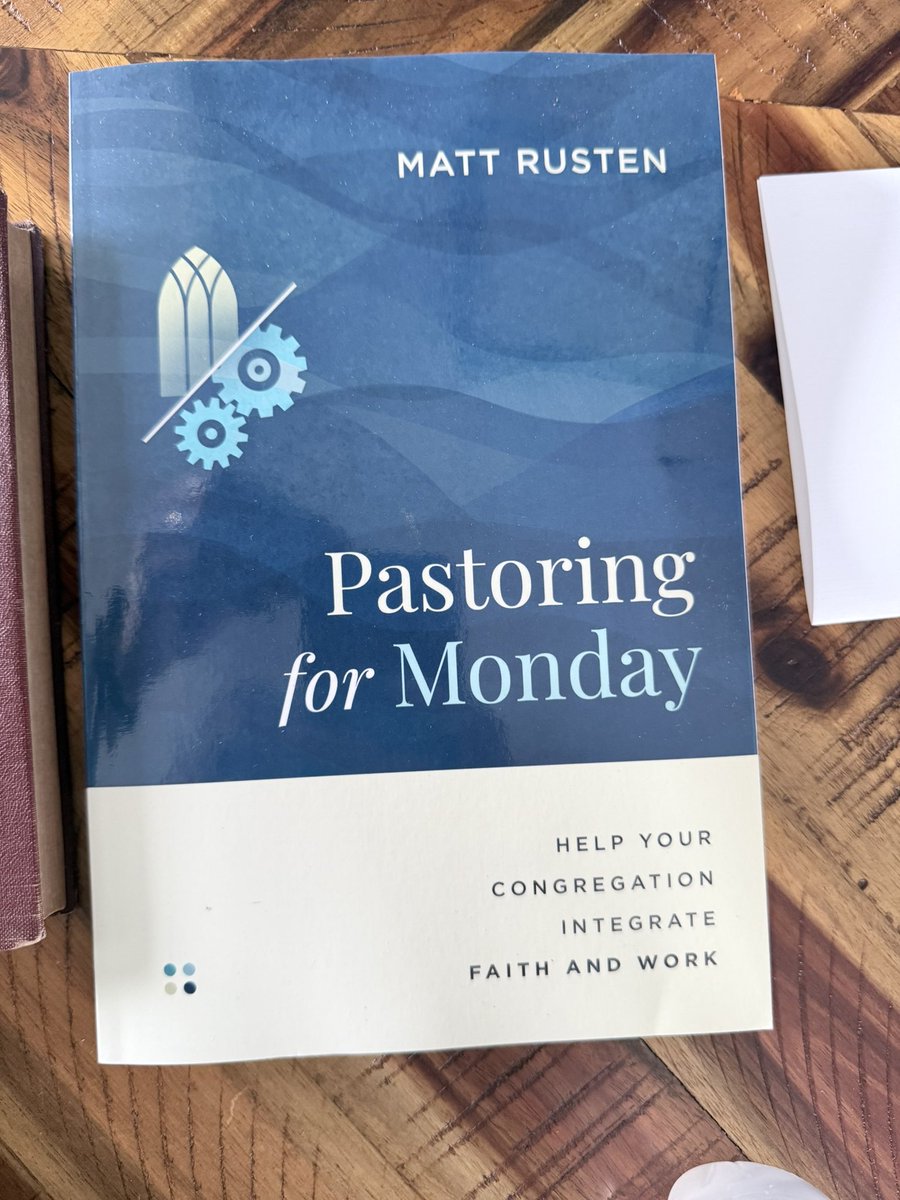
Surround yourself with smarter people. That’s always been my philosophy. So it was neat to come back from vacation and see the two of my friends had sent me their newest book. These are gonna be great resources for pastors and the church. Pick yours up today. #MattRusten@markdance
Few people are as helpful as nucelar-submarine-engineer turned church planting calayst @toddwilson in understanding how the road that brought us here helps us better discern where to go. I’ve personally benefited from Todd’s analysis and writing! You can download a free pdf copy of Todd's latest book “How Did We Get Here” https://t.co/YFzymMhspj
Working on an upcoming message. Help me out here.
What are some “blessings” (even think benefits) of being a follower of Christ people don’t initially see.
Another way to think about this - how has being a believer helped you personally that you couldn’t explain to someone - they’d have to experience it to understand it.
Share any examples of stories that help make your point (or simply share one word.)
Go!
"If I told you there was one free thing you could do every Sunday that would make your kids happier, healthier, smarter, and closer to you, you'd think I was selling something."
Take your kids to church regularly. I don't care if you believe. The data is so lopsided that skipping it is the parenting equivalent of refusing vegetables because you don't like the taste.
Grades. Religious teens get As at almost twice the rate of nonreligious teens. In a class of 100, that's 24 A-students instead of 14. Church gives a kid the same academic boost as being born rich instead of poor.
College. Working-class religious kids earn bachelor's degrees at double the rate of their nonreligious peers. Middle-class kids do it at 1.5x the rate. For families without a trust fund, this is one of the most powerful forms of upward mobility social scientists have measured.
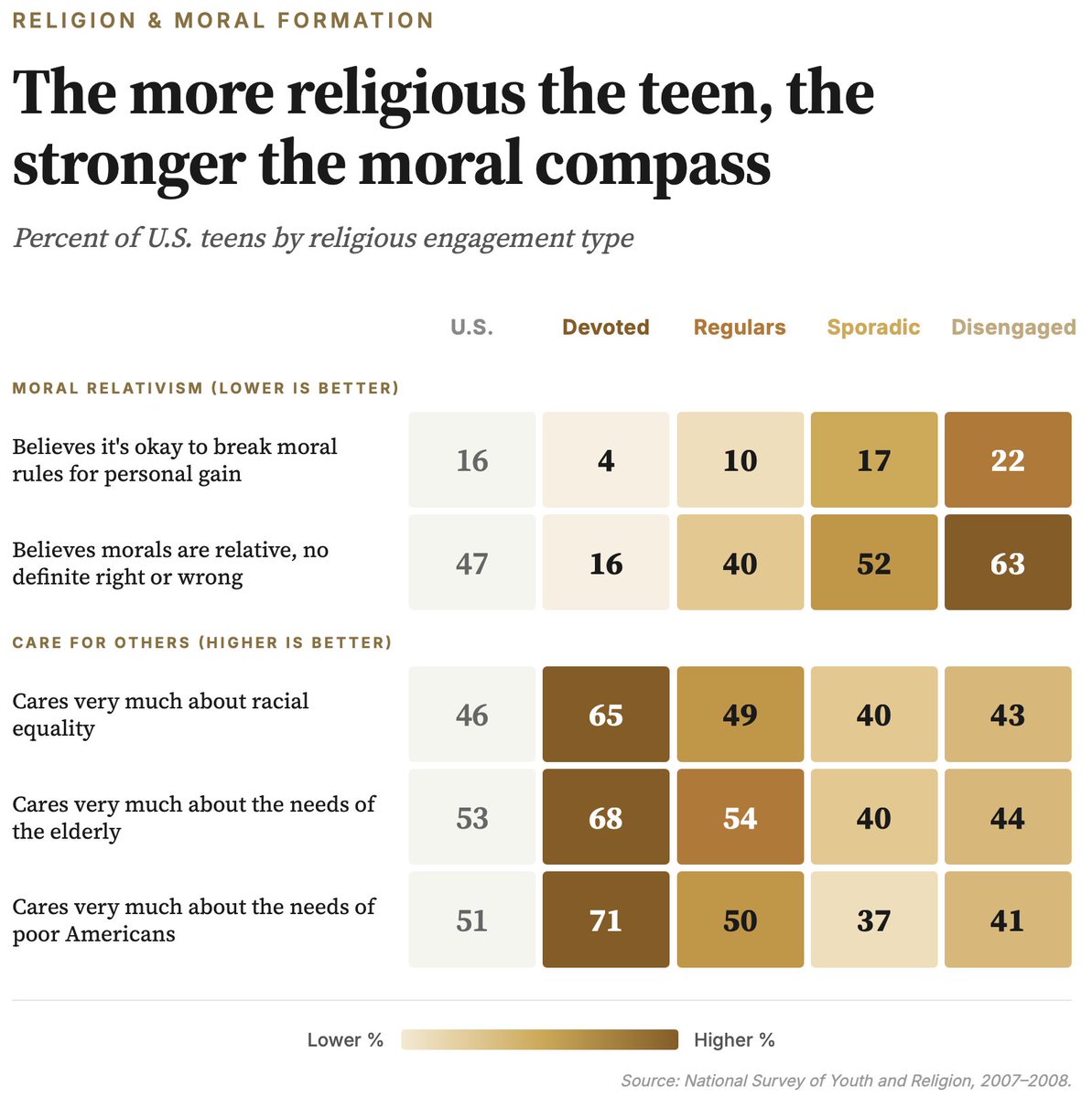
Character. Religious teens are far less likely to lie, cheat, or do things they hope their parents never find out about. They're more likely to care about racial equality, the elderly, and the poor. They reject the idea that morality is whatever works for you in the moment. That kind of kid doesn't happen by accident. It's built.
Closeness. 60% of parents of religious teens say they feel "extremely close" to their kid, compared to 50% of nonreligious parents. The kids report the same thing back. They get along better with their parents, talk about hard stuff, and actually want to spend time with their family.
Despair. Religious teens are dramatically less likely to be depressed, anxious, lonely, or feel that life is meaningless. 90% of devoted religious teens never binge drink, compared to 41% of the disengaged. Economists named the modern epidemic "deaths of despair." Regular church attendance is one of the strongest known buffers against it. Parents are spending fortunes trying to solve teen mental health. The most evidence-backed intervention is free.
Purpose. Religious young adults report higher purpose, gratitude, life satisfaction, and resilience. These are the exact traits every parent says they want their kid to have.
Here's why it works. Affluent families already surround their kids with networks of stable, accomplished adults through neighborhoods, schools, and parents' colleagues. Working and middle-class families usually don't. A congregation is often the last institution in American life that puts your kid in weekly contact with dozens of stable, employed, sober adults who know their name. It used to be called "a village." Now it barely exists outside of churches.
"But I don't believe." Your kid doesn't need your theology. They need you to show up.
"But church is boring." So is sitting through a kindergarten music recital. Parenting is the deliberate choice to be bored on purpose for someone you love.
There's a church within 15 minutes of nearly every American home. You don't need money, connections, or credentials to walk in. Nothing else in this country will surround your kid with engaged adults, teach them moral seriousness, and give them a stable weekly rhythm at zero cost.
You already drive them to practices that produce far less. The free thing on Sunday produces more, on more dimensions, than almost anything else you do as a parent.
You don't have to believe anything. You just have to take them.
Chapter books.
I love you. I read you. Sometimes 2 chapters in one day.
But this morning my chapter had 86 pages. That’s too many.
Keep it to 12. Or 15 maybe. But never 86.
So, there. Rant over.
And problem solved. (Hopefully.)
7 ways to know it's not really a team:
1. One person makes all the decisions.
2. Everyone doesn't have a key role.
3. There are multiple agendas.
4. Communication is controlled.
5. Conflict is seen as a threat.
6. Every person is for themselves.
7. Individual celebration trumps collective.