@JaipurDialogues The only solution for the general public is to leave India as soon as they can. They should go to any country, even Nepal. India is facing doom because of politics, and people want to stay in power. Congress has 35% of Muslim votes and needs an additional 15%; thats from OBCs
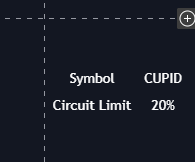
As @tradingview rejected my request to access custom feed pine scripts, I decided to semi automate stuff on my own. created a pine script where circuit limits will be shown for all the stocks , only catch is you need to download / copy the pine and paste it everyday / whenever needed in your tradingview indicators and use it. Hope this helps to some people . Attached screenshot for reference. I will try to update all my indicators/ pine scripts automatically and everyone can access it , need few more days.
https://t.co/aVQcEtILEx
Saakshi Medtech & Panels is evolving from a relatively small fabrication and control panel company into a broader engineering platform across EVs, railways, wind, aerospace and heat exchangers. FY26 PAT was around 12 crore, but the important part is the new growth engines coming together at the same time.
The biggest visible driver is the multi year Mahindra EV panel order, while aerospace can become the higher margin growth leg as new customers and certifications ramp up. Radiators and heat exchangers for DG sets and data centre related applications add another opportunity, while the new integrated manufacturing facility provides capacity headroom and operating leverage. The Laxmi Engineering investment also opens exposure to power, oil and gas and heavy engineering customers.
The investment thesis is essentially:
Existing 115 crore revenue base + Mahindra EV ramp + aerospace scale up + radiator/heat exchanger business + better capacity utilisation = possibility of 300 to 350 crore revenue over the next few years.
high remuneration of promoter : yellow flag
I think MDR on UPI was probably inevitable at some point, especially given how widespread UPI adoption has become. It could also lead to more competition, instead of just three apps accounting for more than 95% of the market.
That being said, there are some use cases, like investing and broking, where the proposed MDR structure doesn’t really make sense.
The problem with broking is that there is no guarantee that money transferred to a broker will actually result in a transaction.
As brokers, we can’t force a customer to trade after transferring money. And if we can’t pass the UPI charge on to the customer, there is essentially no limit to the cost a customer can impose on a broker without generating any revenue.
Just as an example, 10,000 customers could each make 50 UPI transfers of ₹2 lakh in a month without executing a single trade. At the proposed MDR, this could potentially cost the broker around ₹2 crore, without generating any business.
What makes this even more challenging is quarterly settlement (QS). This is a SEBI regulation that requires brokers to send unused funds back to clients every month or quarter.
Most customers then transfer these funds back to their broking accounts, with more than half of these transfers happening through UPI. So regulation essentially forces this movement of money every month or quarter, and the broker could end up bearing the cost when the money comes back, without any incremental benefit or revenue.
By the way, we currently don’t charge brokerage on equity delivery trades because the economics allow us to offer them for free. But if every UPI transfer starts carrying an additional cost, irrespective of whether the customer actually trades, I don’t see how we can absorb this indefinitely.
I think having an MDR is okay. It still doesn’t solve the problem of customers transferring money without transacting, but something like 0.02% with a cap of ₹5 or ₹10 per transaction seems much more reasonable for broking, instead of a cap as high as ₹300.