The Bibi/Trumpy BIG LIE That Iran Was Two Weeks From A Nuke
The now endlessly repeated notion that Iran's stockpile of 60% enriched uranium (HEU) is tantamount to having a nuclear weapon within weeks is downright malefic. Indeed, this gross deception is so thoroughly fallacious and dangerously misleading that it needs be debunked lock, stock and barrel.
So we begin with the War Party's hoary claim that the roughly 400 kilograms of 60% enriched uranium possessed by Iran as of May 2025, according to the IAEA, could have been further processed to weapons-grade levels (90 percent or higher) in a matter of a few days or weeks using existing centrifuge cascades.
And, then, poof, they would supposedly have had ten nukes.
Actually, they would not have had any nuclear bombs at all. Not even remotely.
That's because producing fissile material is only the first—and in many respects the easiest—step on the long road to a reliable, deliverable nuclear weapon. If building the latter is akin to a grueling 20-mile journey across rugged terrain, acquiring 60 percent HEU gets you perhaps to the "mile-one" marker.
Metaphorically speaking, you would have cleared the initial foothills of uranium isotope separation. But the remaining 19 miles are chock-a-bloc with uncharted engineering valleys, sheer technical manufacturing cliffs and a final summit that no nation has ever scaled without extensive trial, error, and empirical proof that the wherewithal for successful weaponization of a nuclear reaction has been obtained.
Indeed, this crucial distinction—between producing fissile material and building a functional weapon—has been at the very center of U.S. National Intelligence Estimates (NIEs) for nearly two decades. From the 2007 NIE (national intelligence estimate) on the matter right up to and including the March 2025 testimony of Director of National Intelligence Tulsi Gabbard before the US Congress, the intelligence agencies have attested to Iran's proficiency in uranium enrichment but have also noted its complete lack of activity or capability with respect to bomb weaponization.
Moreover, it's also the heart of the truth-telling that Joe Kent has been engaged in since scuppering his Deep State berth last week. Even as of February 28th, when the Donald launched the most reckless, stupid and unjustified war in American history (and there is a lot of competition for that title), nothing on the intelligence front had changed. Thus, even when the bombs and missiles started exploding over Tehran, Iran had not remotely closed the yawning gap between uranium enrichment to high levels of U-235 purity, on the one hand, and actual weaponization of a bomb, on the other.
To understand why enrichment alone falls short of weaponization by a country mile and then some, it is useful to separate the two processes clearly. Uranium enrichment is a straight-forward matter of isotope separation of the U-235 from the U-238 in natural uranium ore. This mixed-isotope uranium oxide is known as yellowcake, which gets converted through chemical processes in a conversion plant to uranium hexafluoride (UF6), which is a white crystalline solid at room temperature.
Cylinders of the latter are then sent to the enrichment plant where the UF6 solid is heated to achieve a gaseous state, which hexafluoride gas is then pumped into rotors spinning at extreme speeds (50,000 to 70,000 revolutions per minute). Inside the spinning rotor, centrifugal force pushes the slightly heavier molecules containing U-238 toward the outer wall, while the lighter U-235 molecules concentrate closer to the center. This separation process is crucially necessary, of course, because natural uranium contains only 0.7% of the U-235 isotope needed to make a bomb, while the 99.3% balance consists of U-238, which needs to be sorted out and discarded.
Accordingly, each centrifuge is equipped with scoops and baffles which collect two separate off-take streams. The first stream is enriched gas with a now slightly larger portion of the U-235 needed for a nuclear reaction. The second stream, by contrast, consists of a now slightly depleted hexafluoride gas with a larger portion of essentially useless U-238. Importantly, however, each single pass through a centrifuge only achieves a very small increase in U-235 enrichment levels, typically 0.1% to 0.5% per pass.
Accordingly, it takes a hell of a lot of passes through an enormous string of centrifuges to bring the enriched U-235 stream from 0.7% of the hexafluoride gas in it natural state up to even civilian reactor grade at typically 3.67%. And that's to say nothing of medical grade at 20% or the current 400 Kg of Iranian material at 60% or, ultimately, weapons grade at 90%+.
Nevertheless, moving increasingly enriched hexafluoride gas through long cascades of centrifuges is actually a matter of brute mechanical effort, not a question of ascending technical and scientific difficulty. Essentially, if you can get to 4% reactor grade enrichment, you can get all the way up to the top of the U-235 purity scale. Thus, any country that can make reactor grade fuel----and there are ten NPT countries which already have that ability---can also get to 90% bomb-grade material if it strings up a long enough cascade of centrifuges.
As it happens, the effort required to move the UF6 gas up the enrichment scale is measured in something called “separative work units” (SWUs). This is a standard metric that quantifies the amount of energy and centrifuge work needed to achieve a given enrichment level.
Reaching 60 percent enrichment from natural uranium thus requires roughly 200–250 SWUs per kilogram of product. At the 400 Kg level held by Iran as of IAEA certification last May, it would have taken 80,000 to 100,000 SWUs to reach its current stockpile. Advancing from 60 percent to 90 percent or higher, however, demands far fewer additional SWUs—often only 40–60 SWUs per kilogram— or in this case about 16,000 to 24,000 additional SWUs in total.
Accordingly, since most of the unwanted U-238 has already been removed at the 60% U-235 purity stage of the material held by Iran, upwards of 85% of the SWUs needed to reach bomb grade material were already completed. And that's why the final leap to weapons-grade material could occur in a matter of days or weeks once a large stockpile of 60 percent material exists: There are simply no science or technical hurdles in the way, while the process mechanics and economic costs get easier at the final rungs of the enrichment scale.
But, alas, now comes the skunk on the woodpile with respect to the hoary myth of a "breakout" to a bomb being just around the corner. To wit, fissile material (enriched U-235) is not a bomb, even at 90% purity. Nor is possession of centrifuges or actual enriched material evidence of either an ability or intention to make a bomb.
At the present time there are 11 other countries in the world that operate enrichment facilities: Five of these have nuclear weapons (China, France, Russia, United Kingdom, United States) and have so declared; one of these (Israel) has both enrichment and bombs, but hasn't declared; and five others (Argentina, Brazil, Germany, Japan and Netherlands) do not have nukes and have not been accused of seeking them despite possessing significant stockpiles of reactor grade materials and having the capacity to string up enough centrifuges to get to 90% U-235 purity in short order, if they chose to do so.
Now, the truth is that Iran is like the latter five no-bomb enrichers, and has been running enrichment facilities for two and one-half decades since early 2006. Subsequently, it actually reached 20% medical grade at its Natanz facility in February 2010 and its Fordow plant in December 2011. Both of these facilities were under active IAEA inspection, however, and Iran's stockpiles were regularly disclosed and its enrichment activities were in compliance with its Non Proliferation Treaty (NPT) obligations.
So all the while what was going on in Iran was not any kind of secret, illicit program to get the bomb. Instead, it was a transparent and internationally supervised effort to enrich uranium for its large scale civilian nuclear power plant at Bushehr. Effectively, after 2006 Iran joined the ranks of the five aforementioned nuclear power plant operators which had no bomb programs at all but had chosen to enrich their own uranium fuel for civilian power uses.
Needless to say, Bibi Netanyahu and his neocon fifth column on the banks of the Potomac have converted these prosaic facts of the nuclear fuel production process into a giant geopolitical Big Lie: Namely, that the transparent and internationally regulated process of operating uranium enrichment plants was actually a nefarious enterprise in getting the bomb.
No, it wasn't anything of the kind. The claim that enriching uranium was proof that Iran was seeking nuclear weapons is just plain hogwash. It's just a sleight-of-words trick equivalent to what magicians do with their hands.
Moreover, if large-scale enrichment capacity were the sum and substance of getting a bomb, Iran could have been there 15 years ago. But self-evidently they were not actually seeking to weaponize a bomb. And, more importantly, this forbearance was voluntary because they did not face any technical or economic limits at all in moving up the enrichment scale to 90% bomb grade material after their production of 20% material in 2010 and onwards.
Thus, a centrifuge is a centrifuge---you only need pipping and electrical harnesses to string them together. Likewise, once you are set up with the basic enrichment process infrastructure---cascade piping, electrical systems, vacuum pumps, control electronics and installation labor--- the incremental cost of another centrifuge unit is comparatively meager: It ranges from $25,000 for an older, slower first generation IR-1 centrifuge to upwards of $70,000 for the current most advanced IR-6 models.
So to put it in practical dollars and cents terms, Iran could get the equivalent of 35 more centrifuges for the cost of one Tomahawk cruise missile, if it was buying on the global equipment market, which it can't under sanctions. Yet since it obtains its centrifuges from homegrown suppliers, it has probably gotten even more additional centrifuges for the price of one Tomahawk.
In short, for most of the past 15 years Iran has never been constrained by a technical, scientific, engineering, equipment or cost barrier to accumulating enough centrifuges to enrich bomb-grade material. But they have generated neither 90% material nor an actual bomb---rudimentary or otherwise---because their policy has been to not seek nuclear weapons.
Moreover, it is quite evident that even the 400 Kg of 60% material was not about sneaking up to the nuclear bomb threshold, at all. Again, to recall the context: As a NPT (nonproliferation treaty) signatory and operator of the aforementioned large-scale civilian nuclear reactor at Bushehr, Iran was allowed most of the May 2025 stockpile certified last spring by the IAEA and shown below. That is---
the 7,582 kilograms of civilian reactor grade enriched uranium (<4%).
the 1,257 kilograms of medical grade uranium (20%).
What was really up for debate was just the 409 kilograms of 60% enriched material, but it is goddamn obvious to anyone not looking for an excuse for war that Iran had produced this material as of last June as a bargaining chip. That is, in order to get a new nuke deal with Washington to replace the one the Donald himself unilaterally shit-canned in 2018, and to thereby pave the way for lifting the brutal and demented economic sanctions that Washington has again imposed on Iran.
IAEA Report On Iran's Enriched Uranium Stockpiles As Of May 2025
Stockpile Component |Amount (kg) |Enrichment
------------------------|------------|----------
60% Enriched |409 |60%
20% Enriched (Est.) |1257 |20%
Balance (Mostly 3.5–5%) |7582 |2–5%
Total |9247 |Mixed
The proof of the bargaining chip pudding could not be more evident in the graph below. During the 10-year run-up to the 2015 nuke deal with the Obama Administration, the Iranians increased their enriched uranium stockpiles to just slightly below the current level, to about 9,000 kilograms. But in an almost mirror image of the present, fully 96% of that amount was fuel-grade material at <4%, with about 350 kilograms of that material enriched to the 20% purity level for medical grade uses.
hat is to say, most of the 2015 stockpile was generated as a bargaining chip, and that was exactly its fate. Upon activation of the JCPOA in 2015, all of the 20% material was destroyed as certified by the IAEA.
At the same time, the total stockpile of fuel-grade material was also reduced by 97% to de minimis working levels, as further certified by the IAEA. Indeed, Iran ended up retaining only 300 kilograms of its 9,000 kilogram stockpile. That is, an amount so small that it could have easily been stored in the Donald's wine cellar are Mar-a-Lago.
But in recklessly canceling the deal in May 2018 on the grounds that it had to be a bad deal by definition because he didn't negotiate it, the Donald only caused the Iranians to restart the stockpiling process yet again, as is so explicitly depicted by the green line in the graph below.
The irony, therefore, is that after the Donald's feckless June 2025 bombing campaign the Iranians likely had close to 100% of the 9,248 kilograms (including the 409 Kg of 60% material) held before June still in tact.
That's based on pretty convincing satellite photos showing that all of the Donald's amateur "art of the deal" head fakery last June about "two weeks to decide" before the actual the bombing runs enabled the Iranians to drive trucks up to the Nantanz and Fordow facilities and remove the stockpiles to safe sites elsewhere.
Stated differently, Obama negotiated Iran's enriched stockpile down by about 97%, while the Donald bombed roughly the same level of stockpile from 9,250+ kilograms to, well @ 9,250 kilograms!
In any event, the Iranian government's adherence to the Ayatollah's Fatwa against nuclear weapons is evidenced by the dog which didn't bark within Iran's nuclear activities complex. We are referring to what is called the "physics package" in the trade, which is the sine qua non to make a workable nuke.
The latter requires a precisely engineered device that can achieve supercriticality in a fraction of a microsecond. That is what actually initiates an uncontrolled chain reaction.
In practical terms, this means the fissile material (90% enriched U-235) must be compressed so rapidly, powerfully and uniformly that the number of neutrons produced by fission exceeds those lost to escape or absorption, causing the chain reaction to multiply exponentially in an uncontrollable burst. The entire nuclear explosion unfolds in roughly one millionth of a second — releasing energy equivalent to thousands of tons of TNT before the device physically blows itself apart.
Historically, there have been two basic designs for the physics package: The simpler gun-type device (used only once, on Hiroshima) and the far more efficient implosion-type design (used on Nagasaki and in virtually all modern weapons). According to American intelligence, Iran has never demonstrated mastery of either approach in a deliverable configuration. And that is something anyone can look up via Grok 4 or any similar AI.
In any event, the implosion design favored by all proliferators to date is excruciatingly demanding. It can be envisioned as having a hollow sphere or “pit” of weapons-grade uranium, roughly the size of a grapefruit, at the center of the device. This "pit" is then surrounded by a tamper/reflector and finally around the outside of the latter lies a precisely synchronized shell of conventional high explosives.
The functions of each of these two outer layers, which wrap around the U-235 "pit" of the bomb, are crucial to actually triggering a nuclear chain reaction explosion. And they also involve no mean feats of physics-based engineering and extreme precision during the manufacturing and assembly process.
In this context, the tamper/reflector is made of heavy metal (usually beryllium or depleted uranium) and consists of a precisely machined spherical shell typically 5–10 cm thick, surrounding the uranium pit like an eggshell. It thus sits directly between the high-explosive lenses grafted to the inside of the bomb's outer wall and the U-235 pit at the center.
The tamper/reflector therefore essentially encases the fissile core and performs two vital roles. First, when the high explosives on the outside shell detonate (see below), the tamper's mass and inertia resist the outward expansion of the exploding pit for a few crucial microseconds. This “holds the pit together” long enough for many more generations of fission to occur before the entire device blows itself apart. Without a perfectly functioning tamper, the pit would expand too quickly and the chain reaction would fizzle out prematurely.
Secondly, this layer also operates as a reflector much like a basketball backboard, causing any neutrons escaping from the pit to rebound back into the hoop, so to speak. This happens because the beryllium or depleted uranium in this layer is very effective at reflecting neutrons back into the pit rather than allowing them to escape. By bouncing neutrons back into the fissile material, it greatly increases the efficiency of the explosion, meaning less uranium is needed to achieve a full yield.
Finally, the bomb's outer shell is comprised of a steel, aluminum or plastic sphere, which houses the "high-explosive lens" that are fused to the inside of this outer case. These so-called explosive lenses are essentially the ignition propellants that initially slam into the pit at incredible speeds, pressures and uniformity of impact. So in order for the bomb to work, these high-explosive lenses must be machined to tolerances measured in fractions of a millimeter.
These propellant lenses are manufactured from two different types of conventional military grade explosives with deliberately different detonation velocities. The faster explosive is typically HMX and TNT-based, while the slower explosive is usually Baratol. These two explosives are cast and machined into complex lens-shaped components. The precise difference in their detonation speeds allows the lenses to reshape multiple detonation waves into a single, perfectly symmetrical spherical shock wave that compresses the uranium pit uniformly.
Again, precision design and manufacturing are of the essence. Accordingly, the high-explosive lenses are carefully bonded and fastened to the inside surface of the outer shell. They are not loose but form a precise, three-dimensional mosaic that completely fills the space between the rigid outer case and the tamper layer.
The entire purpose of these precision-engineered components and the manner in which they are configured within the device is to facilitate incredible levels of simultaneity. That is, at the instant of detonation, these explosives must ignite simultaneously to within nanoseconds, generating a perfectly spherical shock wave that compresses the pit of weapons grade uranium inward. Indeed, the necessary implosion needs to be so powerful that the uranium is squeezed to densities two to three times that of lead.
In turn, squeezing the pit to the requisite densities requires pressures reaching tens of millions of atmospheres. For purposes of comprehension these extreme pressures might be compared to the pressures in a standard automobile tire, which are generally at 2 to 3 atmospheres, not millions.
At the same time, the material is heated to millions of degrees in a fleeting instant. Yet any asymmetry in either the pressures or heating, even on the scale of a human hair, can distort the shock wave, thereby causing the "pit" to squirt out unevenly, and the device to “fizzle,” producing at best a low-yield dud or nothing at all.
The entire process must be timed with sub-microsecond precision, while the device must also remain safe and stable during transport, storage, and launch.
Moreover, even if Iran possessed the necessary high-explosive components and pit metallurgy today, it would still face yet another weaponization hurdle: To wit, the neutron-initiator problem.
The latter sits inside the hollow center of the spherical fissile pit. It is completely surrounded by the weapons-grade uranium. A reliable neutron initiator must flood the compressed pit with neutrons at the precise moment of maximum compression.
Producing and integrating these components at industrial scale while maintaining safety and reliability is a non-trivial enterprise, obviously. In this context, US intelligence believes that Iran has conducted some modeling and small-scale experiments, but scaling to a functional warhead requires years of iterative design, subcritical hydrodynamic testing, and computer simulation validated against real data.
Miniaturization and survivability add another layer of difficulty. A crude device weighing hundreds of kilograms might be transportable by truck or ship. But a deliverable weapon that can be mated to a ballistic missile, survive re-entry heating and vibration, and detonate reliably at the intended altitude—usually 1,500 to 2,500 feet for anti-city applications---requires dramatic size and weight reduction and configuration.
And lest there be any confusion here---we are talking about an anti-city weapon designed to kill hundreds of thousands of civilians. After all, that's what the supposed Iranian nuke threat is all about. In this regard, the only other nuclear attacks on cities were---
the Little Boy bomb detonated at Hiroshima at 1,900 feet.
the Fat Man bomb detonated at Nagasaki at 1,650 feet.
In any event, the problems of bomb/missile mating and sufficient miniaturization of the former are not trivial. North Korea’s first nuclear devices were too large for its missiles. So it took them years of additional work to miniaturize and compact their warheads to usable scale.
In this context, even Iran's best current missiles are not fit for purpose. Thus, Iran’s Shahab-3 and Sejjil missiles have significant payload limitations that make them poorly suited for delivering a nuclear weapon. The Shahab-3, Iran’s longest-range operational ballistic missile, has a payload capacity of only about 700–1,000 kg, while the more advanced solid-fueled Sejjil offers roughly 700–1,200 kg.
By contrast, a first-generation nuclear warhead — including the heavy physics package, tamper, explosives, arming and fuzing systems, and re-entry vehicle protection — would likely weigh upwards of 1,500 kg. This means Iran would need to significantly miniaturize any nuclear device before it could be realistically mated to these missiles, a complex engineering challenge that has so far eluded them, as well.
In addition, the re-entry vehicle must protect delicate electronics and explosives from extreme thermal and mechanical stresses. Integrating the physics package into such a vehicle while preserving the precise timing required for an implosion is a separate engineering discipline that Iran has never demonstrated, either.
Perhaps the greatest single barrier, however, is testing and confidence. No nuclear weapon state has ever fielded an operational arsenal without some form of full-yield or near-full-yield testing.
hat's because the empirical data from actual detonations are irreplaceable. Computer models and subcritical experiments can only approximate reality. Accordingly, here is the applicable historical record:
United States: 1,054 nuclear tests (1945–1992)
Soviet Union/Russia: 715 nuclear tests (1949–1990)
France: 210 nuclear tests (1960–1996)
United Kingdom: 45 nuclear tests (1952–1991)
China: 45 nuclear tests (1964–1996)
India: 6 announced tests (1974 and 1998)
Pakistan: 6 announced tests (1998)
North Korea: 6 announced tests (2006–2017)
South Africa: 0 tests (it built six gun-type devices in the 1980s but dismantled the program without ever 0detonating one).
Iran, by contrast, has perforce conducted zero nuclear tests because it has never even weaponized a bomb!
The alternative of proxy testing—using conventional explosives to mimic implosion dynamics—can provide useful data, but it cannot replicate the extreme pressures and neutron fluxes of an actual nuclear detonation.
Needless to say, therefore, the absence of any detected full-scale test or credible proxy program since 2003 remains a central pillar of the U.S. intelligence community’s long-standing judgment that Iran has conducted no weaponization activities.
#Uluun#Söke#Akhan buğdaydaki düşüşün sebebi piyasanın bir olasılığa umut bağlaması. 520 centten 795 cente koşarken böyle umutlarla çok düzeltme yaptı. Gerçekleşme olmaksızın umuda bağlı fiyat düşüşünü teknik düzeltme olarak okumak lazım diye düşünüyorum.
Two chokepoints, one avoidance strategy: Saudi Arabia's 535,000t #wheat tender explicitly specifies Red Sea ports only, sidestepping both the Black Sea conflict zone and Hormuz shipping risk. When a major buyer designs a tender around two separate geopolitical flashpoints simultaneously, it signals origin diversification is now a structural procurement requirement, not a temporary hedge.
My (intense) debate on the Politics of Rage's causes & effects with @jam_croissant, reffed fairly by Niels Kaastrup-Larsen, on Top Traders Unplugged is now out in all the usual places, including here:
https://t.co/fjU5nHrSQs
@DylanRatigan Tariff refunds have mandatory retroactive interest payments dont forget!!
In your example the 100$ refund the corporation got was actually more like 105$ so the government had to borrow or print extra dollars on top of what they collected and refunded. 🤣🤣
The Catastrophic Corruption of the Trump Tariffs
Imagine the government adds $100 to the price of something you buy in the name of creating more jobs in America.
You pay the extra $100.
Later, the Supreme Court rules that the government never had the authority to impose the charge. No jobs were created and everyone is $100 poorer.
You would assume at the very least that you get your $100 back.
You don’t.
The company that collected the $100 gets to keep it and they can even take some of their ill-gotten profits and donate it to the government to support more policies exactly like this .
Making matters more despicable, imagine that while the legality of that $100 charge is still being fought in court, the family firm of a US cabinet official out promoting the policy he knows is illegal -- at the same time begins exploring whether he can buy the rights to those future refunds when it is in fact fpound to bve illegal.
That’s what happened with Donald Trump’s tariffs.
In April 2025, Trump announced sweeping tariffs designed to protect American workers and rebuild American manufacturing.
One of their most aggressive advocates was Commerce Secretary Howard Lutnick.
Before joining the administration, Lutnick spent nearly thirty years running Cantor Fitzgerald, the Wall Street firm that made him a billionaire. When he entered government, leadership passed to his sons.
While Lutnick was publicly advocating Trump’s tariffs, Cantor was reportedly exploring buying the rights to potential tariff refunds from companies collecting them from you.
The tariffs were already facing serious legal challenges. Everyone involved knew there was a possibility that the courts could rule that the President lacked the authority to impose them.
A cabinet secretary was helping promote a massive illegal government policy while the financial firm he had spent his career building, now run by his sons, explored how to profit when that same policy was subsequently declared unlawful.
Cantor and Lutnick say it did not execute these trades, and reporting about whether transactions occurred has conflicted.
Here is the circularity.
The tariff was sold politically as protection for the American worker.
The tariff cost was paid by you, the American consumers.
And when the government was ordered to return the money, legal refund went to the company that took your money not you who paid it.
Meanwhile, the Cabinet Secretary the most aggressive promoter of the illegal tariffs was exploring creating contracts to turn those refunds of YOUR MONEY into huge personal profits.
And last but not least the companies that kept the refunds are then able to fund the Trump government via crypto purchase of TrumpCoin, subscriptions to advance previews of Trump policy announcements and donations to the polical party and its pet projects, like the ballroom.
So follow the money.
The worker supplied the justification. The consumer he cost. The corporation held the refund claim. The corporations may have sold that claim to the Trump Cabinet member who most aggressively pushed the tariffs and your money flows back to the people making these policies. Meanwhile manufacturing jobs stay in Mexico and China..
The is one of the most outrageous scams I have ever witnessed.
That people so close to the creation and promotion of government policy were anywhere near the opportunity to profit from the known possibility that the policy itself would be overturned.
And remember why the tariffs were politically possible in the first place.
For decades, American workers watched corporations benefit enormously from globalization while factories disappeared and manufacturing communities deteriorated. Trump promised those people that government was finally going to protect them.
Instead, they found themselves at the losing end of another financial transaction sold as a way to help them.
The worker was promised protection.
The consumer paid.
The corporation got the refund.
And people close to the government tried to profit from it.
That is the catastrophic corruption of the Trump tariffs.
50 websites that can turn a “quick visit” into hours of exploring 🌍
1. https://t.co/e9MzKtH8Ac — Live satellite views
2. https://t.co/F0sYcAhsEB — Track planes worldwide
3. https://t.co/dlD4FsbeZ5 — Track ships in real time
4. https://t.co/enz2psqLq2 — Live weather & storms
5. https://t.co/6WtqMIyIXO — Live lightning strikes
6. https://t.co/rDjMVuFJ9p — Recent earthquakes
7. https://t.co/2hL9AwpAnD @sauda_coder — Explore internet cables
8. https://t.co/OXUHY0vxtW — Monitor global forests
9. https://t.co/3ykvE8xIQm — Live world statistics
10. https://t.co/WIRyI84z3z — Live internet stats
11. https://t.co/WF9Dt2YTJU — Compare country sizes
12. https://t.co/lkLgao8hPE — Explore historical maps
13. https://t.co/62atEjao3d — Historical map archive
14. https://t.co/0roKo8iBFs — Community-built world map
15. https://t.co/t4SwdWbJzL — Windows around the world
16. https://t.co/upNXry1y9K — Virtual city walks
17. https://t.co/0c5Vd0eMlf — Random places worldwide
18. https://t.co/A07775U3oX — Strange places worldwide
19. https://t.co/2LNjVQBuJG — Fun interactive experiments
20. https://t.co/WE3bRUopQP — Atom to universe
21. https://t.co/BlWzVbrKLO — Explore space in 3D
22. https://t.co/F85rw8lZ7F — Interactive sky map
23. https://t.co/DXt3VwPFml — NASA’s daily space image
24. https://t.co/4NjhLkVJzZ — NASA image archive
25. https://t.co/CKAVlLPXI3 — Interactive data stories
26. https://t.co/y6mFbQxfB7 — Global data & insights
27. https://t.co/DkEF24VHkq — Understand global trends
28. https://t.co/w4FExJsjYb — Data visualizations
29. https://t.co/eJbNAd4SBo — World Bank data
30. https://t.co/xyBlo89HIx — Turkey’s official statistics
31. https://t.co/A1aMVlBPFk — Massive digital archive
32. https://t.co/Mq40zmIIEJ — Free classic books
33. https://t.co/IeLWcbvCzB — Explore millions of books
34. https://t.co/YQD3ttZBoy — Library of Congress archive
35. https://t.co/Ix06KBwQyn — Europe’s cultural archive
36. https://t.co/CgTot9xsnm — America’s digital library
37. https://t.co/STGOC79ra4 — Virtual museums
38. https://t.co/HVjvwXZxdj @sauda_coder High-res artworks
39. https://t.co/11ALJRqB12 — Online art collection
40. https://t.co/C0q1e7mBuK — Historical treasures
41. https://t.co/FzLnwbvNFj — Free culture & education
42. https://t.co/DvnRSpu9PG — Explore the Met collection
43. https://t.co/4LzaPivTOn — Explore music genres
44. https://t.co/YRFJAaEZxr — Music by country & decade
45. https://t.co/KRJ5e0TlCK — Wikipedia edits as audio
46. https://t.co/MD4cssnXHm… — Random knowledge
47. https://t.co/SQ0ZFGnCHI — Time & astronomy tools
48. https://t.co/jVSqK5hoZO — Latest science news
49. https://t.co/DO3rXyKDYD — Free research papers
50. https://t.co/HzGCsimVyk — Interactive data visualizations
The internet is much bigger than your usual feed.
🔖 Bookmark this for later.
Follow @sauda_coder for more useful websites & AI tools. 🚀
With the elections coming, Netanyahu is finally forced to explain why the IDF did not respond to October 7th for hours. His explanation? No one woke him up. No, seriously.
These guys who run that country where we blew up an elementary school and killed their leader during a surprise attack as we were engaged in negotiations with them are so crazy
@WSJ@WSJFreeEx@WSJopinion@MattHennessey Could WSJ be a paid propaganda machine? A legitimate question, you would think, given the f*king bullshit you spew every day!
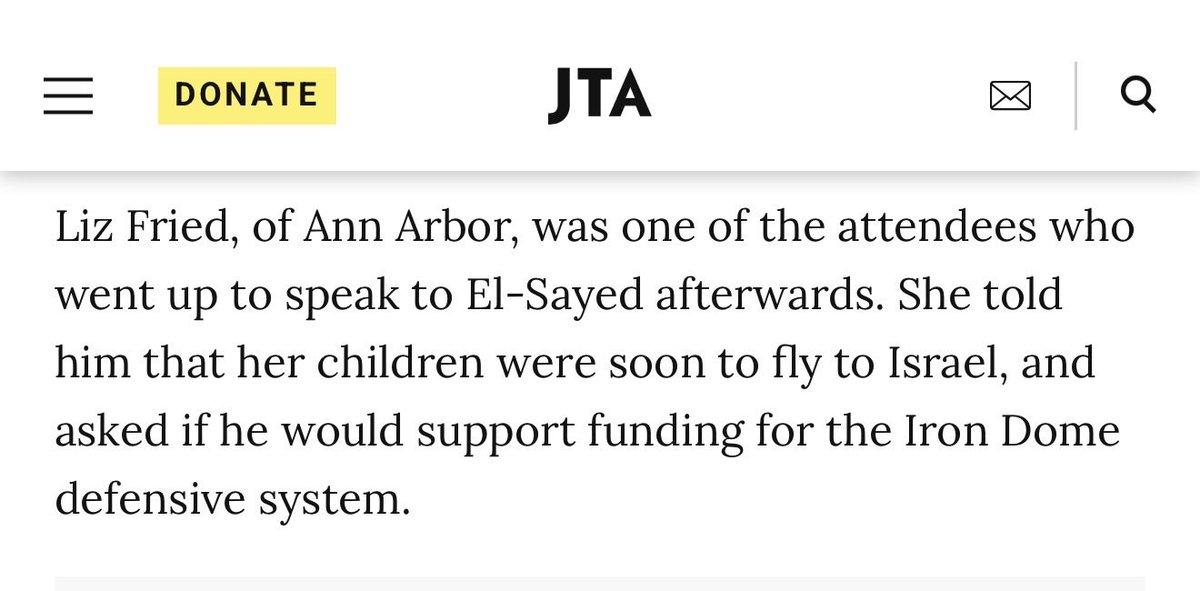
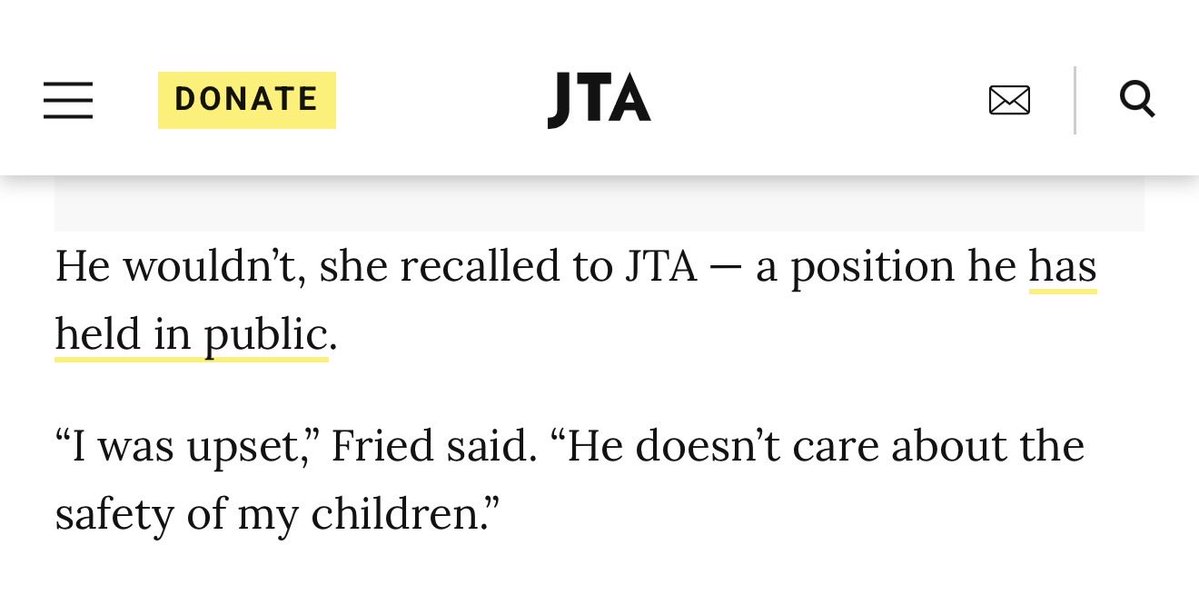
Imagine having to pander to brainwashed ethnosupremacists who believe the US government is obligated to provide an anti-missile system to protect their children’s vacation in a foreign colony
Retired US Navy captain, writing in Military Times:
"The more we learn about the attacks on the U.S. Naval Support Activity (NSA) in Manama, Bahrain, during the opening days of Operation Epic Fury, the clearer it becomes why the news of its near destruction was not initially reported or acknowledged."
https://t.co/wQOMs2luz9
There is something very different about watching Whitney Houston in 1985.🔥🔥
She had not yet become the Whitney Houston that the whole world knew. No massive tours, no stadiums, no legendary ballads, no enormous expectations attached to her name. She was only 22, standing in a television studio in Germany with a microphone in her hand, wearing a leather jacket, a hoodie, and a white headband.
And then she started singing.
What I find most interesting about this performance of How Will I Know is how little she seems to struggle.
The song itself is light, youthful, and almost playful. The rhythm is bright, the melody moves quickly, and the lyrics capture that familiar uncertainty of having a crush on someone: Does he like me? Does he feel the same way? It could easily sound nervous or overly sweet in the wrong hands.
Whitney doesn't sing it that way.
Her voice has an unusual combination of clarity and strength. She doesn't need to push the notes to make them sound powerful. The higher phrases come out cleanly, the pitch stays remarkably stable, and she moves between her chest voice and upper register without making the transitions feel like technical demonstrations.
That is what makes her early performances so fascinating.
You can hear the training, but you don't constantly hear the effort behind the training.
And there is another detail I like even more: she doesn't behave like someone who knows she is about to become famous.
She smiles at the audience. She moves with the beat. She turns toward people standing near the stage. She gives a little gesture here, a playful expression there. Nothing feels excessively rehearsed. She isn't trying to manufacture a “legendary moment.”
She is simply having fun.
That matters.
Because when we look back at famous artists, we often see them through the weight of everything that happened afterward. We know the success that is coming. We know the enormous career, the awards, the expectations, the personal struggles, and the tragedy that would eventually become part of the public story.
But Whitney in this clip doesn't know any of that yet.
She is just a young woman singing a pop song.
And perhaps that is why the footage feels so refreshing.
There is no need to turn her into a symbol of tragedy or perfection. Before all the headlines and expectations, there was simply a remarkable young performer who clearly understood her instrument.
Listen closely to the way she phrases the melody. She doesn't treat every line with the same weight. She knows when to stay light, when to lean into a note, when to release a phrase, and when to let the rhythm carry her forward. Even in a song designed for radio, there is musical judgment happening underneath the apparent effortlessness.
That is the part people sometimes miss when they talk about Whitney only as a “great voice.”
A great voice alone is not enough.
You need control. You need timing. You need phrasing. You need the ability to make difficult things sound ordinary.
Whitney had that ability very early.
And watching her here, I don't think the most interesting question is whether she already knew she was going to become a superstar.
She probably didn't.
The more interesting thing is that, for a few minutes, she didn't need to be one.
She could simply sing.
The world would eventually place an enormous amount of expectation on that voice. But here, in this old television studio, before all of that arrived, we get to see something much simpler: a young Whitney Houston enjoying a song, trusting her technique, connecting with an audience, and sounding completely at home in front of a microphone.
Sometimes the most valuable footage from a great artist isn't the biggest performance.
It's the early one.
The one where you can still see the person before the legend takes over.