@kevinmax Friendly reminder: It’s okay to change. Period. You don’t need to cave to anything. You can embrace whatever you want. #Deconstruction doesn’t require #fundamentalism 2.0
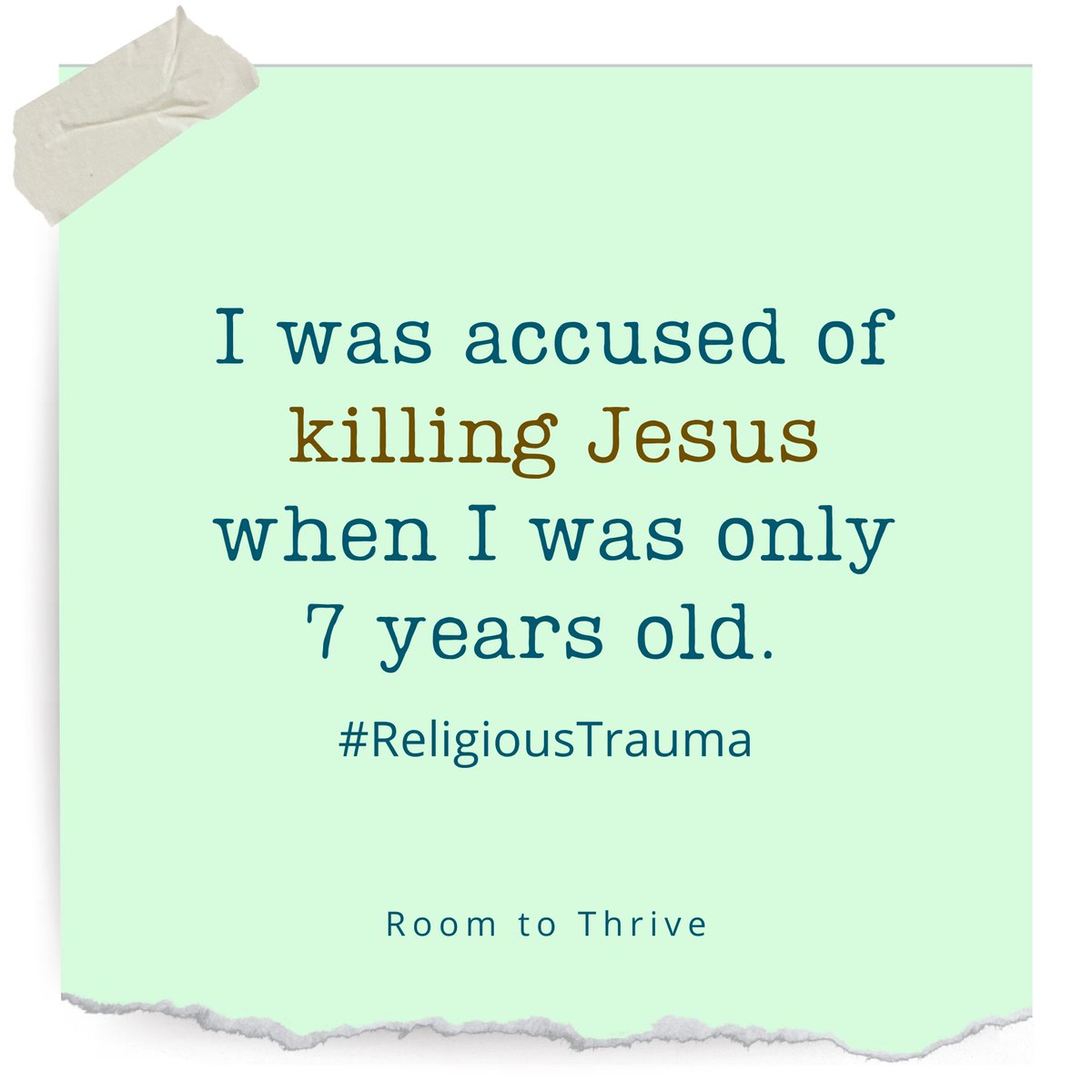
I was accused of killing Jesus when I was only 7 years old.
I still remember the guilt, the shame, the confusion. How was it that my benign childhood behavior was implicated in the murder of an adult I had never met?
It wasn’t your fault your parents got divorced. Your grandmother didn’t get sick because you weren’t nice enough. You didn’t deserve the abuse you experienced. The death of Jesus at the hands of other adults had nothing to do with you talking back to your mom.
Nothing.
Is spirituality functioning as a survival response so you can adjust to oppression?
Is spirituality functioning as an expression of your humanity from a foundation of safety?
Does being spiritual serve a survival need or is it a way of engaging more fully in your life?
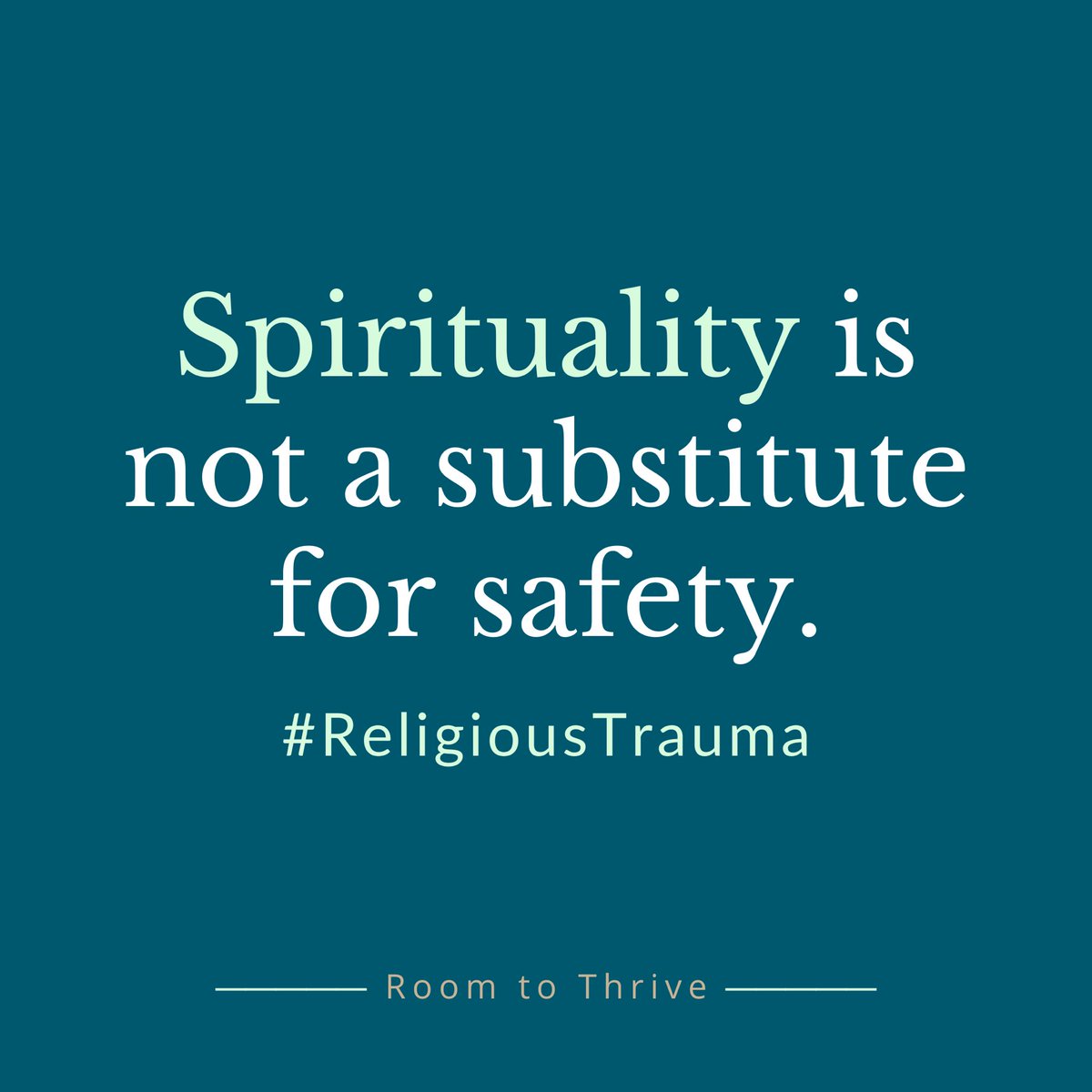
When it comes to #ReligiousTrauma, being spiritual is not a substitute for being safe. In fact, spirituality without safety often functions as a form of dissociation.
"despite no longer believing in hell, or purity culture, or the imminent rapture, they all struggled to overcome the toll those ideologies had taken on their minds and bodies."
Such an important article. Thank you @lauraeanderson@RoomToThrive@C_Stroop
https://t.co/revJYhLQAp
“Denison University political scientist @PaulDjupe estimates that just over 20 percent of American evangelicals, or eight million people, left the church between 2016 and 2020.”
The #EmptyThePews phenomenon turns out to bigger than I realized https://t.co/wA2gK8u7wl
@lauraeanderson bringing it on the reality of religious trauma: "This is trauma, the same way trauma manifests from sexual violence or war."
Great to see quotes from @brchastain @C_Stroop@PaulDjupe. Great work @srussellkraft!
https://t.co/HuXZcO4uBz
Thrilled to have been interviewed for this excellent article on religious trauma!
(And shout out to my amazing friends and colleagues who were also contributors: @RoomToThrive@C_Stroop @brchastain and Kathryn Keller)
https://t.co/35SekFLYoZ
Evangelicalism encourages folks to exist primarily in their minds, in a world of thoughts, beliefs, and mental constructs. Thought control is often viewed as the solution rather than its own source of suffering.