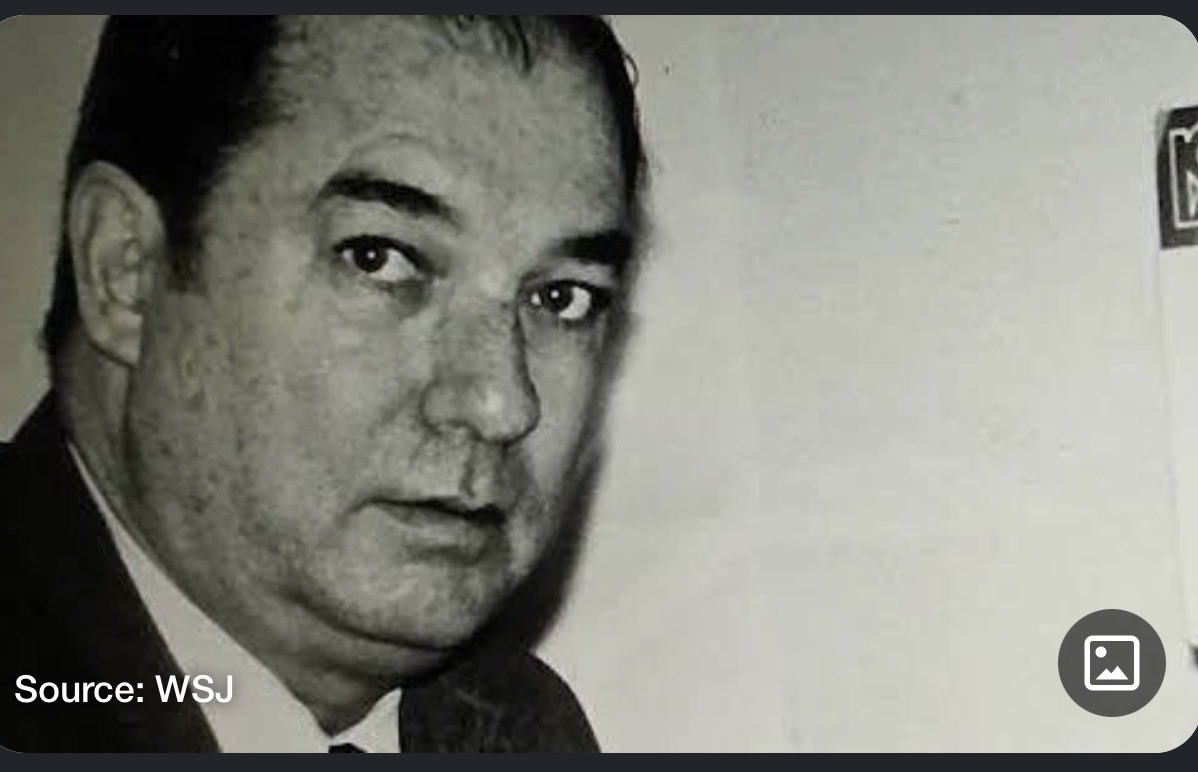
Milton William "Bill" Cooper (May 6, 1943 – November 5, 2001) was an American conspiracy theorist, shortwave radio broadcaster, and author best known for his 1991 book Behold a Pale Horse, which became a foundational text for modern American militia movements and alternate-history subcultures.
Background and Military Service
Early Life: Born in Long Beach, California, Cooper claimed an extensive background in military and naval intelligence.
Naval Record: Public service records confirm he served in the United States Navy as a petty officer second class (E-5), completing a tour of duty in Vietnam.
Discharge: He left military service in 1975 before eventually moving into civilian technical training and the nascent online messaging boards of the late 1980s.
Core Beliefs and Behold a Pale Horse
Published in 1991, Behold a Pale Horse compiled diverse fringe theories into an overarching "superconspiracy" narrative:
Extraterrestrial Collusion: Cooper alleged that the U.S. government entered into secret treaties with extraterrestrial beings in exchange for advanced technology, and that a hidden inner circle (linked to the Illuminati and the Majestic-12 framework) managed the cover-up.
JFK Assassination: He theorized that President John F. Kennedy was assassinated because he intended to expose the presence of extraterrestrials, claiming an analysis of the Zapruder film showed the fatal shot came from the limousine driver.
Public Health Claims: The book also promoted false assertions regarding HIV/AIDS as a manufactured disease engineered to target specific racial and demographic groups.
Radio Broadcasts and Legacy
The Hour of the Time: From 1992 until his death, Cooper broadcast his anti-government and apocalyptic shortwave radio show from Eagar, Arizona, via WWCR. His fierce criticism of federal operations (such as the Waco siege) attracted a dedicated following, including figures within the militia movement.
9/11 Previews: In June 2001, Cooper stated on air that a major impending domestic attack would be blamed on Osama bin Laden. Following the September 11 attacks, he publicly debated the official narrative on his broadcasts.
Cultural Footprint: Cooper's writings and terminology influenced various pop culture domains, including 1990s hip-hop artists (such as members of Wu-Tang Clan and Public Enemy) and thematic elements in media like The X-Files.
Legal Conflict and Death
Tax Evasion Charges: In 1998, Cooper was charged with federal tax evasion and became a fugitive from a U.S. Marshals Service warrant after eluding authorities for years.
Fatal Confrontation: On November 5, 2001, Apache County sheriff's deputies attempted to execute an arrest warrant at his Eagar, Arizona, home regarding separate local disputes. Cooper shot a deputy in the head during an exchange of gunfire and was fatally shot by law enforcement at the scene.
President Bill Clinton’s administration reportedly labeled Bill Cooper
"the most dangerous radio host in America."
According to Cooper's narrative, the comment came to light shortly after the April 19, 1995, Oklahoma City bombing. Cooper claimed that a White House directive targeting far-right militia media was issued in the weeks following the attack, and that conservative commentator Rush Limbaugh read a portion of this memo live on his own broadcast, exposing the "most dangerous" label to the public.