@MartiniGuyYT#btc is destroying itself. Note the NGO s aren’t moving money ? Note who did the NGOs payoff ? The politicians !
What did they use ? #BTC. Note bitcoin has zero real use case other than fraud deceit deception . Are you finally paying attention?
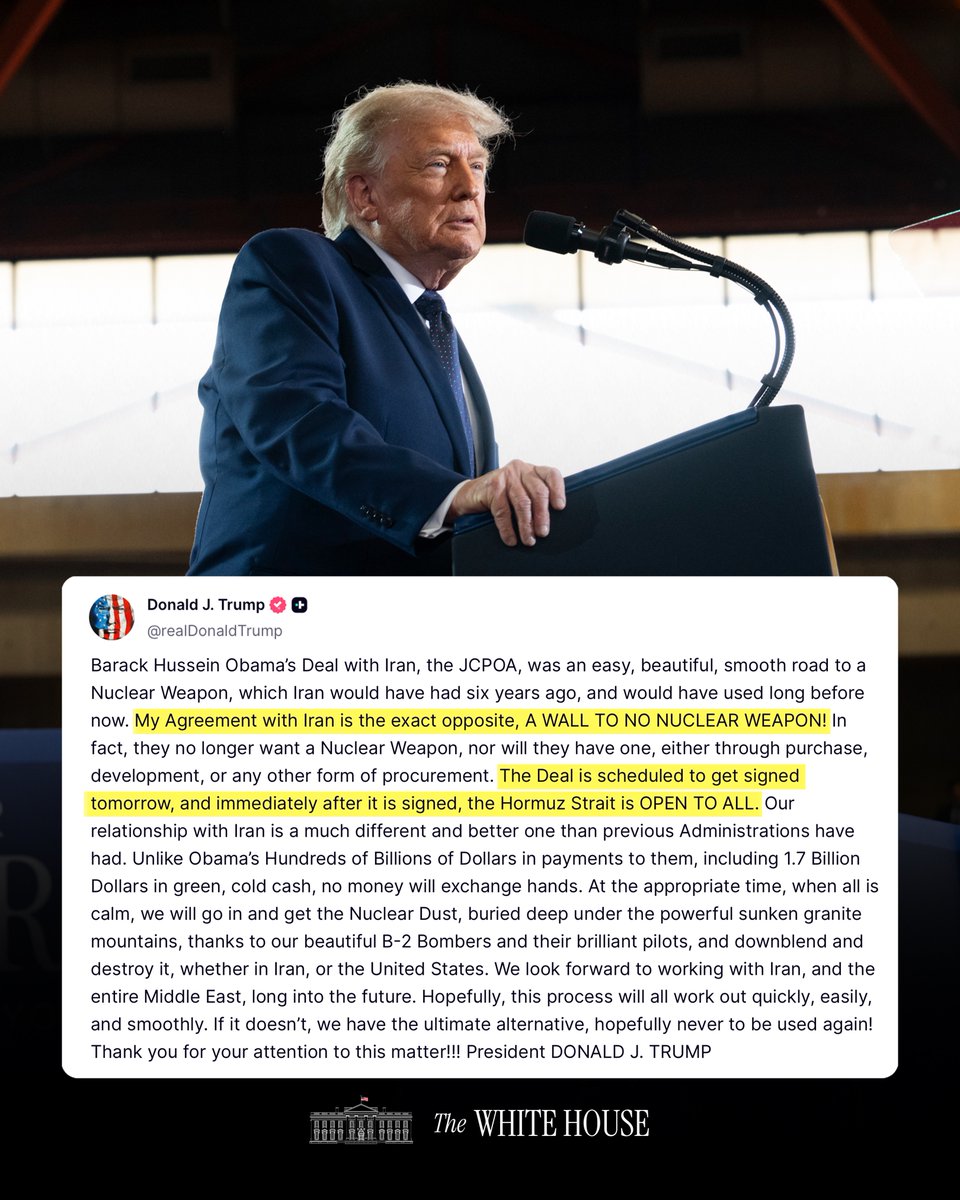
It is not Trump it is garbage !!
No one is prepared for what XRP is going to become. The new hub of global liquidity, from San Francisco to the world, all coordinated by Ripple, the IMF, the World Bank, and the BIS.
The DTCC will settle a large portion of its volume in XRP (the majority); Nadine Chakar knows this, but she hasn’t announced it because she knows it would trigger chaos in the price of XRP.
Settlement is what really matters that’s where the value and institutional money flow. The price will be very high; I’m not mincing words here.
Concerns have been raised about the possibility of front running or transaction sandwich attacks on XRPL payments and offer crossing.
For the reasons I've explained, I'm not that concerned about this issue. But I have a proposal for a fairly simple scheme that would eliminate this attack. It's a transaction reservation scheme that can ensure that a transaction executes before any transaction that was formed after it was disclosed.
This is the scheme, and it eliminates concerns about front running or sandwich attacks.
Reserving Transaction Slots
A new ledger object is proposed, ReservedTxns. It contains a ledger sequence number and an array of transaction IDs. It is stored at an index that is formed from a hash of a fixed string and the ledger sequence number.
A new transaction is proposed, TxnReserve to reserve an execution slot for a transaction. It takes a ledger number and transaction ID as parameters.
It succeeds if:
1) It pays a fee of at least twice the normal transaction fee.
2) It meets all the normal transaction execution requirements.
3) The ledger sequence number specified in the transaction is greater than that current ledger sequence number and not more than 16 ledgers greater than the current ledger sequence number. The transaction TECs if this test fails.
4) The ReservedTxns object for the specified ledger sequence number either does not exist or if it exists it contains fewer than 32 transaction IDs and does not contain the specified transaction ID. The transaction TECs if any of these tests fail.
If it succeeds, it creates a ReservedTxns object for the specified ledger index if one does not exist. It then adds the specified transaction ID to the end of the array of transaction IDs in the object.
Broadcasting Reserved Transactions
If a transaction has a reserved slot in ledger X, the transaction should be broadcast as soon as it is known ledger X-1’s initial proposals are all received or the final consensus transaction set is known. The XRPL software should be modified to provide a feature to disclose when that occurs and, if desired, to hold a list of transactions to broadcast when, and only when, that happens.
The XRPL software should always broadcast a transaction with a reserved slot if that transaction has not been broadcast recently. This should apply even if the server thinks the transaction will not succeed. Its relaying has already been paid for by the doubled fee for the reservation transaction, so this is not an attack.
A transaction that is intended to execute as a reserved transaction should have its last valid ledger set to the ledger it is expected to execute in. This ensures that if it is somehow delayed, it still cannot be sandwiched or front run.
Execution Mechanics
As each ledger executes, the following steps are added prior to the execution of any transactions in the transaction set:
1) The ledger object containing the reserved transactions for this ledger sequence number is retrieved. If there is none, skip the rest of these steps and execute transactions normally.
2) For each transaction ID in the set of reserved transactions, that transaction is executed if it is in the consensus set and removed from the consensus set so it will not execute again.
3) The reserved transactions object for this ledger sequence number is removed from the ledger.
DoS Attack Resistance
There is a theoretical attack on this scheme where an attacker could fill up all reservation slots for many ledgers as a denial of service to others to prevent them from being able to use this scheme to protect their transactions. This is mitigated by the fact that they would have to pay continuously and others could simply wait the attack out. However, the cost is low enough that someone could theoretically do this indefinitely.
A simple fix is to ratchet up the fees for the reservation transaction as the object starts to get full. For example, when we hit 16 reserved slots, we could begin to raise the fee linearly up to the base reserve. By the time we hit 30, the fee could go up to three times the base reserve.
If needed, we could even raise the limit to 64 if people are willing to keep paying fees. It’s likely that this would never result in such fees being paid and simply make the attack impractical. An attacker would have to pay, every five seconds, several times the most anyone would be willing to pay to protect their transaction.
"Government Cheese" was produced in the 1980s to offload a massive dairy surplus which was then stored in massive underground caves in Missouri and given to struggling Americans. The surplus stemmed from policies that left the U.S. government with over a billion pounds of cheese.
The origins of "government cheese" can be traced to federal agricultural policies of the 1970s. To support dairy farmers, the U.S. government guaranteed minimum prices for milk. As production increased faster than demand, the government was required to purchase excess butter, powdered milk, and cheese, creating enormous stockpiles.
By the early 1980s, the federal government owned more than 500 million pounds of cheese, along with large quantities of other dairy products. Much of it was stored in underground limestone caverns near Springfield, Missouri, where the naturally cool temperatures made long-term storage practical.
In 1981, President Ronald Reagan's administration began distributing the surplus to food banks, schools, Native American reservations, and low-income families. For many Americans struggling during the recession of the early 1980s, the distinctive blocks of processed cheese became a familiar part of life and a lasting cultural symbol of federal food assistance.
The dairy surplus became so large that maintaining it cost taxpayers hundreds of millions of dollars. At one point, the federal government was spending roughly $2 million per week simply to store excess dairy products.
#archaeohistories
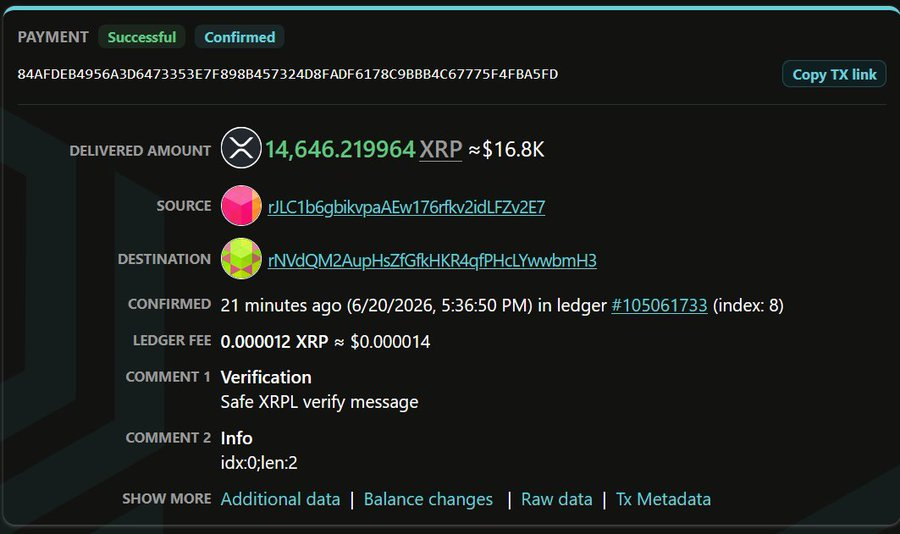
🚨 SCAM ALERT: Another XRP holder just lost 14,646 XRP $16.8K to a payment request attack.
The bait? "10% monthly rewards" + a memo that reads Safe XRPL verify message." Attackers write the memo themselves Safe in there means absolutely nothing.
Always double check what you're signing. Your wallet won't save you your habits will. 🔐
**By December 31, 2026, every US Treasury trade in America must clear through DTCC’s FICC**
No exceptions. No opt-out. Regulatory mandate.
$28 trillion in annual volume. Forced into one pipeline.
DTCC’s clearing subsidiary — **FICC — is mandating that every single US Treasury trade route through it by December 31, 2026.
Every. Single. One.
That’s not a pilot. Not a proposal. Not a working group.
It’s a regulatory deadline. From DTCC’s own website.
$28 trillion in annual Treasury volume forced into a single clearing pipeline in 6 months.
DTCC acquired Securrency — rebranded as DTCC Digital Assets — whose protocol natively supports the XRP Ledger.
Nobody is talking about this.
Because it just happened**
The infrastructure clearing every US Treasury trade by year-end already has XRPL in its stack.
Most people will find out later.
You just found out now.
Japan raising interest rates...
DTCC about to open the door to blockchain...
SWIFT to launch cross-border payments by the end of the month...
Tether about to be delisted in Europe...
Everything is moving forward, and it looks like it’s all going to happen at once.
Not everyone is prepared to wait for a global financial transformation. That is precisely why the greatest opportunities are often visible only to a select few.
XRP