WORKac’s Riverhouse shows how structural design can turn site constraints into defining features. The timber-clad base elevates the house above a floodplain, combining flood resilience with a compact, sculpted form. Thick, insulated walls and carefully placed openings support Passive House performance while framing long views and a central courtyard.
The faceted blue metal roof integrates solar panels and directs light into the interior, while the elevated structure maintains stability and performance in a challenging environment. Timber, glazing, and steel connections are coordinated to support the expressive geometry and the year-round energy efficiency goals.
Elevation, structure, and materials work together to make climate adaptation a visible and integral part of design. https://t.co/hbZ7EJLjRy
Scaffolding is coming down on the Flatiron Building, revealing its iconic façade after years of careful restoration. This office-to-residential conversion pushes the limits of adaptive reuse for a 124-year-old steel-framed skyscraper. Replacing nearly 1,000 windows, restoring the six-foot cornice, and upgrading the internal HVAC system requires precision planning to protect the original steel and glazed terracotta structure.
The project team integrated modern amenities like an indoor pool, spa, and fitness center while preserving the building’s historic integrity. Every modification demands coordination between structural reinforcement, façade work, and interior layouts. Temporary scaffolding, netting, and staged material installation were key to maintaining safety and structural stability throughout the process.
It is inspiring to see the Flatiron continue to evolve while retaining the structural elegance that has defined it for over a century. https://t.co/Y4op5zTFoN
I’m excited to see the new Canarsie Library taking shape as one of the first public mass timber buildings in New York City. Mass timber supports the community’s request for a warmer, more natural space while doubling the usable area to about 11,000 square feet.
The rebuild required careful coordination across design and construction teams. Shawmut’s quality assurance planning ensures exposed mass timber remains protected, and integrating the glass curtain wall directly into the cross‑laminated timber structure emphasizes precision and energy efficiency.
This project demonstrates how structural solutions enhance both performance and user experience. https://t.co/MF0cnbVq11
Tropical buildings are heating up, literally. Cooling now drives up to 50% of operational energy in homes, and rising populations will push demand even higher.
Retrofitting existing buildings with low-energy solutions is more impactful than only building new green structures. Passive cooling, energy-efficient appliances, and solar-reflective materials can cut emissions while keeping people comfortable.
Partnerships and catalytic capital are key. Initiatives like the Clean Cooling Collaborative show that sustainable, net-zero-ready buildings are possible and urgent for people and the planet. https://t.co/LJ5NSO8lRw
Perched on a rugged escarpment, the Burgess House is a feat of structural ingenuity. Kaptur’s original post-and-beam framing and Frey’s vaulted guesthouse create cantilevers and mirrored walls that float above the desert landscape.
Renovation preserved these daring elements while modernizing safety. Barrel-vaulted roofs, arched balustrades, and integrated boulders were carefully stabilized to respect original loads and enhance structural performance.
This project shows how engineering can do more than support architecture. It elevates it, allowing midcentury modernism to shine with beauty and enduring stability. https://t.co/WvOy1Maq5G
New research is turning assumptions upside down. In mass timber buildings, water from sprinklers may cause more structural damage than the fire itself. Full-scale tests showed that while charring was limited, thousands of liters of sprinkler water penetrated hidden connections, making post-incident drying and repair a challenge.
The findings highlight a critical gap in building safety practices. Standard moisture checks often miss water trapped in voids, meaning structures can remain at risk even after the fire is out. Targeted airflow and removal of floor layers were required to bring timber back to safe moisture levels.
For anyone working with mass timber, this research is a wake-up call. Fire suppression saves lives, but water damage deserves equal attention if we want buildings that are resilient. https://t.co/78DX4WaCMa
Snow doesn’t pile up on roofs the way we thought. New research shows turbulence and snowflake size matter a lot. Bigger flakes stick and build up more, while wind reshapes everything. A simple average size can still predict snow loads pretty well. https://t.co/hXT4w4m0Jm
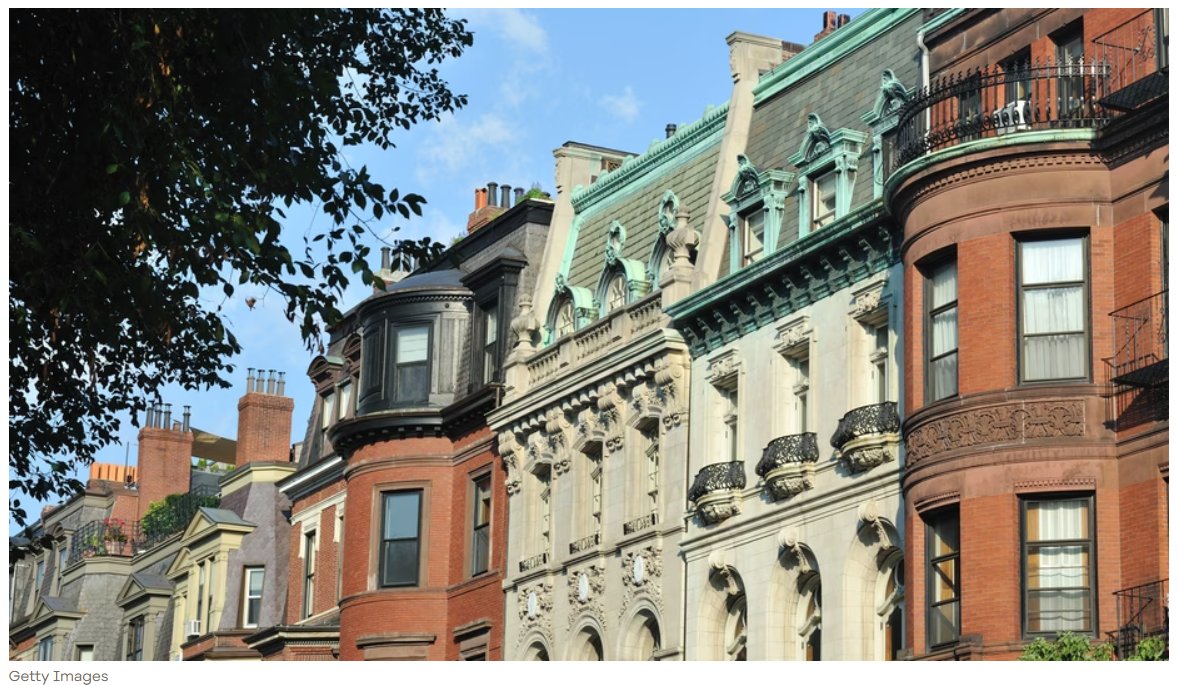
Boston is dealing with a quiet but serious structural issue beneath its streets.
Roughly 8,000 historic buildings sit on timber pilings driven into reclaimed land from the 1800s. For decades, those wood foundations held up because they stayed submerged below the groundwater table.
Now that condition is changing.
As groundwater levels drop due to urban development, oxygen reaches the exposed timber. The result is predictable to any structural engineer: accelerated decay, loss of bearing capacity, and gradual settlement of the structure above.
What stands out here is the visibility problem.
The damage isn’t obvious. By the time signs like cracking, uneven floors, or settlement appear, deterioration is already underway. That puts more weight on proactive monitoring, subsurface data, and early engineering intervention.
There’s also a broader takeaway. Legacy foundation systems, especially those tied to environmental conditions, don’t fail suddenly. They degrade when the assumptions they were designed around no longer hold.
Boston is a case study in how infrastructure, groundwater management, and structural performance are deeply connected.
Curious to see how other cities with historic fill are addressing similar risks.
Frank Gehry turns cities into playgrounds of form and imagination. In a field of quiet names, he stands loud and lasting. His bold, whimsical design can redefine architecture itself. Take a look at these fascinating structures. https://t.co/UMJvlgkjxJ
Great buildings come from strong collaboration.
The relationship between an architect and a structural engineer is where creativity meets reality. One imagines the form, the experience, and the story a space will tell. The other makes sure that vision stands safely, efficiently, and sustainably.
When that partnership works well, something powerful happens:
• Ideas stay bold while becoming buildable.
• Challenges lead to smarter, more refined solutions.
• Projects move forward with clarity and fewer surprises.
At the core, it comes down to trust, communication, and a shared commitment to getting it right.
The best outcomes aren’t architect-led or engineer-led. They’re built together.
The Lehigh Valley is proving that steel bones can carry new life. Foundations once built for heavy manufacturing are now supporting modern housing, offices, and cultural hubs. Structural engineers are at the center of this transformation, blending old load-bearing frameworks with new design demands without compromising safety or vision.
Integrating century-old steel columns into vibrant, mixed-use developments demands strategic judgment. Decisions about which elements to preserve or reinforce directly impact everything from energy efficiency to occupant experience. Projects like The Waterfront show that careful engineering can turn rusting relics into thriving, pedestrian-friendly urban districts.
Every adaptive reuse project is a chance to rethink infrastructure. When structural integrity meets imaginative design, cities reclaim their identity and their future. https://t.co/06am8QZrMk
Machine learning can predict connection forces or flag structural issues, but the real question is how engineers prove they’re in control. Documentation that traces every decision, explains overrides, and sets clear boundaries turns complex algorithms into safe, auditable work. Skip that, and the same building suddenly looks like a product of someone else’s liability.
Sharing methods early and formalizing operational rules keeps surprises from becoming disputes. Even small details, like how thresholds are adjusted or when alerts trigger, can make the difference between clarity and confusion.
When every decision is visible and justified, machine learning stops being a black box. It becomes a tool that strengthens accountability and keeps buildings and teams protected.
https://t.co/bwj2tC7e6U
Cantilevering a massive upper volume reshapes how people move below.
Shading, circulation, emergency access, and views all hinge on precise structural balance. Using ventilated aluminum panels, they turned performance into poetry, making fire resistance and energy efficiency part of the aesthetic.
The offset bars create a spine that guides daily life while a floating mass above defines private and communal zones. Every beam, every slab, every connection decides if the architecture supports experience or collapses under it.
This is engineering thinking as design, not decoration. https://t.co/r6ErKTZ5Nz
Buildings don’t have to crumble to prove they survived an earthquake. At UC Berkeley, the Grimes Engineering Center literally snaps back into place. The tension rods, made from shape-memory alloys, bend during a quake and spring right back, keeping the building usable the moment shaking stops.
This approach changes the trade-offs in structural design. Instead of accepting post-earthquake downtime, engineers can prioritize elasticity and long-term usability while cutting embodied carbon by nearly half. It’s proof that smart material choices and bold thinking can solve multiple problems at once.
When structures recover on their own, communities bounce back faster. Resilience is something you can see in action. https://t.co/nZz8psEDIP
The recent forensic study on roofing systems in Tampa after Hurricanes Helene and Milton offers some fascinating insights for structural engineers. By examining over 30 residential roofs, the investigation highlighted how wind pressures interact with roof discontinuities - corners, edges, and ridges - which are often the first points of damage during severe storms.
What stood out is how careful adherence to installation standards and building codes critically determines a roof’s resilience. They generally performed well when fasteners, adhesives, and manufacturer guidelines were correctly followed. Failures were mostly linked to installation deficiencies, material aging, or deferred maintenance, not the wind itself.
For anyone working in coastal regions, these lessons are invaluable for improving resiliency and protecting buildings before the next storm hits.
https://t.co/9wJOIdbQ9k
Slope-Rise from the 2025 Skyscraper Competition is an exciting approach to building high-rises on Hong Kong’s steep slopes. Instead of leveling the land, it uses a three-part cantilever system with hanging sections and counterweights, balancing loads while fitting the natural terrain.
The design even integrates a slanted core for circulation, connects with the slope along multiple floors, and replaces conventional concrete columns with steel cables, making it lighter, flexible, and cost-effective.
Terraces created by the cantilevered structure improve airflow, circulation, and micro-ecosystems, while still supporting diverse housing layouts.
This project shows how structural engineering can creatively solve urban challenges while enhancing livability in difficult terrain.
https://t.co/wohijmTpMF
Meta is taking an innovative step by using mass timber in its data center campuses, swapping out traditional steel and concrete to cut embodied carbon emissions. The first administrative building at Aiken, South Carolina, shows how cross-laminated timber can provide both structural durability and sustainability, reducing the building’s embodied emissions by an estimated 41%.
Mass timber isn’t just lighter than concrete or steel. It also reduces foundation loads and allows for modular, precision construction. Meta’s ongoing projects in Wyoming and Alabama will continue to explore how timber can perform in large-scale, industrial-type buildings while supporting net-zero goals.
It’s exciting to see a major tech company treat structure and sustainability as one integrated solution, showing that even high-performance facilities like data centers can benefit from innovative structural materials. https://t.co/OUILfzTUFV
March is more than just a change in seasons. It’s a chance to spotlight Expanding Girls’ Horizons in Science and Engineering Month, a celebration dedicated to inspiring young girls to explore the world of STEM. With women still making up only around a quarter of the U.S. STEM workforce, initiatives like this are critical to breaking down barriers and opening doors.
What I love most about this month is its focus on hands-on learning and mentorship - real experiences that spark curiosity and confidence in science, technology, engineering, and math. Every experiment, every conversation with a mentor, every new skill learned is a step toward building the next generation of female leaders in STEM.
If you have the opportunity, consider volunteering, mentoring, or just sharing your journey in STEM. Small actions can have a big impact. Let’s celebrate the curiosity, creativity, and determination of these future innovators!
The new Robert F. Wagner Jr. Park in New York City is a good example of how structural systems are starting to shape public space along the waterfront.
The park was raised nearly 10 feet as part of the South Battery Park City Resiliency Project. A sheet pile floodwall driven to bedrock sits beneath the landscape, tying into the broader flood defense system for Lower Manhattan.
What’s interesting is that most of that infrastructure is invisible. The protection is built into the terrain, so the park still reads as open public space while functioning as coastal defense. https://t.co/R2F0TuwxjW
Rooftop sports courts bring new life to a school.
What’s impressive here is how the stone walls do double duty, carrying the roof while adding thermal stability, while the timber roof keeps the space warm and inviting. Balancing heavy masonry with timber takes careful planning, but it pays off in durability and comfort for students. https://t.co/DHyUTfELgT