Denzel Washington had a 1.8 GPA when his university asked him to leave. Years later he stood at a podium and told 5,000 Ivy League graduates: "If you don't fail, you're not even trying."
March 1975. He'd switched majors three times at Fordham: pre-med, pre-law, journalism. Cardiac morphogenesis was the course that broke him. He couldn't pronounce it. He couldn't pass it.
He was 20 years old, sitting in his mother's beauty shop in Mount Vernon, when an elderly woman under a hair dryer pointed at him and said he was going to travel the world and speak to millions of people.
He went back to Fordham and switched majors a fourth time. Theater.
Two years later he played Othello as a senior. Graduated 1977. American Conservatory Theater in San Francisco. Film debut 1981. Best Supporting Actor for Glory in 1989. Best Actor for Training Day in 2001. Tony in 2010. Presidential Medal of Freedom in 2025.
In 2011, Penn picked him as commencement speaker. The Oscars and the Tony made him eligible. His son Malcolm, a sophomore studying film, made him the actual pick. The university secretary called him their first choice, no debate.
The speech itself is about failure. He told the graduates he once had a 1.8 GPA. He failed an audition for a musical because he couldn't sing. He delivered it all in the cadence his father used in the pulpit. Reggie Jackson's 2,600 strikeouts. Edison's 1,000 failed experiments. The "fall forward" refrain ran the entire 22 minutes.
A single YouTube upload of the speech has crossed 35 million views. Every motivational compilation runs it. Every business school plays it.
The woman in the beauty shop said millions. She was off by two orders of magnitude.
This is actual brotherhood. NHL star Johnny Gaudreau was killed by a drunk driver before he could play for this Olympic team.
When Team USA won gold yesterday, they didn’t just hold his jersey. They pulled his two babies onto the ice and put them right in the center of the world's biggest stage. A completely heart-wrenching moment
STEPHEN BUCHANAN JUST TECHED HASSAN YAZDANI.
13–3 in the Zagreb Open 97 kg Finals.
World champ. Olympic champ. One of the greatest ever.
And Buchanan ran through him.
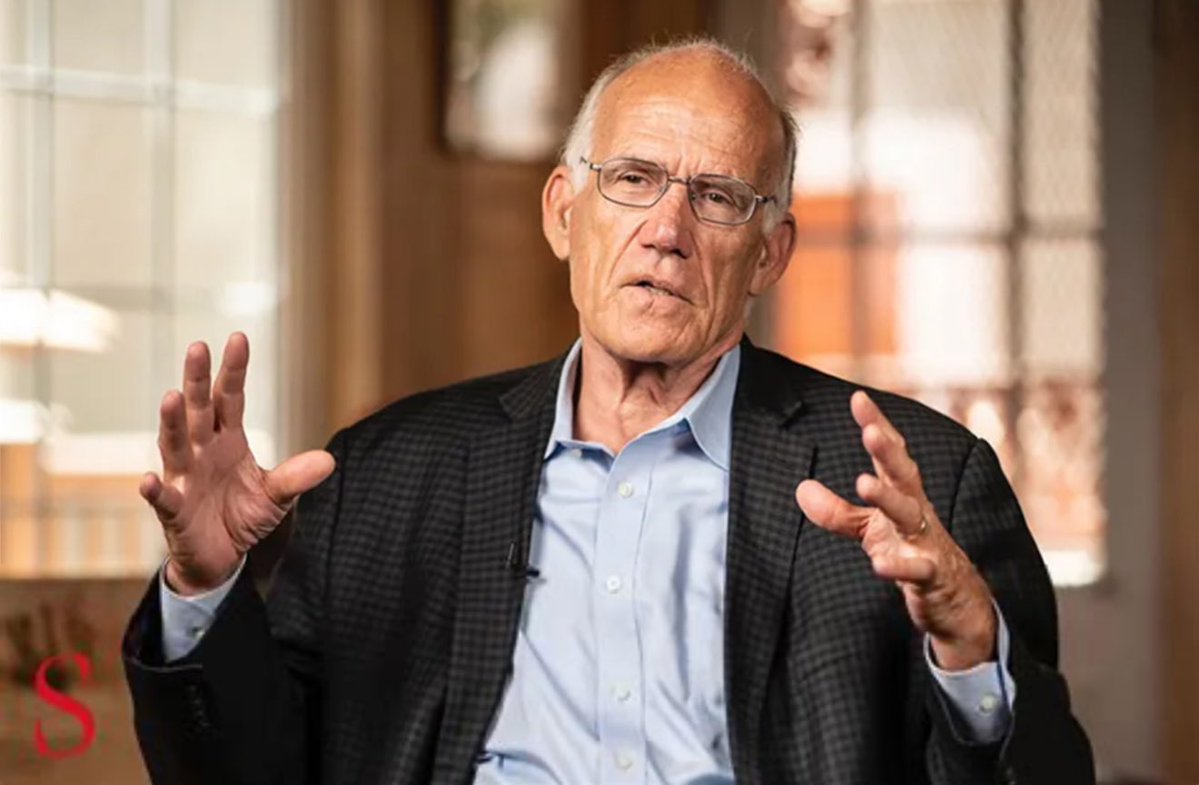
My friends, please take a moment right now to stop what you’re doing and pray for Victor Davis Hanson. This national treasure is confronting a major health challenge and especially today needs us to lift him up in prayer. Thank you.
⚡️Brady is describing a self-engineered compulsion.
What separated him was not motivation, discipline, or love of the game. It was that he removed the option to be casual from his nervous system. Practice was not a means to an end. It was the environment where his identity lived. There was no psychological transition between “getting ready” and “performing.” That boundary simply did not exist for him.
That’s rare, and it’s not benign.
At that level, excellence stops being a choice and becomes maintenance of self-coherence. Sloppiness feels like ego death. Letting reps slide creates internal noise. The body responds with anxiety, irritation, and aggression until standards are restored. That’s the “psychopath” he’s hinting at. Not cruelty. Intolerance for internal disorder.
Most people cannot sustain this because it rewires your relationship with rest, joy, and other people.
You don’t relax.
You don’t turn it off.
You don’t feel satisfied for long.
You feel stable only when the system is tight.
That’s why this approach produces dynasties in narrow, rule-bound arenas and produces wreckage when applied broadly. It works in environments where the score is objective, feedback is immediate, and the hierarchy is real. Football qualifies. Most of life does not.
Here’s the uncomfortable truth people don’t say:
This level of greatness requires sacrificing parts of your humanity voluntarily before life takes them from you involuntarily.
Brady traded:
•emotional looseness
•relational flexibility
•novelty without purpose
•periods of being unaccountable
for:
•inevitability
•precision under stress
•dominance over time
•immunity to pressure
And it worked because the arena rewarded it cleanly.
Most people want the outcome without the cost. They want to feel intense sometimes and relaxed most of the time. That combination does not produce outliers. It produces competence.
Brady wasn’t trying to “be his best.”
He was trying to never betray his internal standard, even for a single rep.
That’s why practice mattered more than game day. Game day is exposure. Practice is programming.
And here’s the final, quiet truth:
This mindset is a tool.
Used deliberately, in a narrow domain, with eyes open, it creates legends.
Used unconsciously, everywhere, it creates tyrants, addicts, and broken families.
Brady chose the cost knowingly.
Most people flirt with the aesthetic and recoil from the reality.
That’s the real signal underneath his words.
Listen to the crowd roar! Our troops love having a real Commander in Chief again, a President who loves his country and is proud to be an American.
And these opening remarks by the head referee are the best I’ve ever heard:
“Mr. President, thank you for your leadership and your continued support of our service members and our veterans. It’s an honor to have you here today. To the men and women in uniform, to all of our veterans, and their family members, thank you for your service. Thank you for protecting this great country and thank you for protecting the freedoms that we enjoy each and every day.”
If you are a Packers fan please take 2 minutes out of your day to listen to this. When Vince Lombardi died Paul Harvey took 2 minutes to talk about him. I promise it’s 2 minutes worth your time.
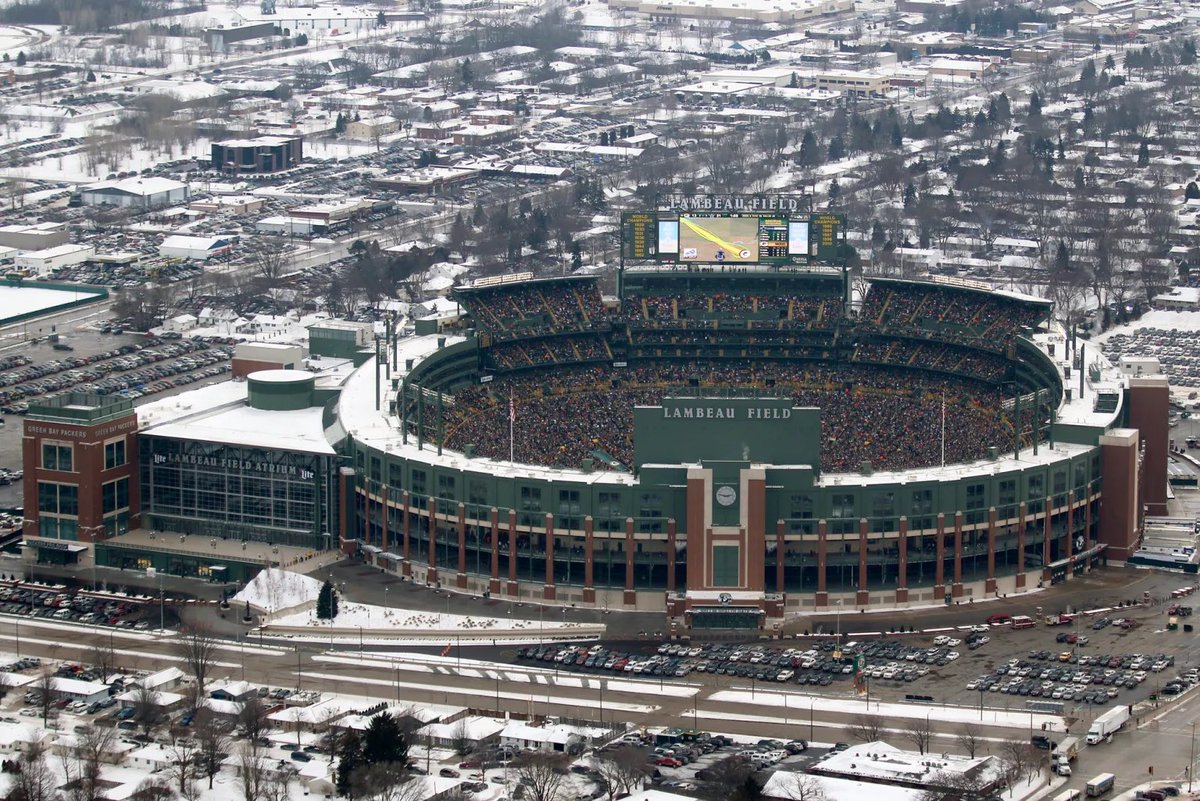
Once the Bears open their new stadium, the Packers will stand alone as the only NFC North team still playing outdoors.
Football was born in the mud, wind, and freezing temps—not in climate-controlled stadiums.
The NFC North used to be the toughest division in football because Mother Nature was the ultimate home-field advantage. Now everyone else is going soft.
Lambeau Field FOREVER. The rest can have their bounce-house arenas.
#GoPackGo
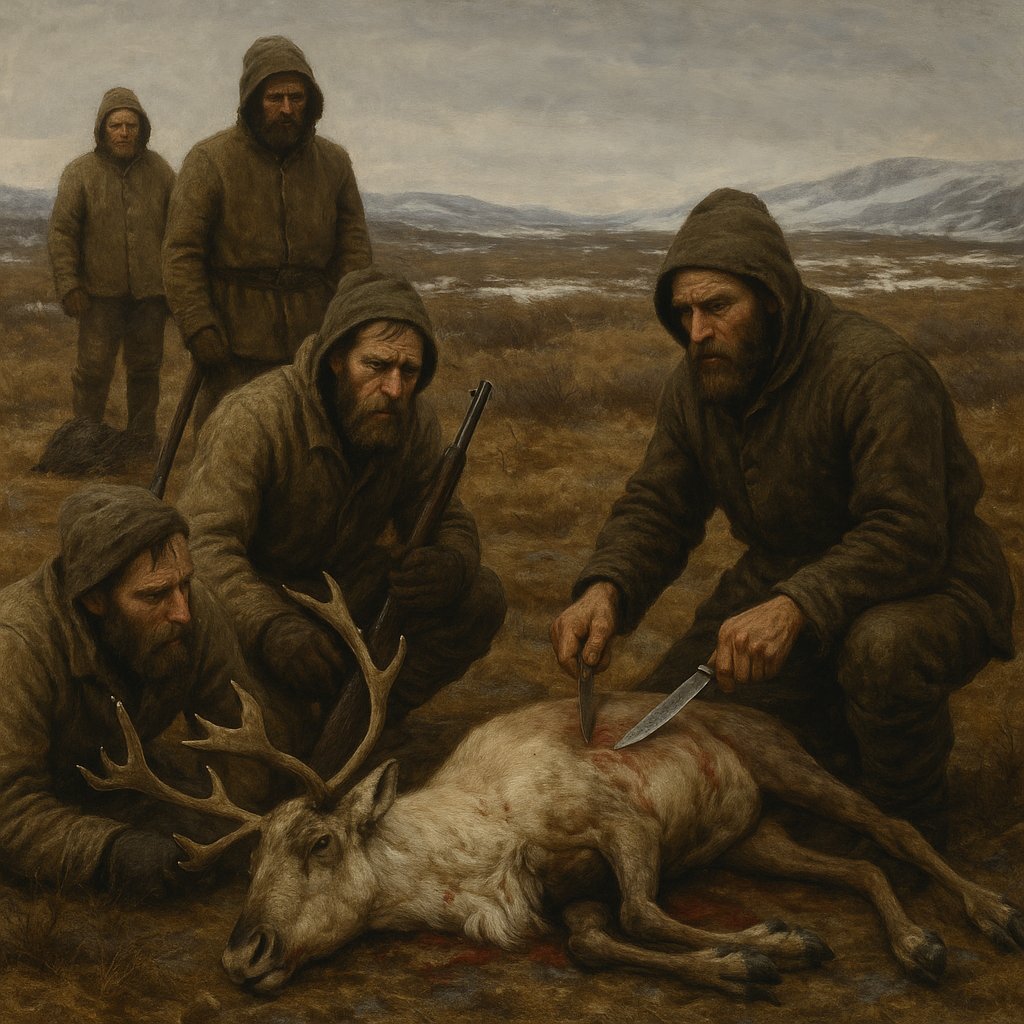
1856, Canadian Arctic. A British expedition led by Francis Leopold McClintock is searching for Franklin's lost ships. They're running low on supplies. They shoot a caribou. The men are starving.
They examine the carcass and make a decision that baffles the historians who later read their journals: they leave most of it behind.
Not because they can't carry it. Because it's too lean.
This is spring caribou. The animal has burned through its fat reserves surviving the Arctic winter. What remains is almost pure protein. The hunters take the tongue, crack open a few bones for what little marrow is there, and abandon the rest. Several hundred pounds of meat left for the wolves.
The ship's doctor records this in his journal with confusion. Men are on short rations and they're leaving food behind. It doesn't make sense to him. But it makes perfect sense to the Inuit guides traveling with them. They tell him what they've known for thousands of years: lean meat will kill you faster than no meat at all.
The explorers have unknowingly encountered the metabolic reality that European medicine won't formally document for another 50 years: protein poisoning. Your liver can only process about 200-300 grams of protein daily. Beyond that, the ammonia from protein metabolism builds up faster than your body can convert it to urea and excrete it. You get nausea, diarrhea, hyperammonemia. In extreme cases, death.
The Inuit call lean caribou "starvation food." You can eat until your stomach hurts and you'll still waste away. The fat is what keeps you alive. Without it, the protein becomes toxic. The body desperately needs the calories from fat to process the protein you're eating. It's not optional biochemistry. It's survival.
Three weeks later, the expedition shoots another caribou. This one is autumn-fat, thick with the reserves it's built up eating all summer. The men take everything. They render the fat carefully. They roast the meat. They crack every bone for marrow. Nothing is wasted. The difference in the animal's condition means the difference between food and poison.
The doctor notes that the men's health improves dramatically after the fat caribou. Their energy returns. Their mood lifts. They can work longer hours. He attributes this to finally getting adequate food. He's half right. They're getting adequate fat. The protein is just along for the ride.
McClintock's expedition survives and returns to England. The doctor's journal is published. The parts about abandoning lean caribou are read as interesting cultural notes about Inuit superstition. No one considers that maybe the Inuit are right and European nutritional understanding is catastrophically wrong.
Your modern nutritionist tells you to choose lean cuts and trim visible fat. Your ancestors would have recognized that advice as a death sentence. They knew what your nutritionist apparently doesn't: fat is fuel. Protein without fat is poison.
This isn't a preference. It's biochemistry that's been tested by survival for millions of years.
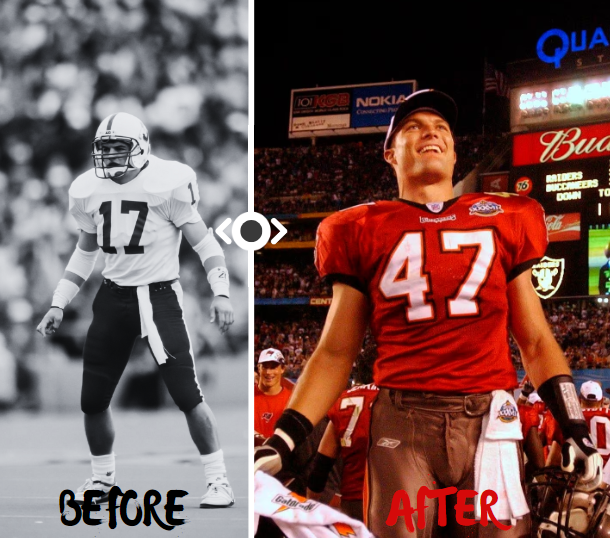
In 1994, John Lynch was a backup safety at Stanford.
He had barely played for 3 years and was ready to quit to play baseball.
But that offseason, Stanford hired Bill Walsh as its head coach.
One conversation with Bill changed everything.
Bill Walsh called John and said, "I watched the tape and you're our best defensive player. I want you back. I think you can be a pro bowl safety."
John Lynch said it blew his mind. He had only played 50% of the snaps last year. He thought Bill Walsh was just "recruiting and selling" him.
Bill told John to come to his office next week and he would show him.
John showed up and he was amazed.
John said, "In true Bill Walsh fashion, he not only told me, he showed me. He made a tape of 10 plays, 5 were Ronnie Lott (who Bill coached) and 5 were me. He would show a play that Ronnie made and then a similar play that I had made."
Bill said, "What do you think now?"
John said, "I'm all in now." He called the Marlins and told them he wasn't quitting football just yet.
John Lynch took off in his senior year. He even learned some great tricks from Joe Montana and Ronnie Lott when they would come by for practice.
Ronnie told him to visualize hitting through people. Imagine there are 4 people and that you hit through all 4 of them.
That advice along with Bill Walsh's belief was just the beginning for John Lynch and his future hall-of-fame career.
Takeaway 1: Your belief in someone or someone's belief in you can be transformative.
John Lynch had doubts about himself and his future, but Bill Walsh's belief in him changed his perspective. Walsh's recognition and assertion that Lynch could be great gave him confidence and a boost. Confidence comes from within, but we all have moments of needed external validation and support. That belief can dramatically change our self-perception and trajectory.
Takeaway 2: Having belief is great, but you still need to do the work.
While Bill Walsh's belief in John Lynch was a crucial turning point, it was ultimately Lynch's response that created his success. If you talk to any of John's teammates, they would say he was one of the hardest workers they ever met. True success requires personal effort, dedication, and the willingness to put in the work necessary to realize your potential. This story highlights that even when someone else recognizes your abilities, it's your own hard work and perseverance that will truly develop them.
"Sometimes I think the lesson is it takes other people to believe in you before you can actually believe to that level in yourself." - John Lynch
- - -
This story is sourced from John Lynch's interview on the Beyond the X's and O's Podcast with Trent Dilfer (@DilfersDimes)