The “0 requests” figure only meant that no API requests had been recorded during that 24 hour window. It did not mean the upstream provider was offline. Routers currently gives API keys access to 32 models, and successful end to end requests have already been completed.
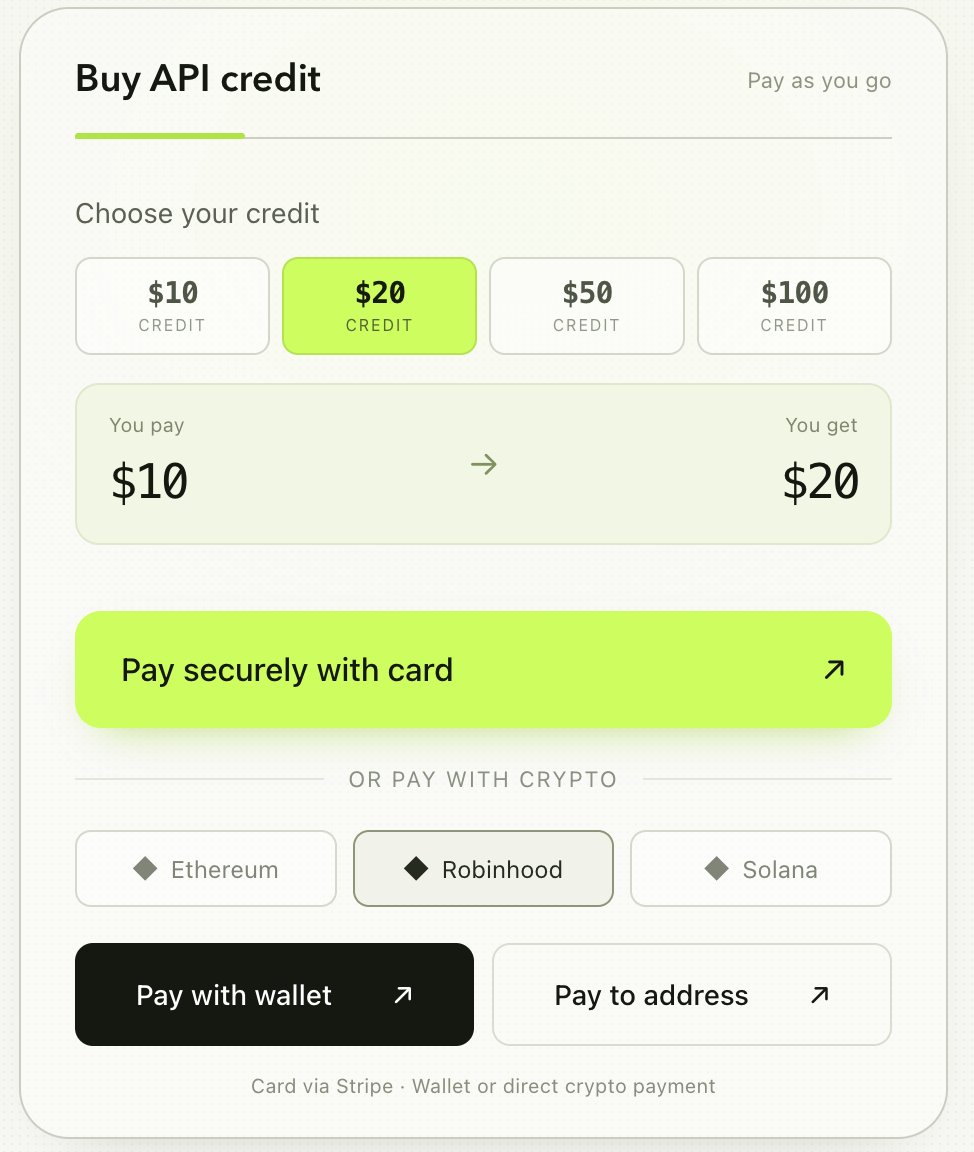
Users are already buying API credit at half price. Pay $10 and receive $20 in usable credit, or pay $50 and receive $100. Instead of paying full market price across multiple providers, they can access supported models through one key and one balance.
Platform and token generated fees will help cover infrastructure and subsidize these credits so we can continue offering API usage at approximately half the standard price. That discounted access is the core utility we’re providing.
Your site currently shows 0 verified live models, upstream provider “awaiting configuration” and 0 requests in 24h. Which upstream AI providers are already under contract/live, and can you demonstrate a real paid request going through Routers end-to-end today?
What exactly connects $ROUTERS to the API business economically? If users pay for API credits in ETH/SOL, what enforceable on-chain mechanism makes API usage accrue value to this token buybacks, fee distribution, burns, staking or something else? Please point to the contract/code that enforces it or is it just the tax mechanism being used to fund?
Our Stripe account is currently being verified. Until the verification is complete, card payments will remain in test mode.
Live card payments will be enabled as soon as Stripe approves the account.
I’m working on stablecoin payments now. Going to get some sleep for 5 to 6 hours, then I’ll be back with more updates. $routers
$Routers update the new features are now live and working.
• Spend caps + per-key usage tracking
• Automatic provider/model failover
• Referrals deployed
• No-prompt-logging policy now visible
• Keys, Usage, Referrals, Auto & Privacy pages all live
Card payments and Stable Payments on the way.
The 2x credits come from how we source API capacity at significantly lower rates than standard retail pricing, then pass those savings back to users.
Think of the uTorrent concept as a simple analogy. Instead of relying on one expensive traditional distribution route, a more efficient network can make access much cheaper. Same idea here.
Lower sourcing costs let us give users more API credits for the same spend. $Routers
We’re competing directly with Orbio. Pay any amount and receive twice that value in API credits.
Sign up with any X account and get 1 million free tokens.
@egv_omg I’m getting those tokens at around 1/100th of the retail price. So while you’re paying $10 for $20 worth of credits, my actual cost is only around $1–$2 😄
And yes, this does not rely completely on $ROUTERS trading fees, so the subsidy is independent of trading activity