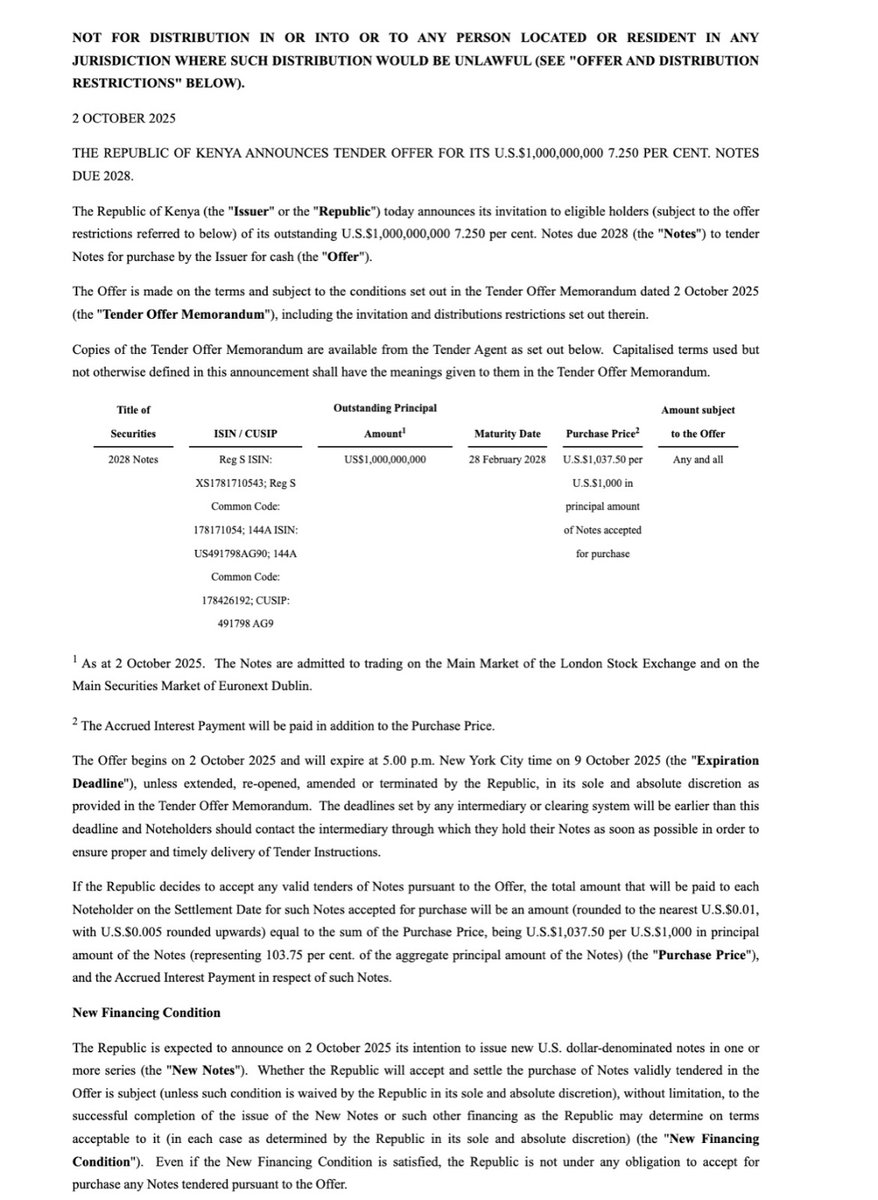
Kenya made a tender offer to its $1B(2028) Eurobond holders, offering to purchase back the debt at a 3.75% premium over par plus accrues interest. Implying treasury will need $1.0375B + accrued interest to settle it if the entire $1B is bought back. Let's dig in. Thread 1/n
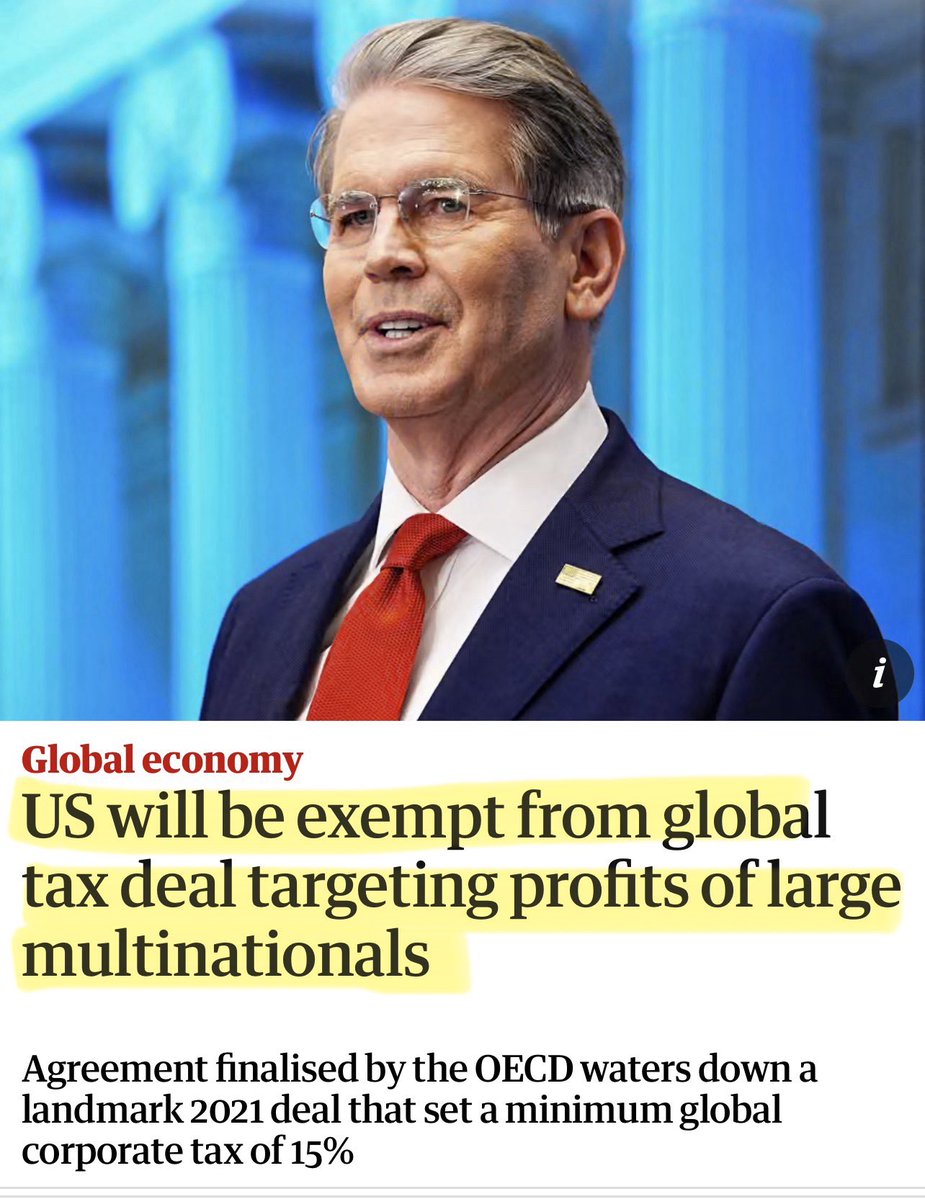
🚨 150 countries have been marched into the UN and OECD global tax deal. And their citizens had no say.
The US said fuck off.
“Our companies will not be taxed by rules we didn’t ratify domestically.” Protecting their multinationals.
The UK signed it enthusiastically, imposing the rules on itself, ceding domestic tax policy to unelected global bodies and handed its companies over, as usual.
Globalism only works on those weak enough to accept it 🚨
@smutoro Safaricom PLC is a mature, revenue generating company with high capex needs, not a Software Startup play. It’s a telco/fintech play with growth constraints. You don’t use revenue to value such a company when there’s proven operating cash flows and market valuation.
...If you buy at a premium (above $1,000), your return is lower.
Yield also takes into account bond tenor i.e time to maturity and repayment structure.
When it comes to bonds, you might get a bit caught up in the jargon. What is the difference between the coupon rate and the yield? First the definition then we can try to oversimplify it later:
...regardless of market price.
Yield (Effective Return)
This is the actual return an investor earns based on the price they paid for the bond. If you buy the bond at a discount (below $1,000), your effective return is higher than the coupon...
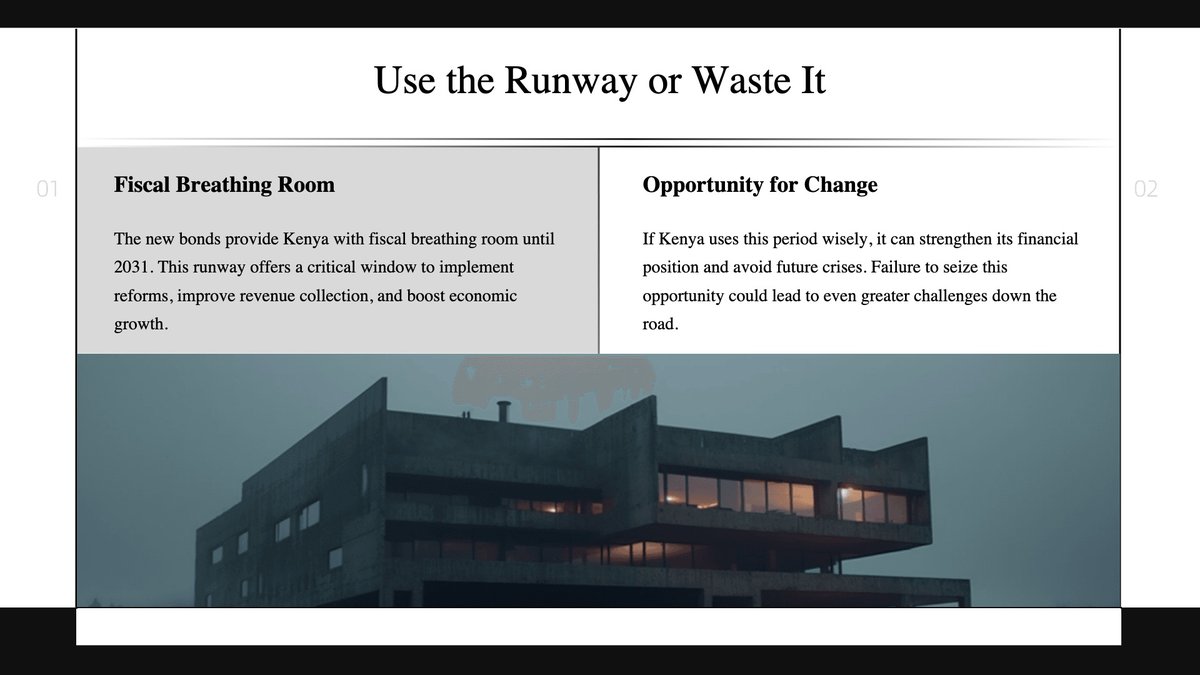
So yes, interest costs rise marginally. But it’s insurance: pay more, avoid default panic. The real test? Whether Kenya uses the breathing room to grow exports, collect taxes, and cut waste. Otherwise, we’ll pay even more in 2033. @BrianGeorgeKE
The final results are out for Kenya's new Eurobond issuance - two $750M bonds with 7-year(2033) and 12-year(2038) maturity and 3-year amortized payments. This is great for Kenya's liquidity management, signifies market stability and investor confidence. 1/n
Extra bonus: Kenya raised $1.5bn, so after retiring the $1bn bond it keeps ~$500m for budget support/refinancing. A small liquidity buffer when revenues are tight.
It shows @KeTreasury is actively managing debt maturities. 2028 is just 3 years away — retiring this early avoids a big bullet repayment risk. It also signals to markets that Kenya wants to smooth out its maturity profile and take advantage of favorable market conditions now.
Kenya made a tender offer to its $1B(2028) Eurobond holders, offering to purchase back the debt at a 3.75% premium over par plus accrues interest. Implying treasury will need $1.0375B + accrued interest to settle it if the entire $1B is bought back. Let's dig in. Thread 1/n