Tired of always speculating about MR spectroscopy?
If you've ever looked at an MR spectroscopy & thought: "I have no idea what I’m looking at!"--then this cheat sheet is for you!
Here are the 4 basic rules you need so you can understand the spectrum of basic spectroscopy!
First you need to know the peaks.
3 main peaks: Choline, Creatine, NAA
Remember the order bc a spectrum looks like mountain peaks & it is cold in the mountains. And CHOld CREATures NAp or hibernate in the mountains
Choline
Marker of membrane turnover
Remember: membranes coat or “CHOat” the cell
Choline = ChoLEAN, choline LEANS into the creatine peak, it’s right next to it
Creatine
Marker of energy, basically an internal control
Remember, everyone takes Creatine powder for energy!
Creatine is at ~3—creatine almost rhymes with 3
NAA Marker of neuronal health
N = Neuron
NAA has double As so it is at ~2!
Four rules:
1. Hunter’s angle:
—Most people know that the peaks of the spectrum should go up at you move lateral, called Hunter’s angle
—Most bad things reverse Hunter’s angle
—Ask yourself: Is my arrow pointed up to shoot into the air at the enemy (good) or is point to the ground where it will hit the dirt (bad)
2. TE & spectrum length are inversely related
—Spectroscopy follows the rule: speak softly & carry a big stick.
—Short TE = long spectrum, lots of extra peaks for glutamate/glycine, myoinsitol
—Long TE = short spectrum, mainly the basic 3 peaks
3. Each region has its own unique signature
—Each brain region has its own unique composition of compounds that might alter Hunter’s angle a bit, but not reverse it
—Need a control in contralateral normal brain so compare apples to apples
4. Lactate peak goes like a sine wave
—Lactate peak represents anerobic metabolism—sign of cells in trouble
It’s at 1.3ppm. Remember this bc 13 is an unlucky number & lactate is an unlucky sign!
—It’s like a sine wave: up at short TE (35), down at intermediate TE (144), and up again at long TE (244)
—You can use this flipping to better visualize the lactate peak
—You can remember it’s down in the middle TE bc when you’re caught in the middle, you’re down & out
Just remember these tricks & you will be spectacular at basic spectroscopy!
@Dr_Reyner_Solis@moy_qmac Tu pelvis esta chueca, tienes una cresta mucho más arriba que la otra, pero por resonancia no se evalúa por no estar en bipedestacion, por eso manda a descartar con una radiografía
@moy_qmac En lo que se, no me parecía una neumopatia intersticial de primera, hubiera apostado a algo infeccioso y como segunda inflamatorio, más por la distribución posterior y periférica.
Pero quedó como buen caso.
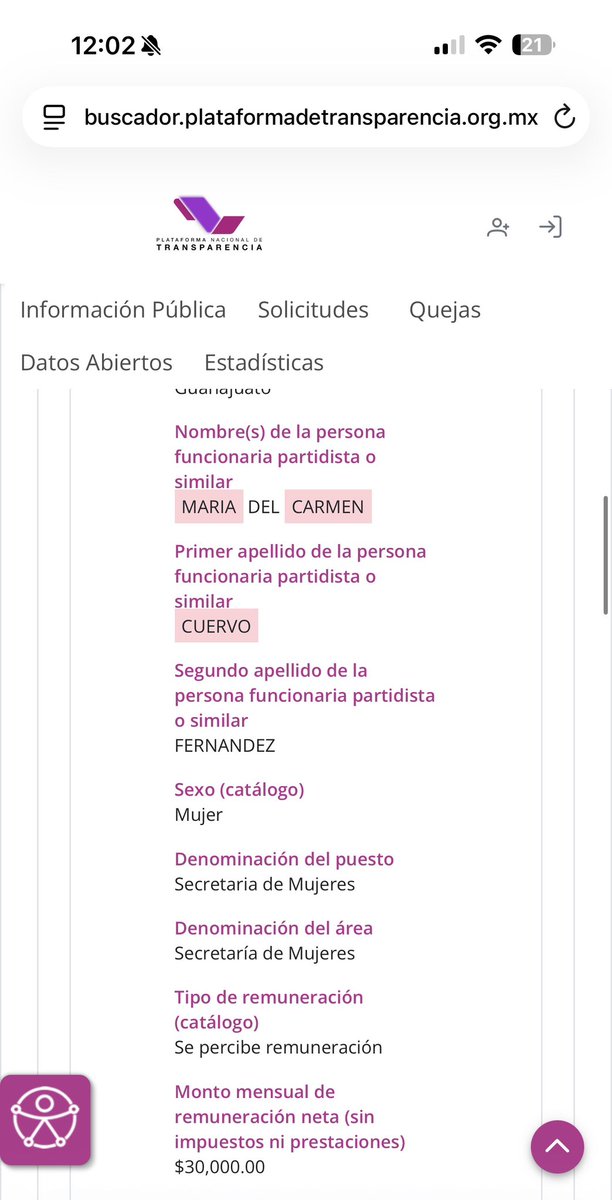
Aún no se acaba la novela de la doctora con consciencia social y clínica estética… pues resulta que sus papás también parasitan del gobierno. Y su mamá fue candidata para un distrito de Guanajuato en 2024.
@AcidoRinon 16.01.24 - 10.07.25 Capecitabina/ Exemestano (2000/ 25 mg) x 18 c = PE (Carcinomatosis peritoneal, ÓSEO)
28.08.25 - 12.12.25 CBP / TXL (150/120 mg) x 3 c= (Óseo)
26.01.26 CBP/GMZ (150/450mg) x 1c
MI: Hipercalcemia G4 + Hiperkalemia G3 + LRA G3
A que hora lo bajo a TAC?
@AcidoRinon 01.03.23-05.03.23 RTE OD 25 Gy/5Fx= PE = PE (tejidos blandos, Pleural, MO )
16.08.23 Doxorrubicina (30 mg) x 1 c = Desabasto
28.09.23 - 31.12.23 Epirrubicina (100 mg) x 7 c = PE (tejidos blandos cervical)
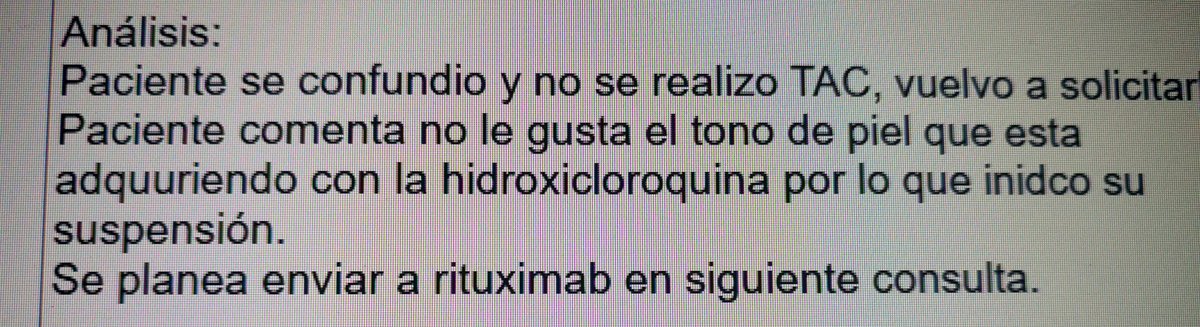
Uno de los pocos efectos adversos que tiene la hidroxicloroquina es la hiperpigmentacion de la piel.
Cuando mis pacientes tienen que elegir entre morirse o hacerse morenos siempre toman la decision correcta. *
@AcidoRinon Maestro Riñón ácido, su avatar de pirata es por el pirata de Culiacán? Acaso usted ya sabía algo antes? Si sí, solo asiente con la cabeza, lo estaremos protegiendo...