Aquatic Ecology and Environmental Biology studies biogeochemical and ecological key processes explaining the functioning and services of wetland ecosystems
PhD student Rosa Boone @RIBESresearch is interviewed by @VoxNieuws about her transdisciplinary work on healthy soils. One aspect is to develop an electronic nose to sense soil gasses that are a proxy for healthy belowground processes.
Want to work as a postdoc on questions that deal with plant-soil interactions and the role on C dynamics in organic soils (e.g. peatlands) and considering the NL as a base? Why not reach out to us to write a https://t.co/IciYk5LfBI? Contact Bjorn Robroek (https://t.co/foFgRnrLET)
Here at @RIBESresearch we advertise three vacancies for ecologists at Assistant/Associate level. Are you interested in species-environment relationships, community ecology, or Theoretical Ecology? https://t.co/6ZKDDltWyo. Be fast, only 3 days left. @BritishEcolSoc@NordicOikos
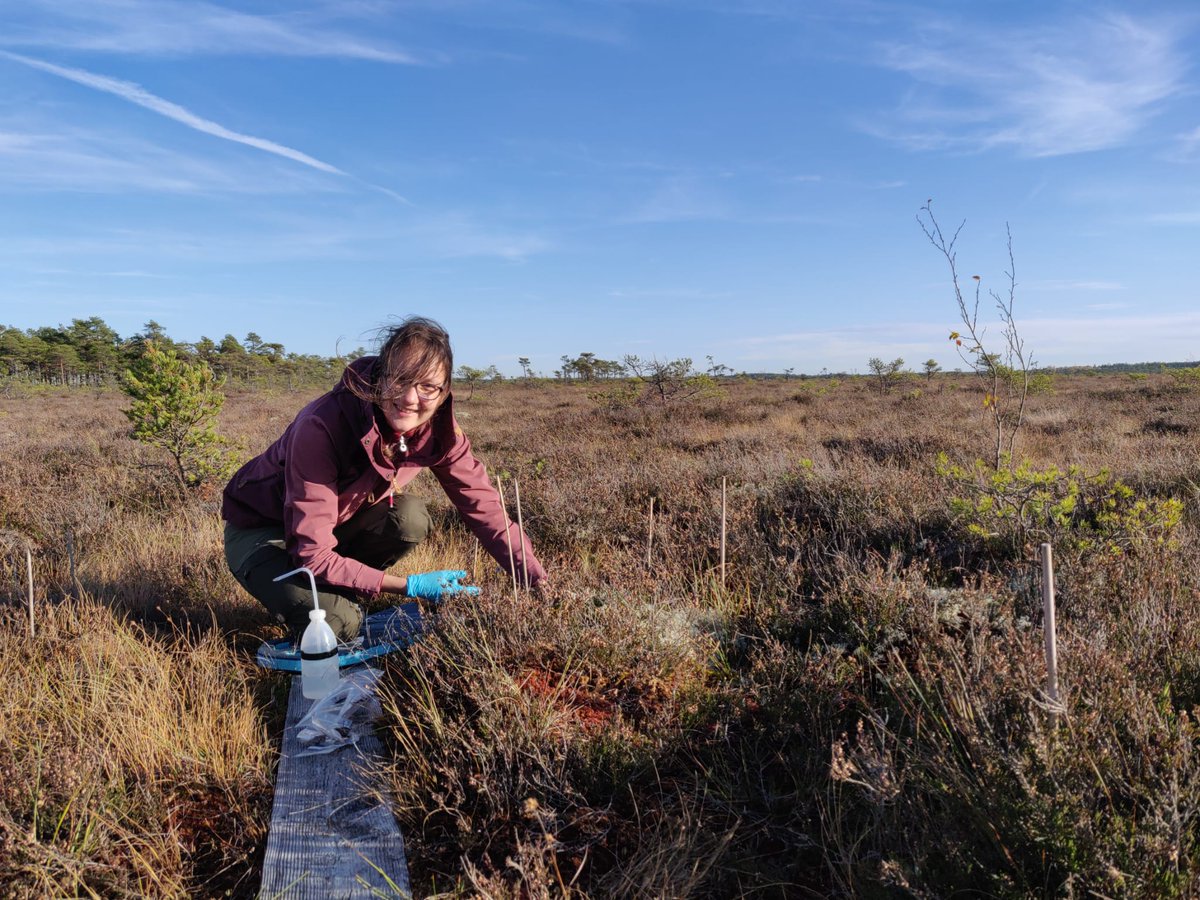
Aangenaam kennis te maken, ik ben Janna (@JannaBarel). Als bodemecoloog werk ik als post-doc onderzoeker bij de afdeling aquatische ecologie en milieubiologie (@RuAeeb) @Radboud_Uni.
Dit bericht komt vanuit Letland 🇱🇻, want deze week neem ik jullie mee op veldwerk door Europa!
This week I am taking-over the Dutch Science account @NL_Wetenschap. Here, you can follow our fieldwork adventures and #peatland research in Dutch.
I'll keep posting English updates here.
Next-up: Cena mire, next to Riga
#Paperalert
Check out the paper by Daniël Tak & Renske Vroom, with the collaboration of other AEEB members on #carbon fluxes from the newly created Marker Wadden wetlands. They found that carbon fluxes were driven by water table & vegetation presence
https://t.co/6vwExQCS7S
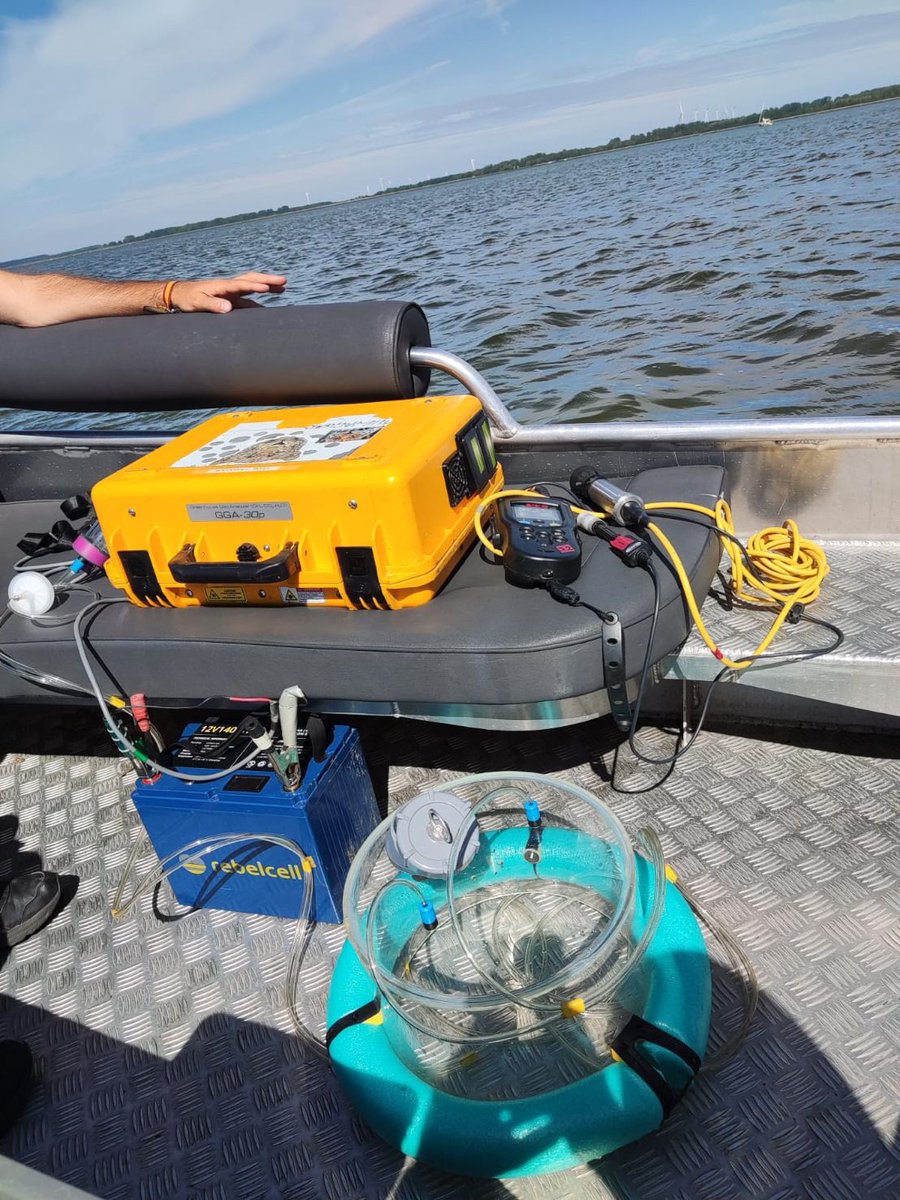
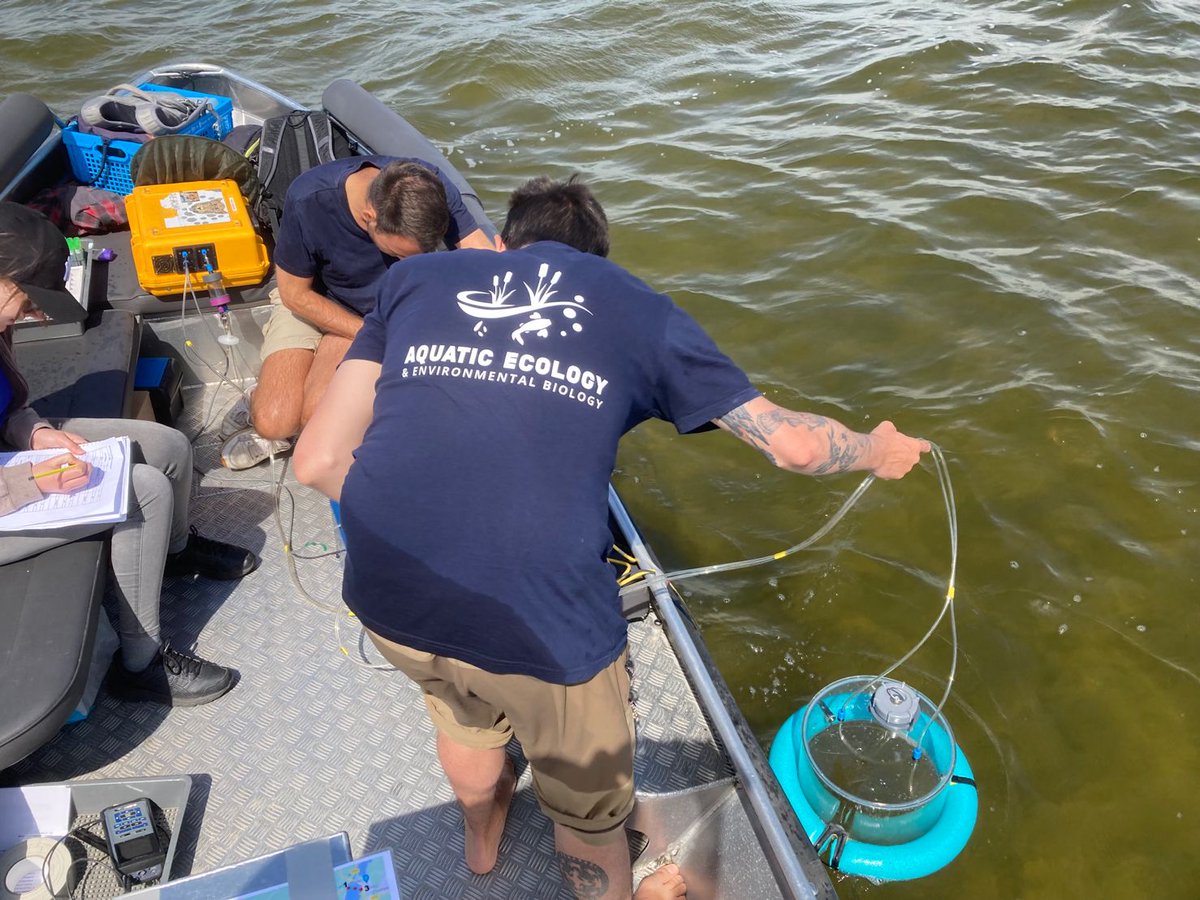
AEEB colleagues & Marcel van den Berg @Rijkswaterstaat are interested in the fate of organic & inorganic #carbon in Lake #Veluwemeer. After spatial sediment investigation (May 2022), now it is time to measure summer #CO2 & #CH4 fluxes - often over large meadows with #macrophytes
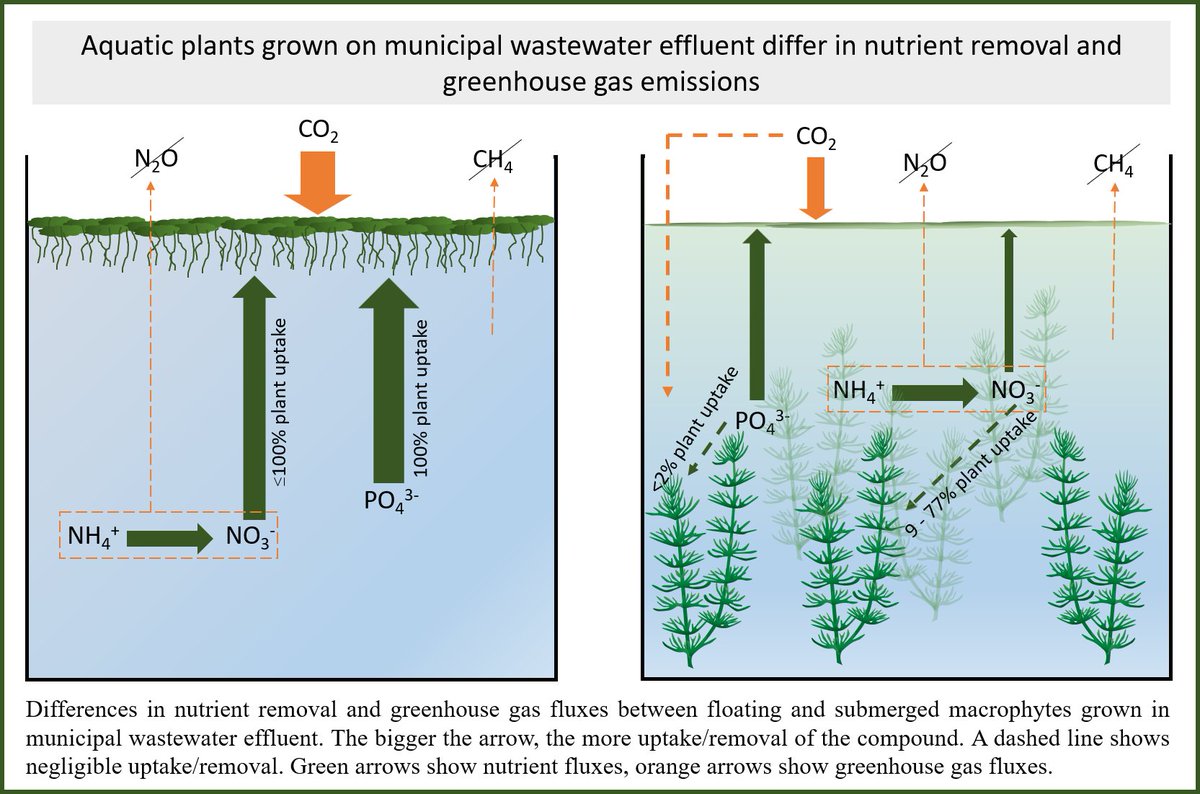
Ph.D. candidate Lisanne Hendriks and the @RIBESresearch AEEB-team show the potential to treat domestic wastewater effluent using floating and submerged aquatic plants.
@radboudscience
https://t.co/2GK7gD4nUS
The research was made possible by the funding and support of three Dutch water authorities, tackling current challenges in wastewater treatment: Hoogheemraadschap Hollands Noorderkwartier, Hoogheemraadschap De Stichtse Rijnlanden, and Waterschap Rivierenland
📢STUDENTS & ECRS📢
REGISTER NOW for SIL's 2nd FREE workshop part of the Writing Skills Workshop Series!
The workshop is open to ALL who wish to master the scientific review process!📝📚📖
July 12, 2023 @ 10:00 UTC ⏰📅
Register here to receive the link: https://t.co/Jw7SowSoSw
@RIBESresearch The methane is oxidized throughout the water column, even beyond the oxygen-methane counter gradient, and the methanotrophs present are adapted to live under varying oxygen conditions.
Part of an @ERC_Research grant awarded to @msmjetten & @CarolineSlomp
@JessicaVenetz (PhD at RU microbiology, but also affiliated with our group) published her first, first-authored paper: Versatile methanotrophs form an active methane biofilter in the oxycline of a seasonally stratified coastal basin
https://t.co/zIvtqiimJm
The paper shows nice teamwork between @RIBESresearch clusters (microbiology & ecology) and Utrecht University. In this paper they show that a microbial CH4 filter in the water column of Lake Grevelingen counteracts high methane fluxes during summer stratification and hypoxia.