🌟 Our latest KetoSAge Trial publication is now out!
Ketosis Suppression and Ageing (KetoSAge) Trial: Effect of Hypoketonaemia on Extracellular Vesicle Profiles in Healthy Premenopausal Women
This paper takes the KetoSAge work into a new and largely unexplored area of human metabolic-endocrine physiology: extracellular vesicles.
Extracellular vesicles (EVs) are microscopic membrane-bound particles released by cells into the circulation, carrying proteins, lipids, metabolites and nucleic acids between tissues. They are increasingly recognised as an important system of intercellular communication.
What remains remarkably poorly understood is how EV biology changes when whole-body metabolism moves between euketonaemia and insulin-mediated hypoketonaemia. That is what we investigated.
Our wider KetoSAge work proposes that one of the earliest stages of metabolic-endocrine dysfunction is not hyperglycaemia.
It is insulin-compensated euglycaemia: ICE.
Blood glucose can remain completely normal because an increased demand and exposure to insulin is compensating to maintaining euglycaemia. The harm is from the chronic excess insulin exposure required to achieve euglycaemia.
Lifestyle, with dietary carbohydrate exposure being one of the largest modifiable determinants, can create a High Insulin Demand and Exposure State: HIDES.
As insulin demand and exposure increase, an individual can exceed their own Personalised HyperInsulinaemia Threshold, or PIT.
Beyond that threshold, insulin progressively suppresses hepatic ketogenesis while glucose remains apparently normal.
The resulting phenotype is:
HIDES → PIT exceeded → hypoketonaemia → ICE.
This is why glucose alone can give an incomplete picture of metabolic-endocrine physiology.
The opposing physiological state is Sustained Low Insulin Demand and Exposure: SLIDE.
Restricting foods that repeatedly impose a high insulin demand, particularly sugars and starchy carbohydrates, permits endogenous ketogenesis to remain active and supports the combination of:
SLIDE → euketonaemia + euglycaemia.
Our KetoSAge studies have repeatedly shown that experimentally suppressing euketonaemia in lean, metabolically healthy women alters a broad network of metabolic, endocrine, hepatic, inflammatory and growth-signalling biomarkers despite glucose remaining within the conventionally normal range.
Our newest KetoSAge publication asks another question:
Does moving from euketonaemia into hypoketonaemia-ICE also alter the extracellular vesicle (EV) signalling environment?
Ten lean, healthy premenopausal women who had maintained long-standing euketonaemia completed three consecutive 21-day phases:
euketonaemia → induced hypoketonaemia → return to euketonaemia.
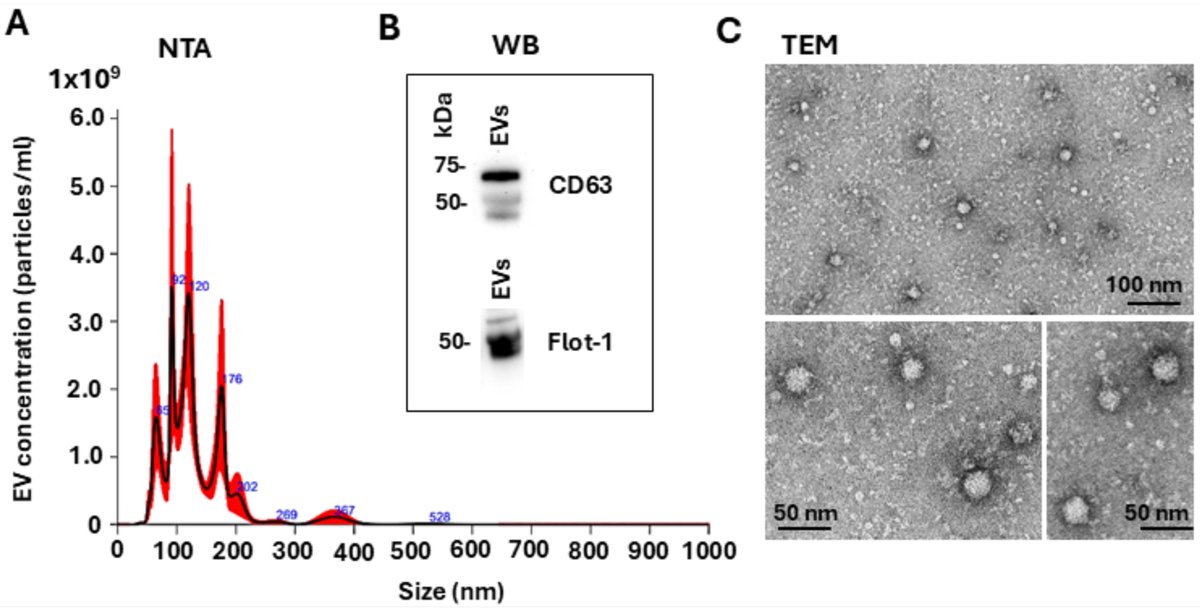
We measured EV concentration, mean EV size and modal EV size and examined their relationships with metabolic-endocrine biomarkers.
At the whole-phase level, EV concentration and size did not significantly change.
But something considerably more interesting emerged when we examined the relationships between EV characteristics and the biological environment in which those vesicles were circulating.
Nominal associations were observed between EV concentration and adiponectin, free T3, bilirubin, luteinising hormone and EGF.
EV mean size was associated with HDL-cholesterol.
Most strikingly, EV modal size tracked with a much broader metabolic-endocrine network including:
➡️ insulin
➡️ HOMA-IR
➡️ β-hydroxybutyrate
➡️ GKI
➡️ thyroid hormones
➡️ ALT
➡️ AST
➡️ IL-6
➡️ oestrogen.
These associations did not remain statistically significant following false discovery rate correction, so they must currently be regarded as exploratory. Though, exploratory does not mean biologically uninteresting. It tells us where to look next.
The exciting possibility raised by these data is that extracellular vesicles may participate in, or reflect, a coordinated insulin-responsive communication network linking endocrine signalling, hepatic physiology, inflammation and systemic bioenergetic state. This matters because the transition into metabolic dysfunction may begin long before fasting glucose or HbA1c becomes abnormal.
The body may already be communicating differently between tissues while conventional clinical markers still describe the individual as metabolically “normal”. That is the central biological problem our ICE-PIT framework seeks to address.
ICE can precede overt hyperinsulinaemia, insulin resistance and dysglycaemia for years, potentially decades.
A person can remain euglycaemic while progressively increasing insulin demand, suppressing endogenous ketogenesis and living chronically within hypoketonaemia-ICE.
The phenotype is therefore hidden if we only look at glucose.
Our work asks whether euketonaemia and the GKI (glucose ketone index) itself can be used as a physiological readout of sufficiently low insulin exposure, and whether hypoketonaemia can identify the transition beyond an individual’s PIT before conventional disease markers become abnormal.
This new EV paper now raises another layer of that question:
Could extracellular vesicles become measurable biological reporters of that transition?
Could EV concentration, size, cargo or tissue of origin reveal metabolic-endocrine dysfunction before conventional pathology becomes clinically visible?
Could EVs eventually help distinguish SLIDE from HIDES?
Could changes in EV cargo reveal which tissues first respond when insulin exposure exceeds PIT?
Could EV signalling provide a mechanistic link between chronic hypoketonaemia-ICE and downstream hepatic, inflammatory, endocrine, mitochondrial and oncogenic signalling?
We do not yet know. And that is precisely why this field is exciting. The next step is not larger cohorts. We need to understand EV cargo, tissue origin, receptor interactions, temporal dynamics and whether specific EV phenotypes reproducibly track movement between euketonaemia and hypoketonaemia-ICE.
We also need to determine whether these signals differ in healthy individuals compared with people with cancer, cardiovascular disease, neurodegeneration, metabolic disease and ageing-associated phenotypes.
The deeper message from KetoSAge remains consistent:
Normal glucose does not necessarily mean normal metabolic-endocrine physiology.
If insulin must remain chronically elevated to maintain that glucose, the system has already changed.
Consuming excess carbohydrates that results in a HIDES increases hypoketonaemia-ICE.
PIT marks the individual threshold beyond which endogenous ketogenesis becomes suppressed.
ICE describes the resulting insulin-compensated euglycaemic state.
Hypoketonaemia is its metabolic signature.
Carbohydrate restriction results in a SLIDE state that restores the physiological conditions in which euglycaemia and euketonaemia can coexist.
And now extracellular vesicles may provide another window into the biology occurring between those states.
That is what makes this publication particularly exciting.
We are beginning to move from asking whether metabolism changes, to asking how the tissues of the body communicate that change to one another long before overt metabolic disease is diagnosed.
https://t.co/ct3nzmKlRl
Are you falling for longevity myths?
Here are 5 things you think are extending your life that are actually doing nothing, and learn what truly works to age well.
Full episode:
0:00 Longevity industry hype, fundamentals, and common myths
1:11 Myth 1 - The Thinner You Are The Healthier YouWill Age
2:40 Myth 2 - Supplements, repair mode, and other longevity myths
4:11 Myth 3 - Keeping Your Body In Repair Mode
7:54 Myth 4 - Wine is good for you
9:24 Myth 5 - Longevity Is Mostly Genetic
10:34 The longevity reality check and what you can change
11:13 The real path to healthspan, strength, and independence
It was a great pleasure to get to meet up with @BenBikmanPhD and @lowcarbGP , to geek out together, and share with others how we can achieve optimal health and vitality through high impact lifestyle choices.
ICE (insulin-compensated euglycaemia) proceeds overt hyperinsulinaemia and insulin resistance for years if not decades.
Lifestyle (dietary being the biggest influence - starchy carbohydrates) that results in a High Insulin Demand and Exposure State (HIDES), causes one to surpass one’s own Personalised HyperInsulinaemia Threshold (PIT), resulting in chronic hypOketonaemia-ICE.
Restricting starchy carbohydrates and sugar maintains a metabolic-endocrine state of Sustained Low Insulin Demand and Exposure (SLIDE), resulting in euketonaemia-euglycaemia, a natural healthy physiological state.
The second part of our long form conversation #FeldmanProtocol with @realDaveFeldman
It was a marathon conversation and we still only touched the surface of most topics, however it was so wonderful how Dave helped me to be able to share information that we think is valuable to people with cancer or have loved ones with cancer.
Our current allopathic system works really well for acute medical needs, it unfortunately does not serve chronic disease treatment and prevention well at all. In the U.K. and I think the USA is similar, our governments have given sole license to one body to be able to legally diagnose and treat and claim “cure”. That goes against anti-trust laws in my view and prevents competition which is what is required to improve healthcare/medical sciences.
On a side note, people who would like to fund research, please, find the scientists you like and find ways to donate directly to their labs, this can make a world of difference to research that does not generate IP products and instead generates greater knowledge for the public at large.
Thank you once again Dave for such an awesome time, 4 hrs!
Our open-labelled, non-randomised cross-over trial is published.
We studied the effects of short-term ketosis-suppression in healthy women on long-standing ketosis.
Ten lean (BMI 20.5 ± 1.4), metabolically healthy, pre-menopausal women (age 32.3 ± 8.9) maintaining nutritional ketosis (NK) for > 1 year (3.9 years ± 2.3) underwent three 21-day phases: nutritional ketosis (NK; P1), suppressed ketosis (SuK; P2), and returned to NK (P3). (66 days in total with a 6 month qualifying lead in)
Results:
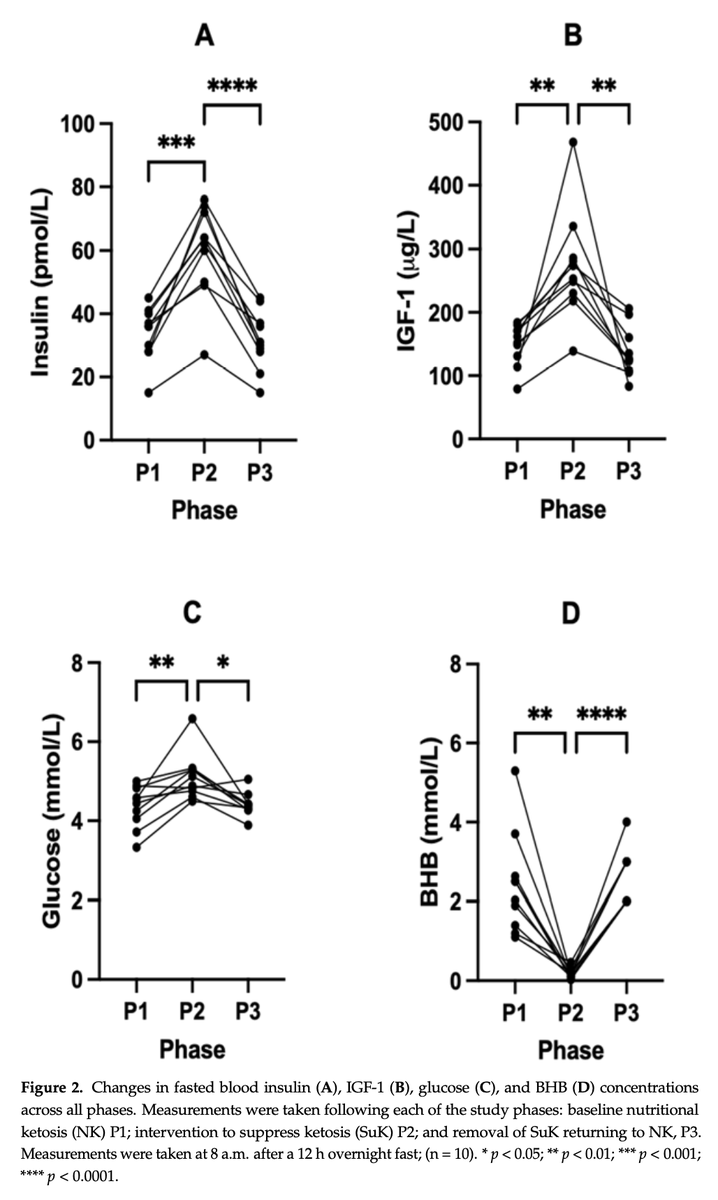
Adherence to each phase was confirmed with daily capillary BHB tests (P1 = 1.9 ± 0.7; P2 = 0.1 ± 0.1; and P3 = 1.9 ± 0.6 mmol/L).
Ketosis suppression significantly increased:
👉Insulin, 1.78-fold from 33.60 (± 8.63) to 59.80 (± 14.69) mmol/L (p = 0.0002)
👉IGF1, 1.83-fold from 149.30 (± 32.96) to 273.40 (± 85.66) µg/L (p = 0.0045)
👉Glucose, 1.17-fold from 4.36 (± 0.53) to 5.12 mmol/L (± 0.59, P2; p = 0.0088)
👉Respiratory quotient, 1.09-fold 0.66 (± 0.05) to 0.72 (± 0.06; p = 0.0427)
👉PAI-1, 13.34 (± 6.85) to 16.69 (± 6.26) ng/mL (p = 0.0428).
👉VEGF, EGF, and monocyte chemotactic protein also significantly increased, indicating a pro-inflammatory shift.
👉Sustained ketosis showed no adverse health effects and may mitigate hyperinsulinemia without impairing metabolic flexibility in metabolically healthy women.
Conclusions:
Evolutionary evidence suggests that ancestral populations were predominantly adapted to patterns of intermittent and time-restricted feeding, as opposed to continuous nutritional intake, rich in farinaceous and sucrose carbohydrates that stimulate bolus insulin secretion. The escalating prevalence of T2DM, obesity, CVD, AD, and cancer observed in populations adhering to multiple substantial carbohydrate-dominated meals in developed nations is a testament to this.
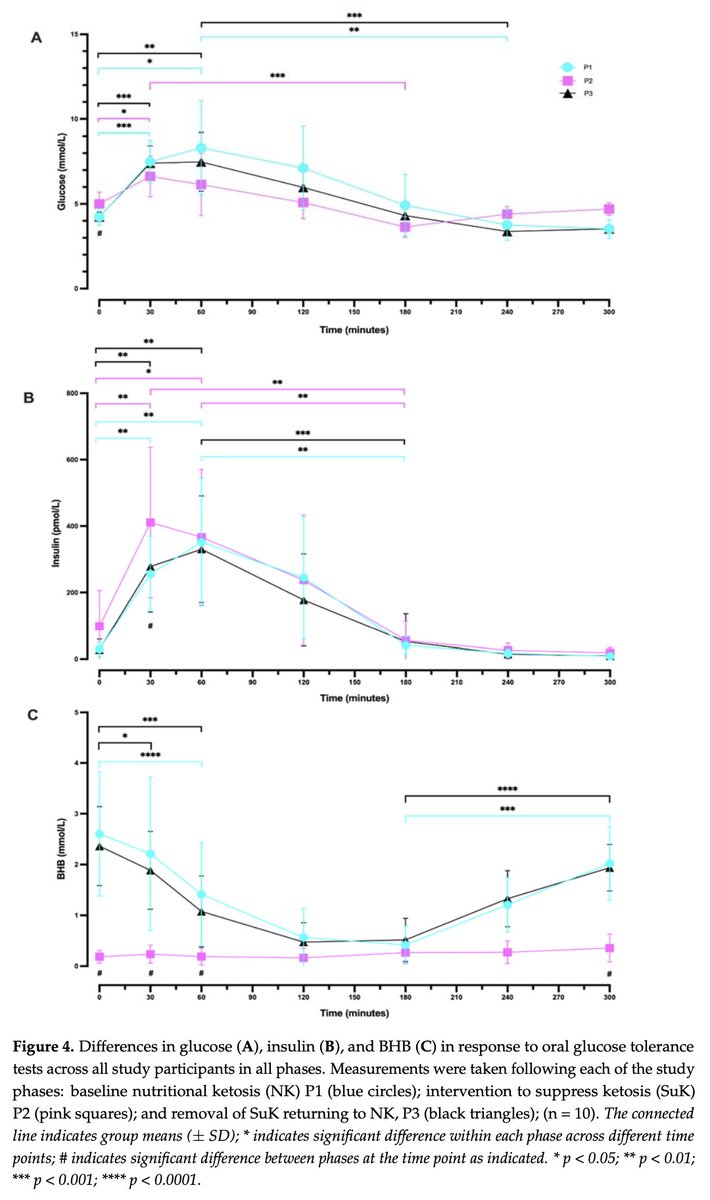
Individuals maintaining long-standing habitual NK, when subjected to 21 days of consuming carbohydrate to suppress ketosis, followed with restricting carbohydrate, reverted to an evolutionary ketotic state within one day, indicate metabolic flexibility and health.
The negative changes in biomarkers associated with chronic diseases and ageing, which occur from a one-time excursion in a 1-year period of 21 consecutive days of suppressing ketosis, are rapidly restored after restoring the baseline dietary lifestyle of carbohydrate restriction which does not overstimulate insulin demand and secretion.
Our data show that long-standing NK appears to provide major health benefits in the maintenance of euglycaemia, with low insulin and IGF-1, the triad of markers most strongly associated with chronic diseases and biological ageing. NK serves as a reliable surrogate marker for these parameters to understand an individual’s metabolic phenotype, and therefore risk.
This study was conducted to establish a detailed metabolic phenotype biomarker profile in a long-standing healthy ketosis cohort, providing a NK control group for other studies to establish metabolic phenotypes in people with cancer, CVD, AD, T2DM, and ageing, and to assess treatment efficacy using KMT in gaining better health.
Sustained NK may mitigate hyperinsulinemia without impairing metabolic flexibility and carbohydrate tolerance in metabolically healthy individuals. Maintaining low insulin requirement and IGF-1 levels through endogenous NK may offer lower chronic disease risk, resulting in benefits to both lifespan and healthspan.
https://t.co/aNCqk0phXJ
Awesome co-authors:
@Yvoni_Kyr@_kurtisedwards@_LucyPetagine@tnseyfried @TommyDeeMD @ascarbs@jacomesandra@AdrianSotoMota@kenbrookler@valennutrition@NovaesVanusa@Brads_science
Here I am in the South of France at a metabolic conference with good friends @BenBikmanPhD and @I_mitochondria Again a HUGE audience interested in insulin resistance& what to do about it👍
A 12 year old boy walks into my office having already seen a psychiatrist, an allergist, a lung doctor, maybe a GI doctor. Seven different drugs by age 12. Kicked out of kindergarten for being disruptive. Diagnosed with ADHD and put on stimulant medication for years.
Nobody connected the dots. He also had asthma, headaches, stomachaches, insomnia. Each doctor treated their one piece and ignored the rest.
I did a full workup instead of writing another prescription. His gut microbiome was a mess. Leaky gut. Elevated gluten antibodies. Reacting to dairy. Fungal overgrowth. Low zinc, low magnesium, low B6, low folate, low omega 3s. Lead toxicity.
He ate only processed food. Never a vegetable in his life.
So we removed the gluten, dairy, sugar and processed food. Rebuilt his microbiome with probiotics. Treated the fungal overgrowth. Chelated the lead. Corrected the nutrient deficiencies with magnesium, zinc, fish oil.
Two months later his mother brought him back. No more symptoms. No more meds. No more behavioral issues.
And his handwriting went from illegible to perfect penmanship. Same kid, same brain, two months apart.
That handwriting change is what made me write The UltraMind Solution. A brain that chaotic and disorganized became coherent and synchronized once we fixed what was happening in his body. The writing on the page was just a reflection of what was happening in his gut.
ADHD is not a brain problem. It's a systemic problem that shows up in the brain. If your kid's brain isn't working right, don't just look north of the neck. Look at what's happening south of the border first.
There is one addition to this excellent presentation. The Two Glucose Pool model of human carbohydrate metabolism argues that blood insulin concentrations do not rise ONLY in response to ingested carbohydrate entering the small glucose pool.
Rather blood insulin concentrations remain elevated whenever the muscle glycogen content in the large glucose pool is elevated.
Thus a low carbohydrate diet produces two benefits for those with insulin resistance - reduces acute increases in blood insulin concentrations since less carbohydrate is being ingested; reduces chronic elevations in blood insulin concentrations caused by chronically elevated muscle glycogen content. @PhilipPrins11@AKoutnik@PaulBLaursen@BenBikmanPhD@LoreofRunning1
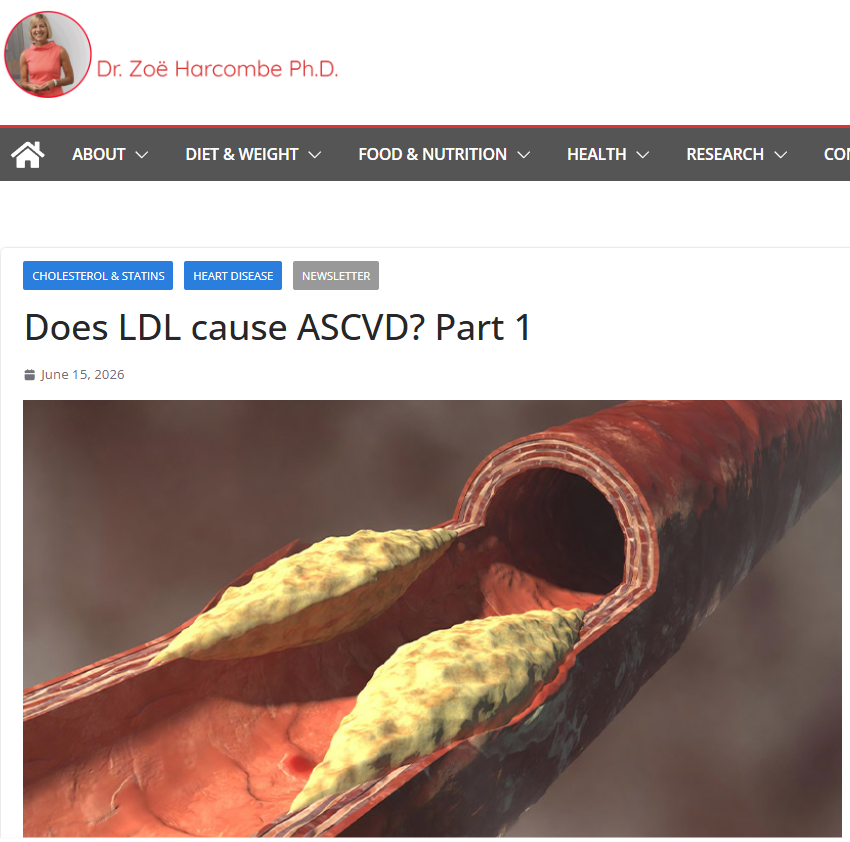
I did a forensic review of the Ference et al consensus statement from 2017.
It has become the go-to article to support the claim LDL/LDL-C (it's vague) causes ASCVD/CHD/vascular events (that's vague too).
It doesn't withstand scrutiny.
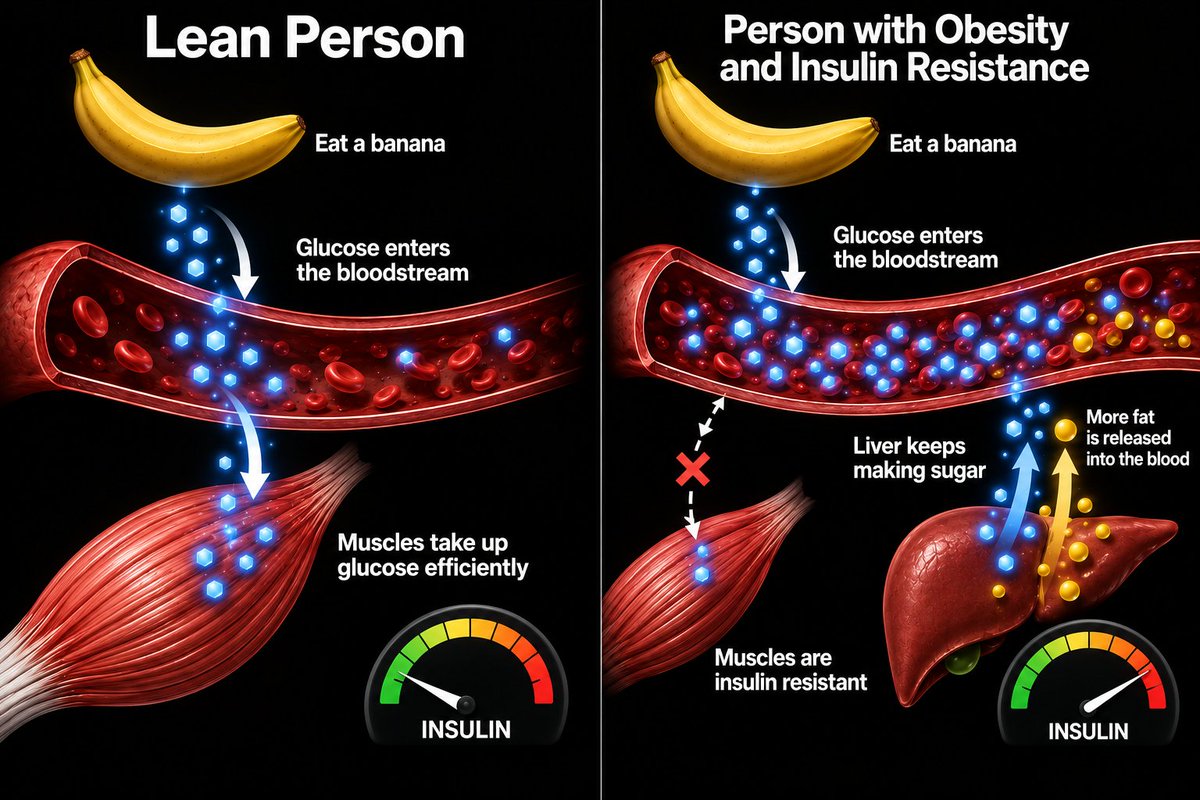
What happens when a lean person and a person with obesity and insulin resistance each eat a banana 🍌?
Well, in the lean person, the sugars from the banana move quickly into the blood and then into muscles to be used as energy.
But in a person with obesity and insulin resistance, something very different happens.
1. Muscles are insulin resistant, so they don’t efficiently take up sugar, meaning it lingers in the bloodstream. In the liver, things are worse.
2. Insulin resistance means the liver doesn’t get the memo to stop making its own sugar, so it spills more sugar into the blood.
3. By contrast, the fat-generation pathway gets overstimulated, like the body is biologically yelling, “Make more fat!”
The ultimate result is that sugar lingers in the blood, while the liver is dumping out more sugar and fat, like it’s trying to make a milkshake in your bloodstream.
That doesn't mean a banana is "bad" for a person with obesity. It depends what you compare it to.
👉TL;DR: Nutrition is not one-size-fits-all.
*Text explanation is 100% human. Image made with AI.
This podcast I did developed to become very wide ranging & unexpectedly emotional towards the end, but now when I look back Alberto Zandi of @Thriving_Minds_ did a great job, I trusted him enough to share stuff I have never shared publicly before See what you think 🤔 https://t.co/Q9PumCXy3e
I often approach the dangers of chronically elevated insulin from the perspective of it driving insulin resistance (and it certainly does). However, I wonder how much of the consequences of the elevated insulin are also a consequence of depriving the body of ketones?
Ketones have been shown in humans to have myriad benefits, including preserving muscle mass, improving cognition (and other brain benefits), and even enhancing kidney function in those with chronic kidney disease.
Naturally, controlling carbohydrates is the most effective way to lower insulin. This not only improves insulin resistance, but it also allows an increase in ketones. And this is where I think exogenous ketones (goBHB) can be so helpful: for those who aren't interested in controlling carbs. They can supplement with goBHB to enjoy the benefits of the ketones.
Pre-order sale!
This was a fun and enlightening book to write. If you're curious to learn more about the hidden quirks of carbohydrates, I suspect you'll enjoy it.
https://t.co/ygNQRLU4yF
I had the pleasure of a long form conversation with Dave Feldman where we went down many many rabbit holes. The first a bit more on my personal history-journey which I need to learn to be more succinct on as I so rarely speak about it. The second half we dig into geek out sciencey stuff like Co-efficient of variations, intra and inter assay measurements etc, some might find that very boring but as a practicing scientist, I get excited about how can we get more consistent and accurate and therefore confident in our measurements. Dave is a fellow OCD scientist (excellent trait to have in a scientist) so he gets this to a T.
Thank you Dave for such a lovely time talking about the things we love and helping to share that with everyone else.
@realDaveFeldman
This Explains Insulin Resistance in 2 Minutes
1/4) If you take understand this 200 word thread, you’ll understand insulin resistance better than more doctors 🧵
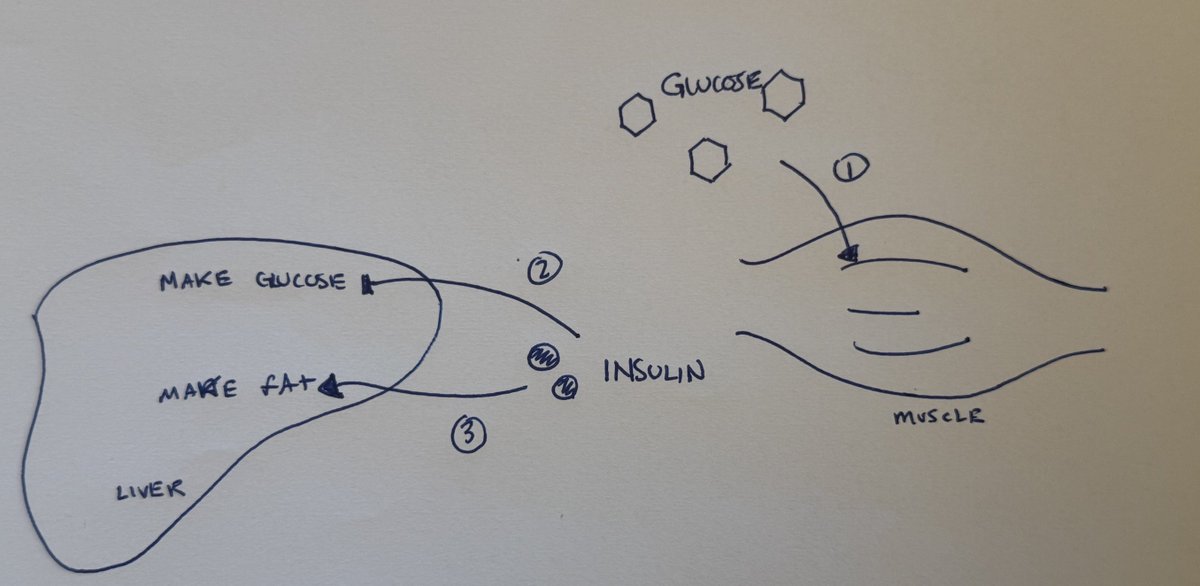
Consider three things insulin is supposed to do:
💪Tell muscles to gobble up glucose out of the blood
🛑Tell the liver to STOP making more glucose because you just ate carbs
🟢Tell the liver to START making fat out of the carbs you ate