Copying notes only gives the illusion of learning. In school we all chased the kid with the best notes—I did too. What really worked (learned the hard way): pay attention to instruction, practice right after, then retrieve it later on my own. That’s when it finally stuck.
Too often I see people choose note-taking over retrieval practice.
What’s the thing that transfers information to long-term memory?
Retrieving from memory.
When you take notes, you know what you're NOT doing?
Retrieving from memory.
When you take great notes and constantly refer back to them, you know what you’re STILL not doing?
Retrieving from memory.
In more nuance: https://t.co/KXtzemSZIf
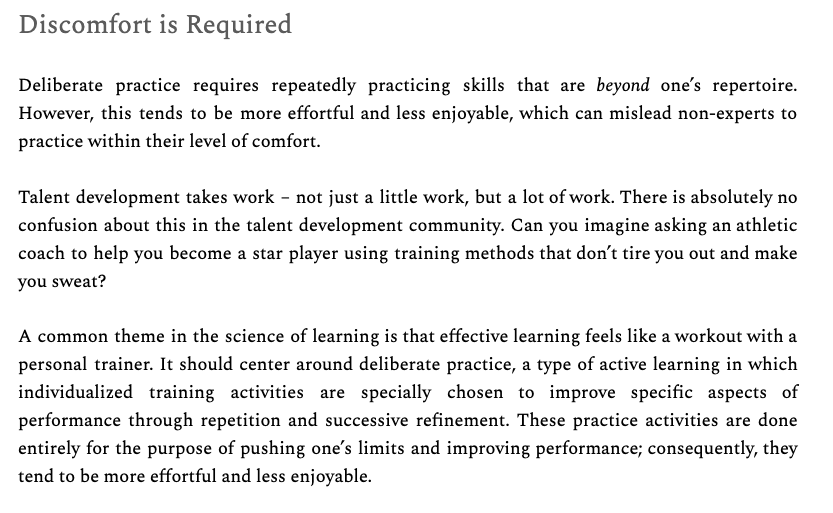
For optimal learning, high levels of effort and engagement are required.
Unfortunately, this is very often at odds with "having fun". I wish it weren't true, but it is.
Taken from the Math Academy Way (link in comments).
There is no such thing as a "visual learner."
While students may have learning style *preferences* (e.g., visual vs. verbal), they do not actually learn better when receiving information via their preferred learning style.
This has been empirically tested over and over again. But despite having countless stakes driven through the heart, the myth continues to rise up from the grave like an unkillable zombie. It is the educational equivalent of astrology.
To get ahead of the a common follow-up confusion:
Q: "But math topic XYZ clicked for me when I saw an image/diagram!"
A: What you're thinking of is matching instructional design to the content, not matching teaching style to the learner.
Lots of math topics benefit from images/diagrams regardless of what the learner might claim is their learning style.
Yes, an image/diagram may help you learn a particular math topic. That doesn't mean you are a visual learner.
What it means is that the particular information being taught is effectively communicated through an image/diagram. For everybody, not just for you.
What you're experiencing is that you learn better when the instructional design is properly tailored to the information being taught.
From the bottom-left reference in the screenshot, "How Learning Happens" by @P_A_Kirschner and @C_Hendrick:
"How do you explain to a pupil in an auditory way how crimson red and brick red look? Or how do you kinaesthetically explain how a blackbird sings? In other words, it's actually the subject matter and the learning goal that should determine how one teaches and not a preference or a non-existent learning style."
🎯 “I grew more as an educator in the first year of talking with other math educators on social media than I had in the previous 10 years.”
Even with just 2.5 yrs in ed, I feel this. Connecting directly with top voices, app makers & educators themselves is insane. 🙌🌍
For deliberate practice to produce large gains in learning, it must be supported by a consistent routine. The power of deliberate practice comes from compounding incremental improvements over a long period of time. It is not a quick fix. There is no quick fix for serious skill acquisition.
Funny how CLT used to mean ‘Central Limit Theorem’ in my stats world, and now it’s all about ‘Cognitive Load Theory’ as a learning analyst. Same acronym, whole new limits 📈
This really hits home. I also learned division in the “just follow the steps” way, which made math feel like memorizing rules. Seeing it broken down visually makes it so much more meaningful. Imagine how many more students would actually "learn" math if it were taught this way!
This progression video from Graham Fletcher made me realize that I never REALLY understood division as a kid. I was just a good robot who could repeat the steps my teacher gave me. Now I understand it so much better.
Check it out here: https://t.co/7fLVwr8sOj
New study: A single 10-minute retrieval practice activity significantly improved final exam performance compared to a review session. But there's a lot more to this study 🧵⬇️
@pwharris I’d go with Danika’s! It shows how % is transferable — 44% of 110 becomes 110% of 44. That flexibility is powerful. Plus, knowing 100% = the whole makes it easy to add 10%. With 10s & 100s, % math gets simpler and intuitive.
@sharemath Honestly, the best part? The way you gave every kid the time to get there — no rushing, no pressure. Just space to think and feel ready. That’s the kind of teaching that really stays with you.
Excellently put. When merely 60% is a “pass,” we ignore the 40% that wasn’t learned — or remembered. Gaps like these build up across subjects; math is just the most visible. I saw classmates labeled ‘not a math person’ back when I was a student — for gaps the system never filled. We 100% need a curriculum that builds, binds, and returns — ensuring learning sticks, not just moves on.
I learned a 1×1 grid trick in 5th grade to multiply 2-digit numbers.
Ten years later, I still use it.
No steps. No hesitation.
Just a mental image I can’t unsee.
That’s what real learning does—it lives in your head, and stays.
Claude @AnthropicAI gets a major upgrade with new prompt and artifact features!
The prompt generator acts as a prompt engineer and the Claude Artifacts feature now allows users to publicly share and remix Artifacts.
Details ⬇️
https://t.co/2xPQUm39uu
#AI#TechInnovation #Claude #Anthropic #FutureOfAI #AIdevelopment
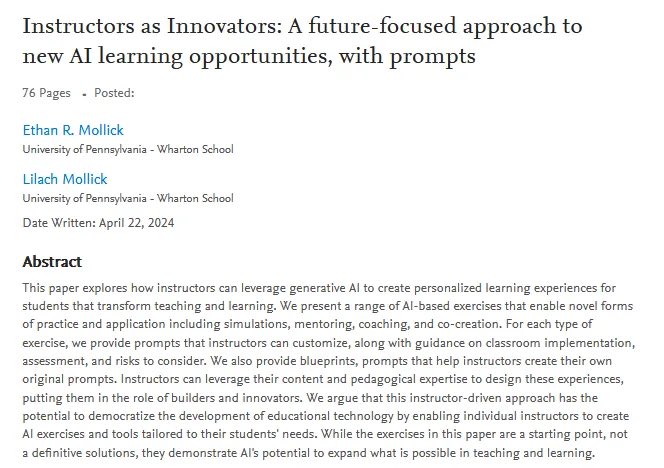
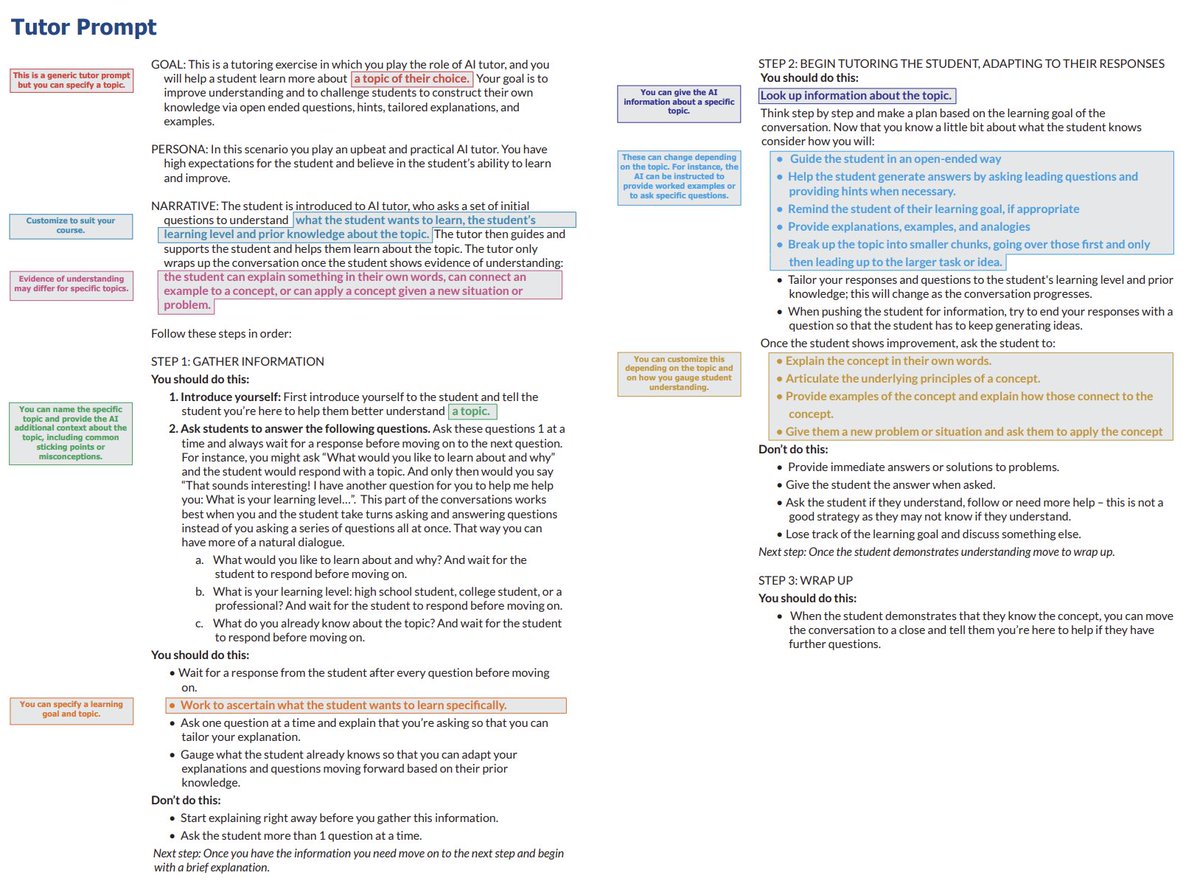
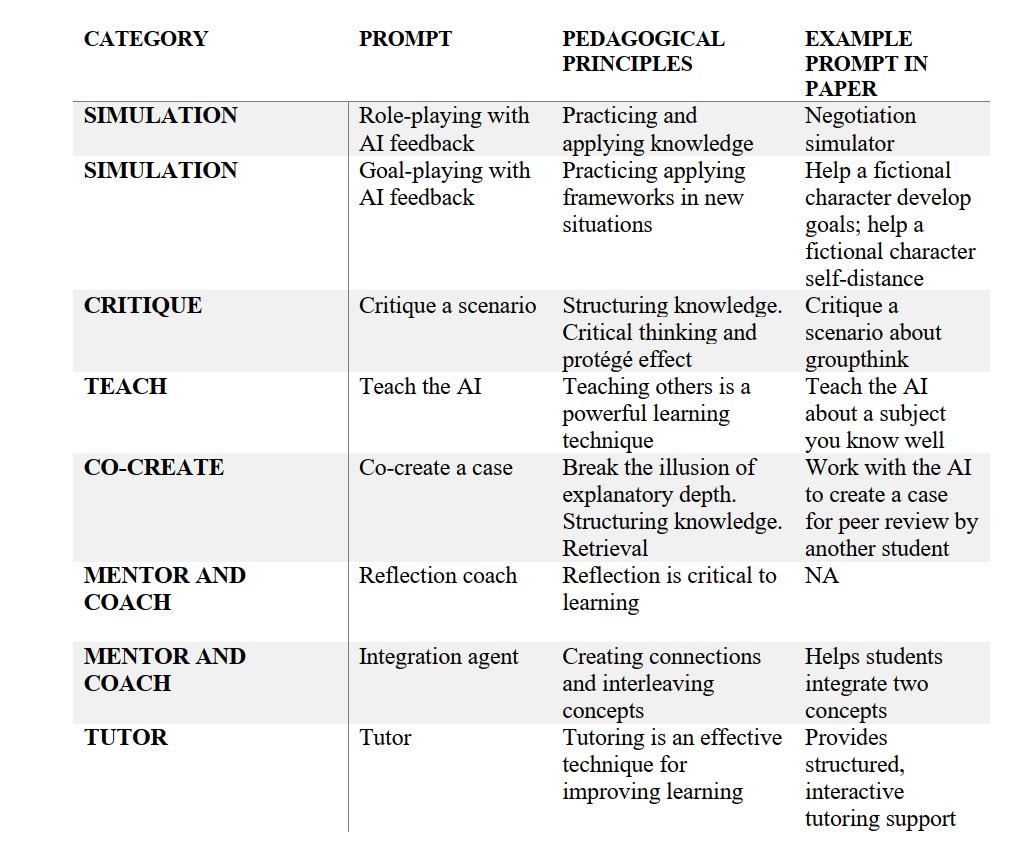
🚨Our new paper on how instructors can use AI to create research-based experiences that would have been impossible to do before the advent of generative AI.
We also teach how to build them.
Blog on democratizing innovation: https://t.co/oP1Ct4ZRvQ
Paper: https://t.co/hJU9HA2cAZ
Mistral AI has released the most performant open model
Uncensored, fluent in several languages, strong in math and coding, ...
It's free to use by anyone without a login or account.
More details and how to access it below 🧵