🚨 ICYMI: @SonicLabs has officially addressed Matthew Madera’s status within the ecosystem.
On paper, this may look like a contractual update.
But for a community that has spent months asking for clearer communication, stronger accountability, and a more consistent direction, it carries more weight than that.
In my view, publicly addressing the situation is a positive first step toward greater clarity and rebuilding trust with the Sonic community.
Read the full official notice directly: 👇
https://t.co/0RRZTUk24T
$S
SODAX Is More Than a Bridge. 🌉
Moving assets between networks is only one part of the problem.
Builders also need to find liquidity, integrate different wallets, manage routes, coordinate settlement and maintain separate infrastructure for every chain they support.
@gosodax brings those pieces into one execution layer.
Through a single SDK, applications can offer cross-network swaps, lending and borrowing across EVM and non-EVM ecosystems while hiding bridges, routes and network switching from the user.
The user defines the outcome.
SODAX handles the path underneath.
What makes this especially important for Sonic is the role the network plays inside the system.
Sonic is not simply another destination connected to SODAX.
It serves as the coordination and settlement hub where the final state of cross-network activity can be recorded and reconciled.
That gives Sonic a position deeper in the stack:
Not only where applications are deployed, but where infrastructure connecting multiple ecosystems is coordinated.
The recent addition of $USSD as cross-network collateral makes that relationship more tangible.
Users of SODAX-powered applications can supply $USSD and borrow against it across connected networks, expanding its utility beyond applications native to Sonic.
For builders, this means:
🔸One integration instead of rebuilding infrastructure chain by chain
🔸Access to liquidity across more than 20 connected networks
🔸Cross-network swaps, lending and borrowing inside their own application
🔸A simpler experience without manual bridges or network switching
For @SonicLabs, it means something bigger:
Assets created on Sonic can reach users across other ecosystems.
External liquidity can become accessible to Sonic applications.
And Sonic can help coordinate the execution layer underneath cross-network DeFi.
SODAX is not just connecting Sonic to more chains.
It is helping Sonic become part of the infrastructure that connects them. 🥤
$S $SODA
I believe @SonicLabs has a credible path toward becoming one of the most important homes for DeFi.
@flyingtulip_ could play a meaningful role in that transition not simply as another major protocol, but as an integrated financial system connecting liquidity, lending, trading and capital efficiency across the ecosystem.
Its success alone, however, would not automatically guarantee success for Sonic.
The real opportunity depends on how much of Flying Tulip’s liquidity, users, volume and settlement activity becomes anchored on the network.
If a meaningful share of that flywheel develops on Sonic, it could help create deeper markets, stronger financial infrastructure and a more attractive environment for serious builders.
That is one of the reasons I am optimistic about Sonic’s DeFi direction.
What makes the current phase even more interesting is that the opportunity under @MattVisser leadership could extend far beyond DeFi alone.
Sonic already has strong technical foundations. The next opportunity, in my view, is to translate that performance into a clearer economic and ecosystem advantage.
That does not require Sonic to compete in every vertical at once.
A more focused approach around a small number of connected areas could make that advantage easier to build, measure and communicate.
The strongest foundation may begin with DeFi, trading, RWA and payments.
RWA could connect Sonic to productive offchain assets and more stable sources of yield.
Prediction markets could create recurring, event-driven activity.
Payments could turn stablecoins and onchain assets into tools people can use in everyday financial activity.
Consumer applications could gradually expand Sonic beyond DeFi-native users by creating simpler and more accessible products around payments, gaming, social experiences, loyalty, commerce and everyday financial services.
This matters because most users will not join a network simply because it is fast.
They will join because there is something useful, entertaining or valuable to do there.
Community, creators and marketing could then become the distribution layer around these products helping turn technical progress into adoption, culture and a narrative the market can understand.
These areas become much more powerful when they reinforce one another.
A stronger financial layer can attract more capable builders.
Those builders can turn the infrastructure into useful applications for both DeFi users and a broader consumer audience.
Useful applications can bring more users, volume and revenue.
Stronger community-led distribution can improve retention and bring more partners, users and capital into the ecosystem.
That growth can then support deeper liquidity, better products and stronger reasons for teams to remain on Sonic.
The broader opportunity, in my view, is to build a connected economic system where DeFi, RWA, prediction markets, payments and consumer applications strengthen one another with community, creators and marketing helping distribute that value across the ecosystem.
The final challenge is value capture.
Growth in Flying Tulip or any individual application does not automatically translate into stronger demand for S.
Over time, creating a clearer connection between ecosystem activity and the value captured by Sonic and S could make that growth more durable.
That connection may come through transaction demand, protocol revenue, strategic ownership, reinvestment and stronger economic alignment across the ecosystem.
What gives me confidence in Sonic’s current direction is that the opportunity is not simply about rebuilding attention.
It is about building stronger reasons for users, capital and teams to come to Sonic, grow there and remain there.
Under the right execution, Sonic would not simply be catching up with competing networks.
It would be building a more focused, connected and sustainable economy around the advantages it already has.
$S $FT
The more I read about @flyingtulip_ , the less it looks like another collection of DeFi products.
It looks more like an attempt to make them work as one financial system.
Right now, using DeFi usually means splitting your capital across different places.
You lend in one protocol.
Trade somewhere else.
Move to another platform for leverage.
Then use a separate product for yield or derivatives.
Every product has its own liquidity, collateral and settlement process.
Your capital may be on-chain, but it still spends a lot of time moving between disconnected systems.
Flying Tulip is trying to remove that fragmentation.
The idea is to bring lending, Spot, margin, TRS, insurance and future markets into the same account and liquidity structure.
At the center of it sits ftUSD.
Not just as another dollar-pegged asset, but as the liquidity and settlement layer connecting the whole stack.
Capital supplied through ftUSD can earn yield from borrowing demand while also supporting activity across the platform.
Assets deposited into Lend can become part of the same account infrastructure used for Spot orders, margin positions, RFQ execution, liquidations and derivatives.
You are not supposed to rebuild your position every time you move from one product to another.
The same capital stays useful across the system.
That is the part I find more interesting than any individual product launch.
Flying Tulip is not simply adding Spot next to Lending, or derivatives next to a stablecoin.
It is trying to make each product strengthen the others.
More borrowing creates more demand for liquidity.
More trading creates more fees.
More settlement creates more use for ftUSD.
That activity can contribute to ftUSD yield, attract more liquidity and give the rest of the platform more capital to work with.
The value of ftUSD is not meant to come from one isolated strategy.
It comes from being useful across the entire system.
That is why calling it only a stablecoin misses the point.
It is closer to the connective tissue of Flying Tulip.
The original promise of DeFi was composability.
But as protocols became businesses with their own liquidity and fee models, that composability became harder to maintain across separate platforms.
Flying Tulip's answer is to rebuild it inside one connected stack.
One account.
One liquidity layer.
Different financial products drawing from the same underlying infrastructure.
There is still a lot to prove.
The products need real users.
The risk controls need to work under pressure.
And making capital more efficient cannot come at the expense of security.
But the direction is much bigger than launching another DeFi app.
Most protocols are competing to become the place where capital goes.
Flying Tulip is trying to become the system where capital keeps working.
$FT
Aave is moving to wind down its Sonic deployment.
But the more important question is not simply who is leaving.
It is how @SonicLabs and Sonic-native builders use the space that opens.
Aave gave Sonic access to a proven lending market, but Sonic was ultimately one deployment within a much broader multichain strategy.
@flyingtulip_ is taking a different approach. 🌷
Lend and ftUSD are already live, while Spot, leveraged trading and TRS are planned as additional layers of the same financial stack.
The distinction is not only the number of products.
It is how they connect.
Flying Tulip is designing these products around shared pricing, collateral and settlement infrastructure:
▫️Deposit USDC.
▫️Mint or use ftUSD.
▫️Lend, borrow and earn.
▫️Trade spot or access leveraged exposure.
▫️Keep capital moving through multiple financial functions on Sonic.
A standalone lending market creates deposits and loans.
An integrated stack can potentially create a broader loop of liquidity, trading volume, recurring transactions and fee-producing activity.
The strategic value is not simply replacing one lending market with another.
It is increasing the economic density of every dollar that enters Sonic.
The same capital can support stablecoin supply, lending demand, trading liquidity, leveraged positions and fee generation—without constantly leaving the network between each activity.
For Sonic, that means the potential for stronger capital retention, more repeat transactions and more revenue-producing activity per unit of liquidity.
That alignment matters.
Aave’s Sonic market has declined significantly, and the deployment no longer generates enough revenue to justify its operational and risk-management costs.
Flying Tulip, by contrast, is still expanding the products it is deploying around Sonic.
That does not make it a replacement for Aave yet.
Flying Tulip still needs deeper liquidity, stronger borrowing demand and successful adoption of Spot, leverage and TRS.
But strategically, the opportunity is larger than replacing lost TVL.
The goal should not be to replace Aave’s TVL.
It should be to make each dollar on Sonic work harder.
Aave is reducing its footprint.
Flying Tulip is expanding the stack.
What Sonic does with that difference may matter more than the departure itself.
$S $FT
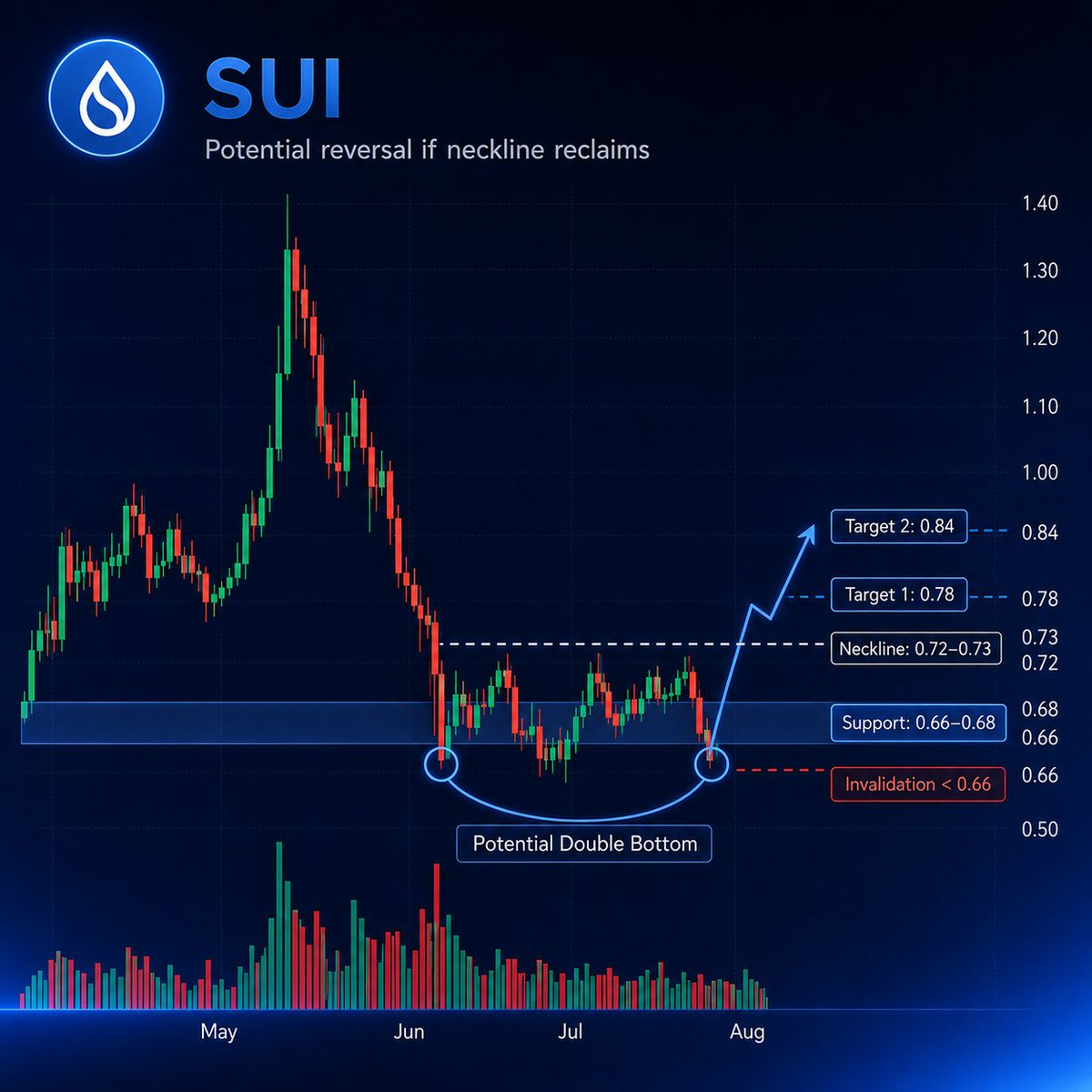
A clean technical setup meets a meaningful fundamental narrative.
$S is compressing inside a falling wedge. 📈
At the same time, @SonicLabs decision not to mint the annual allocation adds an important layer to the broader thesis.
If inflation pressure is reduced and validator rewards are solved sustainably, the market may start pricing that in.
Watching: 🎯
Breakout: 0.0230–0.0250
Targets: 0.0280 / 0.0310
Invalidation: 0.0200–0.0190
Your contracts can run on many chains. ⛓️
The real question is where the product and business can grow together.
15 reasons to build on @SonicLabs: 👇 $S
15 Reasons to Build on @SonicLab: 🏗️
Choosing a blockchain is not only about where your contracts can run.
It is about where your product can perform, monetize, attract users and grow into a sustainable business.
Here are 15 reasons builders should take Sonic seriously:
1️⃣ Sub-second finality
Transactions confirm almost instantly, creating a smoother experience for trading, payments, gaming and consumer applications.
2️⃣ Economics for frequent interaction
Low transaction costs make repeated actions, microtransactions and fully onchain product loops more practical.
3️⃣ Full EVM compatibility
Builders can use Solidity, familiar development tools and existing EVM infrastructure without learning an entirely new stack.
4️⃣ Fee Monetization
Eligible applications can receive a share of the network fees generated through their smart contracts.
Instead of only creating value for the network, builders can participate directly in the economics their products generate.
5️⃣ An engaged ecosystem community
Building a strong product is only part of the challenge.
Projects also need early users, feedback, visibility and people willing to support their growth.
Sonic’s community gives builders an environment where they can introduce new products, build relationships across the ecosystem and turn early attention into long-term participation.
6️⃣ A share of execution economics without running a chain
FeeM allows eligible applications to capture part of the value generated by their activity without operating validators, sequencers, bridges or an independent security environment.
7️⃣ Vertical integration
Sonic is not positioning itself as a passive provider of blockspace.
It is aligning important financial infrastructure and revenue-generating products with the broader network economy.
8️⃣ A more coordinated financial stack
Sonic is building toward a more connected environment across stable liquidity, trading, lending, payments and settlement.
For builders, that can reduce fragmentation between the financial primitives their products depend on.
9️⃣ Better economic alignment
Builders benefit when their applications grow.
The network benefits when those applications generate recurring activity and revenue.
Both sides have stronger reasons to support long-term success.
1️⃣0️⃣ Gasless onboarding opportunities
Applications can subsidize transaction costs and reduce the need for new users to acquire a gas token before interacting with the product.
This can create a smoother first experience for users coming onchain.
1️⃣1️⃣ Built for high-frequency applications
Sonic is particularly suited to products that require repeated and inexpensive transactions, including trading platforms, prediction markets, games and AI agents.
1️⃣2️⃣ Access to ecosystem support
Strong teams may gain access to funding, technical assistance, strategic partnerships, distribution and support from the Sonic ecosystem.
1️⃣3️⃣ Lower migration friction
Existing EVM projects can expand or deploy on Sonic while reusing much of their current code, tooling and developer knowledge.
1️⃣4️⃣ An opportunity to shape emerging categories
As Sonic expands its product ecosystem, early teams can help define standards, user experiences and market structure within their vertical.
Strong execution not simply early arrival will determine who leads.
1️⃣5️⃣ A stronger focus on durable activity
Sonic’s current direction emphasizes recurring usage, sustainable products, revenue generation and long-term alignment between applications and the network.
The strongest reason to build on Sonic is not speed alone.
It is the combination of:
▫️ Performance
▫️ Monetization
▫️ Integrated infrastructure
▫️ Ecosystem support
▫️ Economic alignment
Ready to build on Sonic?
Reach out at [email protected] 📩
The Sonic team is ready to help you move from idea to execution. ⚡
$S
Last time I charted $CRONJe/wS, it was trading around $19.
But the chart isn’t the only interesting part.
@CRONJEonSONIC brings LPs from multiple Sonic projects into one farming platform, giving liquidity providers another way to participate, earn rewards and remain active across the ecosystem.
Claiming rewards is the short-term move.
Compounding is the strategy: 🚜
Put the rewards back to work.
Grow the position over time.
Keep liquidity active on Sonic.
Earn. Compound. Repeat. 🔄
$S $CRONJe
My first onchain financial transaction was on Fantom.
There will never be a last one because my journey continues on @SonicLabs.
210,000,000 transactions. ⚡️
That is 210 million moments where a builder deployed, a trader executed, or a user chose to interact onchain.
It is a milestone worth celebrating and 210 million reasons to thank everyone who helped build, use and support this ecosystem.
But cumulative transactions are not the finish line.
They show that Sonic’s infrastructure can operate at scale, that real applications are live and that meaningful activity has already taken place.
What matters next is whether that activity compounds into:
— More daily active users
— Consistent transaction volume
— Growing protocol revenue
— More builders choosing Sonic
— Applications people return to every day
The milestone proves that the network can process activity.
The next chapter is about turning that activity into sustained usage, recurring revenue and long-term ecosystem growth.
210 million transactions behind us.
No final transaction ahead.
Onward. 👊
$S
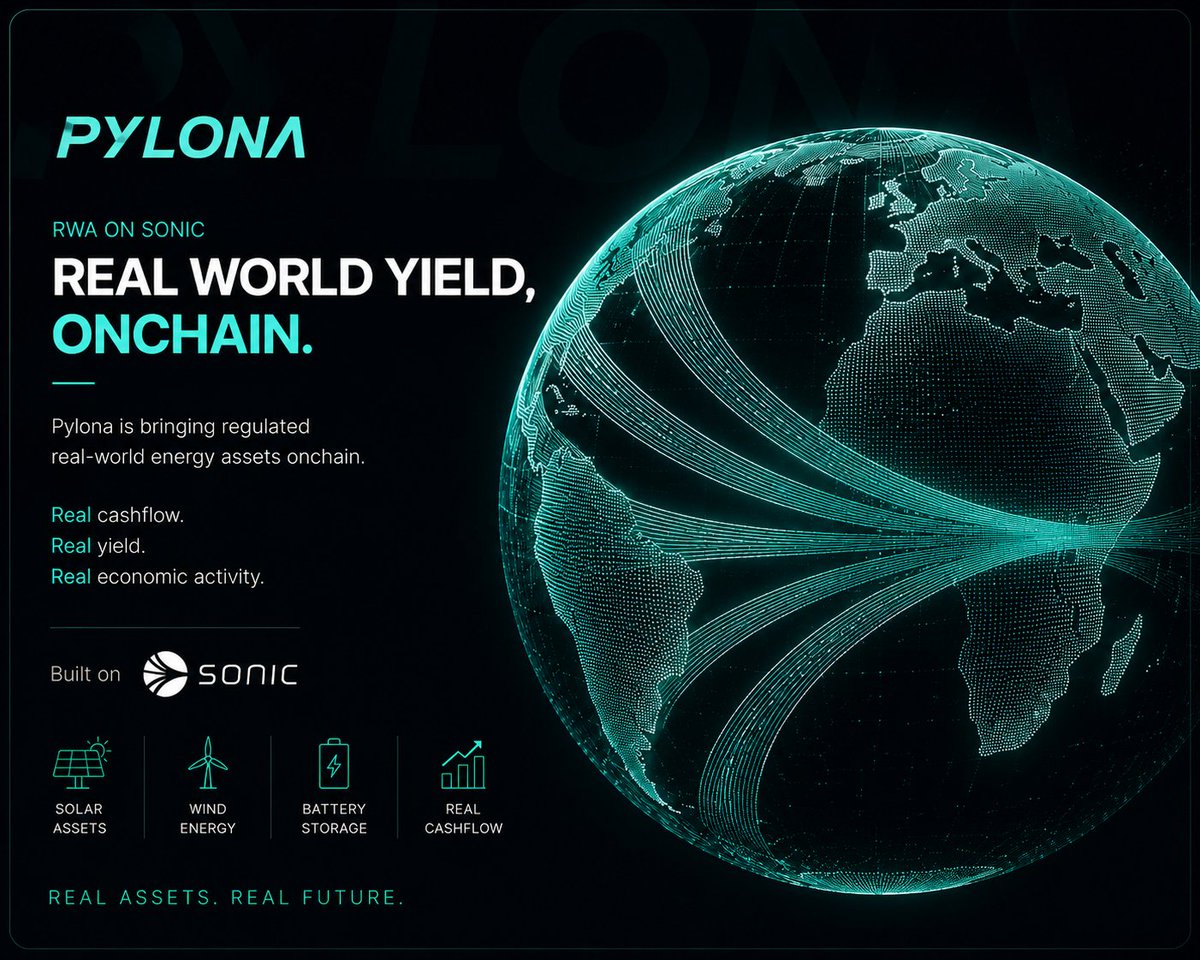
What if yield came from something real?
@PylonaRWA is bringing regulated, renewable energy-backed yield onchain. ⚡️
Settled in $USDC.
Built on @SonicLabs.
The first issuance is coming.
$S
I keep coming back to one question: 🧠
Why can the community play such a large role in crypto marketing?
I think the answer lies in a structural difference:
A core team communicates from the inside, while the community experiences the product from the outside.
The team understands the technology, roadmap, partnerships, and long-term vision.
Users understand what feels confusing, which benefits are relevant, which messages build trust, and which questions remain unanswered.
This gives the community something a centralized team can never fully possess:
different perspectives, languages, cultures, networks, experiences, and forms of trust.
That allows the community to move several parts of marketing forward.
1️⃣ Product interpretation
An official announcement explains what was launched.
The community explains why it matters.
One person creates a thread. Another records a walkthrough. Someone else turns the idea into a visual, a meme, a regional example, or a local-language explanation.
The core message remains consistent, but each audience receives a more relevant entry point.
One official voice cannot communicate naturally with every type of user.
A distributed community can.
2️⃣ Trust and social proof
People rarely build trust through announcements alone.
They look for evidence that real users understand the product, use it, discuss it honestly, and remain involved after the initial excitement fades.
The official team creates awareness.
The community makes the product feel tested, lived-in, and human.
This matters in crypto, where users are often asked to connect wallets, move assets, try unfamiliar technology, or adopt new behaviors.
3️⃣ Faster feedback
The community is not only an outward distribution layer.
It is also an inward intelligence layer.
Users can quickly identify unclear messaging, difficult onboarding, missing educational materials, misunderstood features, regional differences, and shifts in sentiment.
These insights can improve campaigns, product communication, and the overall user experience.
The earlier this feedback reaches the team, the more useful it becomes.
4️⃣ Cultural creation
The humor, language, characters, stories, events, and shared references surrounding an ecosystem cannot be created by one central account alone.
Culture develops when people receive enough context and freedom to build around a shared direction.
That creates an identity that competitors cannot easily copy.
5️⃣ Access to new audiences
Every community member belongs to different networks, regions, industries, language groups, and online cultures.
When they understand a product, they can introduce it in contexts that feel natural and relevant to those audiences.
This is more effective than broadcasting the same message everywhere.
It turns distribution from a single channel into a network.
6️⃣ Moving users beyond awareness
Community marketing should not be limited to generating impressions.
It can support the entire journey:
awareness → understanding → trust → first use → repeated use → contribution.
Someone may discover a project through a post, understand it through a tutorial, trust it after speaking with users, try it through a community activity, and later create something that attracts the next user.
That is where growth begins to compound.
For this model to work, coordination matters.
The goal is for different people to communicate the same underlying value in ways that feel authentic to their audiences.
The community does not replace a marketing team.
It extends the team’s ability to listen, educate, build trust, create culture, and reach people at scale.
The community should not be viewed only as the audience for crypto marketing.
When properly aligned, it can become one of the most capable parts of the marketing system itself.
$S
What if @SonicLabs projects became more economically connected?
Most projects across the ecosystem already have their own communities, tokens and liquidity.
But there may be more room for collaboration between them:
— Shared liquidity initiatives
— Cross-project integrations
— Founder-led Spaces and discussions
— Joint community campaigns
— Small, transparent partnership experiments
Not to artificially support prices or manufacture activity.
Simply to explore whether projects can use existing resources more effectively, create more recurring onchain activity and build relationships that last beyond a single campaign.
Attention can introduce communities.
Real collaboration can give them a reason to stay connected.
I'm curious to know your thoughts on this $S fam. 💭 👇
Sonic’s Next Burn Is Already on the Clock. 🔥
There are currently 7.652M $S remaining in the airdrop contract.
75 days left. ⏳️
More info at: https://t.co/xfLoa1XcFO
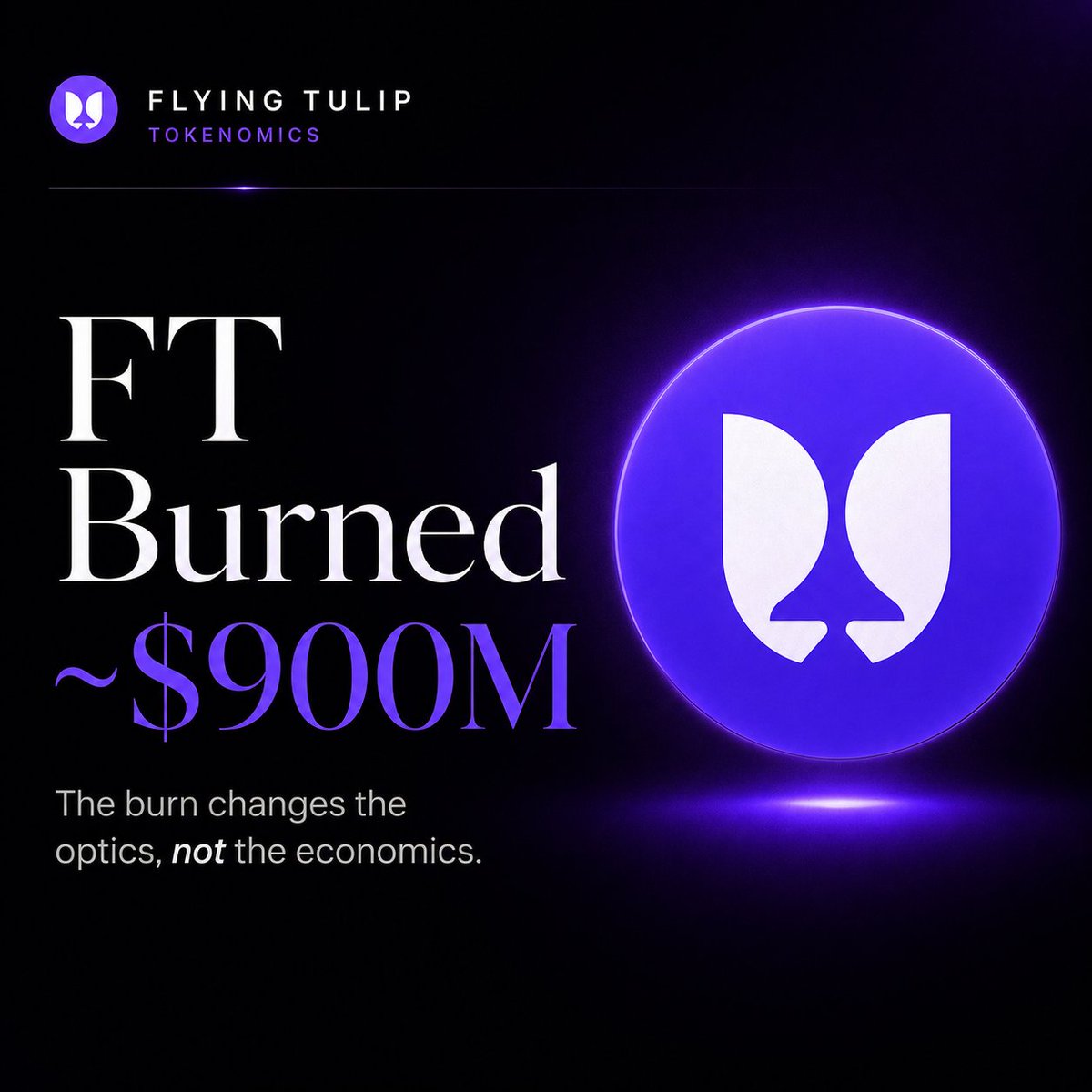
@flyingtulip_ did not burn $900M of real circulating value.
It removed conditional supply that could only enter circulation through collateralised PUT positions.
The real story is not the burn.
It is the token design: 🌷
▫️No free team tokens.
▫️No free foundation tokens.
▫️No incentive emissions funded by dilution.
Protocol revenue buys back FT, and those buybacks fund the team, foundation and incentives.
That creates a cleaner alignment:
If the protocol generates revenue, $FT receives demand.
If it does not, insiders do not receive free tokens.
The burn mainly makes the accounting clearer.
FT’s real experiment is not artificial scarcity.
It is tying token distribution directly to protocol performance.
$FT
When @MattVisser mentioned RWA in his recent update, I don't think it was just another buzzword.
Projects like @PylonaRWA show what that vision could actually look like. 🏛️
For years, most DeFi yield has come from the same sources:
🔹Trading fees
🔹Lending activity
🔹Token emissions
They're all tied to crypto market conditions.
When markets slow down, those yields often slow down too.
Pylona is taking a different approach.
This isn't just another yield protocol.
It's about bringing real economic activity onto @SonicLabs.
By tokenizing regulated renewable energy assets, the underlying yield is backed by cash flows generated from real-world infrastructure not solely by activity within the crypto market.
It creates a bridge between blockchain and the real economy.
It opens the door to new users.
New capital.
New industries.
And ultimately, new reasons to build on Sonic.
Of course, execution matters.
Trust matters.
Regulation matters.
Especially in RWA.
But if projects like Pylona execute well, they could become an important proof of concept for what's possible on $S.
If Sonic wants to become more than another DeFi ecosystem, RWA could become one of the most important pillars of its next chapter.
One of @SonicLabs most important RWA launches is getting closer.
The first regulated yield instrument on Sonic is getting closer to launch. 🏛
Follow @PylonaRWA and turn on notifications. 🔔
Let’s support the teams bringing new asset supply to $S.