Rugtector has raised $3.2M in private funding.
Backed by Animoca Brands, X21, Gains Associates, Moniq Ventures, Blockwave Capital, and Nodebase Capital.
⚡ Detect hidden market risks before they become visible. Built for a safer onchain future.
A multisig is only as safe as the keys behind it.
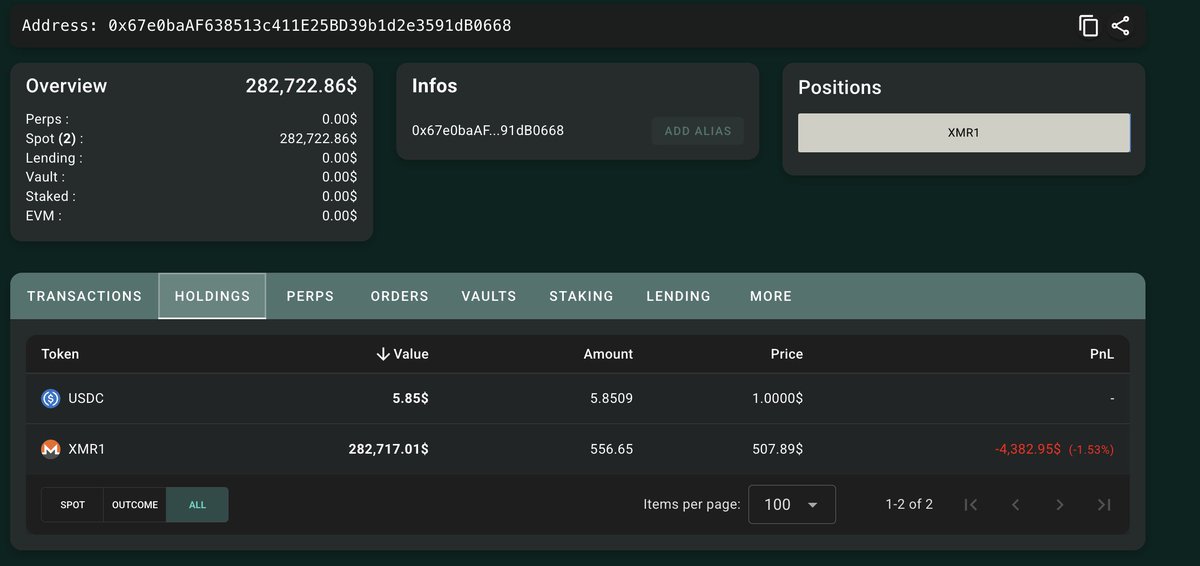
$6.45M gone, and the hacker was already buying $XMR by the time it hit the timeline.
Stolen funds move in minutes.
Your alerts should too. That's what Rugtector is built for.
#Rugtector#DeFi#CryptoSecurity
#PeckShieldAlert Specter has reported that a Gnosis Safe may have been compromised, resulting in $6.45M being drained, including $4.3M in $USDC and $1.7M in $syrupUSDC. The hacker has spent ~$813K to buy $XMR on Hyperliquid.
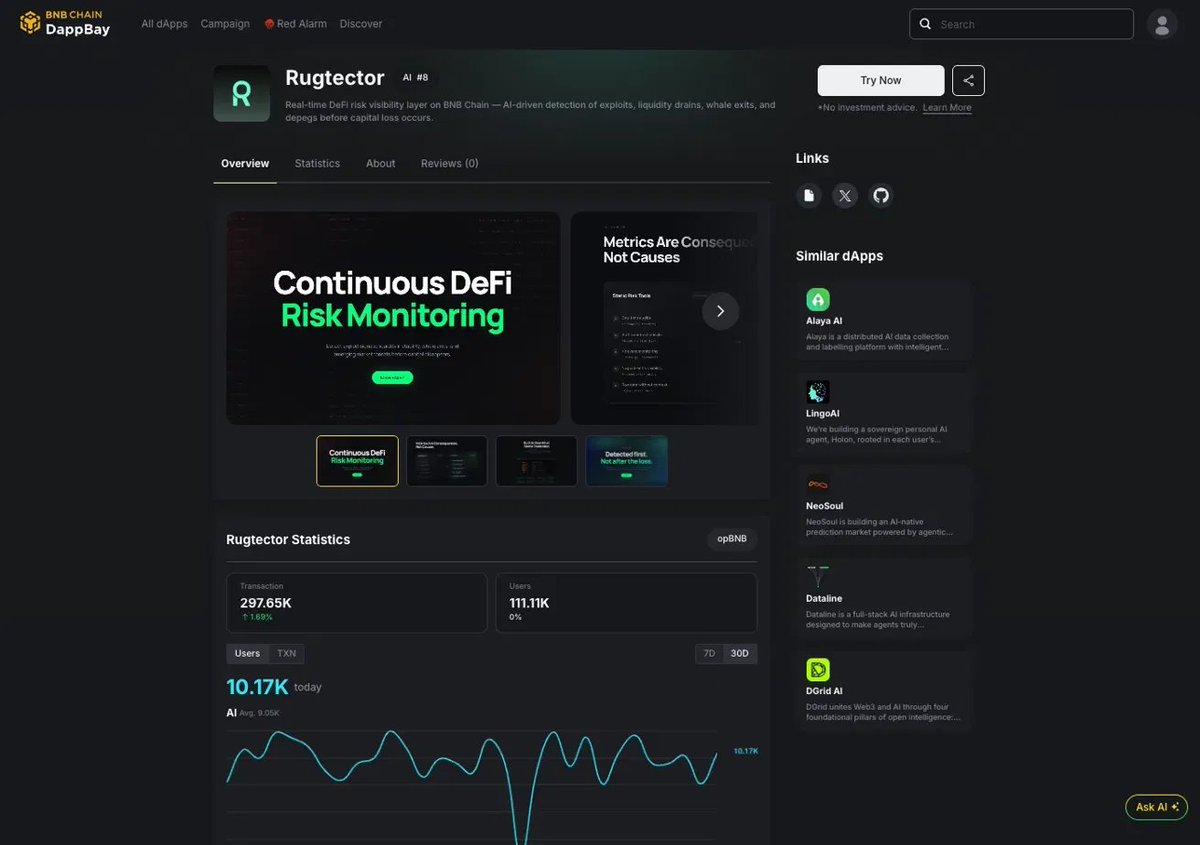
You can now find Rugtector on @BNBChain DappBay.
Real-time DeFi risk visibility for BNB Chain: exploits, liquidity drains, whale exits and depegs, flagged before the loss.
Take a look 👇 https://t.co/0wBcvjhgth
#BNBChain#DeFi#AI
56 hacks in one month.
Every one of them ends the same way: funds moving on-chain, in public, faster than people react.
The data is always there. Most people see it after it's too late.
That's the gap Rugtector is built for.
#PeckShieldAlert In October 2026, the crypto industry experienced 56 major hacks, resulting in total losses of $6.48B, a ~745% month-over-month increase from September’s $766.49M.
The #Binance incident (~$6.3B, with $3B already frozen) has jumped to #1 among the largest crypto thefts of the year to date, surpassing the #Bitget incident (~$387M) and the #LiquidNetwork incident (~$320M, with $285M returned), which now rank #2 and #3.
The Top 10 hacks as of Oct. 31 accounted for 92.3% of the year’s total losses ($8.6B), before accounting for frozen and returned funds.
Top 10 hacks as of Oct. 31
-#Binance: $6.3B ($3B frozen)
-#Bitget: $387M
-#LiquidNetwork: $320M ($285M returned)
-#Drift: $292M
-#KelpDAO/#LayerZero: $285M
-COLDCARD Wallet: $130M
-CryptoBills Ledger drainer: $93M
-Tectonic Finance: $74M
-Humanity Protocol: $31M
-Step Finance: $28.9M
Anatomy of a rug, in timestamps:
T-72h: deployer funds 6 fresh wallets
T-24h: LP lock "expires soon"
T-2h: top holder moves to a new address
T-10m: liquidity pulled
T+0: the chart finally notices
You were never late. The chart was.
#DeFi#Rugtector
Your protocol can be fine and you can still get hit.
This year's biggest exploit started on a bridge. The stolen tokens then landed as collateral on a lending market.
DeFi risk travels through dependencies. Know what your position depends on.
#DeFi#Rugtector
Crypto vaults are making headlines. The APY is doing the marketing.
Before depositing, ask:
• Who controls the strategy?
• What backs the loans?
• What happens to withdrawals when liquidity gets tight?
The yield is visible. The risk should be too.
#DeFi#Rugtector
It’s only a small position” depends on the pool.
In thin liquidity, even a modest swap can move the price sharply—and getting out may cost more than getting in.
Before entering, test the exit: check pool depth and estimated price impact.
#Rugtector#DeFi
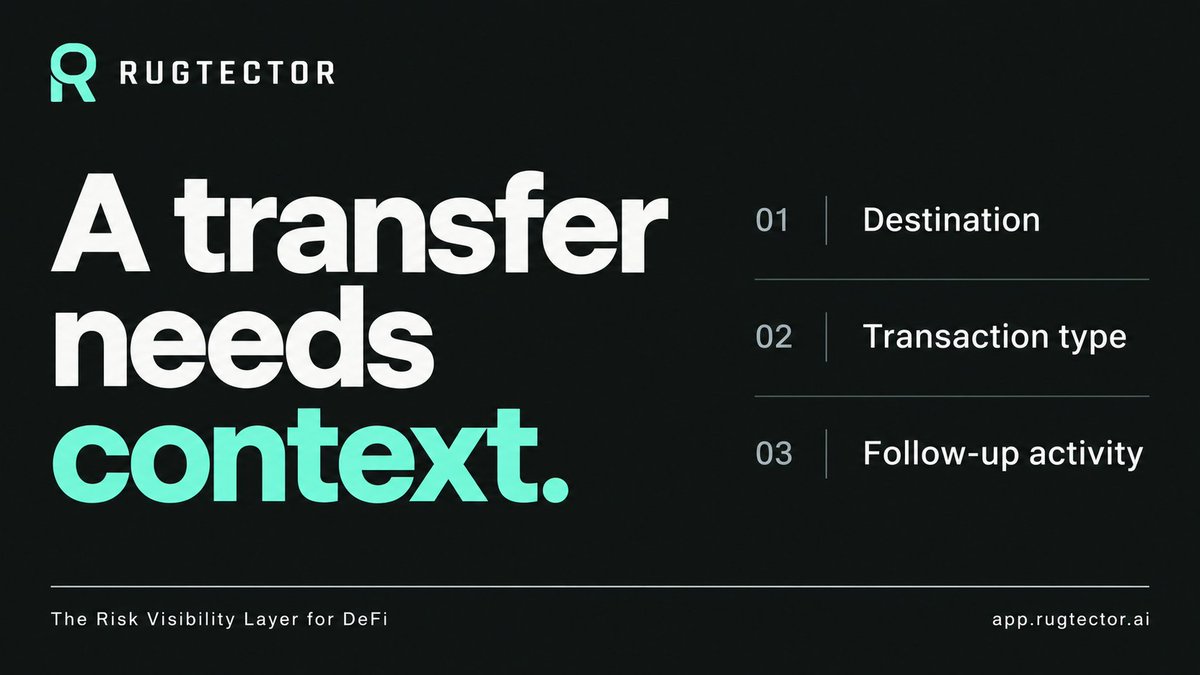
A large token transfer needs context.
Check the destination, transaction type and any swaps that followed. Then compare liquidity changes.
Size alone doesn't establish selling pressure.
#Rugtector#DeFi
DeFi risk doesn't always begin with a falling price.
It can start with unusual whale activity, liquidity shifts, or abnormal protocol events.
Rugtector monitors the signals that come first.
#Rugtector#DeFi#CryptoSecurity
Bitcoin is back near $80K.
But price going up doesn’t mean risk goes down.
Liquidity shifts. Whale movements. Protocol exploits. Depegs.
Monitor what happens beneath the price.
#Rugtector#Bitcoin#DeFi
Another bridge exploit. Another reminder.
Around $24M was drained before the market could fully react.
DeFi risk often begins with an abnormal event—not a falling metric.
Rugtector monitors the signals that come first.
#Rugtector#DeFi#CryptoSecurity