Dear brother @TherealKwizera allow to respond not as a young Rwandan but as someone who was once young and who has worked with youth youths for the last 24 years and as someone who returned to this country at the age of 17 in 1995. By then my father was 43 years old!
Older Rwandans have, to varying degrees, accepted limits on certain civil liberties and political freedoms in exchange for economic security, stability, social order, and public goods. It is an largely unspoken arrangement: the state delivers tangible national progress, while citizens accept constraints that might otherwise be contested.
But that social contract is facing a generational test.
Millennials and Gen Z are not necessarily rejecting Rwanda’s stability or development model. They are questioning the terms of the exchange. They increasingly want to know what else they are entitled to as citizens beyond security and economic progress: greater personal autonomy, room for self-expression, freedom of speech, and a greater say in decisions that shape their lives.
The recent dress-code controversy is a useful starting point because it exposes this tension in a very ordinary way. What may appear to older generations as a question of discipline, decency, or social order can be interpreted by younger Rwandans as a question of personal autonomy and who gets to determine the boundaries of acceptable behaviour.
The deeper issue is that the original trade-off may be losing some of its persuasive power. Older generations experienced Rwanda’s transformation from a country marked by extreme poverty and instability into one that is safer, more orderly, and significantly more prosperous. For many who lived through that transition, the argument that certain sacrifices were necessary to secure national survival and development carries considerable weight. Stability is not an abstract concept when you remember what instability looks like.
Younger Rwandans inherited a different Rwanda. For many Millennials and Gen Z, rapid development, public order, digital connectivity, and economic ambition are not extraordinary achievements they personally witnessed being built from the ground up. They are the baseline from which they evaluate the state. That changes the question.
The younger generation is therefore less likely to ask, “What must we sacrifice to preserve what we have?” and increasingly likely to ask, “Now that we have achieved this, what else should citizenship mean?”
That shift matters. Economic development can create new expectations rather than simply satisfy old ones. As societies become more educated, urbanised, connected and exposed to different ideas, citizens often begin demanding forms of participation and autonomy that were less urgent when survival and stability dominated the national agenda.
This does not necessarily mean that young Rwandans want instability, political upheaval, or the abandonment of the model that produced Rwanda’s gains. In fact, many may want precisely the opposite: they want to preserve the stability they inherited while expanding the space within which they can live, speak, dress, create, disagree and participate.
That is where the generational divide becomes interesting. Older Rwandans may see restrictions through the lens of what Rwanda had to overcome. Younger Rwandans increasingly see them through the lens of what Rwanda has already achieved.
The question, then, is not simply whether the social contract will survive. It is whether it can evolve. A state can no longer rely indefinitely on yesterday’s achievements to justify tomorrow’s restrictions. Each generation renegotiates its relationship with power according to the conditions it inherits.
So, are we witnessing a clash between generations? Maybe but this is less a battle over who is right than a struggle over what the next version of the Rwandan social contract will look like.
And if there is one certainty, it is this: the youth have time on their side.
We should consider pursuing consumer-protection class actions against those manufacturers ahubwo!
Families of those who got sick or died after consuming ibyuma deserve compensation!
I wish more lawyers were vocal about these issues, because some of the arguments I am seeing here are concerning…. Tureke byacitse!
Some of these matters need to be framed within the proper context: public policy & public safety!
The Washington Agreement calls for the neutralisation of the FDLR — not a negotiated protocol with a genocidal militia that the DRC government continues to arm and collaborate with.
Voluntary “disarmament” announcements while the FDLR remains embedded in the Congolese army & active on the frontlines change nothing. Implementation means verifiable dismantlement, not theatre.
Rwanda remains focused implementation of the agreement. Our region deserves real security & stability, not paper exercises.
Collette Braeckman said in an interview with @peroluwara1:
"The security of Rwanda's borders is a legitimate concern"
"A country like Rwanda, which went through the genocide, knows that some of those responsible for it have not abandoned their ideology. We should not tell ourselves stories by saying, 'They are old now.........Thirty years have passed. They are patriarchs.'"
"When people in Tshisekedi's entourage embrace the {genocide}ideology that led to the genocide 32 years ago, and you think Kagame is unaware of it, you are mistaken. If you believe Kagame will not take measures to protect himself against that threat, you are idiot, you are blind"
"Kagame is protecting himself from that threat. In gaming terms, this is what you would call a fatal mistake, a very serious mistake. And that, in my view, is Tshisekedi's mistake."
Le président Kagame n'a pas dit que faire disparaître le M23 signifiait faire disparaître le Rwanda. Il a plutôt déclaré : « Ils pensent que faire disparaître le M23, c'est aussi faire disparaître le Rwanda. » Il y a une nuance.
Parlons des faits.
Les propagandistes de Kinshasa peuvent-ils expliquer :
1. Pourquoi, lorsque le M23, pourtant venu d'Ouganda, s'est installé à Cyanzu (Rutshuru), le gouvernement de Kinshasa n'a jamais condamné Kampala ?
2. Pourquoi, lorsque le M23 a pris Bunagana, Tchengerero, Rutshuru-Centre et Kiwanja, les forces FDLR ont été regroupées par le feu Gen Cirimwami, tout au long de la frontière rwandaise ?
3. Pourquoi le président Ndayishimiye a-t-il déclaré publiquement, devant les étudiants de l'UNIKIN, vouloir aider les Rwandais à se débarrasser de leur gouvernement ?
4. Pourquoi, durant la campagne électorale, Tshisekedi a-t-il promis à plusieurs reprises d'attaquer le Rwanda, allant jusqu'à déclarer que Kagame ne dormirait plus jamais chez lui ?
5. Pourquoi, lorsque l'AFC-M23 a officiellement lancé son offensive sur Goma depuis l'ouest et le nord de la ville (Sake et Nyiragongo), loin de la frontière rwandaise, les FARDC ont-elles préféré bombarder Rubavu et ses environs, de l'autre côté de la frontière, au Rwanda ?
6. Pourquoi, au même moment, les soldats de la SADC déployés à Goma en appui aux FARDC ont-ils orienté leurs armes lourdes vers le Rwanda, alors que, la menace provenait de l'ouest et du nord de la ville ?
7. Pourquoi Tshisekedi reçoit-il et continue-t-il de réunir à Kinshasa des figures de l'opposition armée rwandaise, parmi lesquelles le fils de l'ancien président Juvénal Habyarimana ?
Oui, Kagame a raison sur un point : si leur objectif est le Rwanda, comme les faits le laissent penser, ils considèrent que vaincre le M23 est le moyen d'y parvenir, d'autant plus qu'ils n'existent plus de frontière commune entre eux et le Rwanda depuis deux ans.
Kagame a également déclaré qu'ils pensent que la levée des mesures défensives du Rwanda équivaudrait au retrait du M23. 😂
Ils ont réduit la lutte du M23 à une simple guerre pour les minerais. Ils oublient que, pour beaucoup des membres du M23, elle est aussi liée au grand retour de populations ayant vécu plus de 30 ans maintenant dans des camps de réfugiés de la région et qui disent ne plus vouloir y retourner.
Si vous continuez à nourrir la haine, un jour, il vous faudra peut-être un visa pour visiter Goma.
S.M. ✍️
INDIVIDUAL ELEPHANT IDENTIFICATION UPDATE:
The bi-monthly elephant survey was completed, resulting in the addition of six new individuals to the database. Akagera now has 115 individually identified elephants, comprising 65 females and 50 males, representing approximately 80% of the estimated park’s population.
Video: Emerance Tuyipfukamire
If the 🇷🇼n Gov opened up its public sport facilities 24/7 including the ones at stade amahoro & petit stade..kids would be in there instead of clubs/bars..i know i would in there getting different kinda shots up. Hard to Tunywe less when the nightlife is just bars & clubs
#🏀>🥃
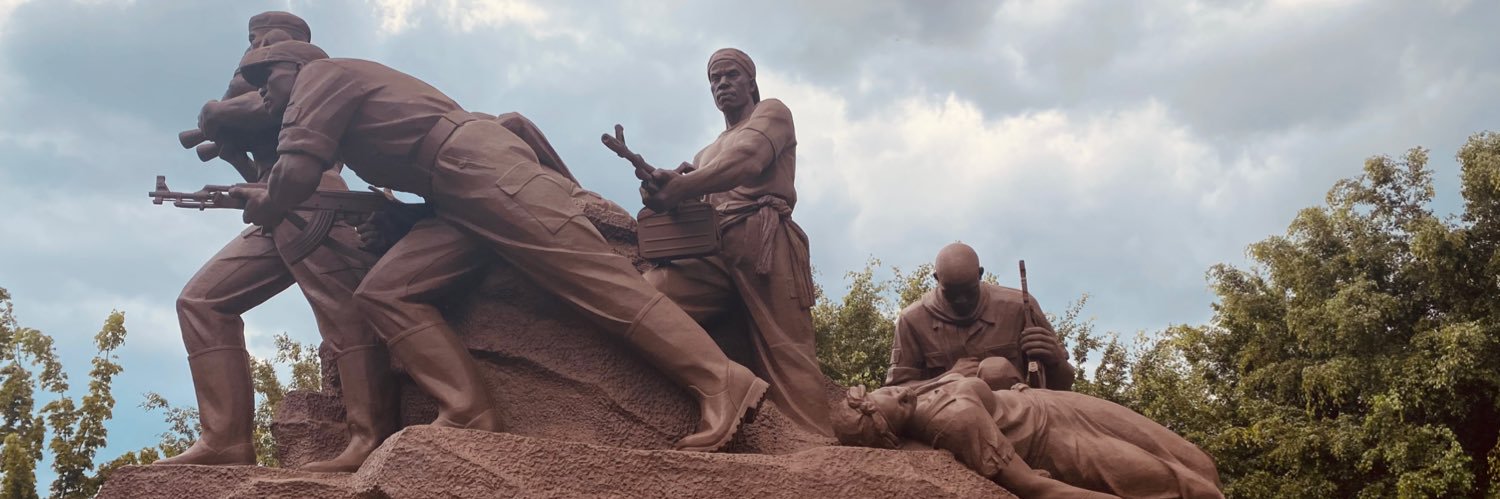
Happy Liberation Day Rwanda.
To the liberators: Your main achievement is that you never allowed to think of yourselves as “small.”
You imposed dignity upon a people who still doubted their worth.
This is the real definition of Inkotanyi in the dictionary: to impose dignity on you even when you believe you are not worth it.
Stay the course.
I rest my case, the 2025 DHS contains some very interesting data & yesterday’s Cabinet resolutions included several significant directives. Yet neither seems to have generated much public debate or engagement. It appears that as a society, we are often more drawn to drama than to substantive issues. #RwOX
Who made you supervisor over my relationships?Who made you judge over how I & Rwandans relate to our President? There are 195 countries in the world,why are you obsessed with Rwanda & its Leader,@PaulKagame?
Your paternalistic obsession with Rwanda is driven by four factors: 1/3
4)Belief in democracy as equal to ethnic majority & Rwanda as forever divided by ethnicity;ethnic power & animosity.
While you believe in the immutability of ethnicity & ethnic politics,I believe in Rwandanness& politics as a creative venture that can unite &ensure shared dev't
3)Unethical:while you methodologically refuse to acknowledge your Hutu/Tutsi theory, you sell the idea that both the genocide regime & RPF are criminally responsible for crimes committed in 1994.This is based on the idea of barbaric Africans born to kill &whites/u as the saviour!
2)Ideological & intellectual commitment:everything you have written on Rwanda uses the lens of Hutu versus Tutsi. You were& remain a believer in Hutu Majority versus Minority Tutsi politics.Hutu power is built on this & like Hutu ideologues,you see RPF&its leader illegitimate;2/3
1)Financial benefit:evidence shows that you worked & financially benefited from the defeated Habyarimana regime;including making its 1978 constitution.And you still make a living from the same relationships you developed in the Habyarimana years&hope to regain influence 1 day;2/3