New Data Byte: Tobacco usage in India is highest among older people, by @nileena_suresh
About one in four Indians over the age of 15 reported smoking or using some form of tobacco as of 2021, according to the National Family Health Survey 2019-21. However, there is a significant divide in tobacco consumption between younger and older adults.
Across the population, over one in three Indians in their 40s and 50s consume tobacco, compared to just half that share among those in their 20s. The gap is particularly striking among men. Over half of Indian men in their 30s and 40s consume tobacco, whereas the share is just over a quarter among men in their 20s.
Tobacco consumption is much less common among women. Overall, just 4% of women consume tobacco in some form. However, even among women, prevalence increases with age, reaching about 17% among women aged 50 and above.
Tobacco is consumed in many forms, the most common being paan masala or gutkha, followed by cigarettes, khaini and bidis. Across age groups, chewing tobacco like gutkha, paan masala and khaini is more common than smoking. About two-thirds of tobacco users consume these products, while around half smoke bidis or cigarettes. Regardless of the form, tobacco has serious health consequences and is a major risk factor for serious non-communicable diseases, like cancers, heart disease and respiratory illnesses.
This generational gap is observed globally. Across most countries, younger people are less likely to use tobacco than their older counterparts.
#Tobacco #Gutkha #Health #India #DataForIndia
Climate across India is influenced by factors such as latitude, elevation, land use, proximity to the coast and atmospheric circulation. These geographical differences mean that warming affects different seasons and regions differently.
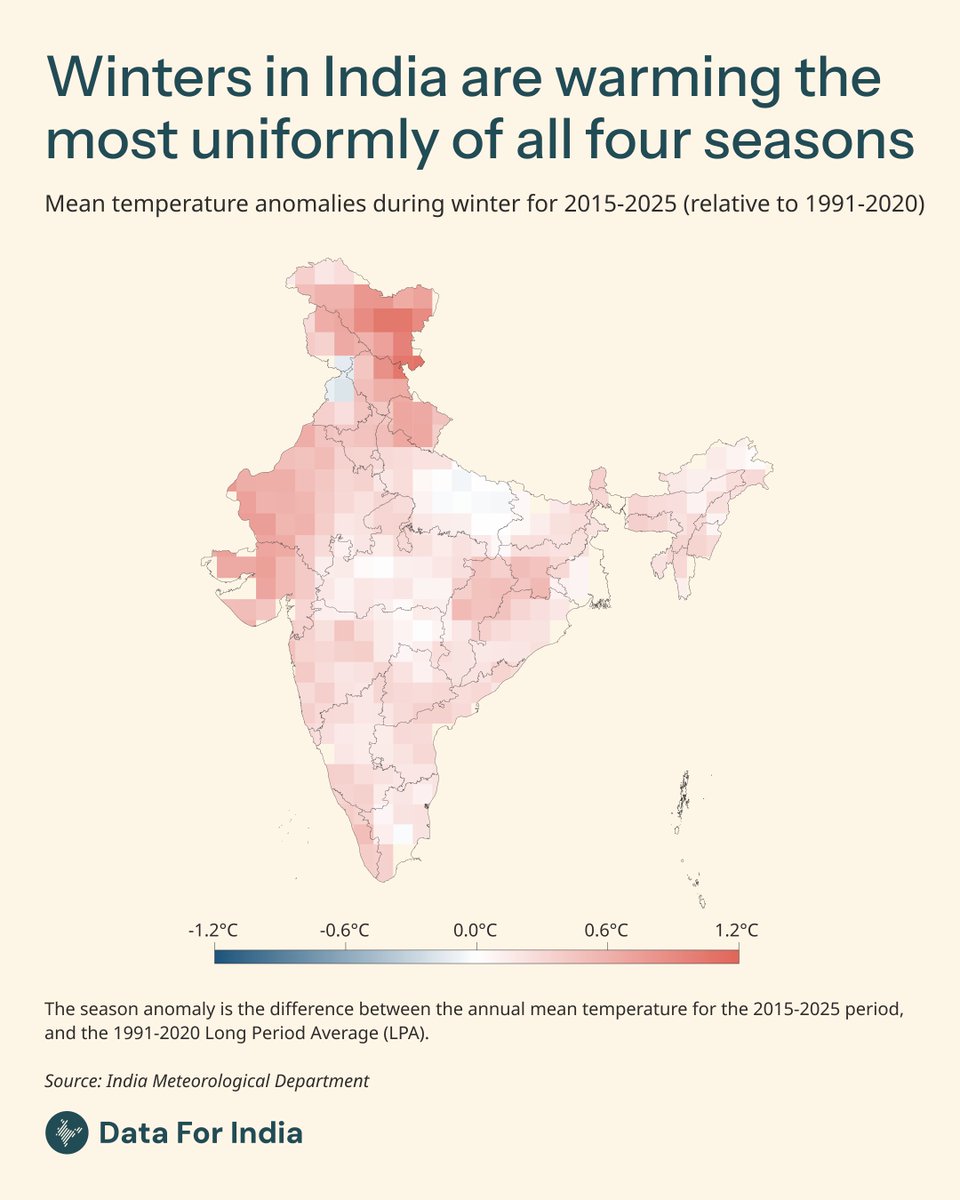
Using daily gridded temperature data from the India Meteorological Department (IMD), we analyse mean temperature anomalies across India for the 2015-2025 period relative to the 1991-2020 climatological baseline. Since temperatures naturally vary across India, anomalies offer a more consistent way to compare warming across regions and over time.
Negative anomalies (shown in blue) indicate temperatures cooler than the baseline average, while positive anomalies (shown in red) indicate warmer-than-baseline conditions.
Winter in India shows the most geographically widespread warming of all four seasons, with positive anomalies across almost the entire country. This means that our winters are becoming warmer, and nearly all states show temperatures above the 1991-2020 average.
Warming is strongest in north-western India. Parts of Rajasthan, Gujarat, Punjab, Haryana, Himachal Pradesh, Jammu and Kashmir, and Ladakh show anomalies exceeding +0.5°C, locally approaching +1.1°C. The central and southern states, including Maharashtra, Telangana, Andhra Pradesh, Karnataka, Tamil Nadu and Kerala, show smaller increases of around +0.2°C to +0.5°C.
Warmer winter conditions have important implications for rabi agriculture, which is particularly sensitive to rising temperatures. They can also increase crop water stress and alter irrigation requirements.
#Heat #GlobalWarming #Winter #Temperature #India #DataForIndia
What stories can data tell us about India?
Join us for a special seminar by @Rukmini S—founder of @dataforin, former National Data Editor at The Hindu and HuffPost India, and author of ‘Whole Numbers & Half Truths: What Data Can and Cannot Tell Us About Modern India’
📅 22 October | 4 PM
📍 MSSRF, Chennai
🎟️RSVP: https://t.co/Z0LvlB4B2y
#DataForIndia
.@Rukmini: The number of Indian women in the agricultural workforce is the highest it has been in 30 years. And for the first time, the number of men working in services has surpassed the number of men working in agriculture https://t.co/aAyNC8zLyl
Civil litigation is something of a black box in terms of data analysis - we know so little about how many civil cases there are and around what, as compared to the criminal side. Our work using e-courts data attempts to bring numbers to the table.
The full extent of people's interactions with the law in India can be difficult to quantify.
We analysed cases disposed of across India’s subordinate courts between 2010 and 2020. These cases, heard before magistrates, civil judges, and district and sessions judges, are the first point of contact between Indians and the legal system. In all, this dataset contains 43 million records of legislation invoked in cases.
While criminal cases contribute to the majority of the dataset, the data also provides valuable insights into civil litigation, which is otherwise rarely captured in Indian data. Civil statutes define people’s rights and obligations in personal or contractual relationships, and provide remedies when disputes arise.
The top five civil statutes invoked in the ten-year period were the civil provisions of the Motor Vehicles Act of 1988, the Hindu Marriage Act of 1955, the Registration of Births and Deaths Act of 1969, the Protection of Women from Domestic Violence Act of 2005, and the Arbitration and Conciliation Act of 1996.
The civil provisions of the Motor Vehicles Act are the most commonly invoked, with 1.75 million records. They cover claims over loss of life or property, vehicle damage and insurance liability. Section 166, which allows people to seek compensation after an accident, was cited 1.25 million times.
The Hindu Marriage Act follows with 1.34 million records. It covers marriage, divorce and separation among Hindus, with contested divorce cited most often, followed by divorce by mutual consent.
#CriminalLaw #Legal #Law #India #DataForIndia
Nothing I have to say should be of any interest or consequence because there are enough actually useful people for that, but I will say this one thing: I want to see these vile men arrested, and these young people well again.
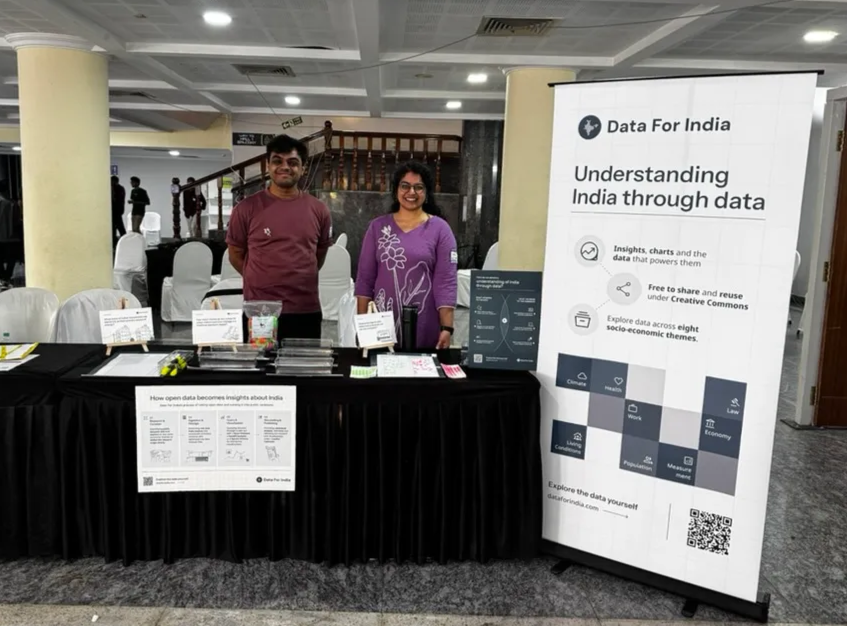
🧵 Data For India was at @IndiaFOSS in Bengaluru this September!
Over the two days of the conference, we spoke with over a thousand free and open source software enthusiasts about our work and making public data easier to understand and use.
At our booth, @nileena_suresh and @TheDataAreClean guided visitors through hands-on activities, inviting them to make guesses about India and compare their answers with the data. The responses opened up many conversations about the gap between data being publicly available and being useful to people.
#FOSS #OpenSource #DataForIndia
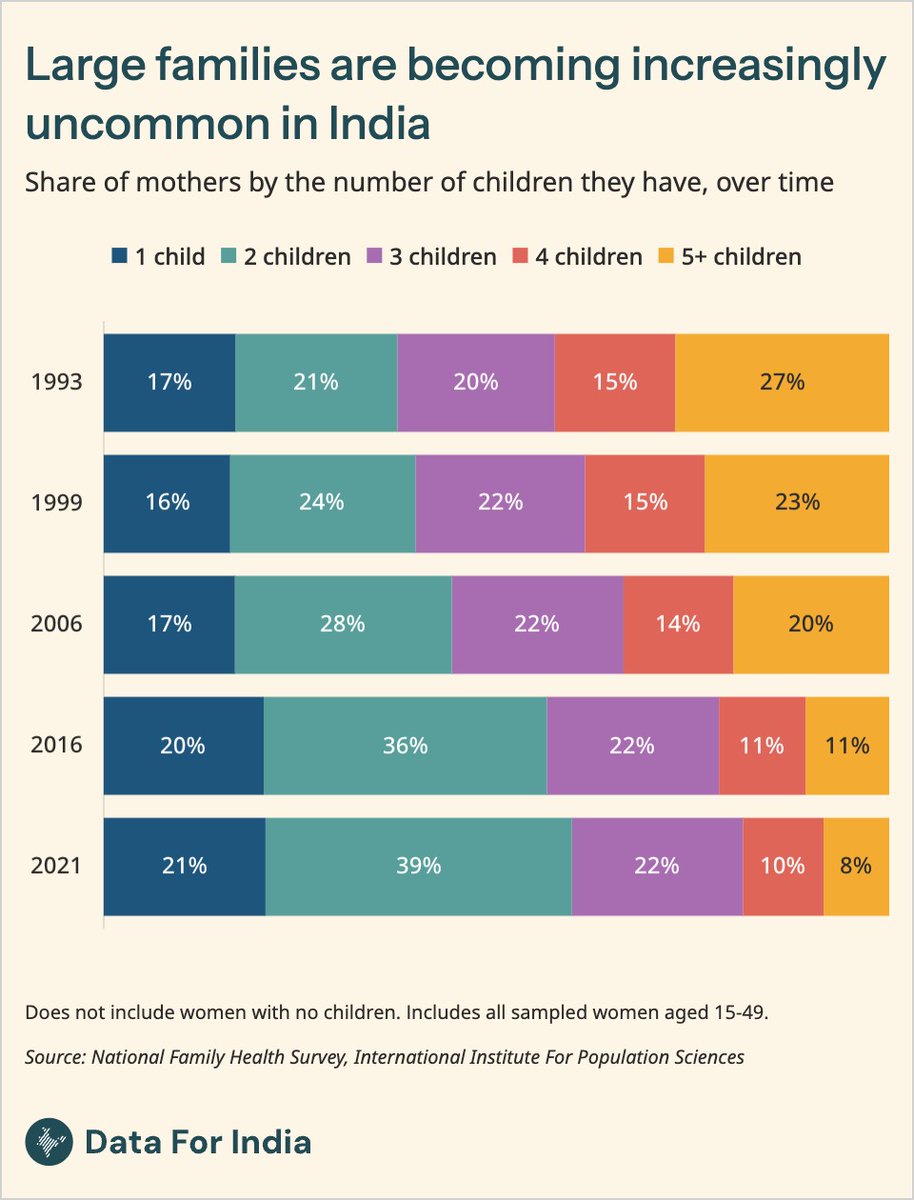
As incomes rise and access to education and healthcare improves, women around the world have chosen to have fewer children. India, too, has seen a stunning decline in family sizes over the last 50 years.
In the early 1990s, over a quarter of Indian mothers had more than five children. By 2021, this share was down to 10%, with most mothers having two or fewer children.
This shift is also reflected in the decline in India’s Total Fertility Rate (TFR), a demographic indicator that estimates the average number of children that a woman will have in her lifetime. In 1971, India’s TFR was 5.2, meaning that a woman in India was expected to have 5.2 children on average over her lifetime.
India’s TFR had dropped to 1.9 by 2023.
As a result of this falling fertility, large families are increasingly rare in India. Families with a larger number of children are more likely to be poorer, and mothers in these families are more likely to have lower levels of education. This suggests that as incomes continue to rise and access to education continues to grow, the share of large families will fall further.
#Population #Fertility #TFR #India #DataForIndia
Can't ever upload a file when working on a train without feeling like I'm in Mission Impossible, even if it's just my boring old slide deck going to a Dropbox folder.
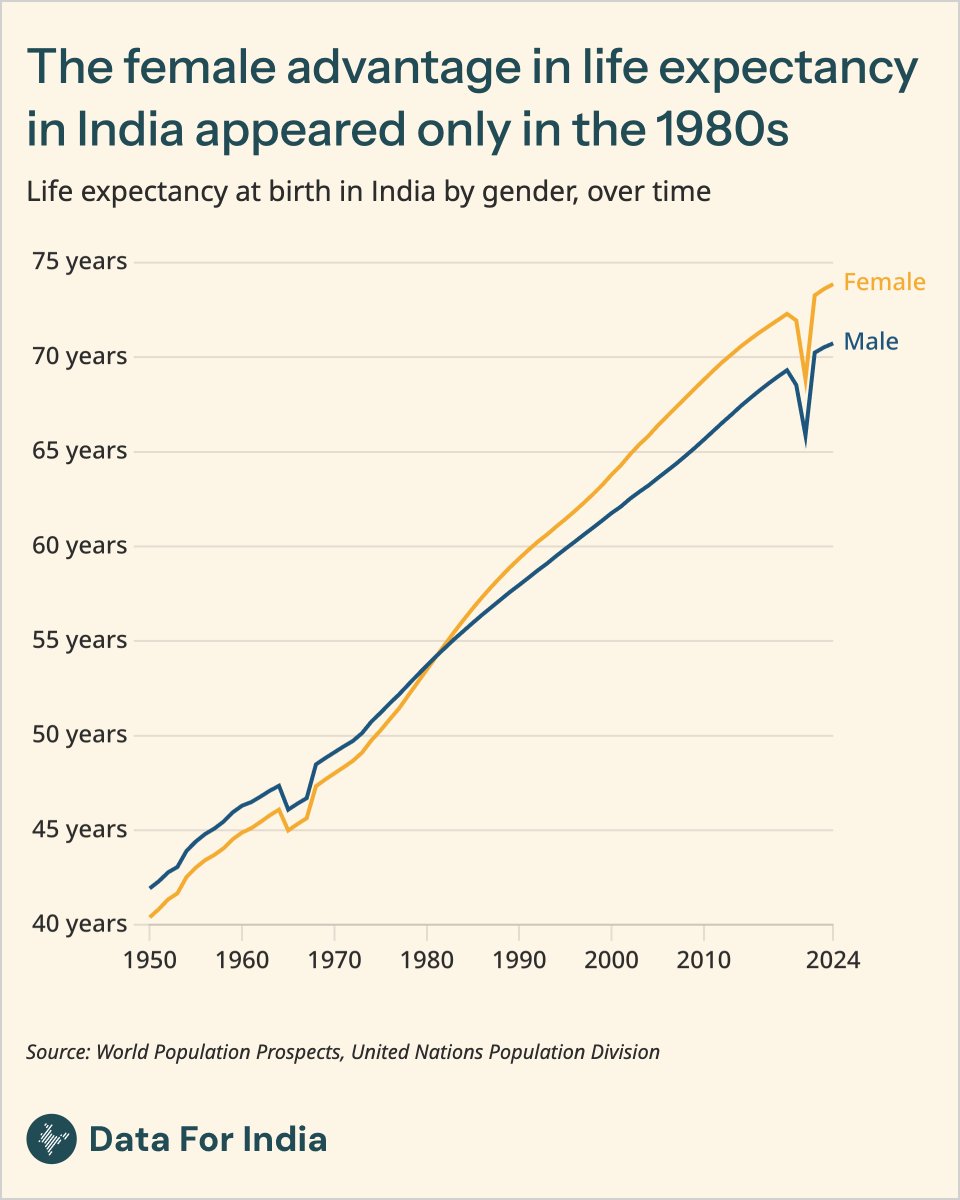
In 1950, a child born in India could expect to live only until the age of 41. By 2024, life expectancy at birth in India had risen to 72 years.
Life expectancy is the average number of years a person would live if they were exposed to the sex- and age-specific death rates prevailing at that time. This data for India and other countries comes from the World Population Prospects, 2024 Revision, published by the United Nations Population Division.
Across the world, women tend to live longer than men owing to a combination of biological and social factors. Girls are more likely to survive infancy and early childhood, while men are more likely to die from accidents in young adulthood and non-communicable diseases in old age, partly because of differences in health behaviours.
However, this global trend did not hold true in India in the first few decades of Independence. In the 1950s, Indian men lived longer than women. That male advantage was reversed only in the early 1980s. By 2024, a newborn girl could expect to live more than three years longer than a boy born in the same year.
This female advantage is large and well established only in India’s richer states. In poorer states, it is smaller and more recent.
#LifeExpectancy #Ageing #Population #India #DataForIndia
We are heading to IndiaFOSS 2026 this weekend!
September 26–27 at NIMHANS Convention Centre, Bengaluru.
@nileena_suresh Suresh and @TheDataAreClean from Data For India will host a hands-on booth to showcase our work on “the last mile of public data”. Together, we will explore what stands between data being publicly available and being genuinely usable. Come meet us on the 1st floor!
Also at IndiaFOSS, @Rukmini will speak about "Telling India’s Story Through Data" on Sunday, September 27, at 11:45 am in Hall 1.
Register here: https://t.co/PIEF6Qprgg
#OpenData #PublicData #OpenSource #FOSS #DataForIndia