There are people who die without ever understanding why. Ahmed Shanan was one of them.
Ahmed was a man with Down syndrome.
He was born into this world without choosing it, born to a family in Gaza, into a life that would demand from him things he could never fully understand.
He lived the war the way a child lives a storm.
He walked with his family through displacement, not fully understanding what “leaving” meant. To him, “home” was simply a word that kept changing, a place his parents gave a name to, then took away, then gave to somewhere else. Again and again.
He heard explosions, but he did not understand them. He looked at the sky, saw warplanes, and thought they were butterflies, or perhaps toys.
Because that was how he saw the world.
With a heart untouched by hatred. With a mind that could not comprehend war. Only a childlike innocence living in a body that grew older while the world around him kept collapsing.
Yesterday, the heat was unbearable. So Ahmed did something simple.
He stepped outside and sat by the door, searching for a little air, a little freedom, just a moment of relief.
Then, for a reason he would never understand, an Israeli strike hit an apartment across from him.
The explosion tore through the air. Shrapnel flew. And it reached him.
Ahmed was taken to intensive care. He remained there for one day. And then he died.
Ahmed was the purest definition of a civilian.
He did not know war. He did not choose sides. He did not hate. He did not even understand what was happening around him.
And yet, like so many others, he paid the price for something he never did. Not because of a decision. Not because of a choice. But simply because he was there, at that moment.
And he did not die during a declared war. He died during what the world calls a “ceasefire.”
In the past two days, Israeli attacks across Gaza have intensified again. Without announcement. Without headlines. Under the quiet cover of what is still being called a truce.
So tell me:
What kind of ceasefire is this, where the innocent continue to die?
What kind of calm is this, where even someone like Ahmed is not spared?
If a man who looked at warplanes and saw butterflies can be killed like this, then this is not peace.
This is war, stripped only of its name.
#WoundedGaza
“To all those of you, struggling with your own demons…”
Martin Lewis’ acceptance speech as he received the Special Award on 10 May at this year's BAFTA TV awards.
Today, on my road to the clinic, I climbed into that miserable chariot which has become the common carriage of Gaza: a broken cart dragged forward by an exhausted car, itself seeming to cough rather than move, like some old beast condemned to labor beyond mercy.
Beside me sat a young man, hardly past the threshold of youth, perhaps twenty eight years of age.
He held in his hands a torn plastic sack, poor banner of a fallen life. His garments were worn thin, his face hollow with fatigue, and on his brow there rested that dreadful expression one learns only in famine: the look of a man who has spent the day searching not for fortune, not for comfort, but merely for bread.
When he entered, the driver asked him: “Do you have money for the fare?”
He replied at once, with the haste of wounded pride: “Yes.”
He paid.
Then he turned toward me. There was no anger in him, no noise, no rebellion. There was only ruin.
He drew out his phone and said in a low voice: “Look at how our life used to be.”
He showed me photographs.
“We used to import clothes from Israel and Turkey. We sold them. We had everything.”
He stopped, as though memory itself had struck him in the chest.
“Then the war destroyed it all. Our goods, our homes .. everything.”
He lowered his eyes to his hands, those empty hands that perhaps once counted profit, folded children’s clothes, opened doors of his own house.
“But I do not steal. And I do not ride without paying.”
Then he spoke words I shall carry like a stone in the heart: “We are people of dignity .. but life humiliated us.”
In those few syllables, he was defending an invisible kingdom.
Perhaps before me. Perhaps before himself.
He wished it known that this shadow seated in dust was not the whole man.
That once he had walls around him. Trade in his hands. Purpose in his mornings.
That before the sky fell, he had been someone standing upright beneath it.
He did not quarrel with the driver. He begged no pity.
He asked for something rarer than charity.
He asked to be recognized.
He wanted some human voice to tell him:
“I see you.
I know who you were.
I know this is not your true life.”
He wanted a hand laid gently upon his shoulder. A sentence strong enough to keep a soul from collapsing.
A small lamp against the vast humiliation. And while I listened to him, I understood.
This is not only the story of one man.
This is Gaza.
A land filled with men and women who, while roofs fall, bread vanishes, and history tramples them beneath iron feet, still labor in silence to preserve the last fortress left to them: dignity.
Perhaps this is what they need most now.
Not bread alone. Not shelter alone.
But someone to whisper to them, with tenderness and truth:
This misery is not your name.
And one day, when the smoke has passed and the ruins have finished speaking, you shall be seen again as you truly were.
#WoundedGaza
This is not a ceasefire.
Call things by their proper names.
It is war, only changed in form. It no longer always comes with bombs and collapsing walls.
Sometimes it comes quietly, with teeth, filth, fever, and the slow humiliation of those already broken.
Today I treated three people bitten by rats.
Three.
All adults.
Once, such creatures sought the weakest, children and infants.
Now misery has deepened.
They attack grown men and women inside their tents, inside the last scraps of fabric people still dare to call shelter.
One man came with a bite to the foot. Within hours the flesh reddened, swelled, and hardened. Infection spread rapidly. It became cellulitis, and we had to send him to the hospital for intravenous antibiotics. A man may survive bombs only to be undone by a rat.
And still the world uses the word ceasefire.
Tonight my aunt told me she and her daughters are afraid to leave the tent after dark, even to go to the toilet.
The rats strike the sides of the tent at night, loudly and repeatedly. She said they are large, moving in groups, almost coordinated, less like animals and more like a dark current passing through the camp.
Something between a swarm and an omen.
Summer approaches, and heat is their season.
Yet there is no response. No pesticides, no pest-control supplies, no means of containment, because the Israeli army continues to block their entry into Gaza.
So people remain trapped with vermin, contamination, rising disease, and the knowledge that relief exists somewhere in the world but has been withheld.
People speak of ceasefires because they imagine war only as explosions.
They do not understand its quieter forms: when a mother searches for water, when a father cannot secure bread, when infection spreads from preventable wounds, when women fear the darkness outside their tent, when sleep itself becomes an ambush.
That is war.
Not paused, only administered differently.
Quieter perhaps, slower certainly, but no less real, and no less cruel.
#WoundedGaza
I began my internship year at the Indonesian Hospital.
There too I began my service as a volunteer.
It was there that I first understood what becomes of a human being when he is placed alone in a room overflowing with the wounded, and is commanded by necessity to learn in a few days what ought to require years, patience, and the slow discipline of life.
Not because I possessed any rare gift. No. Because there was no one else.
And thus I stood, unwillingly, absurdly, as the final frail barrier between life and death.
There my hands trembled while I stitched the eyelid of a seven-year-old girl, and there was no anesthesia.
There I found comrades.
There I buried some of them within myself.
There I saw tears that no language could contain.
There I heard prayers rising from mouths that had no strength left for speech.
There were hours in which God seemed nearer than breath itself, and hours in which I searched for Him as a man searches in darkness for a door that is no longer there.
This is the Indonesian Hospital.
The largest hospital in northern Gaza, or at least that is the name by which it was once known.
Today it bears another truth. Today it is a military barracks.
Yes, a barracks.
And this occurs in the twenty-first century, that proud century which adorns itself with words such as ethics, international law, and human dignity, as a corpse may be dressed in silk.
The patients are driven out.
The doctors are driven out.
And then the hospital itself is seized.
The place where lives were preserved
is remade into a place that serves war.
The place where life was returned to broken bodies
is transformed into a place that assists in taking life away.
This is not merely destruction.
Destruction is simple. This is something colder.
This is inversion.
It is the overturning of meaning itself, the mockery of every noble word mankind has ever spoken.
Welcome, then, to our age,
where all that we claimed to believe has been turned upon its head.
An age in which even healing is not permitted innocence.
#WoundedGaza
Children are being shot in what the world, with its usual cold composure, calls a “ceasefire.”
When the clinic in Jabalia reopened, people returned as though drawn by the faintest rumor that life had not entirely abandoned them.
Return, however, is a strange word. They came back not to homes, but to tents pitched upon the graves of their own rooms, upon the crushed stones of kitchens, bedrooms, family tables. Yet even there, amid ruin, something timid and wounded began to breathe again. Life, perhaps, though ashamed of itself.
Slowly. Fearfully.
But these places are naked now.
They lie open before the eyes of Israeli military positions, in those areas men have named the “yellow zones,” as if color could soften danger, as if language itself were not forever employed to disguise cruelty.
In recent days, the military presence has intensified.
Gunfire is no longer an event. It is routine.
People are wounded inside their tents.
Inside the final scraps of what remained to them.
A few days ago, after we had closed the clinic, the residents called in panic.
Two little girls had been shot.
Today they came for follow-up treatment and wound care.
Two sisters. Eight years old. Twelve years old.
They had been standing at the entrance of their tent, playing, that sacred occupation of children which the world never protects in time.
Their tent was partly shielded by the rubble of their destroyed home, a miserable barricade of broken stone standing between innocence and the machinery beyond it.
But no one should comfort himself with the lie that this was accidental.
One of the girls told me herself: A quadcopter drone descended over their tent.
And fired directly at them. Not stray fire. Not crossfire.
Not some tragic error to be arranged neatly into official language and filed away.
NO!
This was deliberate.
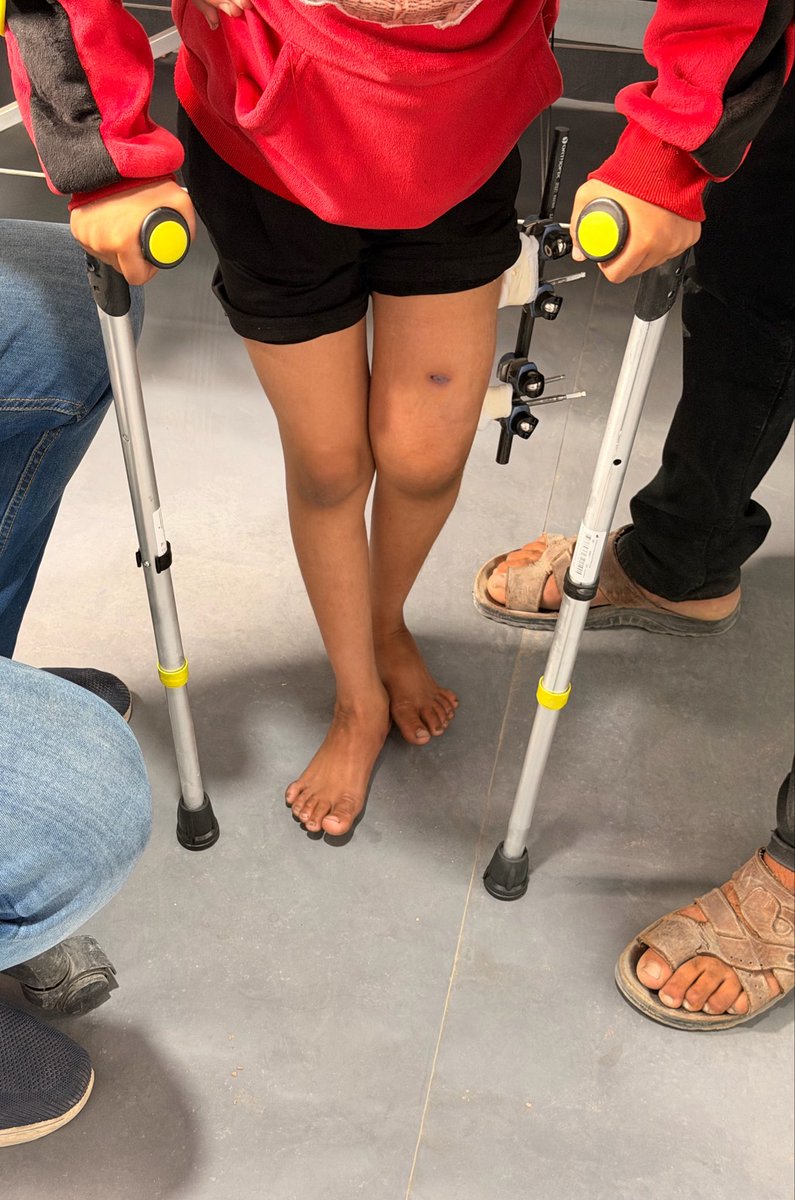
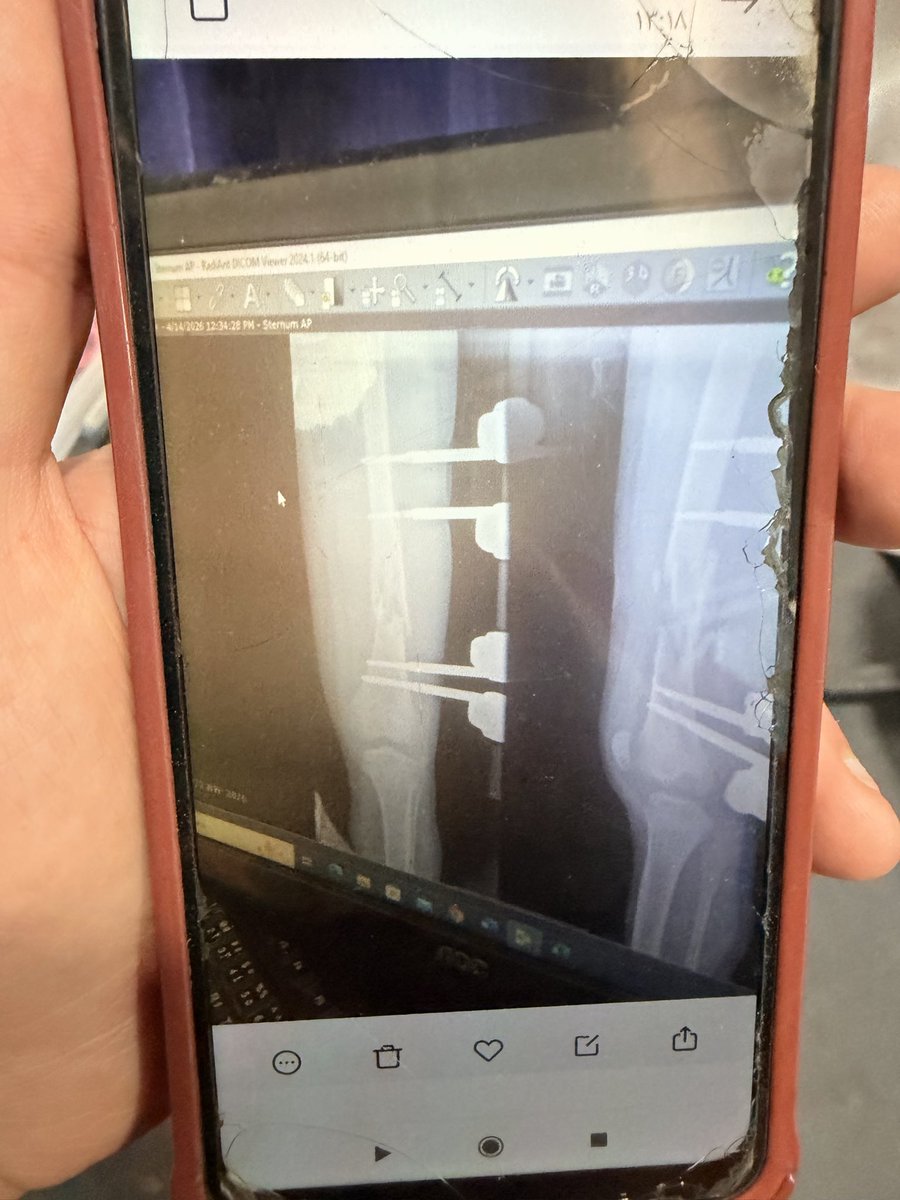
Two children. Standing before a tent. One of them had her foot shattered.
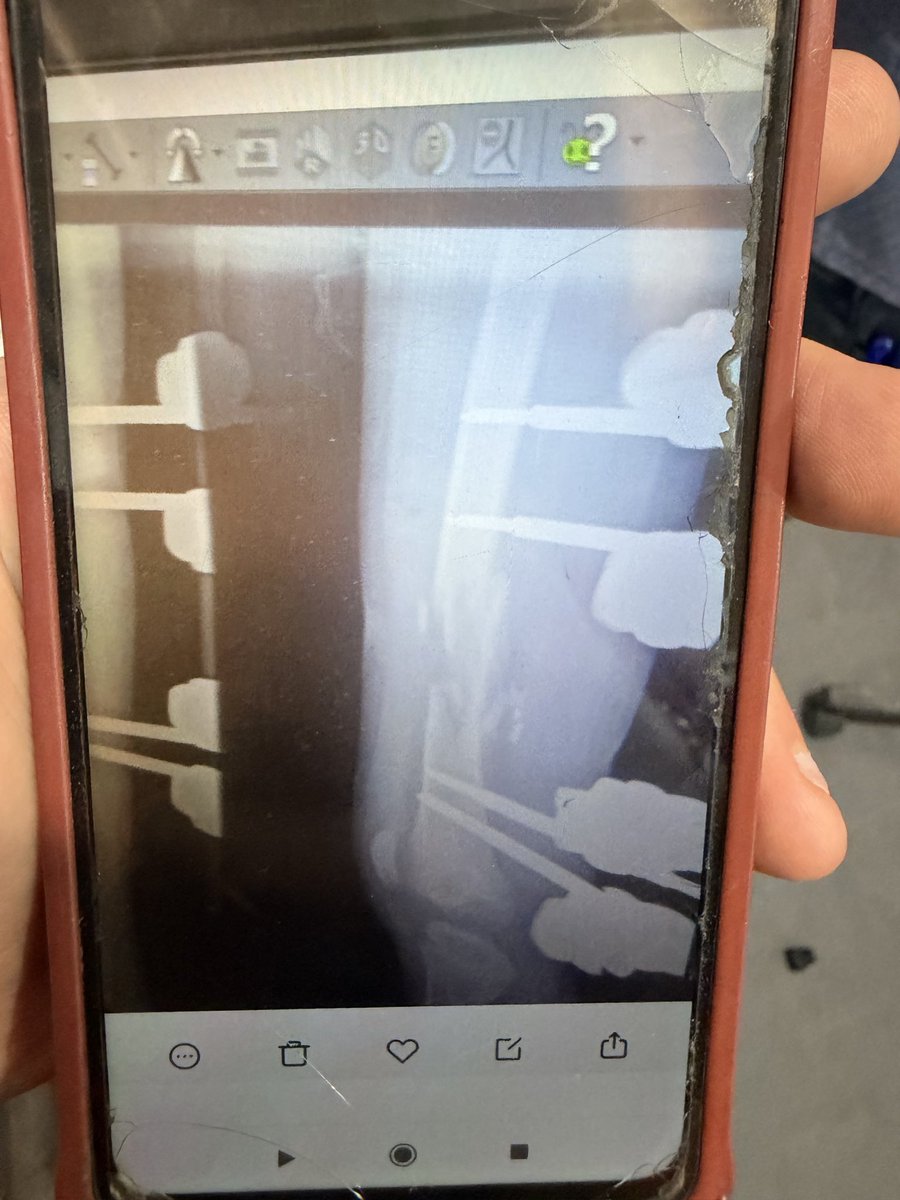
The bullet broke the bones, and now metal plates hold together what violence tore apart.
The other will require reconstructive surgery on her thigh.
The bullet passed through it, leaving a deep and open wound, as though even flesh itself must be taught despair.
And yet they will call this an incident.
They will call it collateral damage.
How tirelessly mankind invents phrases in order not to look at itself.
But let us name it plainly: This is a war crime.
And it is taking place in what they call a ceasefire.
So then one question remains, dark and unavoidable: If this is what calm looks like, what shall we call the day when war truly returns?
#WoundedGaza
Something dangerous is happening in Gaza.
Over the past months, we have been noticing a clear rise in cancer cases, especially breast and uterine cancers.
But this is not just about disease.
This is about a system collapsing around patients, leaving them with nowhere to go.
Two days ago, a woman came to our clinic.
F.J.
32 years old.
We suspected masses in both of her breasts, different sizes.
The ultrasound confirmed it.
What remained was the biopsy, the one step that could define her future. It costs 800 Shikel = 250$
For most people, this is a medical step.
But for her, it is a decision between life and nothing.
She lives in a tent.
Her husband is injured in both legs, with metal plates, and depends on ongoing physiotherapy, which we provide at the clinic.
They have nothing left.
For them, this amount is impossible.
In a place like this, illness is not just painful.
It is financially selective.
Sometimes, death becomes the cheaper option.
In cases like this, I usually try to find a way.
I contacted a colleague who works with an international medical program, a program that used to cover the costs of more than 100 patients every month.
I asked him to add her case urgently.
He paused,then he told me:
“The program stopped… a few days ago.”
Why?
Because the organization discovered fraud and theft
by a private hospital that had been receiving more than half a million dollars every month for multiple projects (including pathology services).
Because of greed, thousands of patients are now left without care.
As if this people needed more suffering.
As if it was not enough to lose homes, safety, dignity.
Now even their illness.. is being traded.
And this is only one story.
How many women are now sitting in tents, feeling a lump in their body, and waiting?
Waiting without diagnosis.
Waiting without treatment.
Waiting for pain to become something irreversible.
How many will lose their chance at early treatment?
How many will reach hospitals only when it is too late?
How many will live with permanent disability, because something simple was delayed?
And even when treatment exists outside Gaza,
patients cannot reach it.
Because the Israeli army continues to restrict and block medical evacuations.
People who could be treated, are trapped.
Cancer patients.
Children.
The wounded.
Waiting for permission that may never come.
This is not one failure.
This is a chain of failures.
A siege that limits medicine.
A system that collapses.
Corruption that steals what little remains.
And in the middle of it all patients .. Waiting.
This is not a story you will see on most news channels.
Because it does not fit a narrative.
But this is our reality:
A place where people are left in tents,
left in poverty,
left in hunger,
left under siege,
and now ..
left to die from diseases this war has helped create.
We may be able to help this one woman.
We may find a way for her.
But the question that does not leave me is this:
How many others will never reach us?
How many names will we never hear?
And how many lives will quietly disappear
because no one was there to pay the cost?
#WoundedGaza
Horrifying video which totally contradicts the Israeli military claims that the ambulances are being used for ‘military purposes’. The attacks killed 4 medics in Nabatieh in south Lebanon including a young father we interviewed a few weeks ago, Mahdi Abou Zeid. I’ll repost the report in this thread. His last words to us:’ If we rest, who will do the job’ 🧵
Today is a beautiful day!
The UK has officially signed its return to Erasmus+.
British students will once again study across Europe, feeling closer to our shared continent
A wonderful victory for all who believe in the bond between the UK and EU
Erasmus+ welcomes the UK home
Hussam Abu Safieh is one of the Palestinian doctors (among 95 other doctors) that will be killed by the “Israeli death penalty for hostages.”
Do not let them murder him. Repost this.
🚨 Netanyahu just expelled Spain’s diplomatic representatives from Israel.
His stated reason: Spain criticized the IDF.
His exact words: “I do not intend to allow any country to wage a diplomatic war against us without paying an immediate price.”
Read that carefully.
Not a military threat. Not a security concern. Spain called out the IDF — and Netanyahu responded by expelling their diplomats and calling it a price that must be paid immediately.
Kemi Badenoch sneered at our party for caring about communities and working hard to get things done. Well that's who we are.
Vote Liberal Democrat on 7th May.
🚨 The Pentagon summoned the Pope’s ambassador to a closed-door meeting and threatened him.
Named official. On record.
Undersecretary of Defense Elbridge Colby called Cardinal Christophe Pierre to the Pentagon and delivered this message:
“The United States has the military power to do whatever it wants in the world. The Catholic Church had better take its side.”
Then a U.S. official invoked the Avignon Papacy — the 14th century moment when the French monarchy used military force to physically remove the Pope from Rome and bend the Church to its will.
The Vatican understood the reference immediately.
The Pope’s planned visit to America for the 250th anniversary celebration was cancelled.
And then something remarkable happened.
The Pope didn’t retreat. He pressed harder. He called the war unjust. He called Trump’s threats unacceptable. He told Americans to call Congress.
Make no mistake: destroying world-class universities, like the US just did with Sharif University of Technology in Tehran, isn't just an attack on Iran but it's literally an attack on all of us, on all of humanity.
It's not Iran that "won" when Maryam Mirzakhani made her discoveries that won her a Fields Medal: it's all of mathematics, and everything mathematics is used for. Human progress won, technology won, we all won.
It's the same type of stuff the Mongols did during the sack of Baghdad and their destruction of the House of Wisdom: we ALL lost something irreplaceable back then, entire fields of human knowledge set back.
That's what bombing a university does. It doesn't just destroy buildings. It destroys us, all of us.