A few tips on running fast for older athletes:
• You arguably never need to sprint all out. I’m very careful about hitting max velocity. In the videos I’m somewhere between mile pace and sprinting, which is plenty fast for most purposes.
• Warm up well. I’ll always run beforehand, do some drills, then gradually introduce 3-5 seconds of speed before the main set.
• It’s totally fine to start your strides slower. Marathon to 5k pace isn’t really “speed,” but it’s a good bridge toward it, especially when managing minor injuries.
• Run with strong, controlled, relaxed form. It doesn’t need to be perfect, just efficient.
Many older runners avoid speed because they fear injury.
Ironically, avoiding speed can make you less durable.
Small, regular doses of fast running help maintain coordination, elasticity, mechanics, and strength.
The key is execution. You can run fast at any age.
A lot of runners find that their progress falls off after a big race, especially a marathon. They struggle to get motivated again until they sign up for another race.
There’s an irony to this.
I don’t think you’ll ever progress very far in running if you can only find motivation through external things like races and finish times.
The runners who continually improve over the years are the ones who genuinely love running and love to train.
So if you’re struggling with motivation or find that signing up for another marathon is the only thing that gets you out the door, I think there’s some self-reflection worth doing.
What do you actually enjoy about running? What makes you want to train when there’s no race on the calendar?
Because that’s the irony of it all. Once you learn to enjoy running for the sake of running and training for the sake of training, that’s when you’ll really start to improve.
@AnnettePsalm100 Of course, though due to slow healing process, I’d say the effects of small strains are more likely to linger. My hamstring tendon even when not injured is pretty sensitive.
A good illustration of why many older runners struggle with injuries.
Tendons take a long time to recover and rebuild their capacity. Getting back to full capacity requires consistent & progressive loading over an extended time period.
You have to be patient and can’t rush the return to a full run load.
Muscle rebuilds in about 3 months, while tendons and cartilage take about 1.5 years and bone over 2. Adding 40 g of whey a day for 2 weeks didn't speed up any of them, since connective tissue is still built from protein but rebuilds so slowly that load and time set the pace.
@10Mayhem10 You’ll be in a good spot physically and mentally when you come back. I hate to say there is a silver lining with injuries, but they can definitely be a catalyst for positive change. Get well soon!!
I would like to publicly thank @runliftrunlift for coaching me through my NYC marathon training block.
I would not have been able to complete this marathon without his guidance.
When I decided to run a full marathon I hadn’t even run a half marathon yet.
Then I ran the Brooklyn half and realized I needed to train for a full marathon now.
But my legs were sort of broken and I didn’t know how I could pull off training for 26.2 miles.
At first I was screwing around with AI, but I never fully trusted it nor did I actually listen to it.
I always found David’s tweets very thoughtful when it comes to building an engine and managing load.
“Run slow to run fast”.
So I ditched AI and hired David in June and he was flexible, reachable at all hours (even though he’s in Japan) and got me through this build.
If you’re looking to improve your fitness and get better at running I highly recommend reaching out.
Another example of the power of this app too.
On to the next goal!!
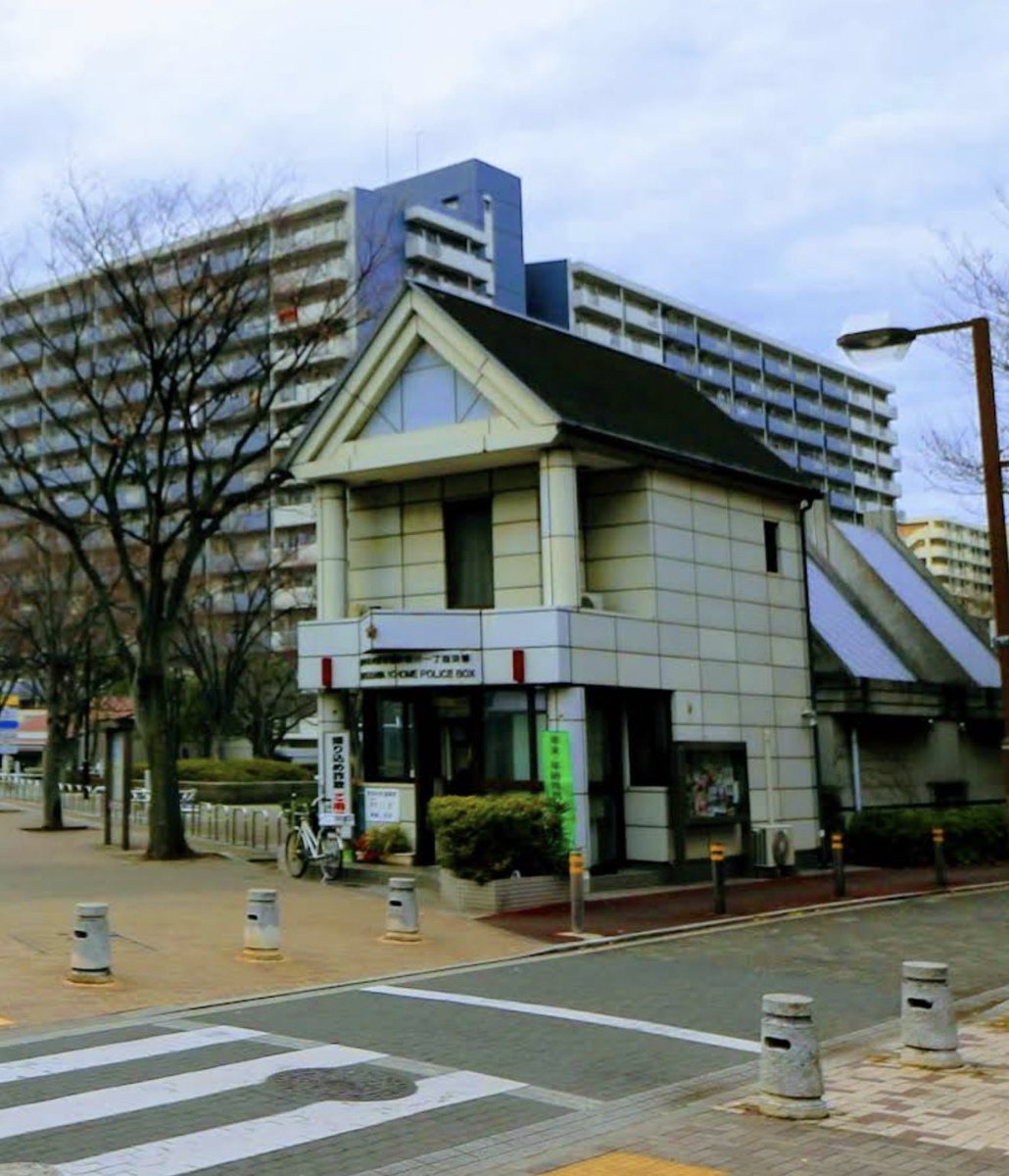
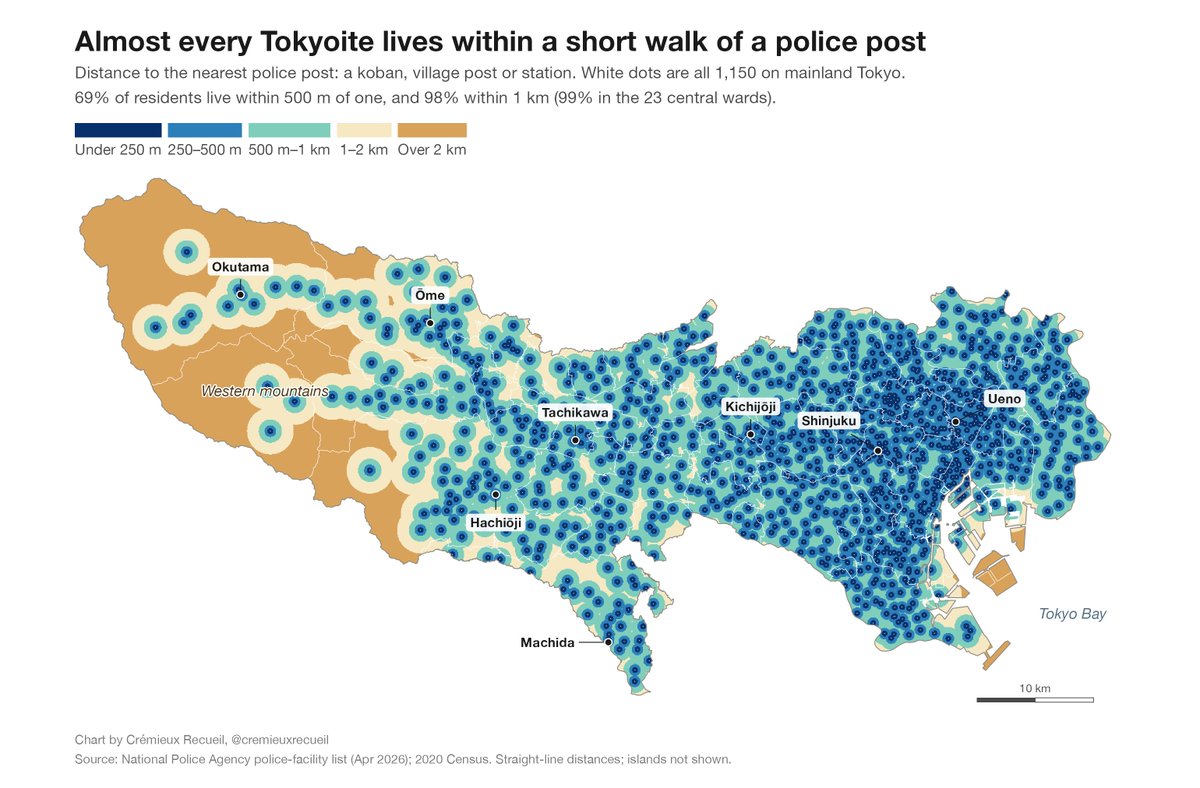
Indeed. The nearest police box is a 5 minute walk from my apartment in Tokyo, directly across from the train station.
You get used to seeing to police officers riding their bikes around town.
In Tokyo, you're never far from a police office.
The city has decided that, instead of using just big precincts, they'll distribute their cops across tiny stations so police are always nearby.
It works great!
@feelthebyrn1 Cross training really does help. It’s the perfect way to decompress sometimes. I find that on days when I don’t feel great, an easy elliptical session or a bike ride along the riverside leaves me feeling better than just sitting around at home doing nothing.
HR zones are helpful for guiding and controlling your training load, not for trying to make your training 100% precise.
That precision is an illusion, but controlling your training load is actually quite easy to do.
• A legit easy run for me will fall mostly under 140 bpm.
• A slightly harder easy run, or “steady” run, might be 5-10 bpm higher.
• Most of my long runs will fall into one or both of these ranges for roughly 90-120 minutes.
• For a controlled tempo/threshold workout, my HR will be roughly 160-175 bpm for 30-40 minutes.
• For harder intervals, I’ll top out in the low to mid 180s, with a total work time somewhere in the range of 5-20 minutes.
These are just things I’ve learned over time, figuring out where the line is between the right dose and too much.
Part of training is also occasionally pushing yourself so you can establish where those lines are.
Once you get a feel for your own training, HR zones are pretty cool. They make training more understandable rather than feeling like a constraint on what you’re doing.
If you’ve got a winter or spring marathon coming up and want some help putting together a training plan that fits your schedule, shoot me a DM. Happy to chat.
It was a lot of fun coaching Jeff through the process of training for his first marathon.
Many of our conversations revolved around time and scheduling constraints. He’s a very busy guy and couldn’t always fit in a long run every Sunday.
Several weeks we had to arrange what I call “scramble” training. Basically, figuring out how to fit different runs into an irregular schedule, move workouts around, and make adjustments based on recovery.
One thing I’ve learned from coaching and my own running is that you don’t need a perfect schedule to train successfully. You just need to be consistent, listen to your body, make smart decisions.
Jeff stayed healthy & improved a lot over the summer and had a solid marathon debut on a tough NYC course. Success!
I would like to publicly thank @runliftrunlift for coaching me through my NYC marathon training block.
I would not have been able to complete this marathon without his guidance.
When I decided to run a full marathon I hadn’t even run a half marathon yet.
Then I ran the Brooklyn half and realized I needed to train for a full marathon now.
But my legs were sort of broken and I didn’t know how I could pull off training for 26.2 miles.
At first I was screwing around with AI, but I never fully trusted it nor did I actually listen to it.
I always found David’s tweets very thoughtful when it comes to building an engine and managing load.
“Run slow to run fast”.
So I ditched AI and hired David in June and he was flexible, reachable at all hours (even though he’s in Japan) and got me through this build.
If you’re looking to improve your fitness and get better at running I highly recommend reaching out.
Another example of the power of this app too.
On to the next goal!!
@CanArt3 Sure, it’s totally fine provided your expectations are in alignment with your training. It depends on the person, but I’d say most runners are motivated to improve their performance.
🤣🤣🤣 that sounds about right. With minimal actual crime in Japan, innocuous events like that tend to draw police.
A few years ago my running club had a relay race in the park and the police came to shut it down. Apparently it was a public disturbance.
Just part of the charm of living in Japan.
7 mile run this morning brought me to 1700 miles for the year. Good close to October.
On track to hit my 2026 goal of 2000 miles, even with a few taper and down weeks for upcoming races factored in. Let’s go!