Maestro is a cross-platform desktop app for orchestrating your fleet of AI agents and projects. It's a high-velocity solution for multitasking keyboard hackers.
Maestro is a desktop AI orchestrator built by hackers for hackers. We're only scratching the surface here, but check out this fun introduction video.
Big thanks to Ricky from Macbook Orchestra (@thepunchisfree) for putting this together for us! Appreciate the support 💜
Pick the coding agent, keep the workflow.
Maestro now supports 11 harnesses natively: Claude Code, Codex, OpenCode, Copilot CLI, Factory Droid, Grok CLI, Hermes, Pi, Oh My Pi, Antigravity CLI and Qwen3 Coder. Most are in beta.
Missing yours? Open a feature request on GitHub.
Honor roll 🎟️
First to Music Director: @ksylvan
Three months of unattended agent runtime. First human on Level 7, reached Sep 24.
Level 8 is still an open seat, Kayvan. 👀
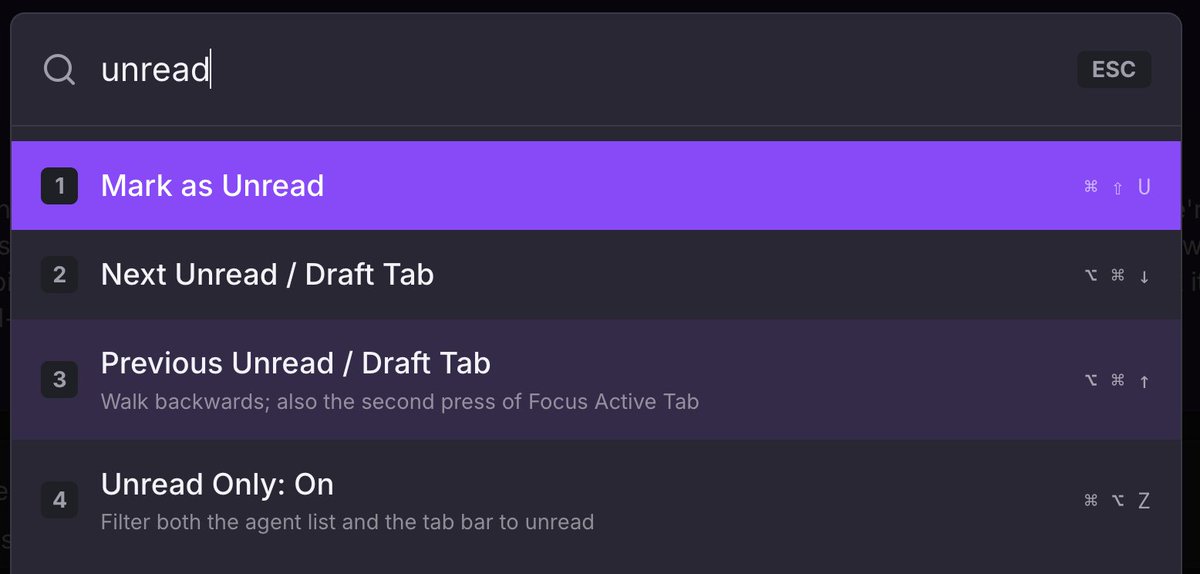
Hundreds of tabs across dozens of agents. Which ones are waiting on you?
In Maestro, Opt+Cmd+Down jumps to the next unread or draft tab, and Unread Only trims both the agent list and the tab bar to just those.
Honor roll 🎟️
First to Chief Conductor: @PatrickRuddiman
A full month of unattended agent runtime, reached Feb 22. His climb from Level 5 took 11.8 days. The field median is 74.
Not every step of a playbook needs the top model. Reading the codebase is cheap; designing the change is not.
Maestro Auto Runs now switch model and effort per document and per task. Hover the pill to see why that level was picked.
A long Auto Run is drifting off course and you don't want to abort it.
Type a note into its Thought Stream. Maestro hands it to the agent at the start of the next task, and the run keeps going.
Codex users: your agent hits its usage limit at 2am and you have a reset credit sitting unused.
Maestro can now redeem it for you, per agent, only when the account is actually blocked. Off by default.
Or see every credit and its expiry in the usage dashboard and reset by hand.
Maestro v1.0.2 ships with a Run button ▶️
When an agent replies with a shell block, one click runs it
📊 Usage re-scans no longer freeze the app
🗺️ Cue pipelines grouped by agent
🧙 Wizards render Mermaid, SVG and math
https://t.co/SKBGQcyqA8
Speed run: Level 5 ⚡
From 1 day to 1 week of unattended agent runtime. The median climb takes 38 days.
@sounilyu did it in 3. That's two agents running around the clock.
Close behind: @thewtex in 6.9, @vhailors in 8.1.
Your agent only knows what you paste into it.
The next Maestro release candidate adds Computer History, an opt-in plugin that gives your agents context from every app you work in. Turn it on and they know what you've been doing. Recorded locally.
Speed run: Level 6 🏁
From 1 week to 1 month of unattended agent runtime. The median climb takes 74 days.
@PatrickRuddiman did it in 11.8.
Hats off to @ksylvan, @thewtex and the field. (@pedramamini took 185 days. Dead last. 🙃)
Maestro's Encore Features went from 10 to 16 in five weeks. Four of the new ones:
🎙️ A Cappella: voice control
🕰️ Computer History: local recall of what you saw and typed
⚡ Quick Chat: ⌥Space from anywhere
📟 Throughput Gauge: watch tokens flow
Three are in the release candidate. All opt-in.
Maestro v1.1.0-RC is out: the Maestro Lib Refactor.
A rebuilt core, plus Computer History, Quick Chat on a hotkey, and agent conversion between Claude Code and Codex.
Big changes under the hood, so please tell us what breaks.
https://t.co/mvZRRCjaVb
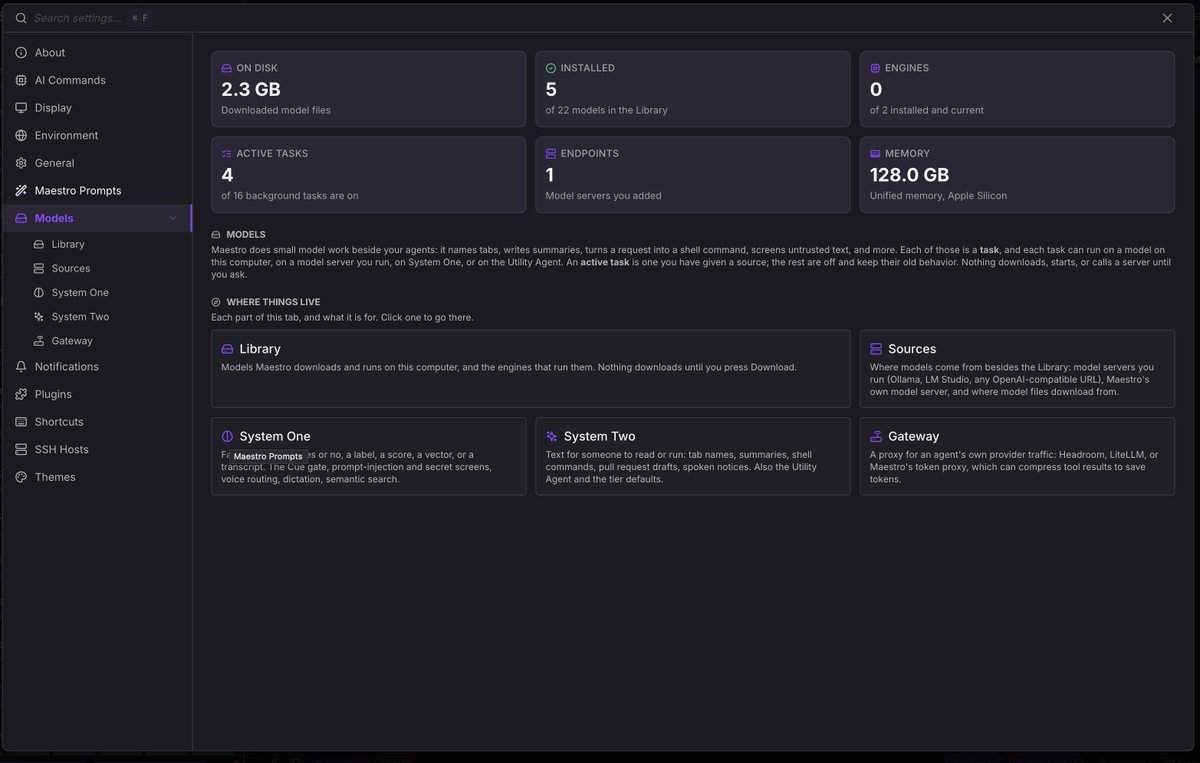
Not every agent task needs a frontier model.
In the works for Maestro: local models for the small jobs. Tab names, summaries, shell commands, prompt-injection screens, voice and model routing. Run them on your machine or your own Ollama or LM Studio server. Nothing downloads until you ask.
Photo finish 📸
The race to Level 7, three months of unattended agent runtime, came down to two conductors.
@ksylvan crossed first, 15 days ahead of @pedramamini.
Only two people have made it this far. Who's next?
Standing ovation for @ronaldeddings 🎻
Maestro MVP. He put the entire Maestro desktop in your browser, then made it survive your phone's lock screen. 8 merged PRs, ~7,000 lines, and two more on the way.
Friend of the family. Beast of a builder. Bravo, Ron.
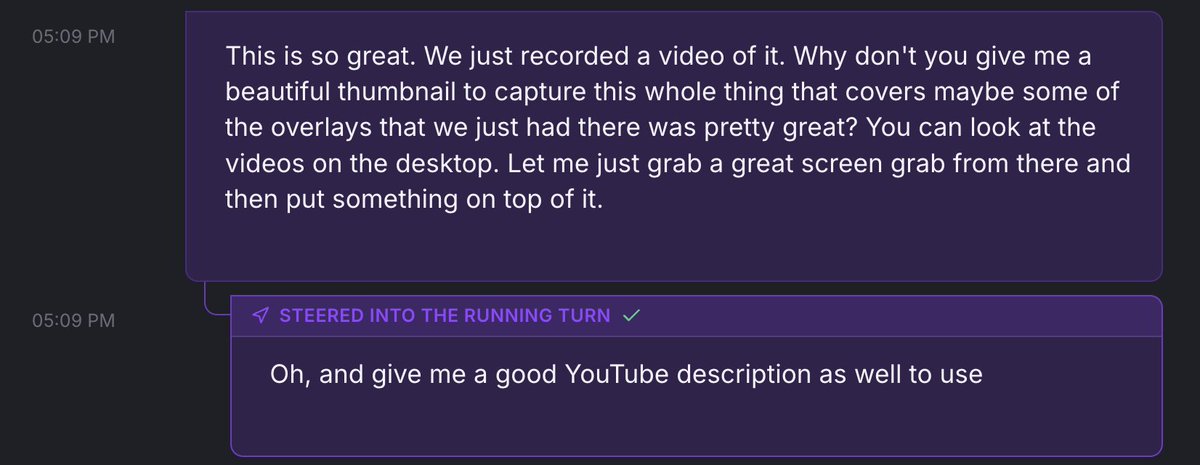
Your agent is mid-turn and you just thought of one more thing.
In the next Maestro release candidate, send it anyway. The message is steered into the turn that is already running. Works with Claude Code and Codex agents.
Who got there first? 🎼
Every level of the Maestro Conductor leaderboard has a first, earned in hours of unattended AI agent runtime:
L1-2 @msuiche
L3 @letswastetime
L4 Putna
L5 @vhailors
L6 @PatrickRuddiman
L7 @ksylvan
L8 open seat 👀
https://t.co/E3tvuqmnCi