I am so excited to have my submitted talk accepted at the @PsychScience Annual Convention 2026 in Barcelona, Spain! I will briefly present my first lead-author work during my graduate studies, titled ‘Spontaneous Head Movements Encode Face-based Social Judgments.’”
Learn how to navigate the publication process, explore careers outside #academia, network at the student social, get a global perspective on mentorship, and more during student programs at #APS26BCN.
⏰Early-bird registration rates end 8 April! https://t.co/F0wWO7BC9M
I made a Claude Code skill that generates conference posters 🛠️
Instead of a static PDF, it outputs a single HTML file — drag to resize columns, swap sections, adjust fonts, then give your layout back to Claude. 🔁
🔗 Skill 👉 https://t.co/KhYV8anbxL
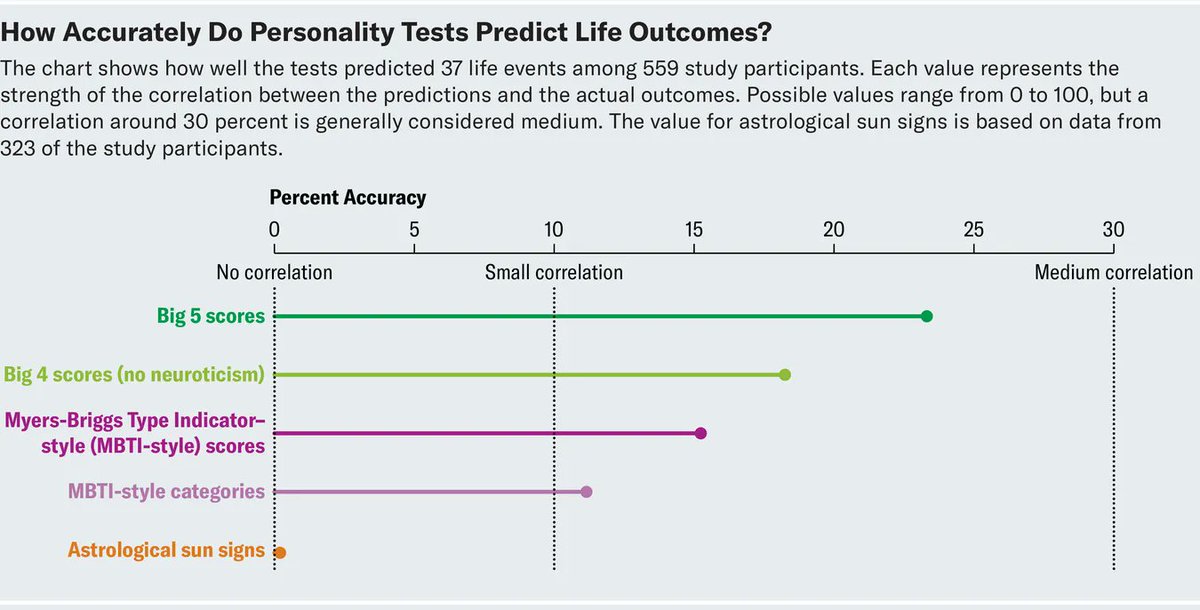
The Big Five test is about twice as accurate as the Meyers-Briggs test for predicting life outcomes, placing the usefulness of the MBTI test halfway between science and astrology—literally.
When we use personality tests that impose categories—like the Meyers Briggs or Astrology—we risk exaggerating the differences between groups and the similarities within them. When this occurs with other types of identities like race or gender, we typically call it “stereotyping” and we try to avoid it. When consultants do it in companies, they are creating the same dynamics and doing it on dubious scientific grounds.
Our latest newsletter explains why the MTBI is a bad measure, but why we are nevertheless obsessed with it! https://t.co/4VfRnv9qcZ
During my application season in Fall 2024, I am sincerely thankful to my supervisor at U of Macau, DongWon @dongwon_oh, Ruien @ruien_wang, Zhaoning @lizhn7, Yuqing @syuuqing......, as well as many professors and friends who have provided invaluable support. 🙏
With https://t.co/xIwKCUofyw, you can chat with your data in plain languages. Now upgraded to v. 0.96. Fix a bug and made GPT-4 available. Interactive plots via plotly and CanvasExpress!
In a new preprint with @l_spiering, we took a closer look at brain activity generated by involuntary (micro)saccades during standard EEG face recognition experiments. Following a fixation cross, we presented faces with a neutral, angry, or happy expression:
Delighted to share our study led by
@ruien_wang and with
@Michael61542212 @Tianyan_Yan
linking individual variation in the neurophysiological representation of negatIve emotions in VR and sociability is out.
Thanks to three UG students of the lab!
https://t.co/hHCObnv0mr