A LATAM Airlines Group carrier will become the first South American operator to introduce doored mini-suites on a narrowbody aircraft flying long haul when the company starts taking delivery of A321XLRs in March 2027 with Thompson's VantageSOLO platform, complete with a spacious front-row, biz-plus style product.
Down back, the airline has selected RECARO’s fully-featured R3 seat, and will offer footrests in extra-legroom Economy.
Fitted from nose to tail with Panasonic Avionics’ OLED-based Astrova IFE system — featuring 19” screens in Premium Business, 22” screens in the front row, and 13” in Economy — the 174-seat, two-class A321XLRs will carry a content-rich server with more than 2,300 hours of viewing pleasure, including movies, TV series, music albums, children’s programs and games.
Supporting passenger personalization, the Astrova IFE system will enable passengers to resume watching films or series from previous flights and provide an interactive timeline, as shown in some of the new renderings shared by LATAM Airlines Group.
Astrova will also accommodate “future upgrades,” including ultimately a connected seatback experience, the Santiago, Chile-based Group confirms to Runway Girl Network.
It reveals it plans to integrate SES’s multi-orbit inflight connectivity service with the hardware “in time.”
https://t.co/WWtzthQYN0
#latam #paxex #avgeek
Inflight connectivity standards group Seamless Air Alliance this year made the case for why it believes SpaceX’s Starlink Low Earth Orbit (LEO) satellite-supported IFC solution hasn’t permanently won the aviation market.
Counting Airbus and Delta among its founding members, the group’s thought leader Peter Lemme suggested at SATShow in Washington D.C. that Starlink will enjoy market dominance in the near term, but predicted that a second wave of disruption will transpire when new LEO networks enter the picture, including Amazon Leo and Telesat Lightspeed.
This, in turn, could usher in a third wave of disruption, Lemme said: a paradigm wherein multiple providers serve an aircraft, enabling airlines to take advantage of least-cost routing, which has already been adopted in maritime.
Best known for powering inflight connectivity with high-capacity geostationary (GEO) satellite service — including, lately via its new three-satellite ViaSat-3 network — Viasat is among a cluster of IFC providers which have seen some high profile airline customers defect to Starlink’s low-latency LEO service.
While Viasat is not a member of Seamless, the satellite operator and aero ISP is a key partner to Delta, and has notably outlined a wider technology roadmap that will see it offer an Amara-branded multi-orbit GEO/LEO solution that ingests Telesat Lightspeed capacity, when the Ka-band LEO network comes on line.
Viasat’s traditional gimbaled antenna will initially support Amara, but the Carlsbad, California-based company is developing a new multi-beam electronically steerable antenna called AERA that will be optimized for Amara, and is in the technical evaluation process to receive Boeing linefit offerability.
And so, we put the question to Viasat: do you agree with Seamless’ prediction (for the three waves of IFC disruption)?
“I don’t agree with the premise of the question that implies the disruption is coming from operators in a specific orbit,” Don Buchman, president of Viasat Aviation, replied.
“What Viasat has always said, and is being reinforced with the resoundingly positive feedback on ViaSat-3, is the single biggest failure mechanism in IFC is running out of capacity. What we have seen is an operator enter the market with excess bandwidth, so the disruption was not Ka vs Ku or LEO vs GEO, it was delivering on demanded capacity.”
He continued:
"In the end, the market boils down to basic elements: can the IFC provider deliver on all demanded bandwidth and at what price economics. You can see this play out in the ground fixed markets — new market entrants are constantly closing a market due to lack of capacity, or raising pricing to get the right economics. It is no different in the inflight connectivity market. A multi-orbit system is more about resiliency in both capacity access and application experience while delivering the winning economics."
Full story: https://t.co/JlhhNZr8q2
Air India has won the inaugural Seamless Journey Award for its Vista Digital Platform, which is designed to connect inflight entertainment with the airline’s digital services before, during and after a flight.
Intended to work across IFE systems from different hardware suppliers (Air India counts Panasonic and Thales among its providers), the Vista Digital Platform links seatback screens with passengers’ personal devices and the Air India app, in turn allowing passengers to access entertainment, flight information and travel services across different stages of their journey.
Currently at the prototype stage and being developed and tested within Air India’s IFE ecosystem, the Vista Digital Platform can be used for myriad possible applications, including duty-free shopping.
Passengers could browse products on their seatback screen, scan a QR code to add items to a shopping cart and complete their purchase during the flight. After landing, they could collect their order at the airport using a code linked to the Air India app.
The Seamless Journey Award is presented jointly by the Crystal Cabin Award and the Airline Passenger Experience Association (APEX), and recognizes innovations that connect the aircraft cabin with the wider passenger journey. The award was presented at APEX FTE EXPO Asia 2026 in Singapore.
https://t.co/3LDG1qE5Ym
#paxex #pressrelease #airindia #seamlessjourneyaward #hamburgaviation #crystalcabinaward #apex
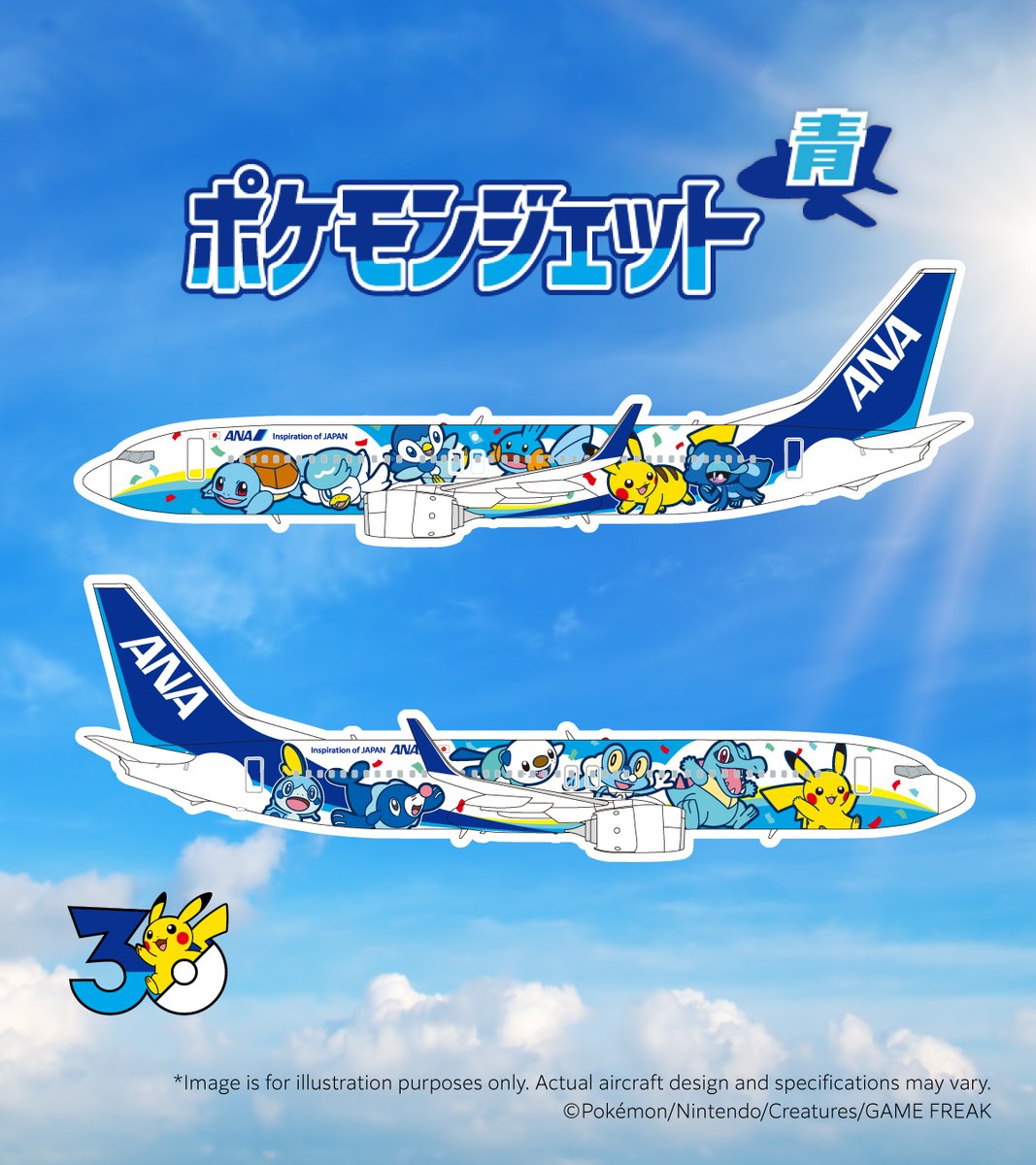
🔵 Introducing the Blue Pokémon Jet! ✈️💙
To celebrate Pokémon’s 30th anniversary, ANA’s newest special livery aircraft, the Blue Pokémon Jet, is ready to take to the skies on December 12! 🎉
Featuring Pikachu and Water-type first partner Pokémon from across the video game series, this special aircraft brings some familiar faces together for a new adventure! 🌊
✈️ First flight: December 12 (Sat)
Haneda (9:00 AM) → Noto (10:00 AM)
Noto (10:40 AM) → Haneda (11:45 AM)
The Blue Pokémon Jet will continue flying on various domestic routes across Japan.
Ready for your next adventure with Pokémon? 💙
https://t.co/rmZ4sSavv1
#ANA #Pokemon #Pokemon30 #PokemonJet #AllNipponAirways
A spectacular new First Class Lounge has landed in Dubai. ✨
We've unveiled the first milestone in our AED 400 million lounge transformation, bringing sophisticated design, exceptional dining and elevated luxury hospitality to the ground experience.
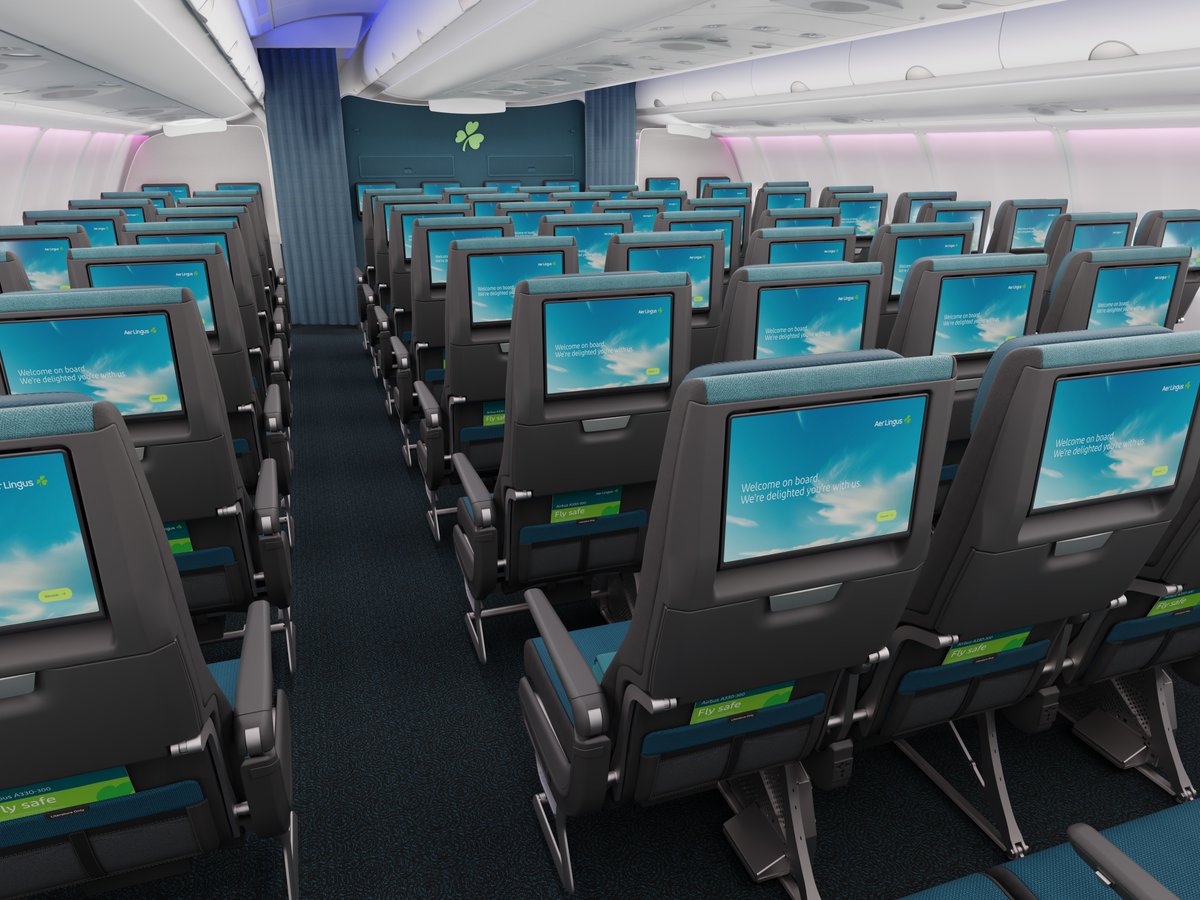
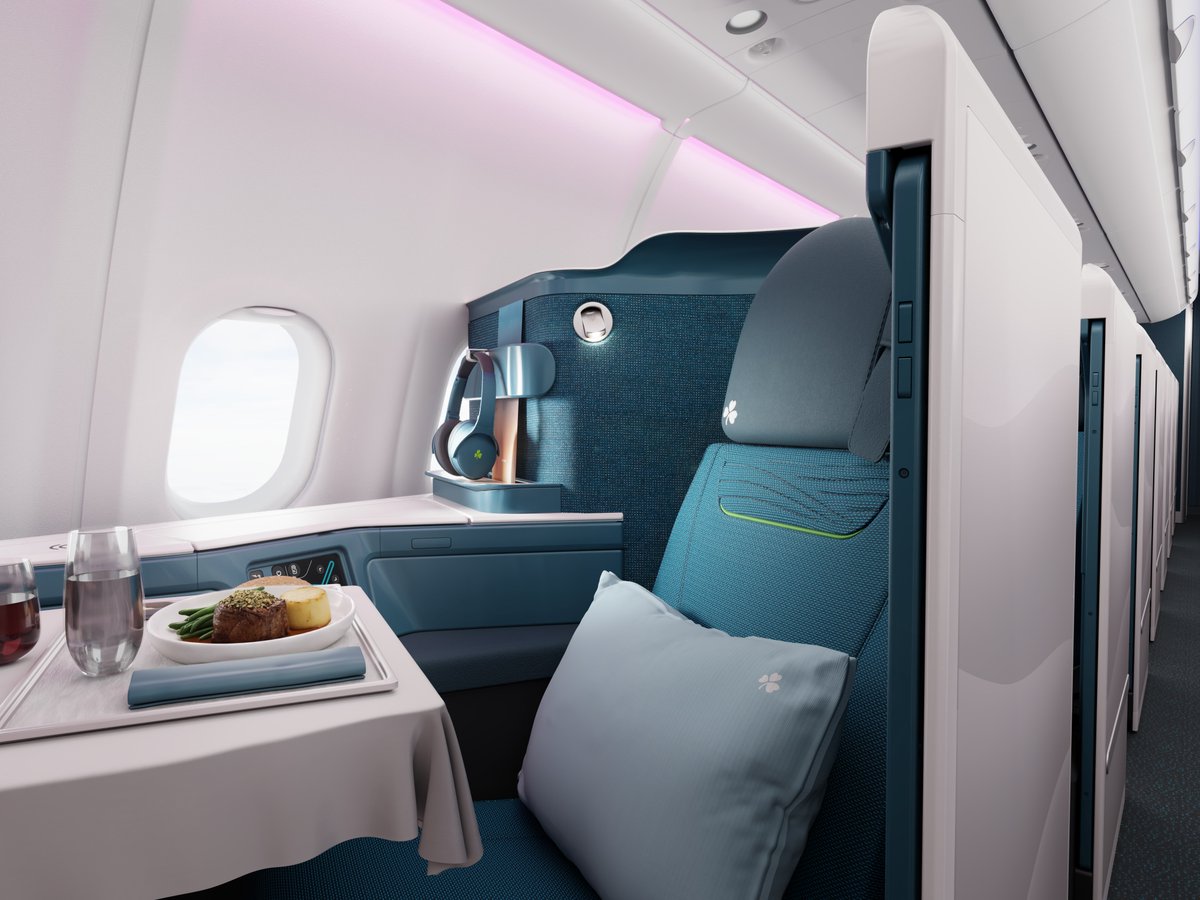
Premium Economy is coming to Aer Lingus! The airline is set to transform ten Airbus A330s with stylish new interiors that visually embrace its Irish heritage, and will notably introduce its first-ever Premium Economy cabin as part of the nose-to-tail refurbishment.
The first refitted widebody will enter service on October 1, 2027 on Aer Lingus’ flagship Dublin-New York JFK route.
The Dublin Airport-headquartered airline has selected RECARO’s next generation recliner, the new R4, as the baseline seating platform for its Premium Economy product. A total of 28 seats, configured in a 2-3-2 layout across four rows, will be installed in a dedicated cabin between Business Class and Economy aboard the three-cabin twinjets.
Each R4 seat will be 18-19” wide, offer 38” of pitch, and enable up to 8” of recline, plus provide enhanced cushioning, integrated footrests and winged privacy, Aer Lingus says. A 13” OLED-based touchscreen will be available at each seat, as based on Panasonic Avionics’ new Astrova inflight entertainment system.
Panasonic has long provided embedded IFE on the lion’s share of Aer Lingus’ long-haul fleet, including its new Airbus A321XLRs. Now, larger 4K screens, featuring Bluetooth headphone connectivity, will feature throughout the refitted A330s. USB-C will also be available at every seat.
“Customers will also enjoy an upgraded three-course dining experience, complimentary drinks throughout the flight, comfortable bedding, an amenity kit and noise-reducing headphones,” Aer Lingus says of the new Premium Economy offering coming to the A330s.
Many Aer Lingus travelers are rejoicing at the news that a proper Premium Economy product is being brought to the twin-aisle aircraft, saying the move is “long overdue.”
They’re also celebrating the carrier’s thoughtful design choices, including seating patterns inspired by the Irish sea and sky, and its color palette — dusty teal, slate blue, charcoal, grey, and green piping feature prominently.
Already advertising Premium Economy on its website, Aer Lingus says that each Premium Economy seat will also feature “your own cocktail table and bottle holder.”
Aer Lingus’ positioning of Premium Economy on its website also suggests that passengers in this cabin class will be able to avail of the new snack bar down back in Economy, which would make sense. https://t.co/TM6CJfw4Bb
#aerlingus #paxex #avgeek
Lufthansa plans to start testing a new recliner product, dubbed the Premium Business Seat, on a subfleet of Airbus A320ceo aircraft operating short- and medium-haul flights.
The trial comes one year after Lufthansa Group subsidiary Eurowings started offering a similar product in business class on medium-haul routes served by a subfleet of A320neos.
Like most European airlines, Lufthansa has historically offered a EuroBiz-style product up front on short- and medium-haul flights by blocking the middle seat of 3-3-configured seat triples. While sold as business, the physical hard product is the same as found in economy class.
But the premium seat wars, which are prevalent in the United States, appear poised to jump the proverbial pond.
“In the first two rows of Business Class, passengers can look forward to an especially generous seating offer. Instead of six seats per row in the familiar 3-3 layout, only two seats sit side by side, giving significantly more personal space,” Lufthansa says of the six A320ceos being fitted with the 2-2-configured recliners.
“Seat pitch of almost one meter (39″), an adjustable backrest, and an integrated leg rest and footrest allow for a particularly relaxed journey. A fold-out table and additional storage space right at the seat add further comfort on board.”
The first retrofitted A320ceo will enter regular service in December 2026. From February, 2027, equipped aircraft will be deployed on flights linking Frankfurt with Athens, Nice and Cairo. Today, the Premium Business Seat recliners are formally available for booking on these routes from March 1 2027.
Lufthansa is currently charging a EUR 139 upsell for a Premium Business Seat on a March 1 flight from Frankfurt to Athens. Its booking engine shows that at least four rows of EuroBiz-style blocked-middle seats, dubbed the “Classic Seat” and positioned behind the 2-2-configured recliners, are also being offered in business class and do not incur an additional ancillary free.
As part of the A320ceo retrofit, SpaceX's Starlink inflight connectivity service will also be installed.
https://t.co/WeBiKajx1b
Named “Am Yisrael Chai,” which is Hebrew for “The People of Israel Live,” and registered as 4X-EDO, EL AL’s new three-class, 271-seat Boeing 787-9 features an upgraded Panasonic NEXT server, “providing improved system responsiveness and performance,” an EL AL spokeswoman said. A new UI, which will bring personalization to the seatback IFE, will roll out in December. https://t.co/iiaQP8PsZ9
#paxex #elal #avgeek
EL AL’s newest Boeing 787-9, which is kitted from nose to tail with RECARO seats and Panasonic Avionics embedded inflight entertainment, will be the first aircraft in the Israeli carrier’s fleet to feature a new, more personalized IFE user interface.
A pilot program for the new UI is “currently planned for late December 2026,” an EL AL spokeswoman revealed to Runway Girl Network after the 787-9, EL AL’s 18th Dreamliner, was pressed into revenue service today on the carrier’s Amsterdam route.
Following a trial period aboard the twinjet, the new UI will be brought to the rest of EL AL’s 787s, she said.
EL AL is slated to start rolling out Starlink inflight connectivity on its now 52-strong fleet in 2027. However, installation of the Starlink phased array antennas on the 787s “is currently planned for 2028," EL AL's spokeswoman confirmed. Starlink will replace the Viasat IFC system on board.
https://t.co/MEoLDcPkUq
On November 13, China Southern Airlines completed the First Article Inspection (FAI) of its next-generation A350 business class seats at Thompson Aero Seating’s facility in the UK. Deliveries of the flagship A350-900 are scheduled to begin in Q2 2027.
Inspired by modern aesthetics, the all new cabin combines refined design, ergonomic features and ambient lighting to enhance comfort and functionality on long-haul flights.
#ChinaSouthernAirlines #CSAirNews #BetterTogether #TechForGood
Air India’s New York flights are back to being non-stop. 🇮🇳✈️🇺🇸
Following the reopening of previously restricted airspace, all Air India flights between Delhi & Mumbai and New York (JFK & Newark) are now operating non-stop, reducing travel time by up to 5 hours.
Customers can enjoy Air India’s newest onboard products, including the Airbus A350 from Delhi and upgraded Boeing 777-300ER aircraft from Mumbai.
Read More: https://t.co/Q61WR59QHs
#AirIndia #NewYork
Based on data received by our Launch Director, we confirm that the Vulcan vehicle launched from Space Launch Complex 41 suffered an anomaly 10 minutes into the flight and failed to deliver the Amazon mission to orbit.
Every flight generates data, and every flight teaches us something. Since the anomaly just occurred, we don’t have any specific data yet to understand what occurred today.
ULA exists to provide assured access to space for our nation and for the customers who depend on us. That purpose is why we take on some of the hardest missions in spaceflight, and why we hold ourselves to the standard of mission success. Today, we did not meet that standard.
We will work closely with our customer and other appropriate organizations to find the cause, determine the appropriate corrective action, and return to flight as quickly as possible.
ULA is committed to full transparency with our customers, and they will have visibility into the investigation process, which utilizes rigorous methodology and corrective action.
We will provide further updates when new information becomes available.
@gladdwareman Work + Play in a double or triple screen scenario (laptop, smart phone and seatback IFE.) It will be interesting to see if Lufthansa will connect the seatbacks to Starlink in time.
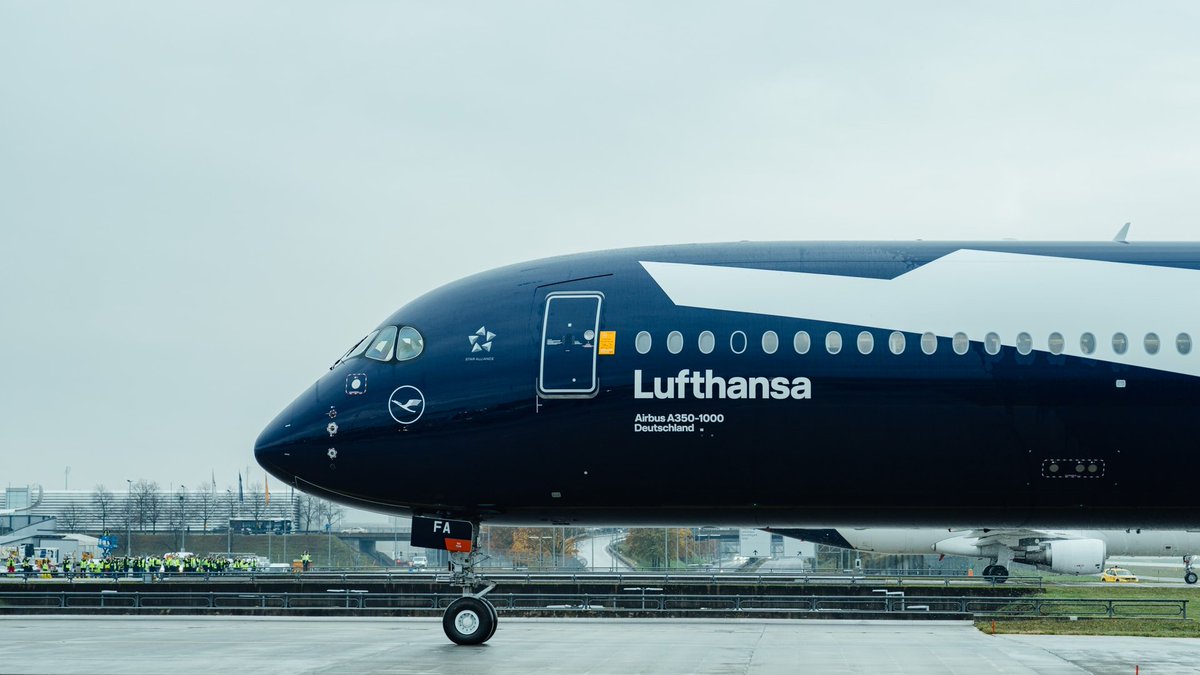
Lufthansa is moving quickly to bring SpaceX’s Starlink LEO satellite-powered inflight connectivity to its first Airbus A350-1000 flagship, after accepting delivery of the aircraft on November 10 and welcoming it to its Munich hub a day later.
For its first revenue flight on December 3 from Munich to Tokyo Haneda, the A350-1000 widebody (registration D-AIFA and dubbed Deutschland) will be “the first Lufthansa Group long-haul aircraft equipped with the new Lufthansa Group Wi-Fi powered by Starlink,” the airline says.
Lufthansa started fitting Airbus A320 aircraft with Starlink in August, as facilitated by MRO giant Lufthansa Technik. The wider Lufthansa Group is in the process of rolling out Starlink across the entire fleet, replacing geostationary (GEO) satellite-based solutions, and the European Aviation Network’s hybrid air-to-ground/S-band offering.
Starlink is not linefit offerable at Airbus, thus necessitating the quick-turn retrofit project for the new A350-1000.
Lufthansa’s new four-class A350-1000 accommodates 300 passengers including three to four guests in first class (which comprises two individual suites and one Suite Plus for a traveling pair), 49 seats in business class (including eight seats in suites), 35 seats in premium economy and 212 seats in economy.
These are the same Allegis long-haul products as found on Lufthansa’s A350-900s.
https://t.co/CL1Zvr09GJ
#paxex #avgeek #lufthansa