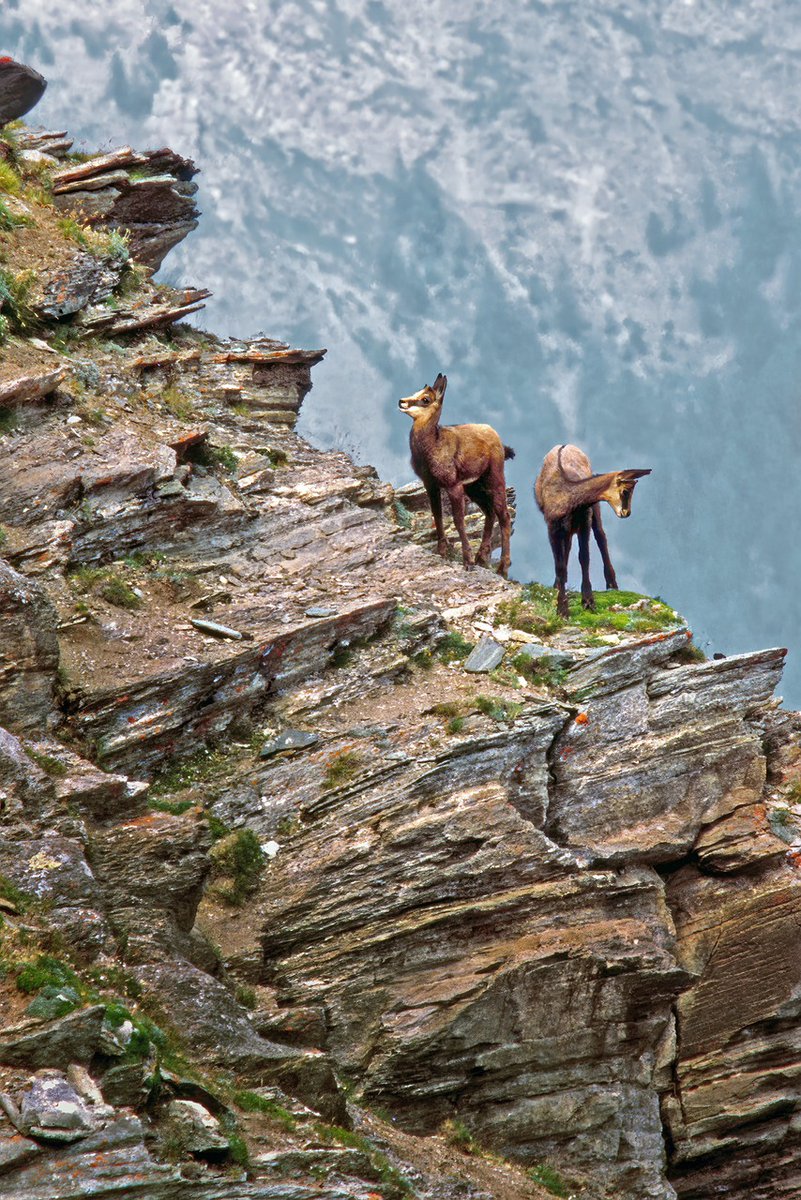
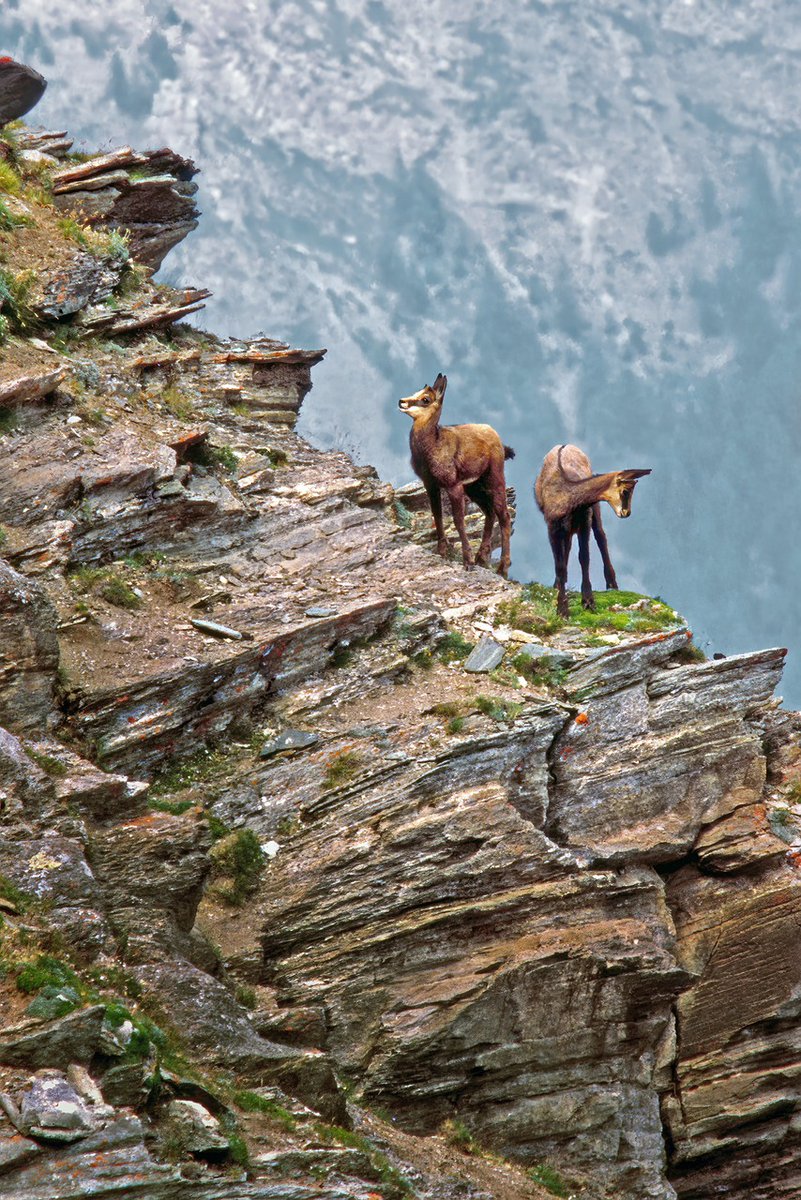
Looks like there's a new virus subtype linked to encephalitis in Europe, but much still needs to be investigated, including zoonotic potential and its host range in other animal species other than chamois. More info here 👉 https://t.co/7EB7xTXvBs
This study (https://t.co/vhYO3hlAgS) estimates chamois densities and seasonal distribution in Greece. So, how many chances will we have to spot a chamois during our conference?👀
In whichever corner of the world you are in, we hope 2025 will be an amzing year for you all and for our favourite species, the chamois! And we hope to see many of you at the International Rupicapra Symposium! Happy New Year!!🥂
Pneumonia is a common disease in chamois, but the etiological agents are less know. This study https://t.co/wXBteamZjf investigates the role of Mycoplasma spp. in the infection.
Male-biased sexual size dimorphism is not uncommon in ungulates, but is the environment they live in influencing it? That's what this study tries to investigate comparing chamois populations across mountain ranges. Read the paper https://t.co/VliGPZkAIF to see what they found
Ungulates are increasing across Europe, but how is this affecting forest ecosystems? This review aims to identify impacts and drivers https://t.co/f5CrxqpFOG
And, as promised, here we are with more news on the upcoming IV International Rupicapra Symposium! It will be held 25-27 September 2025 in beautiful Konitsa (Greece). Keep following us here to stay updated! Looking forward to seeing many of you there 😊
Tick-borne diseases are a considerable public health problem worldwide. This study screens ticks, collected across several wildlife species, for both species identification and pathogens highlighting the risk for potential zoonoses https://t.co/QMSLrXsC17 #OneHealth
Rotaviruses A are a major cause of acute viral gastroenteritis in humans and livestock, but what about wildlife? This study from Slovenia has something to say on the topic https://t.co/E3Iq1sTjlM #OneHealth
Wildlife may represent a source of infectious diseases for both humans and other animals. This study tested several species for Shiga toxin-producing E. coli. How many were #AntimicrobialResistance? #OneHealth https://t.co/8RSCcQmY8y
Did you know @erga_biodiv is working on a reference genome for the Alpine chamois (https://t.co/Pe7A71DmzW)? How would you use it in your conservation and management efforts? They're also helding an online symposium on this topic on Sep 30 https://t.co/maYTehWoST
Sarcocystosis is a common parasitic diseases, but information on wildlife is sometimes lacking. This study shows a high prevalence despite absence of macroscopic lesions, highlighting the importance of correct hygienic measures in game meat uses https://t.co/E4w33c9ERW
We are running low on papers to share! Have you a paper or pre-print that hasn't been posted on the page and you'd like to share with our community? Please leave the link below and we'll feature it in our page!
Chamois are one of the prey species of lynx, but can GPS cluster data and predictive models help in management decisions? This study tries to shed some light on specificity and sensitivity of the approach https://t.co/iavG1Ll4is
PhD grad student opportunity @ClemsonCAFLS@SCCoopUnit : Invasion ecology, population estimation, and wildlife connectivity modeling, focusing on wild pigs in the southeastern US. Desired start date January 2025. Learn more and apply at https://t.co/hvFnxy42tC
📢 Open call for editorial board members for #WildlifeResearch@CSIROPublishing. Get behind-the-scenes of scientific #publishing & previews of #wildlife research before it appears!
AEs:
https://t.co/88yM3eR7bm
Social Media editor:
https://t.co/3qQq54KqVC
Deadline: 16 Aug
READY TO ROCK THE MIGHTY MOOSE?
Then the Rocky Mountain Wildlife Veterinary Externship is for you. Applications close October 3, 2024, with the rotation planned for August 25 - September 19, 2025. For all the details visit https://t.co/SaVQsY0wXg
Assessing the potential of camera traps for estimating activity pattern compared to collar-mounted activity sensors: a case study on Eurasian lynx Lynx lynx in south-eastern Norway https://t.co/evhzZAwUdQ #CameraTraps#Wildlife#Monitoring#GPS@NordicOikos @WileyEcolEvol