On the Krugman et al/Aghion et al discussion. Working my way through it.
The easy part. Let’s settle the central issue, the measurement of productivity growth, i.e. the rate of change of output per hour.
There can be no question that the best measure of the rate of change of output is obtained by using chain indexes. This is what advanced countries, the US and European countries do. (slight difference between the US and other: Fisher versus Laspeyres indexes. Not irrelevant for the question at hand, as the two can differ when one sector, say AI, experiences sharp decreases in prices. But, I believe, not serious enough an issue to change conclusions) Quality adjustments vary across countries, but it is not clear how they bias the comparison between the US and Europe.
Main point re discussion: No reason whatsoever to use anything else (such as PPP prices) than the national measures of productivity growth.
Implication: Almost surely, productivity growth is lower in Europe than in the US.
This does not settle the issue of how to compare levels (as opposed to growth rates) between the US and Europe, or what this implies for the relative standards of living (and the role of terms of trade, and the potential for immiserizing growth in the US). More on those later.
What does war in the Middle East mean for the global economy and energy markets, and what will happen next?
@DEsfandiary, @ZiadMDaoud, @RushEconomics, Tom Orlik and I explore in today’s @business Big Take.
BLUF: Sustained high oil prices = higher inflation and lower growth
What changed between 2019 and 2025? Why are interest rates so much higher?
Bloomberg's Tom Orlik and @RushEconomics join @TheStalwart and @tracyalloway on the Odd Lots podcast to unpack the neutral rate of interest, why it has gone up over the years and how it is affecting the global economy https://t.co/qoGXjc1GMM
Developed economies are facing inflation, demographic shifts and increased spending. Now, concerns about those issues are hitting their bond markets. Listen to @davidgura, @MiaTGlass and @RushEconomics on the Big Take podcast. https://t.co/eOW8UbUNH6
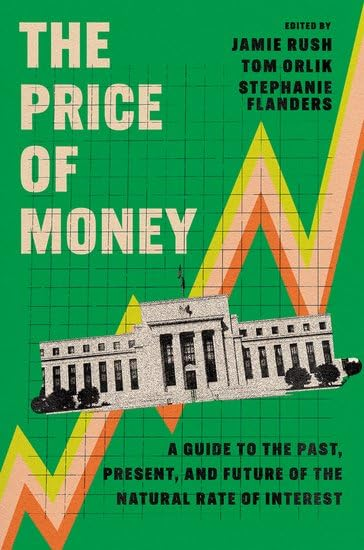
Wondering why bond yields are climbing around the world? Well, there's a book for that. Now available in the US and landing in Europe in the next month. https://t.co/B5VlIHAXUc
@JeremyCliffe@DavideOneglia@DavideOneglia hey Davide, how did you calculate 1% of GDP for reunification? It's been a while since I looked at it but I thought it was more like 4%.
So the bond market is doubing Musk’s DOGE?
In my latest @TheTerminal we plugged some DOGE scenarios into my colleague @RushEconomics’s model, SHOK (BECO MODELS SHOK <go>, which happened to feature in the background of the Netflix movie Fair Play)
I have the max disinflationary impact from DOGE cuts in 2q 26. If DOGE does $100b cuts (which is the $8.6b annualized), cpi is 0.2 ppt lower. $200b is 0.3 ppt lower. $600b cuts = 0.8 ppt lower.
Fed also cuts more across those three scenarios.
Markets currently priced in only 50 bos cuts this year and 25 bps next. Underestimating Elon = underpricing rate cuts in 2026.
Full piece: https://t.co/zVuE3rZHs3
Great recent research by my Bloomberg @economics colleagues @TomOrlik @RushEconomics and Martin Ademmer on the new long run fair value of Trsy 10Y. I agree with it. Fwiw, I was expressing a strictly cyclical view. Looking forward, I do expect 10y to inch upward w higher inflation and higher LR neutral rate.
here's the article:
https://t.co/Po6Ng3AR82
and here's the academic paper if you want to do a deep dive into the econometrics of their model:
https://t.co/Br7qG0CgGI
There's nothing special about UK borrowing costs going up. Britain is deeply integrated in global capital markets and the US is the dominant driver of world interest rates.
Europe's Missing Trillions https://t.co/YVDfo3hsaU Enjoyed saying a few words for this short documentary created by my talented colleagues at Bloomberg Originals. Europe's got some challenges ahead, but I'm still optimistic about the region's future and capacity for change.
Yesterday's splash in the @FT suggested that UK gilts yields are rising on budget speculation around the fiscal rules. My letter in the FT explains why it's a bit more complicated.... "Reeves has to strike right balance on debt policy" (1/n) https://t.co/wCRYWLDuYi via @ft
A really interesting contribution from Jamie and Dan.
Very complementary suggestions with ones made by some of us in a recent @FT letter. It’s good to see an active debate on reforming the UK’s fiscal rules to boost investment and growth. @TomRailton1@Invest_Britain
There's wide agreement that the UK fiscal rules need to be rewritten. But how? My colleague @DanHanson41 and I have just published a proposal that we think would keep the government honest while spurring much-needed investment. https://t.co/mwWjptSemx via @PhilAldrick