Tomorrow marks the beginning.
The Rush to Adopt Summit takes place in El Salvador, Rush Academy goes live, and the first set of courses becomes available.
This is the last chance to get on the Rush Academy waitlist.
https://t.co/QJa7h8PfSN
RWAs have generated returns for institutions for decades.
The barrier was never the asset. It was the minimums, the networks, the access.
That is the problem worth solving. For everyone, not just those already inside.
National digital asset legislation. Defined frameworks for issuance and custody. Institutional dialogue that followed.
That environment is why this work is here.
A stake in a credit fund. A position in private equity. A slice of real estate.
These have always existed. What has not always existed is a path for the person who cannot meet the minimum.
Digital asset infrastructure is changing that.
BlackRock. Franklin Templeton. Apollo.
Five years ago, tokenized RWAs were theoretical. Today these names are actively building the infrastructure around them.
The open question is who builds the layer that makes it accessible beyond those institutions.
El Salvador defined the rules before the market arrived.
Most jurisdictions are still debating what digital assets are. El Salvador answered that early.
For anyone building serious RWA infrastructure, that head start is material.
RWA infrastructure is not just technical.
It is the legal environment, the institutional relationships, and the technical layer working together.
El Salvador built that environment early. That is why this work is happening here.
🚀🌐💰 El internet del valor ya llegó. Mientras el mundo habla de la Web3, El Salvador 🇸🇻 avanza en la construcción de una nueva economía basada en blockchain 🔗, activos digitales 📈 y oportunidades de inversión para todos. 🌎✨🚀🔥💡
Nota https://t.co/8dmjZswPUh
@RushEcosystems #ElSalvador #Web3 #Blockchain #ActivosDigitales #Tokenización #FinanzasDigitales #Innovación #Tecnología #Cripto #EconomíaDigital 🇸🇻💰🔗📊🚀
Institutions require legal clarity before committing capital to emerging asset categories.
They need to know how assets are classified, what reporting requirements exist, what protections are in place, and what recourse they have if something goes wrong.
Jurisdictions that provide that clarity attract institutional participation. Jurisdictions that don't, don't.
Rush Ecosystems operates in El Salvador because the regulatory framework was built to support institutional-grade infrastructure from the beginning.
Markets in emerging categories move faster than regulation in the early phase. That gap allows experimentation but also creates risk.
Eventually, regulation catches up. When it does, platforms that operated without anticipating it face retroactive compliance or operational restrictions.
Rush Ecosystems operates in a jurisdiction where regulation arrived early, not late.
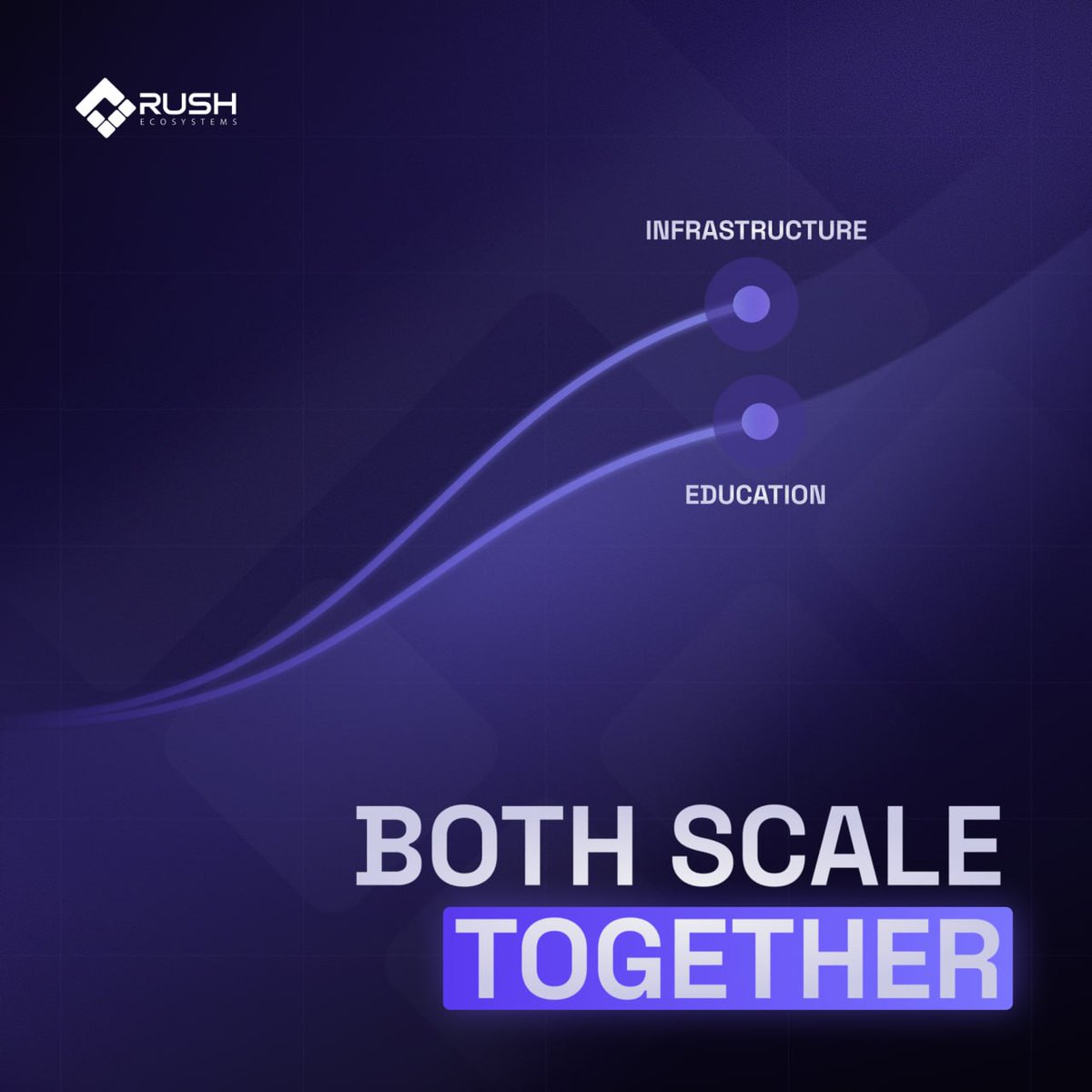
Infrastructure that scales faster than education creates a user base that does not understand what it is participating in.
That asymmetry leads to poor decision-making, higher volatility, and shorter engagement windows. Platforms that invest in education infrastructure alongside product infrastructure reduce that risk.
Rush Ecosystems treats both as foundational.
The Rush to Adopt Summit convened regulators, investors, educators, and builders in El Salvador for structured dialogue about the future of asset infrastructure.
The attendance and speakers list is significant. When institutional participants show up for a full day of conversation, it shows that the category has moved past speculation and into institutional evaluation.
Institutional participants want exposure to emerging asset categories, but they will not enter without proof that infrastructure can support them.
Proof means credentialed users, functioning compliance architecture, and legal frameworks that define liability and recourse. Platforms that cannot demonstrate all three barely get observed, let alone adopted.
Rush Ecosystems is being built to pass the observation phase.
The way ownership is recorded, transferred, and verified is changing as a structural shift in how systems are built.
Traditional ownership frameworks were designed for a physical world with physical intermediaries.
Emerging systems are being designed for something different - where verification is embedded in the structure itself.
Understanding how that shift works is the starting point.
A digital-first economy requires a new way of thinking about how assets move and how value is defined.
The transition begins with education through Rush Academy and is realized through infrastructure via Rush Ecosystems.
Together, these two layers provide the tools and the context necessary to lead in a world where digital and physical systems are no longer separate.
Rush Ecosystems sets the standard for regulatory-compliant digital infrastructure.
Built where legal clarity exists. Operated where institutions can participate with certainty.
El Salvador established regulatory clarity for digital asset infrastructure before most jurisdictions understood why it mattered.
Rush Ecosystems operates where the legal framework was built to support institutional participation from the beginning, not retrofitted after the fact.
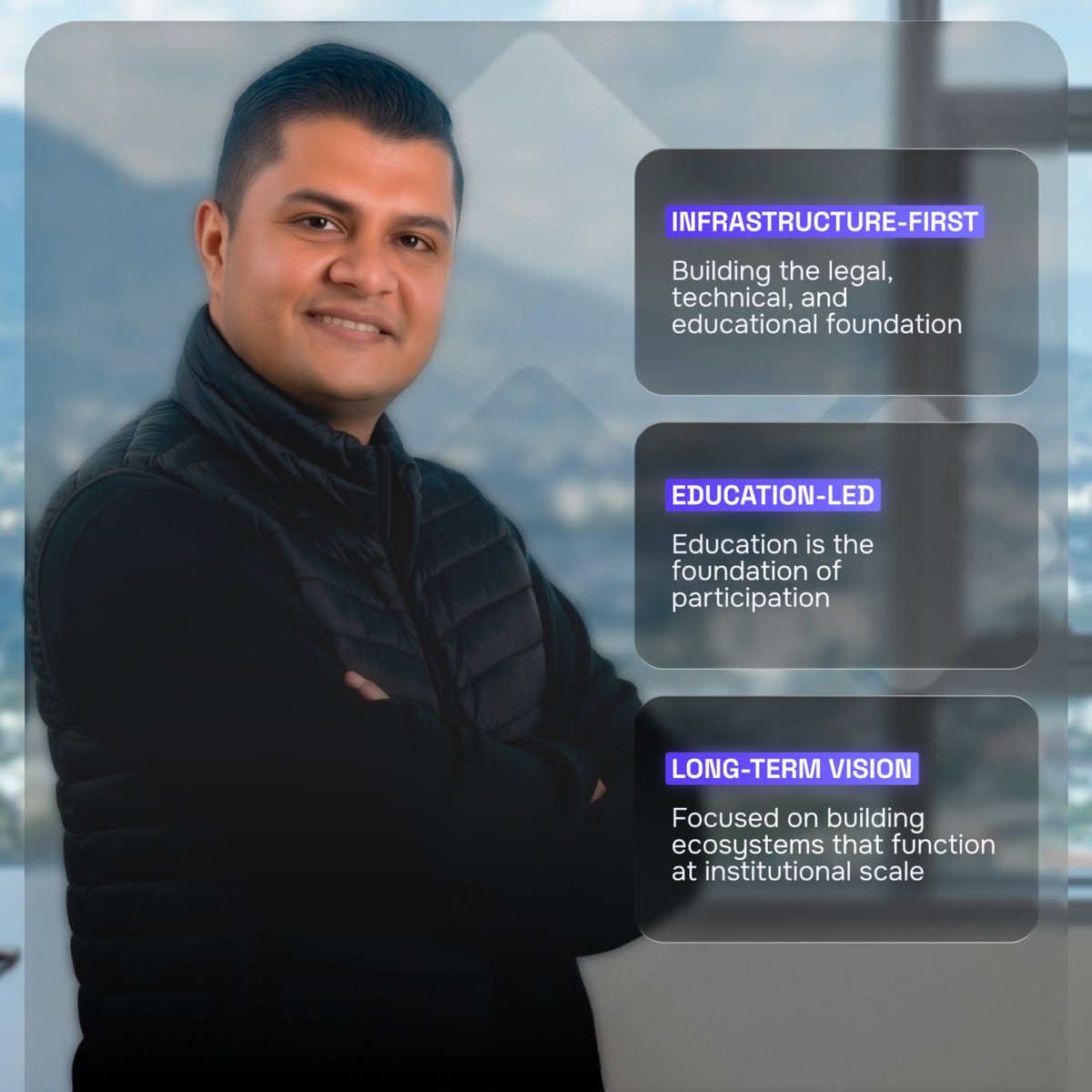
Dr. Emanuel Delgado leads Rush Ecosystems as CEO, bringing over a decade of expertise in financial engineering, credit structuring, and business management.
His experience and approach shapes how Rush Ecosystems is being built, emphasizing sustainability.
Few platforms explain what infrastructure means in the context of RWAs.
Infrastructure, in this context, is the legal recognition, the technical architecture, and the educational foundation that enable asset systems to function consistently.
It is not a product. It is the layer beneath the product.
Rush Ecosystems is building that layer.
While most jurisdictions are still debating what the digital economy looks like, El Salvador defined this years ago.
That head start created the regulatory environment Rush Ecosystems needed to build RWA infrastructure within a structured legal framework from day one.
Before entering the market, institutions look for a number of things.
Legal clarity: regulatory frameworks that define what an asset is, how it can be issued, and what protections exist for participants.
Compliance infrastructure: systems that can handle reporting, identity verification, and cross-border reconciliation at scale.
Educational credibility: proof that the ecosystem is not just building products but also building the literacy required to use those products responsibly.
Rush Ecosystems was built to meet all three criteria.