10/10 I believe five technologies built nations, and the internet is unbuilding them. The shift will be messy, but understanding these forces early can help you adapt. Read the article: https://t.co/ePkSXvYxQN
9/10 Nationalism may follow the path of religion. Faith did not disappear; it became more private and lost political power. Nationalism could do the same. You may still love your country, while your identity, money, education, and communities become increasingly borderless.
8/10 Why do so few people see this? Because the nation-state is not merely a political system to many people. It is sacred. Once you treat the state as a god, disruption feels like heresy, and technologies that weaken it look like threats to be stopped.
7/10 The fifth force is military power. National armies once made people fight for territory and flag. As national consciousness weakens and populations become more global, that bond may fade. Future armies could be professional, robotic, or simply less decisive.
6/10 The fourth? Education. National schools standardized culture for industrial society. The internet now gives anyone access to courses, experts, and personalized learning. AI tutors could accelerate that shift, making national education less central to how people learn.
5/10 The third force is power. Cryptography makes private communication harder for states to control, while crypto can separate money from the state. Global mobility also makes it easier to live across jurisdictions, weakening the link between citizenship and one territory.
4/10 The second force is belonging. Newspapers, radio, and TV once made millions imagine themselves as one national community. The internet lets you belong to communities based on interests, not geography. You can feel closer to strangers worldwide than to your neighbor.
3/10 The first force is language. Printing presses made national languages practical; the internet makes a global language more valuable. English already dominates the web, while AI translation may eventually remove language barriers. National identity loses another anchor.
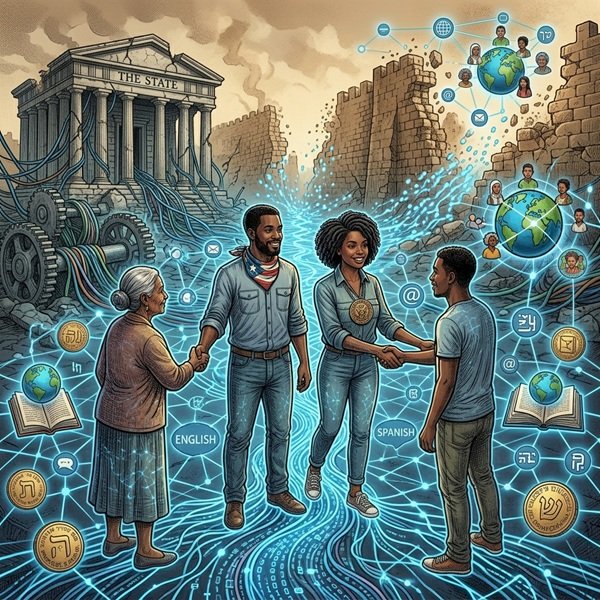
2/10 The same technologies that built nationalism are now being reversed. The internet crosses borders, creates global communities, weakens language barriers, and makes identity less dependent on birthplace. One machine built the nation; another is taking it apart.
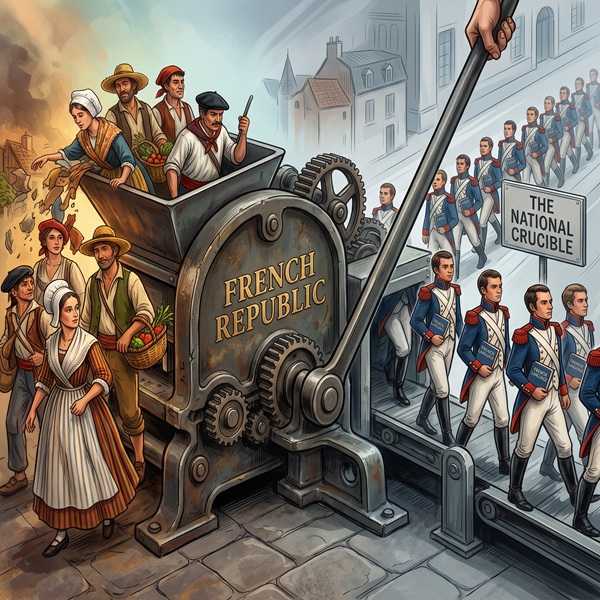
1/10 Nationalism feels ancient, but it isn't. In 1794, millions in France could not speak French. A century later, shared language, schools, newspapers, and armies had turned local identities into national ones. The nation was built, not discovered today.