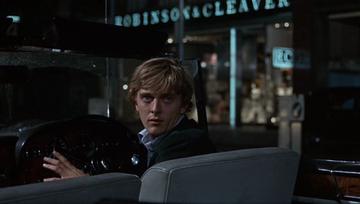
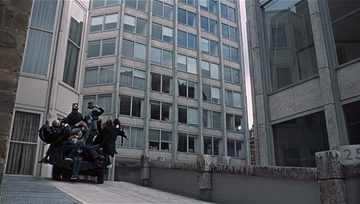
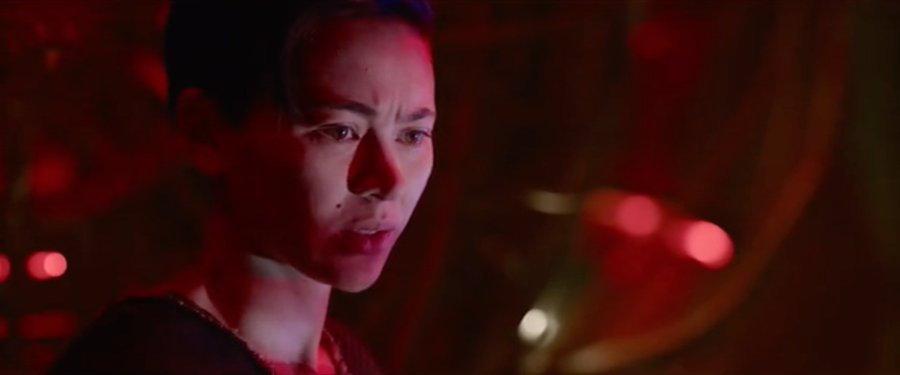
The ending of THELMA & LOUISE (1991) is one of those rare endings that feels bigger than the movie itself. Ridley Scott freezing the car midair instead of showing the impact turns a tragic choice into something strangely liberating and unforgettable.
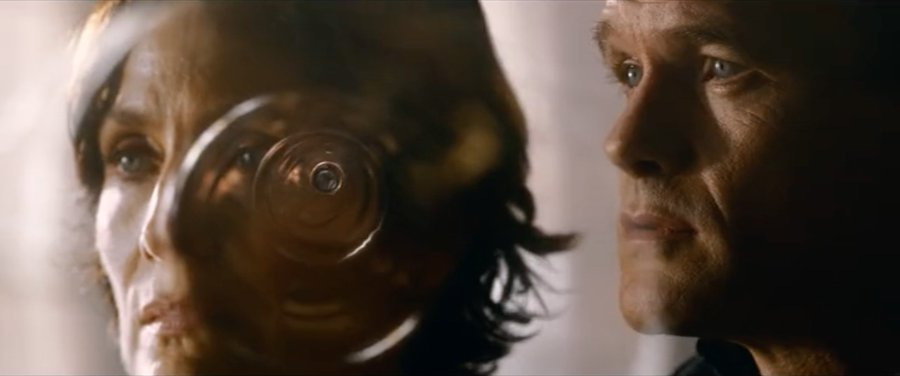
Brian De Palma on the reason for the poor box office performance of "Femme Fatale" (2002) in the USA:
"Interviewer: 'Femme Fatale' seems to me to be 'An American in Paris' (1951) story, like 'Obsession' (1943) in Italy – it’s thinking about an American relationship to Europeanness.
De Palma: it’s something that’s been done across the history of the creative arts. An English artist goes to Venice – what’s surprising about that? But I’m living in America in an era which has become completely isolated. Not only are they not interested in what’s going on in the world outside the United States, they’re antagonistic about it!
Interviewer: So how does that affect the way that a film like this played to American audiences?
De Palma: Not very well. At first they thought it was a foreign film. And the fact that it had subtitles really confused them. The concept that you can’t have a film with subtitles on without ki!!ing it in the marketplace! I was brought up on films with subtitles!"
("The Erotic Thriller in Contemporary Cinema", Linda Ruth Williams, 2005)
"I never like to see my movies because I like to remember them as being so much better than they really were"
- Orson Welles
Welles with Rita Hayworth in The Lady From Shanghai.
David Cronenberg on why "The Brood" (1979) was his version of "Kramer vs. Kramer" (1979):
"Samantha Eggar really understood 'The Brood' (1979); she said that it reminded her of her own childhood. To me that meant she was seeing past the horror fantasy elements to the psychological elements, which were really the basic underpinning of the movie. I’ve said this ad nauseam, but 'The Brood' was my version of 'Kramer Vs Kramer' (1979). I was really trying to get to the reality, with a capital R, which is why I have disdain for Kramer. I think it’s false, fake, candy. There are unbelievable, ridiculous moments in it that to me are emotionally completely false, if you’ve ever gone through anything like that.
'The Brood' got to the real nightmare, horrific, unbelievable inner life of that situation. I’m not being facetious when I say I think it’s more realistic, even more naturalistic, than Kramer. I felt that bad. It was that horrible, that damaging. That’s why it had to be made then; it wanted to be made full blast. Getting philosophical and mellow, you make another movie.
The reality needed to be expressed in what, if you’re a critic, are symbolic terms. I can’t remember if I tried a more obviously naturalistic version of it, but that wouldn’t have satisfied me. It wouldn’t have been cathartic enough. 'Kramer Vs Kramer' also had a kind of happy ending. Not my version of that situation."
(Cronenberg on Cronenberg', 1992)
"'The Brood' was ‘my version of Kramer vs. Kramer’, which was a movie about a divorce with a child involved, a Hollywood version of that situation with Meryl Streep and Dustin Hoffman, that was very popular then. I thought 'Kramer vs Kramer' was the most false, sentimental, bullsh!t movie ever — and people were loving it, you know. That also made me realise, in a very forceful way, that you could make a movie that had people weeping and crying and very emotional but which was a complete lie — and that it would sell, and I didn’t ever want to do that."
("David Cronenberg: Interviews with Serge Grünberg", 1992)
P.S: "Kramer vs. Kramer" was only released in December, 1979. I believe Cronenberg might be confusing reading the 'Kramer vs. Kramer' novel with watching the movie before making 'The Brood'. The quote doesn't make sense in some parts.
On this day, 47 years ago, "The Brood" (1979) premiered in Chicago, Illinois.