BEFORE YOU BOARD YOUR NEXT FLIGHT READ THIS
A former airline captain named John Hoyte reached out to me recently. He spent nearly 30 years flying commercial aircraft, developed serious neurological damage, lost his career, and has been trying to get this story properly investigated ever since.
He sent me documents spanning two decades. The scale of what is in them is HUGE.
What he shared includes parliamentary records, a 320-page published report from the British pilots union, @BBC coverage, House of Lords testimony, and active litigation in multiple countries. This has been heard at the highest levels. It has largely been buried.
Most commercial jet aircraft use a system called bleed air. Instead of drawing fresh air from outside, the plane takes compressed air directly from the engines and pumps it into the cabin. That is the air you breathe for the entire flight.
When engine seals wear down, oil and hydraulic fluid can leak into that air supply. Those fluids contain organophosphates, the same compounds found in certain pesticides and nerve agents. Inhaling them can cause neurological damage, memory loss, and chronic fatigue. In documented cases, far worse.
This design has been in use since the 1950s. The health risk has been documented for just as long.
In 2005, @BALPApilots, the British pilots union, published a full conference report on this with the University of New South Wales. The following year, 27 BALPA pilots were tested by University College London. All 27 showed evidence of toxic poisoning and reduced cognitive function. Not some of them. All of them.
@BBCPanorama covered it in 2008. The House of Lords Science and Technology Committee heard evidence on it in 2007 and 2008. In February 2007, 40 unrelated passengers on a single XL Airways flight were seriously injured by contaminated cabin air. Their cases went to court. Twenty of them won a US jurisdiction ruling in 2010.
A UK coroner recorded a death linked to this in 2015.
France has formally recognised aerotoxic syndrome as an occupational disease. In the US, a law professor is suing Boeing for $40 million after a single exposure left him permanently injured. Morgan & Morgan, America's largest personal injury firm, is now actively taking mass cases on behalf of passengers and crew.
John himself was one of those 27 pilots tested by UCL. He founded the Aerotoxic Association in 2007 at the Houses of Parliament to support other survivors. He has been fighting for this for nearly 20 years.
Almost every commercial jet aircraft except the Boeing 787 Dreamliner uses the bleed air system. The 787 uses a different design that avoids this problem entirely. That safer design has existed for years. That fact alone says everything.
BBC has not covered this story since 2020. The UK Civil Aviation Authority continues to say there is no positive evidence of a link. The Aerotoxic Association has been contacted by more than 2,500 people who believe they have been affected.
John is looking for mainstream investigative journalists who want to dig deep into this. He is an expert witness with decades of evidence and is willing to answer every question. He has a passenger injured on that 2007 flight, Samantha Sabatino, whose case is in the parliamentary record.
This is a genuine story of enormous public interest and it deserves proper investigation.
If you are a journalist or researcher and want to speak to John directly, his contact details are in the comments.
I will add media coverage links in the comments section.
Sources:
@AerotoxicAssoc (Aerotoxic Association)
@BALPApilots (British Airline Pilots Association) @forthepeople (Morgan & Morgan)
gcaqe org (Global Cabin Air Quality Executive)
@BBCPanorama covered it in 2008 with a full documentary titled Something in the Air.
@heraldtweets@WSJ@FlightGlobal@TheCanaryUK
@the_ecologist
<I’m also a black lesbian who is frequently mistaken for a man. And I’ve never voted right of Labour, fwiw. Your assessment is pure fantasy. The Code is accurate guidance to the law. If you don’t like the law, take it up with parliament. Don’t mistake the map for the territory.
Incredible stuff @MrNishKumar. I was on the EHRC Board working group that supervised the production of the Code. I’ve been an equality law specialist for 26 years. We scrutinised every line exhaustively, following detailed, highly specialist legal advice and a huge consultation.>
NEW. The woman who was strangled, beaten and raped by Paul Quinn in Salford in 2003 is a "hero", said Mr Justice Bright.
His remarks at the start of the sentencing hearing at Manchester Crown Court must be read. I don't think I've read anything like them before from a judge in a Crown Court:
I am no longer surprised at the degree of intellectual vacuity contained in your posts, but this one is especially worthy of comment.
“We have a responsibility to our trans constituents to resist it.”
Actually, you have a responsibility to your female constituents to fully support it. Yjis is because it is a code of conduct specifically written to assist in the effective implementation of settled law.
“The Code will exclude trans people from services and facilities that they have long used without issue ”
The Code will do no such thing. This statement is either a deliberate lie or a further example of legislative incompetence. Both explanations are probably in play here.
Trans people are not ‘excluded’ from any services. They are specifically included in all services provided based on their birth sex. There isn’t a single-sex service that trans people are excluded from.
If a trans individual has previously used services designated for the opposite sex, they have done so in contravention of the law, in which single-sex services have always been segregated by reference to biological sex. It is the responsibility of the trans individuals concerned, and those who have been advising them erroneously; if they have been acting unlawfully.
It is false to claim that these historical abuses of single-sex spaces has passed ‘without issue’. There are countless examples of detriment to women and girls and a long history of trans infiltration being challenged.
There is no evidence that using correct-sex facilities will make trans individuals more likely to be the victims of violence.
Trans individuals will not be ‘pushed out of public life’ as they have the right to access public facilities appropriate to their sex.
“It ushers in an era of enforced segregation for trans people.”
This is another lie. Any ‘segregation’ that occurs is a) the result of the proper interpretation of the Equality Act and b) based on the material reality of sex. It only requires any ‘enforcement’ due to the insistence of, in particular, trans identifying men that they are entitled to ignore the law, transgress women’s boundaries and infiltrate female spaves for the purpose of validating their identities and exercising their fetishes.\
”The Code represents a profound rollback of rights,”
This is also a lie. No ‘rights’ have been ‘rolled back’. The Code implements the law as clarified in the For Women Scotland Case, which found that it has ALWAYS been the law that single-sex spaces are segregated by biological sex, meaning that it has never been a ‘right’ for a male person (whatever his ‘identity’) to invae and colonise female spaces.
The Supreme Court Ruling is the law, name's on the tin.
Its positive for lesbians.
We have rights to single sex spaces
MPs need to include protected characteristics of sex & sexual orientation when discussing the EHRC guidance for services, public functions & associations.
It boggles my mind that after decades of being told to not walk alone at night, lock your doors, don't get into an elevator alone with a strange man, be careful of stairways, watch your drink, carry your keys in your hand, don't go into the park at night...
With everything we are hearing right now about ticks this seems like good information to share.
“Here’s what I’ve learned after more ticks than I care to count.
First, whatever your uncle told you, forget it. No matches. No nail polish. No Vaseline. No soap on a cotton ball. All of those do the same terrible thing, they stress the tick out, and a stressed tick empties its gut back into the bite before letting go. Which, if you think about what that actually means for a second, is literally how Lyme and the rest get transmitted so you’re not speeding up its exit. You’re making it throw up into you.
Fine-tipped tweezers. Grip right where the mouthparts enter the skin, not the body, the head. Pull straight up, steady, no twisting, no jerking. It’ll feel like it’s resisting because it is, the mouthparts are barbed. Just keep the pressure on and it lets go in a few seconds. If a piece breaks off in the skin, leave it alone. Your body pushes splinters out. Digging around with a needle does more damage then the fragment ever would.
Clean it with alcohol or soap. Wash your hands.
Now here’s the part most people skip: don’t flush the tick.
Tape it to an index card. Clear packing tape right over the body, write the date and where on your body it was, and stick the card in a drawer. If you come down with anything weird in the next 30 days, rash, fever, joint pain, that flu-that-isn’t-flu feeling, that tick goes with you to the doctor. Some labs will test the tick itself, which is faster and often more reliable than waiting for antibodies to show up in your own blood. A dated tick taped to a card is one of the most useful things you can hand a doctor who’s trying to figure out what’s wrong with you.
The other thing worth saying out loud: if the tick was engorged when you pulled it, and you can’t swear it was off your body within 24 hours, call your doctor that same day. Don’t wait for a rash. Fewer than three out of four Lyme cases even produce the classic bullseye. A single preventive dose of doxycycline within 72 hours of a deer tick bite cuts the Lyme odds way down, and most docs in tick country will write that prescription without giving you a hard time, especially if you walk in with the tick taped to a card and a clear timeline.”
Finnish scientists trucked in real forest dirt and grass and laid it over the gravel at four daycare yards. They let the kids dig around in it for a month. The blood tests came back with changes the researchers hadn’t expected to see so fast or so clear.
The study ran at ten daycares in two Finnish cities with 75 kids aged three to five. Four of the yards got the forest treatment: about a tennis court worth of soil and grass laid over the gravel, plus planters and peat blocks the kids could dig and climb on. Three others stuck with their normal gravel yards. The last three were daycares where the kids were already visiting real forests every day.
After one month, the variety of bacteria living on the kids’ skin shot up, and the kind that helps train the skin’s immune defenses jumped the most. Their gut bacteria started to look like the gut bacteria of the forest-visiting kids. Their blood showed more of the immune cells whose job is to keep the body from freaking out at harmless stuff like pollen and peanuts, and overall inflammation dropped. The kids on the plain gravel yards showed none of this.
Childhood asthma in the US doubled between 1980 and 1995. Food allergies in kids jumped 50 percent between 1997 and 2011, then jumped another 50 percent between 2007 and 2021. And peanut allergies in one-year-olds tripled between 2001 and 2017.
The Finnish researchers think one of the reasons is simple: kids today don’t get dirty enough. 37 percent of American preschoolers now spend an hour or less outside on a normal weekday. Their immune systems are getting trained in environments stripped of the bacteria humans have always lived around.
Aki Sinkkonen, who led the study, put it in plain words: “It would be best if children could play in puddles and everyone could dig organic soil.” The Finnish government is now helping pay for daycares across the country to make the same changes.
Today, I was given a permanent ban of posting on my Facebook page, @Meta. The page can exist - apparently - but I am not allowed to post on it anymore. The page has been deemed controversial due to the Giggle v Tickle case and increased popularity of 25,000 new followers in a week. I don't want to labor the irony of being banned on a social networking platform while fighting in court for the right to ban men from a woman only social networking platform, it is what it is. Frankly, I'd love to have the same right that you do, @Meta.
Women are routinely punished for not accepting men as women. It doesn't turn those men into women. Nothing will.
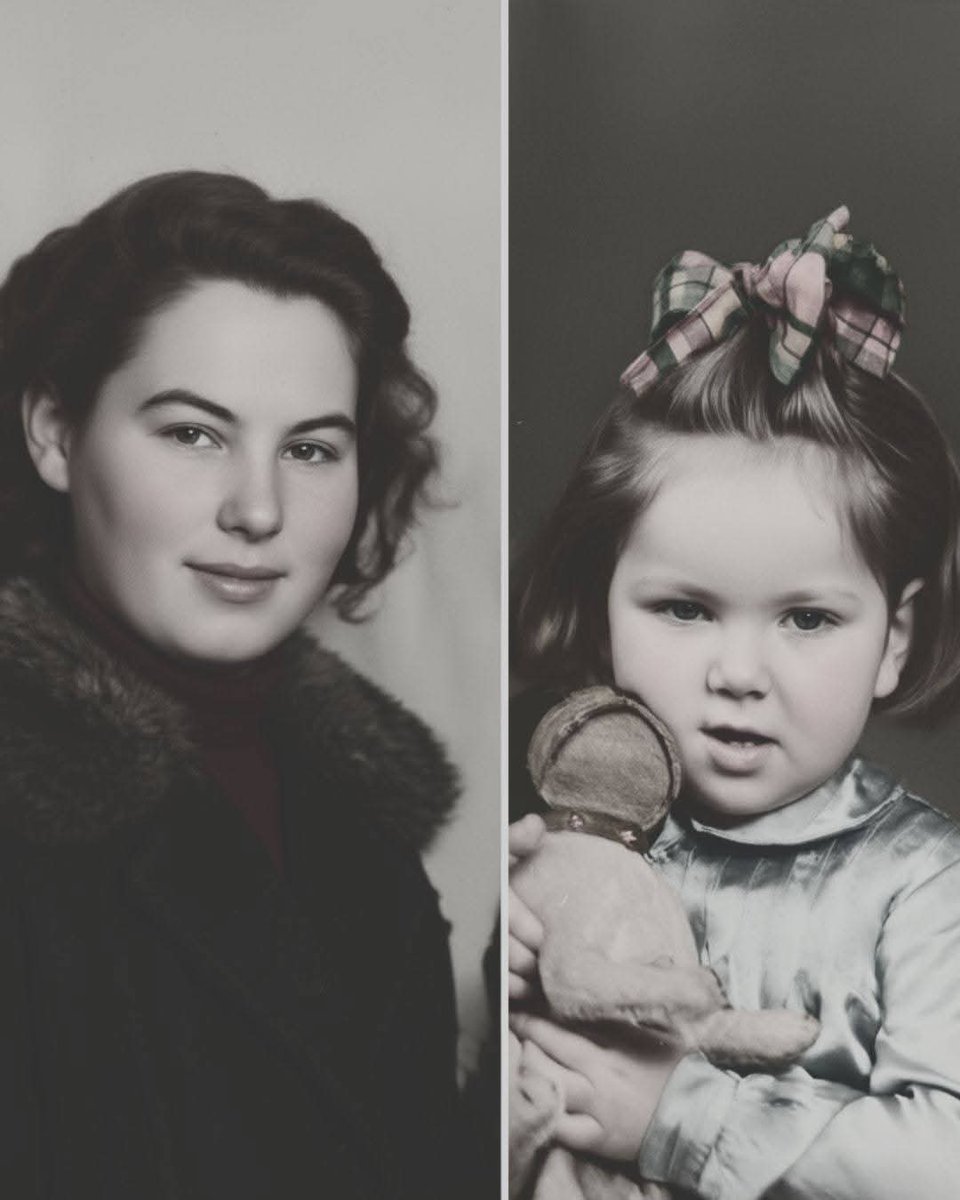
She gave her three-year-old daughter a sedative, wrapped her in a blanket, and placed her in a large leather suitcase. With her heart pounding, she waited in line to leave the Nazi ghetto, watched closely by armed guards. If the little girl made a sound, or if a guard decided to open the heavy bag, they would both be executed on the spot.
When she finally made it outside the gates and her child was safe, she did something completely unthinkable. She went back inside.
And then she saved another child. And another. She did this dozens of times, risking her life with every single step she took.
For most of her life, that little girl, Henia Lewin, believed her mother, Gita Wisgardisky, had performed a single, desperate miracle just for her. It was not until her mother’s funeral many years later that the shattering truth finally emerged.
An elderly survivor approached Henia at the cemetery, looked into her eyes, and revealed a secret kept for decades.
"Your mother saved so many," the survivor told her. "No one knows how many. Maybe she didn’t even know herself. She didn’t count them."
Gita had smuggled countless children out of the Kovno Ghetto in Lithuania, hidden deep inside suitcases or carried through secret passages, right under the noses of the oppressors.
Henia was born in 1940 into a normal, loving Jewish family. That normalcy completely vanished when the Nazis invaded and forced the Jewish population into a cramped, disease-ridden ghetto. Hunger and sudden deportations became the daily reality.
Gita saw through the lies early on. While some people hoped for the best, she understood the dark truth. She knew that when the Nazis spoke of relocating children, they actually meant killing them. Gita refused to wait for the end.
Working secretly with a brave Lithuanian Catholic priest, she found kind families willing to hide Jewish children in the countryside. But getting the children out of the heavily guarded gates was a suicide mission.
The children had to be perfectly still and silent. This was why Gita used sedatives. She put her own daughter into a deep, heavy sleep, placed her in that suitcase, and walked toward the guards.
When a soldier stopped her, Gita did not panic. She calmly offered her watch and her best pair of leather boots as a bribe. The guard took them, looked away, and she passed through the gates.
Little Henia was taken in by a Christian family. She was taught to call strangers mom and dad, and she learned to never mention her real name. Though she was only three, she understood the danger and kept the secret for two long years.
Meanwhile, Gita went right back into the nightmare. She returned to the ghetto to find more children. Each trip involved a new suitcase, more sedatives, and a fresh set of bribes. She never asked for recognition. She simply acted.
Miraculously, Gita, her husband Jonas, and Henia all survived the war. They eventually moved to the United States, where Henia grew up to become a school teacher and a passionate voice for Holocaust education.
Today, Henia shares this story because memory is a torch that must be passed from hand to hand. It reminds us that even in the darkest corners of human history, love can conquer the greatest fears.
Gita went to her grave without ever boasting about her heroism, but her legacy lives on in the generations of children who got to grow up, laugh, and have families of their own because one mother refused to leave anyone behind.
Some stories are not meant to be closed—they are meant to be carried forward.
I posted about Tilly because her mother is connected to families at my children’s school.
Some called it a “dog whistle.” Some called me a racist. Some demanded to know why I cared.
A child is missing. Her parents are in agony.
But this is the discourse we have built. Everything sorted by race. Every story slotted into a side. Care about this child and you must be against that one. Compassion itself has been made tribal.
A missing child should unite us. Worry, prayer, hope she comes home. Nothing more complicated than that.
We used to know how to do this.
In 1943, the Gestapo finally caught Raymond Aubrac — one of France's most wanted Resistance leaders. He was sentenced to death. His execution was days away.
His wife Lucie was six months pregnant.
Most people would have hidden. Would have grieved quietly and prayed for a miracle. Lucie Aubrac did something else entirely. She obtained forged identity papers, constructed a cover story, and walked straight into the office of Klaus Barbie — the man history would remember as the Butcher of Lyon — and convinced him to grant her a visit with the condemned man.
She wasn't there to say goodbye.
She was memorizing guard positions. Counting minutes. Mapping the route the prison truck would take.
On October 21, 1943, that truck rolled through the streets of Lyon carrying Raymond and other prisoners toward what should have been the end. Lucie had spent weeks quietly assembling a team of Resistance fighters, planning an ambush with the precision of a military operation. When the truck reached the ambush point, the team struck — fast, coordinated, and without hesitation.
In the chaos of gunfire and confusion, Raymond Aubrac was pulled free.
Lucie — visibly, unmistakably pregnant — had organized every detail of his liberation.
They went into hiding. Weeks later, Lucie gave birth to their daughter in a safe house while German forces searched for them across France. When liberation finally came, the Aubracs didn't merely survive — they rebuilt.
Raymond became a celebrated engineer and entered public life. Lucie became a historian, pouring decades into ensuring that the women of the French Resistance — so often unnamed, so easily forgotten — were written permanently into the record. They raised three children. They traveled the world. They argued and laughed and grew old together.
When journalists asked Lucie, years later, what had compelled her to risk everything that October day, she didn't hesitate.
"He was my husband. What else would I do?"
Lucie Aubrac passed away in 2007 at the age of 94. Raymond — who had once needed a commando team to be freed from a German prison — lived on until 2012, reaching 97 years old. In his final years, he continued speaking publicly about the Resistance, about memory, about the obligation to tell the truth.
They had been married for 64 years.
Not a love story built on grand gestures or perfect circumstances. A love story built in occupied France, in safe houses and forged documents and a prison truck ambush on a Lyon street — forged in fire, and never broken.
True love doesn't wait for rescue. Sometimes, it does the rescuing
Excellent article exposing the cynical lie that women's sex-based rights can be secured without repealing gender-based laws. As long as the law enables men to obtain documents with female sex markers, women's safety and single spaces will be in jeopardy.
https://t.co/ZP1LPqw5EA
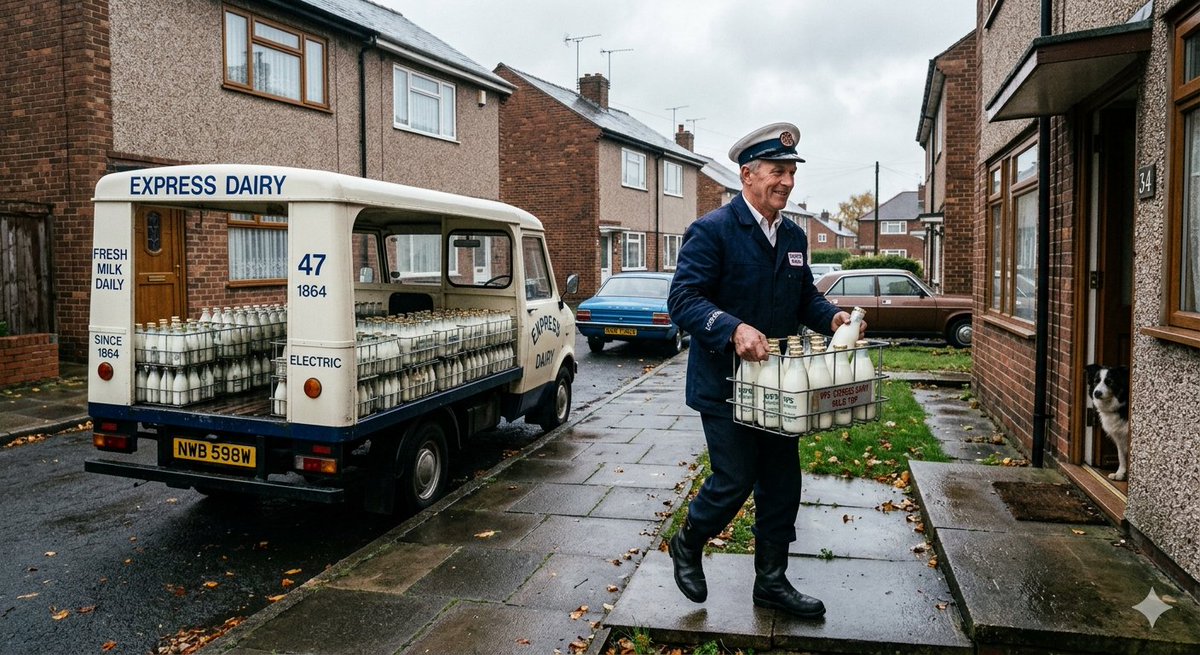
In 1975, more than 90% of milk in Britain was delivered to the doorstep by a milkman before seven in the morning. The float was electric. The bottles were glass. The pint left on the step was waiting for the kettle to go on.
By 2025, doorstep delivery had collapsed to under 3%.
The British milkman, at his peak, was one of the most visible faces of national life. He knew every customer on his round by name. He left bottles in the porch, on the wall, in the rack by the gate. He picked up the empties. The bottles made, on average, more than twenty round trips before being retired.
The milk came from a local dairy. The dairy was supplied by farms within a few miles. The milkman, the dairyman, the farmer, and the customer were, very often, on first-name terms.
Several things broke this between 1980 and 2000.
The fridge had arrived in nearly every British home by the late 1970s. Daily delivery became unnecessary.
The supermarkets moved into milk. Tesco, Asda, and Sainsbury's began undercutting the doorstep on price. The local dairy was bought out, consolidated, or closed.
The glass bottle was replaced by the plastic jug. Plastic doesn't get washed and reused. Each plastic container of milk now generates a piece of single-use waste that takes hundreds of years to break down.
What disappeared, with the milkman, was a piece of daily British life. The same person at your door every morning for twenty years. The clink of bottles at half past five while the rest of the street slept. The conversation when you were in. The note left under the bottle on the day of the funeral.
The milk is still being produced. It is just being produced further away, by fewer and larger farms, shipped further, sold in plastic, by people you will never meet.
A small British revival has been quietly building since around 2015. Milk & More now serves around half a million doorsteps. Independent dairies in Devon, Somerset, Yorkshire, and the Scottish Borders are running their own glass-bottle rounds. Slightly more expensive. Whole milk. Washed bottles. A man at the door who knows the dog's name.
If there is one in your area, sign up.
The system died because nobody fought for it.
It's coming back, in the same way, by the same people.