Sócrates fez mal à democracia. E, no entanto, quem enche a boca com reformismo não projeta fazer um décimo do que ele fez. Arrisco-me a dizer que foi o melhor e o mais tóxico primeiro-ministro da democracia portuguesa.
https://t.co/SfoJCvutaO
@volksvargas E dos pais q marcaram férias de acordo com os calendários escolares. E também (o ministro esqueceu de dizer) de alunos q gastaram as suas poupanças em compras de viagens de férias e q, agora, perderam o dinheiro e toda a confiança nos governantes.
This video should unsettle anyone who takes the United States seriously as a nation.
Because it exposes something dangerous: the trivialization of the world's most consequential office. It shows how carelessly the power, credibility, and accumulated moral authority of a superpower can be squandered for a few seconds of viral attention.
In any other major democracy, this behavior from a head of state would trigger a constitutional crisis. Paris would burn. Berlin would convene emergency sessions. In the Nordic countries, resignation would follow within hours. Across functioning democracies, the public, institutions, and political class would recognize this for what it is: an assault on the dignity of the state itself. Leaders are not free to perform as entertainers without consequence. National honor is not personal property, it's held in trust.
But the United States is not just another country with a provocateur in charge. It is the linchpin of global order. It maintains formal alliances and security guarantees with forty to fifty nations. It underwrites the financial architecture, trade systems, and diplomatic frameworks that billions of people depend on daily. When the American president speaks—or posts—it doesn't land as satire, meme, or personal whim. It reads as a signal about what the country is becoming.
American power has never relied solely on carrier strike groups or economic output. It has rested on something more fragile and more valuable: trust. The belief that beneath domestic turbulence lies institutional seriousness, predictability, and a baseline commitment to dignity. That belief is now disintegrating in real time.
Millions of American companies operate globally. They negotiate multibillion-dollar contracts in environments where reputation is currency. Boardrooms in Frankfurt, Singapore, and Dubai aren't debating whether a post was clever—they're asking whether the United States remains a reliable partner. Whether agreements signed today will be honored tomorrow. Whether American leadership has devolved from institutional to purely theatrical.
Consider tourism, which sustains millions of American jobs—airlines, hotels, restaurants, museums, entire regional economies. Soft power isn't an abstraction. It materializes in flight bookings, conference locations, study-abroad programs, and decades of accumulated goodwill. A quiet, decentralized boycott doesn't require government action—only a collective sense that a nation no longer respects itself.
Now picture this image being studied by foreign ministers, central bank governors, defense strategists, and sovereign wealth fund managers. Picture them asking a coldly rational question: How do we write binding thirty-year agreements with a country whose public face will be this, relentlessly, for years to come? How do we plan for the long term when the tone is impulsive, mocking, and unbound by the gravity of office?
This is where the real calculus begins. Trillions in foreign capital depend on confidence that America is stable, credible, and rule-governed. That confidence is now being traded for what, exactly? Applause from an online mob? A dopamine rush from manufactured outrage? Content designed to dominate the news cycle rather than serve the national interest?
Every serious nation eventually confronts this choice: burn long-term credibility for short-term spectacle, or safeguard the reputation previous generations bled to build. The United States spent eighty years constructing an image of reliability, restraint, and leadership under pressure. That image wasn't born from perfection—it came from a visible commitment to standards that transcended impulse.
This isn't a partisan issue. Europeans who value democratic norms recognize something ominously familiar here. Americans—Democrat and Republican alike—who believe in responsibility and restraint should see it too. Power attracts scrutiny. Leadership demands discipline. A superpower cannot behave like a reality TV contestant without paying a price.
The presidency is not a personal broadcast channel. It's a symbol carried on behalf of 330 million people and countless international partners who never voted but whose lives are shaped by American decisions anyway. Every post either reinforces or erodes the idea that America can be counted on when it matters most.
So the question is no longer whether this is offensive. The question is whether this is who America chooses to be: a nation that trades a century of hard-won reputation for viral moments. A country that replaces statecraft with content creation. A republic governed like a season of reality television.
History offers a harsh lesson here. Great powers don't fall because enemies mock them. They collapse when they begin mocking themselves—publicly, proudly, and without grasping the cost until it's far too late.
Stay connected,
Follow Gandalv @Microinteracti1
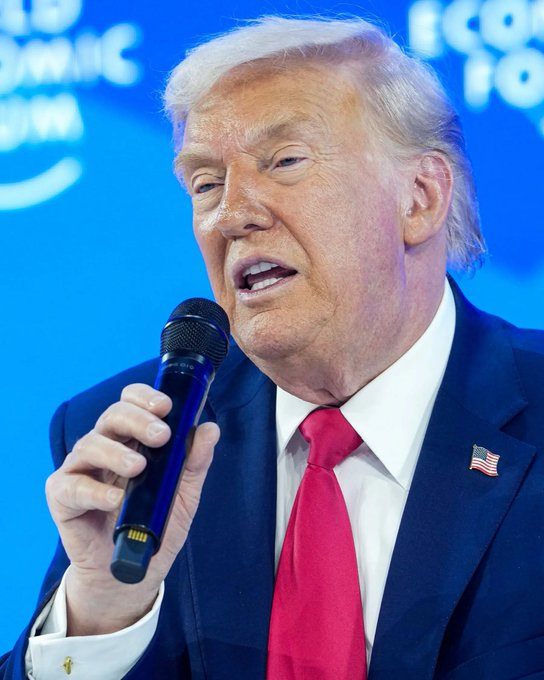
72 minutos. 72 minutos de delirio, transmitidos en vivo a todo el mundo. 72 minutos del presidente de Estados Unidos confundiendo Groenlandia con Islandia. Varias veces. Mientras explica por qué quiere comprarla. Durante 72 minutos, amenazó a Dinamarca, un aliado de la OTAN, con estas palabras: «Puedes decir que sí, y lo agradeceremos. Puedes decir que no, y lo recordaremos». 72 minutos en los que definió a Groenlandia como “un trozo de hielo” del que dependería el destino de la Tierra: “Lo que pido es un trozo de hielo a cambio de la paz mundial”. 72 minutos en los que declaró tener "100% sangre escocesa y 100% alemana". Eso sería un 200%. Pero las matemáticas, evidentemente, no son su fuerte. 72 minutos en los que afirmó que Estados Unidos, tras la Segunda Guerra Mundial, "devolvería Groenlandia a Dinamarca". Lamentablemente, eso es falso. Estados Unidos nunca ha sido dueño de Groenlandia. Nunca. En 1916, reconocieron oficialmente la soberanía danesa. Durante la guerra, solo obtuvieron bases militares temporales. Y en 1946, intentaron comprarla, ofreciendo 100 millones de dólares. Dinamarca se negó. No hubo "restitución". Dedicó 72 minutos a argumentar que «China no tiene aerogeneradores». China, el país que ha sido el principal productor mundial de energía eólica durante 15 años consecutivos. El país que construye el 45 % de todos los proyectos eólicos del planeta. Pero para Trump, "no tienen campos de molinos de viento". Se los venden "a los estúpidos". 72 minutos en los que dijo que "todas las grandes petroleras nos acompañan a Venezuela". Lástima que el director ejecutivo de ExxonMobil, tres días antes, le hubiera dicho en la cara que Venezuela es "invertible". Lástima que Trump se enfureció y amenazó con excluir a Exxon. Lástima que las demás compañías se queden al margen, aterrorizadas. Pero en Davos dijo que “todos vienen”. Dedicó 72 minutos a declarar que "prácticamente no hay inflación" en Estados Unidos. La inflación estadounidense se sitúa en el 2,7 %, por encima del objetivo de la Reserva Federal. Se espera que aumente debido a sus propios aranceles. Pero para él, “prácticamente no existe”. Pasó 72 minutos atacando al presidente de la Reserva Federal, llamándolo "estúpido" y "Jerome Powell llegó demasiado tarde". En vivo. Frente a líderes económicos mundiales. 72 minutos en los que dijo que había impuesto aranceles a Suiza por despecho, porque "una mujer" cuyo nombre no recuerda "lo había acariciado mal". 72 minutos de él diciendo que "el mercado se desplomó ayer por culpa de Islandia". Islandia. Un país de 380.000 habitantes. Eso habría derrumbado a Wall Street. 72 minutos en los que afirmó que Estados Unidos "pagó el 100% de la OTAN". 100%. Cuando la participación estadounidense en el presupuesto de la OTAN es de aproximadamente el 16%. Pero para él, 100%. 72 minutos de confusión de Azerbaiyán en “Aber-bajian”. 72 minutos de monólogos. De mentiras comprobables. De cifras inventadas. De amenazas a aliados. De insultos a funcionarios. De meteduras de pata geográficas. De alardes contradichos por los hechos. Y el mundo, en silencio, observaba. Vio al presidente de la mayor potencia del mundo confundir a dos naciones, amenazar a Dinamarca, insultar a la Reserva Federal, mentir sobre Venezuela, fabricar cifras de inflación y negar la existencia de la industria eólica de China. 72 minutos. Y pensar que hubo un tiempo en que las carreras políticas terminaban por mucho menos. Hoy, sin embargo, avanzamos hacia el siguiente delirio. Bienvenidos al 2026. #Davos #Trump
🤤🇵🇹 C'est STRATOSPHÉRIQUE !
Après son titre de championne d'Europe il y a quelques semaines, la géniale Madalena Costa, 17 ans, a récidivé en devenant championne du monde de patinage artistique, dans la catégorie libre, à Pékin.
This is the Queen's Stepwell in Gujarat, India, built nearly 1,000 years ago.
It's incredible, but it isn't unique — India is filled with hundreds of stepwells just like it.
Here is the story of the world's most extraordinary underground architecture...