RWA is getting harder to ignore. The next step is building the infrastructure that connects real-world value with onchain finance.
That’s what we’re building at RWAOS.
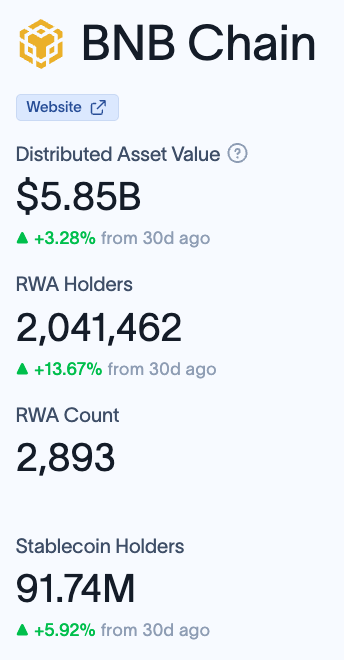
BNB Chain is showing how much demand there is for RWA onchain, with over 2 million holders already.
As more real-world assets enter crypto, the opportunity for BNB Chain goes well beyond the numbers. The next step is making these assets more useful across onchain finance.
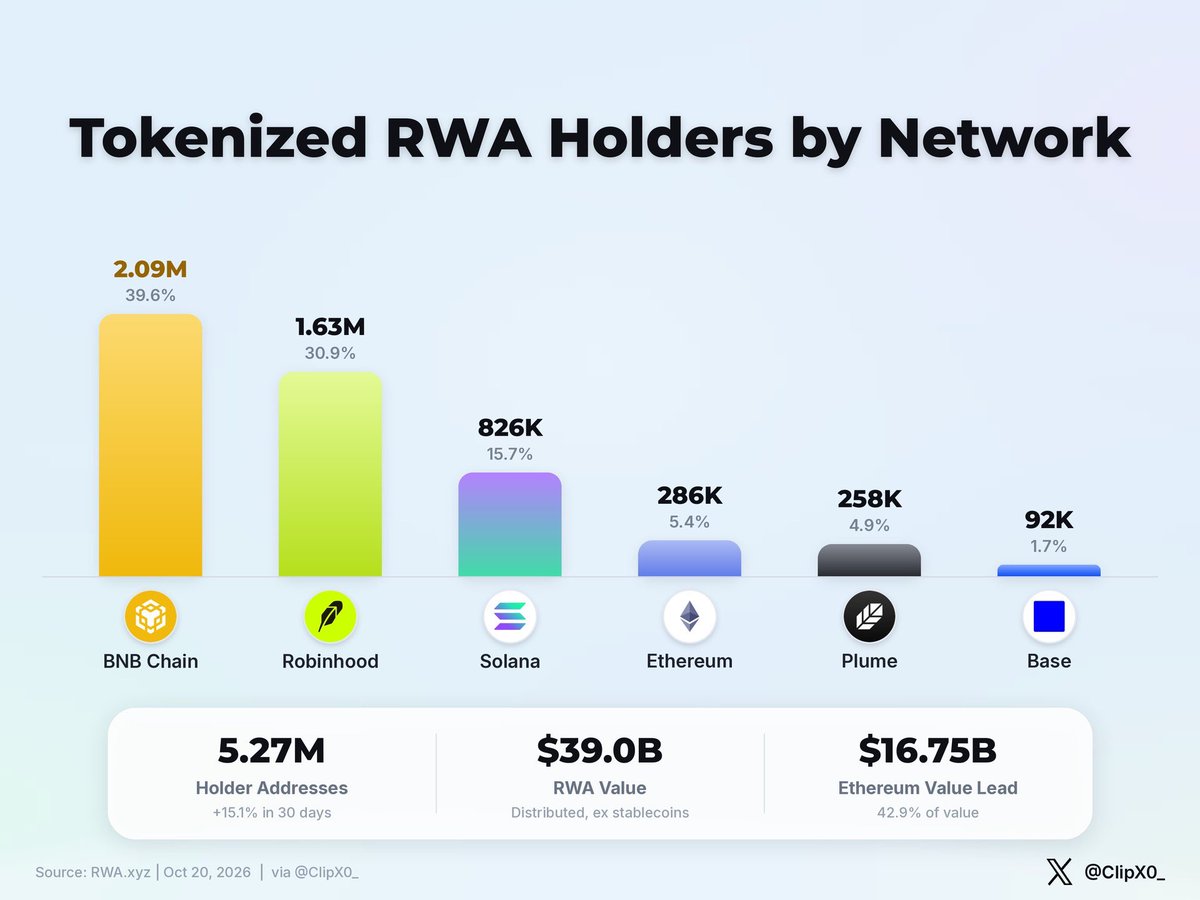
. @BNBCHAIN Leads Tokenized RWA Holders with 2.09 Millions
5.27M addresses now hold tokenized RWAs, up 15.1% in 30 days.
🔸 BNB Chain: 2.09M (39.6%), +12.1%
🔸 Robinhood: 1.63M (30.9%), +14.8%
🔸 Solana: 826K (15.7%), +39.8%
🔸 Ethereum: 286K (5.4%), +6.4%
🔸 Plume: 258K (4.9%), -0.4%
🔸 Base: 92K (1.7%), +6.0%
Holders and value don't line up. Ethereum has 5.4% of holders but 42.9% of the $39.0B in RWA value.
RWA growth is starting to tell a more interesting story. Ethereum continues to attract tokenized funds, while BNB Chain is seeing a major increase in tokenized stock market cap. Different chains are finding their own strengths as real-world assets move onchain.
What stands out to me is the gap between market cap growth and holder growth. Solana added around 92,700 tokenized stock holders this week even as its market cap declined by $18.1M. That’s a reminder that user adoption and capital flows don’t always move in the same direction.
As more traditional assets enter crypto, the bigger opportunity is making them useful beyond simply holding a token. RWA can bring new forms of collateral and financial exposure into onchain markets, creating more ways for capital to move through DeFi. That will depend on liquidity, asset quality, and the infrastructure supporting each product.
We’re still early in this transition. The chains attracting attention today may change, but the long-term direction is clear: more of the real economy is moving toward onchain finance. The projects building the infrastructure around that shift have a lot of room to grow. RWA is one of the most important developments to watch in crypto.
This is bigger than banks moving onchain.
As tokenized assets and onchain finance mature, the lines between traditional finance and crypto are starting to blur. The next challenge is making real-world assets usable across the onchain economy.
RWA is where this gets really interesting.
The real race is just getting started.
As more real-world assets move onchain, the winners will be the chains that make them useful across the broader financial ecosystem.
RWA is still early.
RWA just crossed $39.3B and Ethereum is sitting on $17B of it 🤯
BNB Chain Solana and Stellar all chasing but the gap is still massive
I'm quite enjoying this new race
Crypto has spent years building a new financial system. Now it’s time to bring the real economy into it. RWA is where these two worlds start to meet, and I think we’re still early.
Most of the world’s wealth has never been onchain. As tokenization matures, that value will start finding its way into crypto, opening up a much bigger market than crypto-native assets alone.
Over time, RWA could become a core part of how global finance works. The transition won’t happen overnight, but the direction is becoming harder to ignore.
At RWAOS, we believe the future of onchain finance is deeply connected to real-world value. RWA is more than a trend. It’s a shift worth building for.
RWA is bringing real economic value onchain.
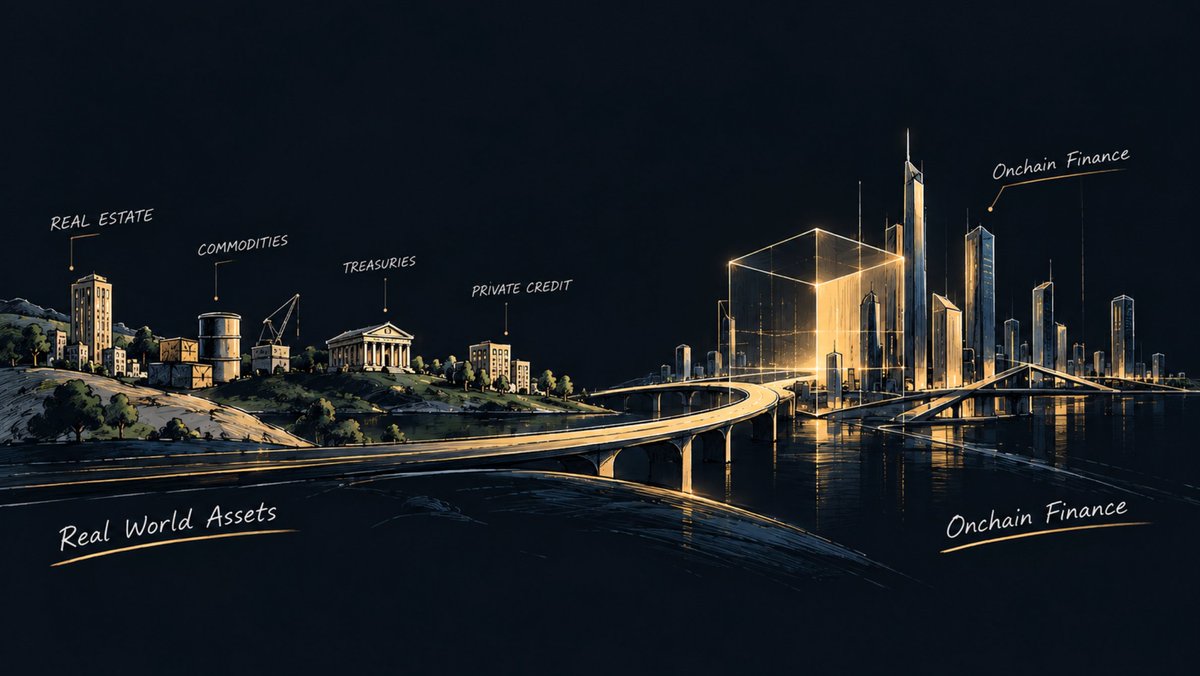
From real estate and commodities to treasuries and private credit, tokenization is opening new ways to access and use real-world assets.
The next step is making these assets easier to verify, track, and connect to onchain finance.
That’s what RWA infrastructure should enable.
https://t.co/IanuXtiUTv
Introducing RWAOS.
Real-world assets are moving onchain, but the infrastructure connecting these assets to onchain finance is still evolving.
RWAOS is building toward a common intelligence layer for tokenized real-world assets, starting with asset registration, verification status, and onchain tracking.
The goal is to make RWA data easier for applications and autonomous agents to discover and use.
As tokenized assets expand across the ecosystem, reliable infrastructure for understanding those assets will become increasingly important.
RWAOS — The Operating System for Real-World Assets.
Ethereum isn’t just competing for RWA. It’s becoming the default settlement layer.
Institutions care about liquidity, security, and infrastructure they can actually rely on. Ethereum checks those boxes.
Tokenized treasuries, onchain funds, and credit markets are already taking shape.
The bigger question isn’t which chain can tokenize assets. It’s where those assets will live, trade, and connect to onchain finance.
That’s where the real RWA race is happening.
#RWA #Ethereum
Real-world asset infrastructure begins with verification.
Before information can support meaningful decisions, it must be accurate, traceable, and connected to reliable source documentation.
Strong verification processes help establish trust throughout the asset lifecycle.
At RWAOS, research is part of the infrastructure.
We study developments in real-world assets, digital finance, compliance, risk management, and asset operations to better understand how this market is evolving.
Insights from our research will be shared here.