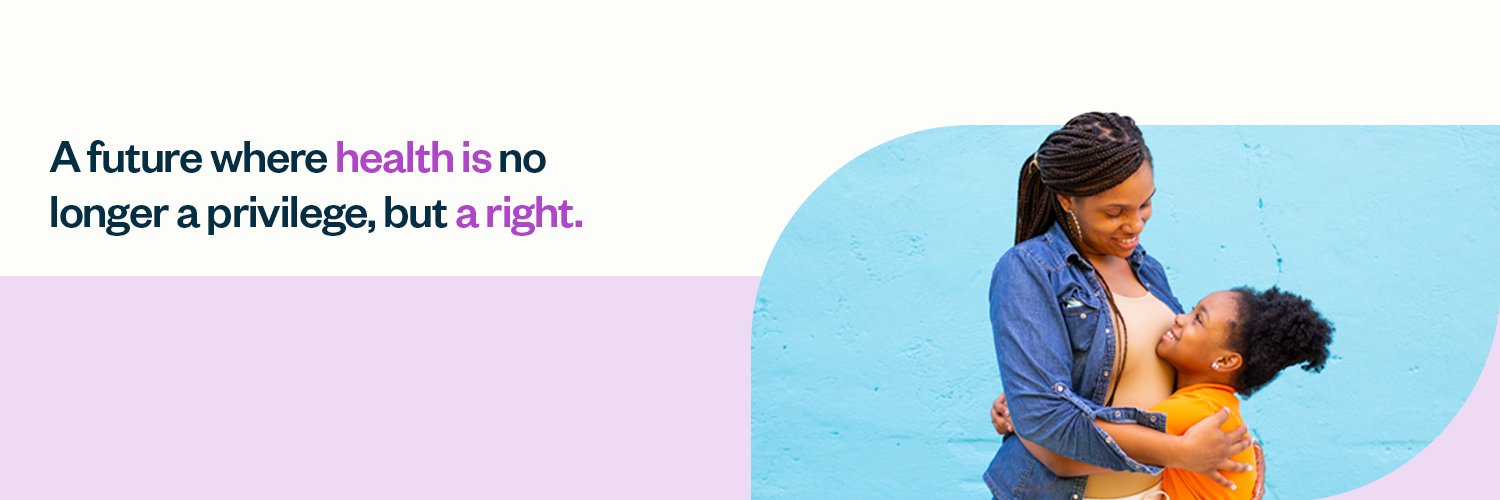
.@RWJF remains committed to advancing policies, programs, and practices that promote racial and health equity to create a thriving democracy where health is not a privilege for some, but a right for all.
Everyone in America should have access to high-quality, affordable, and comprehensive healthcare.
Healthcare coverage is one of the single greatest ways to achieve health equity and ensure that health is no longer a privilege, but a right.
Clinicians, policymakers, journalists, community developers, organizers, funders: Together we the power to shape the way our systems work. And our work will only succeed when it’s done in deep collaboration and with respect for those who our systems consistently fail.
Extending ACA subsidies will help *4 million* people keep their healthcare & reduce costs for millions more.
The next step - make these subsidies permanent to give families the stability they deserve.
https://t.co/eWGXvheYqC
We must recruit, retain, and promote diverse faculty, staff, and students to create a healthcare workforce that reflects the rich tapestry of our society.
Structural racism deeply embedded in the federal laws governing wages is denying fair wages to more than 5 million hardworking service workers.
Ending the subminimum wage would be a big step toward economic justice and giving everyone a fair and just opportunity to thrive.
In the wake of recent policy wins intended to advance equity, we're also witnessing efforts that impede progress. Our work aims to ensure that those with the greatest barriers to opportunity are setting the agenda and our laws are designed to address past harm from discriminatory government actions. https://t.co/i6UeLJYrOi
On the frontlines of efforts to address the U.S. #WaterCrisis, the Little Village Environmental Justice Organization offers lessons for water justice advocates.
https://t.co/EANb4WZOMY
Safe, clean water is a human right. Everyone in the U.S. should have access to clean water to use for drinking, cooking, bathing, growing food. #HealthEquity
Why is water becoming more unaffordable?
Most of US water infrastructure was built 50+ years ago with federal funds. As federal investments have dried up and costs have risen over the last several decades, water providers have passed on the costs of water infs. to communities.
Former @EPAWater & @PolicyLink alum @radhikafox gave testimony in today’s @EPWCmte hearing on #SDWA50. Elevating the importance of this federal legislation & need to build on progress to close racial & economic gaps in clean drinking water. #SafeAffordableWater
Could your family survive if you were paid $2.13 an hour? That’s the reality for millions of tipped workers in 43 states where the subminimum wage undermines health equity.
Here’s how advocates at One Fair Wage are working for change. https://t.co/5ctXGal9Py
Employers often miss out on great talent because they underestimate the skills of someone with a disability. Through intentional effort we can undo the damage done by ableism and shape truly inclusive workplaces. https://t.co/KV0Kqlbxox
By building a powerful coalition of disabled people and advocates, @DisabledSouth is breaking down barriers and building an accessible future where health isn't a privilege for a few but a right for all. https://t.co/ruLv0Oik8d
Since we know it will take time and continued work to tear down longstanding barriers designed to discriminate, @RWJF will continue using the comment process—and every other tool at our disposal—to influence federal rules and advance health equity.
.@RWJF recently submitted public comments on 5 federal rules that made healthcare more inclusive, demonstrating a powerful way advocates can help shape federal policy.
@DrAvenelJoseph shares more about the impact the finalized rules will have on healthcare access and equity. https://t.co/4KajWeOHdM
We all want to live in a place where we can safely travel between home, work, and family. But we haven’t always prioritized this for all. Listen to neighbors and friends share their solutions to right past harms and transform their communities. https://t.co/sloCXd3vaT
We need policymakers to come together to work toward a future in which good health is no longer a privilege but a right.
Central to achieving this vision is a well-functioning Centers for Disease Control and Prevention, writes @DrRichBesser in recent @WashingtonPost LTE.