How do our environments shape the way we age? The exposome, the environmental and contextual exposures we experience throughout life, can help researchers understand these connections.
New research directions and resources from the NIH-supported Gateway Exposome Coordinating Center aim to advance the study of how lifelong exposures influence healthy aging, including Alzheimer’s disease and related dementias.
Learn more: https://t.co/FRgIySLXAQ
In a first-in-human study, NIH-supported researchers tested a new imaging device designed to help improve the detection and treatment of atherosclerosis, the buildup of plaque in the walls of arteries that causes blood vessels to narrow.
Read to learn more: https://t.co/doyJ25BtKC
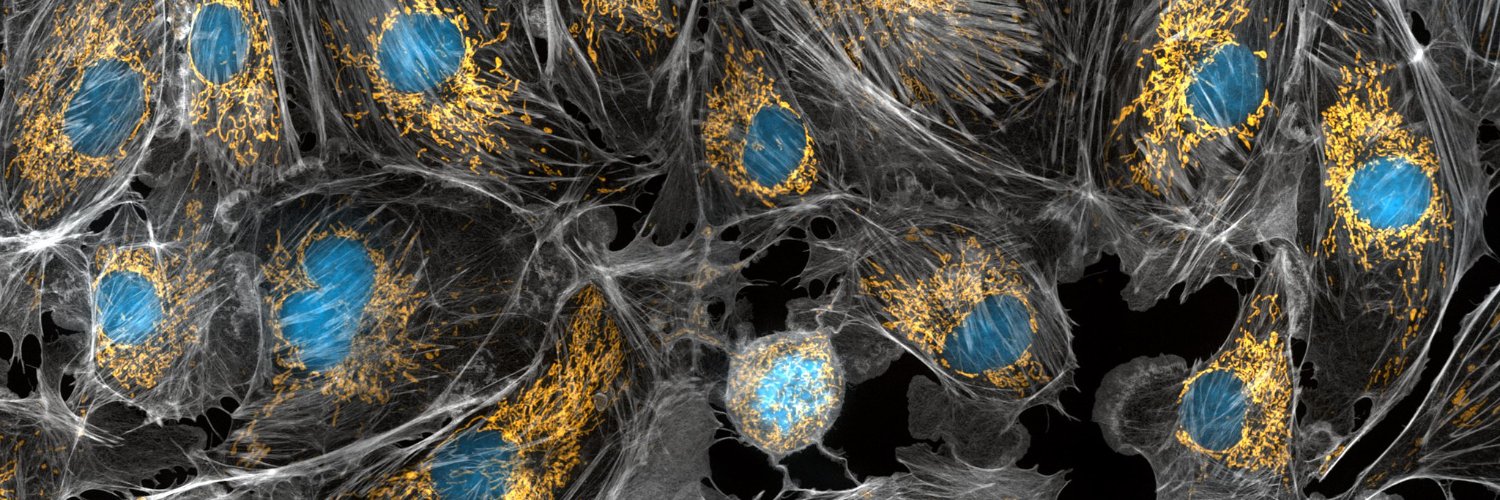
🔬 Innovations in microscopy are enabling NIH scientists to visualize biological processes at unprecedented spatial and temporal resolution.
At the National Institute of Biomedical Imaging and Bioengineering (NIBIB)'s Advanced Imaging and Microscopy Resource, researchers are using advanced microscopy techniques to observe cellular behavior, molecular interactions, and dynamic processes that are otherwise invisible, providing critical insights into human health and disease.
NIH researchers mapped brain regions that connect visual information with learned knowledge, showing how associations between colors and shapes are stored in the brain. The findings could inform future vision research.
Read more ⤵️ https://t.co/ivgDoZM06v
Is your research focused on advancing over-the-counter (OTC)/home use platforms for HIV detection and antiretroviral therapy (ART) monitoring? A new NIH funding opportunity is now accepting applications!
Areas of Interest
• Technologies that enable earlier or lower-cost HIV detection
• Qualitative and quantitative HIV viral load monitoring
• Tools to identify inadequate treatment response, viral rebound, or the need for ART adjustments
• Technologies supporting pre-exposure prophylaxis (PrEP) initiation and monitoring
Submission deadline: January 15, 2027 at 11:59PM EST
Learn more and apply: https://t.co/l6xCWppua5
Does your research focus on diabetes, digestive diseases, or kidney diseases? Explore these highlighted topics as you plan your next NIH application!
Apply through an appropriate NIH parent funding announcement or another broad NIH opportunity. Learn more: https://t.co/y4PvjOKuub
Have hypereosinophilic syndrome (HES)? The NIH is studying dupilumab, an approved drug, combined with other treatments for adults with HES.
You may be eligible if you are 18+ and take mepolizumab, reslizumab, or benralizumab for HES.
Call the NIH CC Office of Patient Recruitment at 833-JOIN-NIH.
Refer to study #001979-I 🔗https://t.co/woG8CPydzI
New findings from the NIH-funded All of Us Research Program highlight the potential value of using genetic information to guide medication prescribing.
Read more: https://t.co/dl0UFl3cRQ
Congratulations to the winners of NIH’s Integration of Nutrition Training into Health Care Education Challenge! These medical schools, nursing schools and residency programs are being recognized for established programs and promising plans to strengthen nutrition education.
Meet the winners: https://t.co/LO9g5fS6gq
NIH is developing broader clinical trial funding opportunities organized by trial type to help researchers find the right fit for their science.
Learn what’s planned: https://t.co/mypcOHkcOQ
We will stop measles outbreaks, protect American families, and work to regain U.S. measles elimination status. I continue to recommend MMR vaccination as the most effective way to prevent measles.
Worldwide COVID-era disruptions interrupted routine childhood vaccination, leaving gaps in protection here and abroad. The multi-year global outbreak has caused many nations to lose their elimination status including, Armenia, Austria, Azerbaijan, Bolivia, Canada, Mexico, Spain, United Kingdom, and Uzbekistan.
Under Dr. Schwartz’s leadership, CDC has provided approximately $100 million in additional funding since August to strengthen prevention and response to measles and other vaccine-preventable diseases.
CDC has worked alongside state teams in Texas, South Carolina, Virginia, Kansas, New Mexico, and Wisconsin to help bring their outbreaks rapidly and successfully under control. CDC is also supporting Pennsylvania and New York with epidemiologists and other experts.
We are working to close vaccination gaps and rebuild public trust. We will answer families’ questions honestly about vaccine benefits and risks and work with trusted health care providers and community leaders to prevent measles, limit its spread, and support timely treatment.
We will support Americans who become ill, regardless of vaccination status, and for the first time equip health care providers with guidance to diagnose and treat measles and its complications.
How can Indigenous ways of knowing and doing help shape research?
Join the NIH N CREW Program on Nov. 23 from 2–3 p.m. ET for a webinar exploring Indigenous research methodologies with experts from the Johns Hopkins Center for Indigenous Health.
Register: https://t.co/39sotBJ3XB
How do different cells behave within the same tissue? High-resolution 3D maps of many human organs are helping researchers answer that question and better understand disease.
Read more: https://t.co/HZ87aeI0dX
Dr. Powers is a physician-scientist who will bring a focus on rigor, transparency, and research outcomes to leading NIAID into the future.
I am thankful for his commitment to serve and glad to permanently welcome him to the NIH leadership team.
Read the full story ➡️ https://t.co/hYdjn5X5c4
Scientists are learning more about the connections among the immune system, gut microbiome and metabolism.
In mice, researchers found that certain immune cells in early life were important for energy burning in brown fat. Young mice that could not release these cells from bone marrow burned less energy and developed obesity on a high-fat diet, even when they had a healthy gut microbiome.
Read more: https://t.co/tG32901f0K