A urologist may love a new device, but that doesn't mean the hospital will buy it.
Clinical value matters. So do budgets, purchasing processes, and existing contracts.
Building a medical device is one challenge. Getting it into the hands of the people who need it is another.
At CMEF in Beijing, I ended up leaving two ureteral stent samples at a visitor's hotel front desk because finding time to meet at the exhibition was harder than expected.
A MedTech startup day: half product discussions, half logistics. 😅
When a distributor asks for an IFU, I want to know what they're checking.
Clinical fit? Local registration requirements? Training needs?
Those questions often tell me more about a market than a polite “we're interested.”
One detail I pay attention to with ureteral access sheaths: the gap between inner and outer diameter.
A smaller profile is appealing, but you still need room around the scope for outflow.
How do endourologists think about that balance?
AI is making it easier than ever to explore new medical device ideas.
But there's a big difference between a promising concept and a validated product.
AI can help us ask better questions.
Engineering and clinical evidence still have to provide the answers.
Studying medicine taught me to start with the patient.
Building medical devices has taught me that a good idea isn't enough.
It also has to work for clinicians, be practical to manufacture, and make sense in the real world.
That's where innovation gets interesting.
A ureteral stent may look like a simple device.
But once it's placed, the real challenge begins.
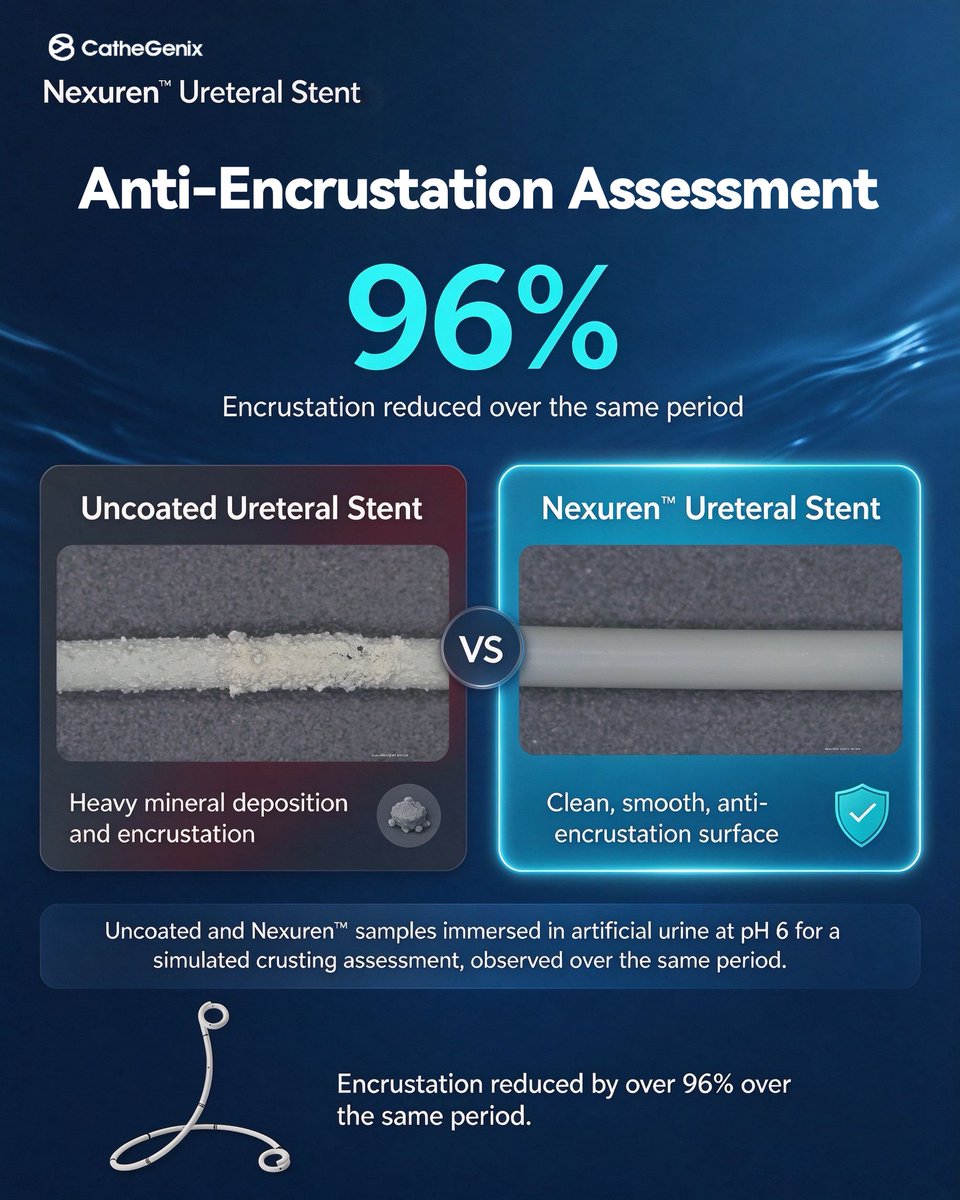
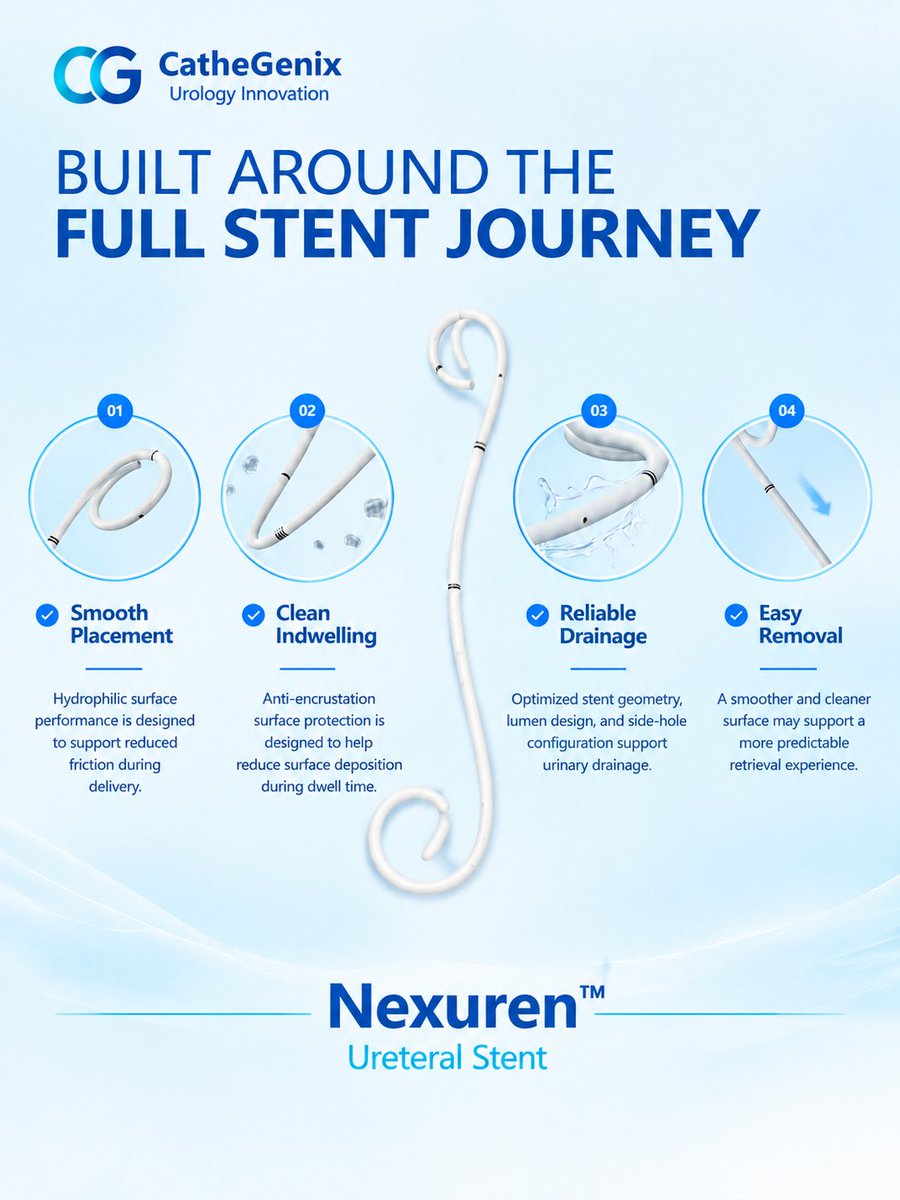
Patient comfort, drainage, encrustation, and removal all deserve attention.
In urology, good design must consider the entire journey, not just the procedure.
One thing I'm learning while building medical devices:
Every design decision comes with a trade-off.
Flexibility, durability, ease of use, and cost all matter.
The challenge isn't maximizing one feature. It's finding the right balance for the people using the device.
In urology, we spend a lot of time talking about device performance.
But I think we should also talk about workflow.
How smoothly do guidewires, access sheaths, and stents work together?
A great device should fit the procedure, not complicate it.
One thing I've learned in medical device development:
A device shouldn't be judged only by how well it performs during a procedure.
What happens after placement matters just as much.
For ureteral stents, that's why I believe surface engineering deserves more attention.
What makes a better ureteral stent?
More than the shape, it’s the surface.
Nexuren™ combines:
💧 Hydrophilic Lubricity
🛡 Anti-Encrustation Surface Protection
Two surface goals. One stent platform.
Supporting placement, indwelling, drainage, and removal.
#Urology#Endourology
@CatheGenix A ureteral stent faces two different challenges: smooth placement and long-term performance inside the urinary tract.
Surface engineering plays an important role in both. It's something we should pay more attention to in stent design.
Good medical devices start with understanding what clinicians and patients really need.
I'm Ryan, co-founder & VP at @CatheGenix. We're building better tools for urology.
I'll share what we learn about clinical needs, product design, startups, and AI.
Glad to be here 👋