💥 Did you know that if you spent $1 on $EBAY stock right now, you’d have shown more conviction in that public company than anyone currently serving on their board or as an executive officer has since February 2021?
In over 22 years, a total of 14 eBay insiders have purchased less than 150,000 split-adjusted shares on the open market, according to https://t.co/PdA313KbuD
Only two of those people are still considered insiders:
Paul S. Pressler, Chairman of the Board
+ 5,140 shares at $29.12 on 11/30/2015
+ 4,180 shares at $23.94 on 2/1/2016
= 9,320 shares total; $249,746 invested on the open market
Logan Green, Director
+ 1,000 shares at $28.32 on 11/3/2016
+ 902 shares at $69.23 on 2/9/21
= 1,902 shares total; $90,765.46 invested on the open market
On 5/1/2026, GameStop bought 2.23x more shares than the entire current eBay board has ever purchased with their own money, according to SEC filings.
Your leaders should put their money where their mouth is.
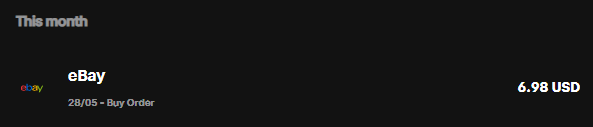
I bought 1 share of $EBAY earlier this month.
That means I’ve bought more shares than the people running the company have in the last 5 years combined.
🤯
🚨 Following sharp questions from GameStop CEO Ryan Cohen over its $2.4 billion marketing spend, eBay is now recruiting a Senior Manager of Marketing Effectiveness. $GME
You used to sell stuff on eBay.
Maybe an old camera. Maybe Beanie Babies. Maybe a coat that didn't fit.
You paid a small fee. The buyer got the thing. Everyone went home.
That eBay is gone.
The website looks the same. The logo is the same. The 135 million buyers are still there.
But the company isn't really a marketplace anymore.
It is an advertising business with a marketplace attached for distribution.
Last year, sellers paid eBay $2 billion just to make sure their own listings showed up.
Read that again.
The board calls this growth.
A Canadian who runs a video game store called it something else.
Here is what actually happened.
In 2020 the board hired a new CEO. His name is Jamie Iannone. He arrived with a strategy called focused categories.
In plain English, that means leaning into the stuff people pay extra for. Sneakers. Watches. Trading cards. Auto parts.
The everyday seller, the person with the camera and the coat, was no longer the customer.
The customer was now the seller who would pay to be seen.
In 2025 eBay did $80 billion in transactions. They kept $11 billion of that as revenue. Of that $11 billion, $2 billion came from advertising.
Sellers paid them $2 billion to promote listings on a website those sellers already pay fees to use.
That is the growth story.
In the same year, the number of enthusiast buyers, eBay's own term for their best customers, was 16 million.
It was also 16 million the year before.
And the year before that.
And the year before that.
Four years. Zero growth. They mention this on every earnings call without mentioning it.
So what does a company do when growth stops?
It buys back its own stock.
In 2025, eBay returned over $3 billion to shareholders. Most of that was buybacks. In February the board authorized another $2 billion on top.
Buybacks shrink the share count. Earnings per share goes up even when earnings stay flat. The stock price follows.
The stock was $68 a year ago. It is $108 today.
The company did not improve. The denominator got smaller.
Then a man from Canada noticed.
His name is Ryan Cohen. He runs GameStop. He started his career selling pet food online and sold it to PetSmart for $3.35 billion.
He looked at eBay. 135 million buyers. $80 billion in transactions. Real margins. Real cash flow. A board harvesting the business instead of running it.
He bought 5% of the company through derivatives and stock.
Then on May 4, he offered to buy the rest. $125 per share. $56 billion total.
On May 12, the eBay board rejected the bid. They called it not credible.
The math is credible.
What the board means by not credible is we would have to explain why we sold.
Then Cohen went on Piers Morgan.
He said eBay is run by a bunch of losers with perverse financial incentives.
He pointed out that eBay's CEO has been paid $144 million over six years.
He pointed out that he personally takes no salary and has put $128 million of his own money into the company he runs.
You do not have to like Ryan Cohen to notice he is making a point that is hard to argue with.
eBay used to be a place where regular people sold things to other regular people.
Now it is a $48 billion company whose largest growth driver is charging its own sellers to advertise to a buyer base that stopped growing four years ago, while spending billions a year buying its own stock to make the chart go up.
The board calls this strategy.
A video game CEO from Canada called it what it is.
The market is now waiting to see who else agrees.
Plz fix. Thx.
Sent from my iPhone
FULL INTERVIEW: @ryancohen explains his plan to acquire eBay.
He unpacks his pitch to institutional investors, why eBay is so horribly run, and how Ryan plans to create billion in shareholder value.
$GME $EBAY
Allow me to translate this letter from eBay for those who don’t speak legalese:
Ryan,
We got your unsolicited offer to buy eBay for $125/share (half cash, half stock) supported by your 5% economic interest in eBay.
Our board, backed by the usual crew of bankers and lawyers who get paid either way, “thoroughly reviewed” it.
We’re rejecting it. Not because the math doesn’t work. Not because the highly confident letter from TD Securities for up to $20B on top of your $9B+ cash pile is fake. None of that.
We’re rejecting it because your entire approach to running a company is an existential threat to how we like to operate here.
Here are the reasons we feel this way, and the things we considered before paying consultants to write this:
1) We’d rather keep milking eBay as a “standalone” cash cow than let you turn it into something bigger and better.
2) Sure, you’ve got real financing lined up and you “know people” with deep pockets, but we’re going to call it “uncertain” anyway so we don’t have to engage.
3) Your plan would actually force real long-term growth and profitability changes we’d rather not be held accountable for.
4) The debt we pretended you can’t even obtain, the operational integration and focus on seller satisfaction, and most importantly, putting someone like you in charge of the combined entity all sound like a nightmare for our current leadership structure because all of us would have zero job security.
5) The valuation math only looks bad if you ignore the 46% premium you’re offering our shareholders and the upside from fixing eBay the way you fixed GameStop, which we are choosing to do and hoping nobody notices.
6) And I hope we buried the lede far enough here: Your governance and executive incentives are completely incompatible with ours. You and your board take zero cash, no salary, no bonuses, no golden parachutes. You buy shares with your own money and only get paid if shareholders win. We, on the other hand, like our nice, reliable annual payouts regardless of whether the stock is flat or the company is just coasting. We’re not about to hand over our golden goose to a guy who eats only what he kills.
Look, eBay is “strong” and “resilient” in the way every entrenched public company says it is while handing out eight-figure checks and perks to the C-suite. We’ve done the usual incremental stuff: tweaked the marketplace a bit, returned some capital, and we’d like to keep doing that without any cowboy from GameStop coming in and demanding actual skin-in-the-game accountability. Can you just leave us alone?
Our team remains focused on protecting the current regime and delivering “value”… mostly to ourselves and our consultants.
Thanks, but no thanks,
Paul S. Pressler Chairman of the Board, eBay (And proud beneficiary of the status quo)
Wow this U.S. vs. eBay lawsuit from 2023 was just uncovered and makes $GME's case for acquisition even stronger. The details of this are one of the most bizarre things I've ever read:
Between August 5 and August 23, 2019, eBay’s former Senior Director of Safety and Security, Jim Baugh, and six other members of the security team executed a harassment campaign intended to intimidate the victims, who spoke negatively of eBay online.
The campaign included disturbing deliveries: sending anonymous packages to the victims' home, including a book on surviving the death of a spouse, a bloody pig mask, a fetal pig, a funeral wreath, and live insects.