Build the bridge before you need it.
A historic flood in Maine taught me a lasting leadership lesson: the worst time to build an important relationship is when you suddenly need it.
#Leadership#CEA
https://t.co/dyamfmsO7T
The most expensive grow isn’t necessarily the best grow.
Start with the product, then choose the technology.
Build only what the business needs.
#CannabisCultivation#VirginiaCannabis
Scale has advantages. So does staying small.
The challenge is giving independent growers the market power of a large operation.
Cooperatives may be the answer.
Maybe the future of CEA isn’t bigger greenhouses. It’s bigger networks.
Not every cannabis product needs the industry’s most expensive production system.
If the harvest is headed for pre-rolls, extracts, vapes, or edibles, why pay for picture-perfect indoor flower?
The production system should fit the product, not the precedent.
Technology doesn't create a business case.
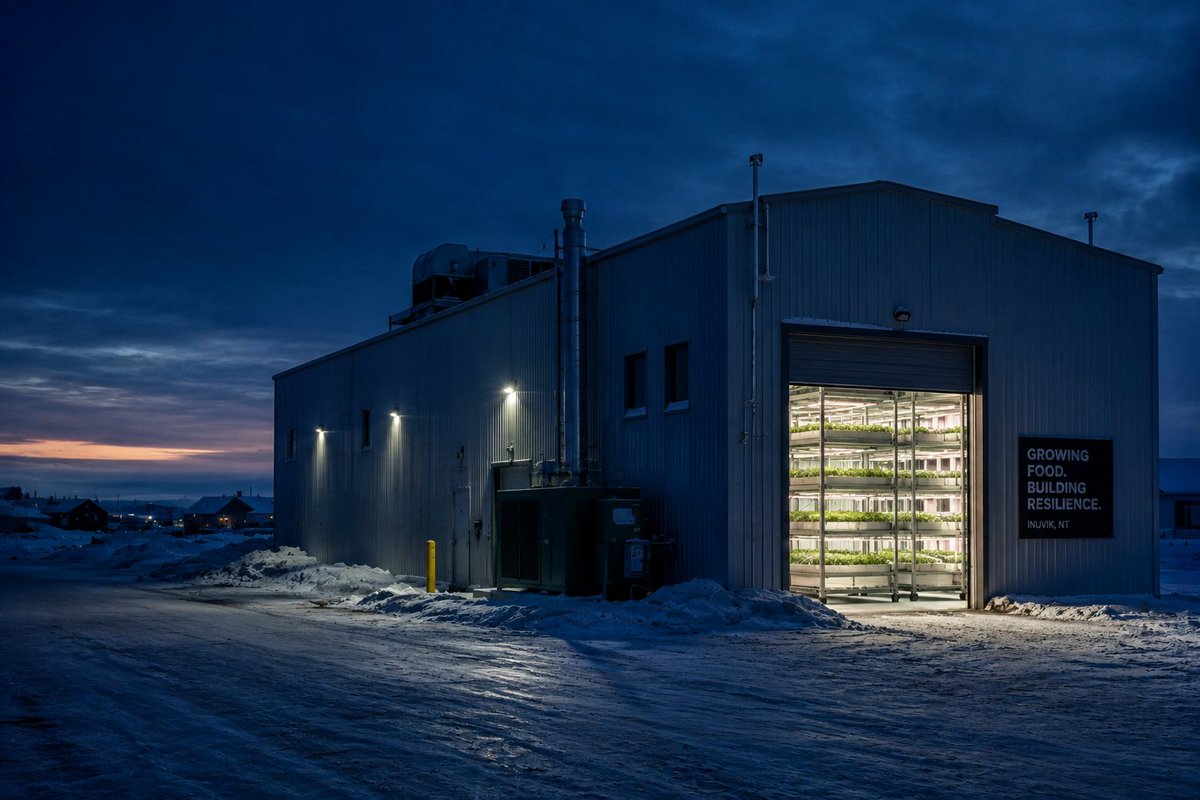
In northern Canada, a vertical farm may be the right answer.
In southern India, it may be too.
But it's not the right answer for lettuce in every temperate market.
Economics should choose the technology, not the other way around.
Don't reinvent the wheel.
This week's Under Glass: The operators who benefit most from federal legalization won't be waiting for new rules. They'll already be building to standards that exist today.
Operational excellence isn't optional.
https://t.co/5peN1NyQAE
It’s easy to underestimate the value of experience.
This week I reviewed a greenhouse plan and quickly spotted some expensive problems.
They asked my hourly rate.
I don’t charge for the 30 minutes it took to spot them. I charge for the 30 years it took me to.
You should too.
We’re often so busy selling what we offer that we forget to ask what the client actually needs.
Sometimes the best solution is simpler than what we’re trying to sell.
Don’t make the solution more expensive just to make the sale more impressive.
A good idea can still be the wrong investment.
In this week’s Under Glass, I ask a question that should come before the capital is committed:
Can it be done, or should it be done?
https://t.co/ekmlMqtgAy
#CEA#IndoorFarming#GreenhouseGrowing
Supporting CEA doesn't always mean the answer is to grow.
If a purpose-built greenhouse can produce the same crop for half the cost, why convert an office building into a vertical farm?
Passion for the mission is admirable. Confusing it with sound economics is expensive.
India's strawberry market is worth $1B.
And they're available only 3 months a year.
Fragaria says it has more than $100MM in pre-orders and expects to become the world's first profitable vertical strawberry farm.
https://t.co/ZoGL8dUoPS
The biggest client isn't always the best client.
Big accounts often come with procurement hurdles, exclusivity, and pricing pressure that slowly rewrite your business on their terms.
The right customer is worth more than the biggest one.
I sat through a greenhouse presentation this weekend. I learned about the company, the warehouse, construction speed, and structural strength. I never learned why I'd buy that greenhouse instead of another one. 🤷♂️
Once the ribbon is cut, investors stop evaluating a business on what it raised and start evaluating it on what it produces.
Everything that matters after opening day falls under operational readiness, yet it's rarely treated with the same urgency as financing or construction.
Independence is the most underrated reason to grow food indoors.
Freedom from policy shifts you don't control, from supply shocks half a world away, and from produce sprayed with chemicals your own country has banned.
True independence is feeding yourself.
You can't scale what you haven't proven.
Three minutes on why the most expensive mistakes in CEA are almost always self-inflicted.
Full playlist in the comments.
You cannot successfully run a greenhouse from behind a desk. Anyone who tells you otherwise is either trying to sell you something or hasn't done it.
https://t.co/P6kAbxb2gm